
The Ultimate Guide to Getting Your Project Management Certification in Finland: All You Need to Know in 2026-2027
Finland rewards project managers who can combine structure, trust, calm execution, and evidence-based decision-making across IT project management, construction project management, healthcare project management, and government project management. Certification helps when it proves you can manage scope, risk, people, vendors, documentation, and business value without creating delivery chaos.
This guide shows how to choose the right credential, prepare efficiently, and turn certification into career leverage using the complete PM career roadmap, PMP exam domains guide, agile project manager roadmap, and entry-level to executive PM path.
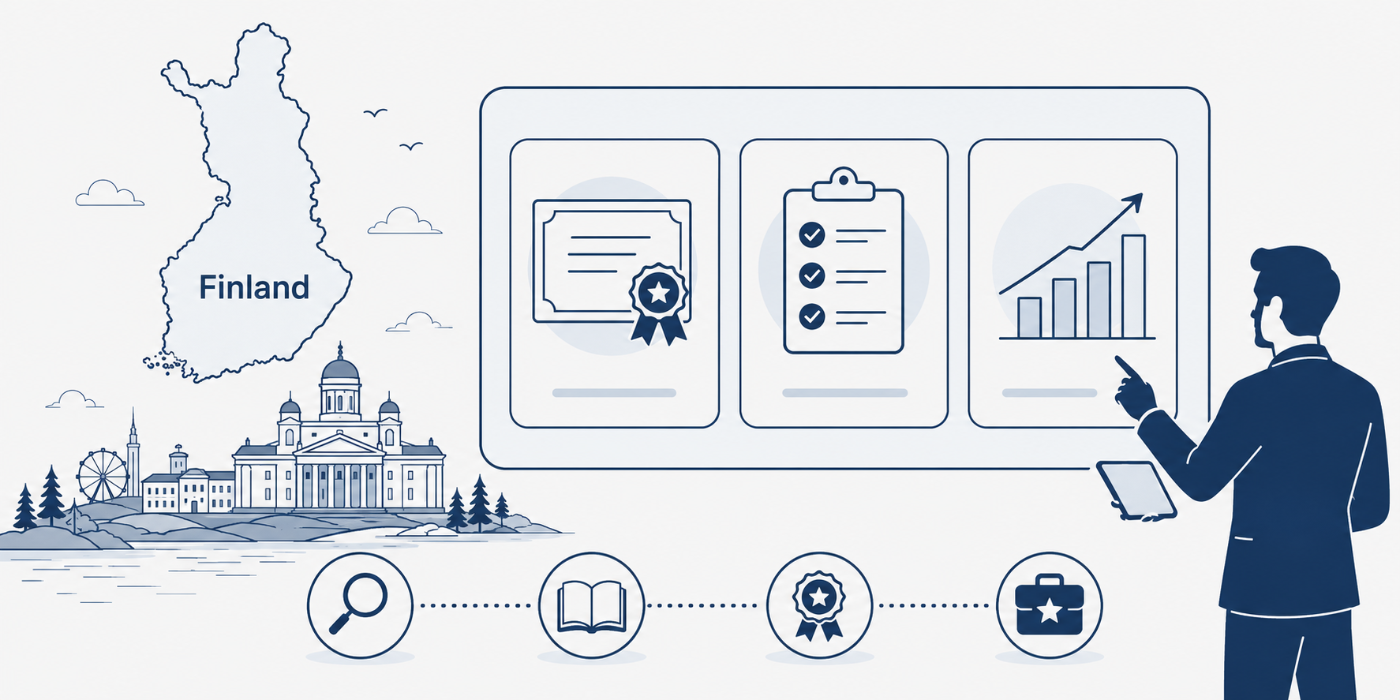
1. Why Project Management Certification Matters in Finland in 2026-2027
Finland’s project market is serious about credibility because many roles sit inside environments where mistakes become expensive quickly: software delivery, telecom, engineering, public-sector digitalization, healthcare systems, construction, energy, manufacturing, logistics, and consulting. A certificate gives you a recognized language, while your proof assets show that you can use that language under pressure. Employers want more than “I know agile” or “I managed stakeholders.” They want risk decisions, reporting discipline, scope control, vendor coordination, and business outcomes. Start by aligning your target role with the project manager roadmap, project execution glossary, monitoring and control terms, stakeholder engagement glossary, and project reporting best practices.
The biggest certification mistake in Finland is choosing a credential because it sounds impressive, then failing to connect it to the role you want. PMP can support international delivery credibility, PRINCE2 can strengthen governance and controlled delivery language, IPMA can fit competence-based professional development, Scrum credentials can help digital teams, and agile training can support hybrid delivery roles. Your decision should come from job descriptions, your experience level, and the exact hiring objection you need to remove. A coordinator needs different proof than a PMO analyst. A construction PM needs different evidence than a product owner. A senior consultant needs different signals than an early-career project assistant. Use the Certified Scrum Master guide, product owner roadmap, project portfolio manager guide, PM director roadmap, and international PM guide.
2. PMP, PRINCE2, IPMA, Scrum, or Agile: How to Choose the Right Certification in Finland
The best certification for Finland depends on the evidence missing from your profile. Choose PMP when you need broad international credibility, complex delivery language, and confidence across predictive, agile, and hybrid work. Choose PRINCE2 when job descriptions mention governance, business cases, stage control, supplier accountability, and public-sector-style delivery. Choose IPMA when you want a competence-based pathway that reflects practical experience and professional maturity. Choose Scrum or agile credentials when your target work sits inside software, product, digital services, or iterative delivery. Compare each path with the PMP exam domains guide, PRINCE2 exam pitfalls guide, Scrum glossary, agile estimation guide, and Kanban terms guide.
A useful decision test is this: which certification removes the strongest doubt a Finnish hiring manager might have about you? If you have software experience but weak governance language, PRINCE2 or PMP can add structure. If you have coordination experience but limited leadership proof, IPMA or PMP preparation can force better evidence. If you have product team experience but weak project controls, agile certification should be paired with reporting, risk, and stakeholder proof. If you want senior PMO or portfolio work, single-team agile training may be too narrow without portfolio, benefits, and governance capability. Build your comparison using the project portfolio manager guide, future PMO guide, project governance trends, earned value management guide, and project financial management glossary.
For Finland, the strongest certification strategy usually has three layers: one recognized credential, one role-specific proof portfolio, and one market-aligned narrative. The credential gets you past filters. The proof portfolio makes your skills visible. The narrative explains why your background fits the Finnish role. That matters for international applicants, career changers, remote candidates, Scrum Masters moving into PM, and coordinators aiming for ownership. Your proof should cover risk, stakeholders, delivery rhythm, budgets, decisions, and lessons learned. Build those assets with the risk register guide, risk mitigation terms, resource allocation guide, project closure glossary, and conflict resolution glossary.
3. Step-by-Step Roadmap to Getting Certified in Finland
Start with role targeting before course selection. Pull ten job descriptions from Finnish employers or Finland-based remote roles and mark the repeated requirements: Jira, MS Project, Azure DevOps, stakeholder communication, procurement, budgeting, agile delivery, risk management, reporting, public-sector governance, construction scheduling, healthcare implementation, or supplier coordination. Then choose the certification that speaks directly to those repeated requirements. A job-market audit prevents the expensive problem of passing an exam that fails to improve your applications. Use the IT PM roadmap, government PM roadmap, healthcare PM roadmap, product owner career guide, and construction PM guide.
Next, map your experience against eligibility, exam expectations, and proof gaps. For PMP-style preparation, collect examples where you influenced scope, schedule, risk, teams, budgets, vendors, and outcomes. For PRINCE2-style preparation, practice business justification, role clarity, stage control, tolerances, issues, change, and exception handling. For IPMA-style preparation, document competence across people, practice, and context. For Scrum or agile training, gather examples that show team improvement, backlog discipline, flow, forecasting, and stakeholder alignment. Study through the PMP resources guide, PMP mistakes guide, Scrum Master guide, complete agile glossary, and product backlog guide.
Then build a six-week study and proof plan. Week one should cover exam structure and your weak areas. Week two should cover scope, stakeholders, and communication. Week three should cover schedule, cost, resources, and risk. Week four should cover agile, hybrid, procurement, and change. Week five should focus on mock questions, wrong-answer analysis, and scenario practice. Week six should polish exam readiness and convert your study into job assets. By the end, you should have a risk register, status report, stakeholder map, change request, schedule baseline, lessons learned note, and interview story bank. Support that build with the Gantt chart guide, schedule compression terms, RFP/RFQ/RFI guide, vendor management glossary, and project templates guide.
The best certification plan fixes one career blocker first, then builds proof that makes your project judgment easy to trust.
4. How to Turn Certification Into Interviews, Offers, and Salary Growth
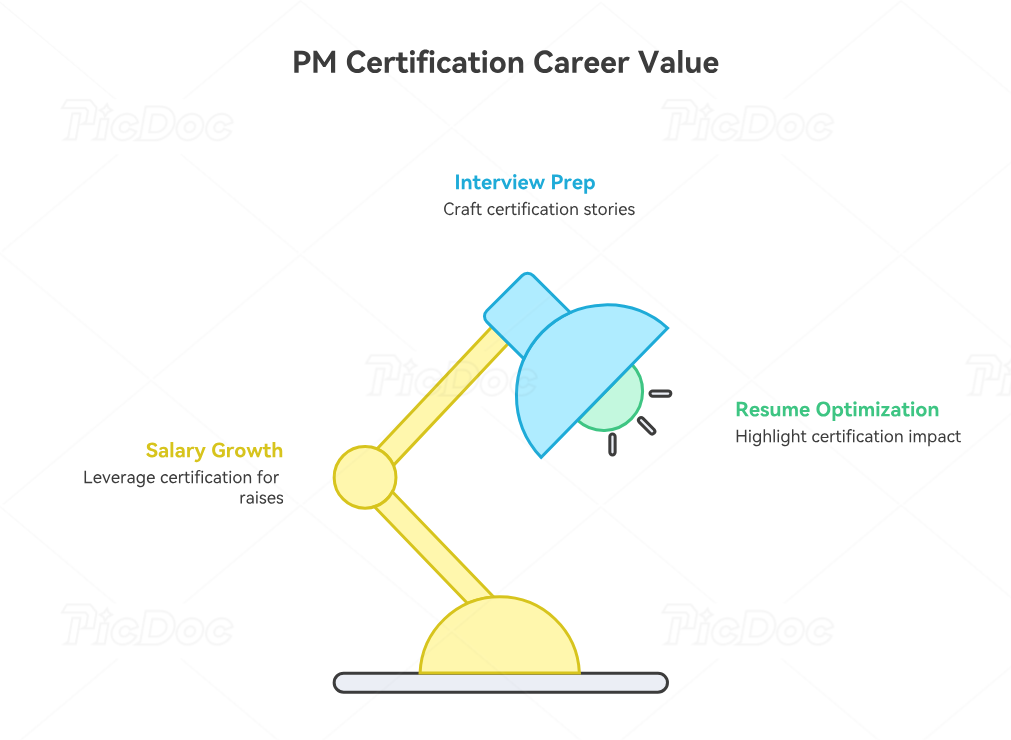
Certification creates career value when your resume converts it into hiring confidence. Your CV should connect the credential to project environments, business outcomes, tools, and delivery problems you can solve. Avoid listing duties as if every PM job is the same. Show specific pressure: scope creep, vendor delays, unclear ownership, weak reporting, slow decisions, budget variance, release risk, stakeholder conflict, or adoption resistance. Finnish hiring teams appreciate clarity and evidence, so your bullets should make your value visible fast. Build your positioning with the PM consultant guide, remote PM guide, PM director roadmap, VP of PM guide, and Chief Project Officer roadmap.
Interview preparation should turn certification topics into sharp stories. Prepare one example each for scope control, risk response, stakeholder alignment, vendor management, budget control, agile delivery, change management, reporting, and project recovery. A strong answer explains the situation, constraint, decision, action, outcome, and lesson. Instead of saying you “managed risk,” describe the risk trigger, the response options, the stakeholder decision, the mitigation action, and the result. Instead of saying you “worked with stakeholders,” explain the conflict, the engagement rhythm, the trade-off, and the decision record. Practice with the risk register guide, leadership and communication glossary, quality management terms, ISO standards guide, and conflict resolution glossary.
Salary growth depends on responsibility, risk, and business impact. Certification can help you move from coordinator to PM, PM to senior PM, Scrum Master to agile project management consultant, delivery lead to PMO manager, or single-project manager to portfolio leader. The credential supports the move, while your outcomes justify the compensation conversation. Strong salary stories mention budget size, delivery complexity, team size, vendor exposure, strategic value, risk reduction, and measurable improvements. Build career progression through the Scrum Master to agile PM consultant roadmap, agile coach career path, portfolio manager guide, future PM skills guide, and certification evolution forecast.
5. Finland-Specific Mistakes That Destroy Certification ROI
The first mistake is ignoring the local work culture. Finland often values directness, preparation, trust, punctuality, calm execution, and respect for people’s time. That means vague PM language feels weak quickly. “Handled stakeholders” says little. “Reduced approval delays by introducing a decision log and weekly sponsor review” says much more. “Managed schedule” sounds ordinary. “Rebuilt the baseline after supplier slippage and protected the critical path through dependency re-sequencing” sounds like practical control. Use the project reporting guide, stakeholder engagement guide, schedule compression guide, monitoring and control glossary, and project closure terms to make your language concrete.
The second mistake is treating exam study as separate from job readiness. Every chapter you study should produce a career asset. Scope study should create a scope statement. Risk study should create a risk register. Stakeholder study should create an engagement map. Procurement study should create a supplier checklist. Reporting study should create a one-page dashboard. This habit gives you an interview portfolio and makes your certificate feel practical rather than decorative. Use the Waterfall glossary, sprint planning terms, agile metrics guide, RFP/RFQ/RFI guide, and vendor management terms.
The third mistake is applying with a generic international CV. International experience can be powerful in Finland when translated into the language of trust, clarity, and measurable delivery. Show cross-border coordination, remote team rhythm, vendor accountability, regulated environments, budget control, and stakeholder communication. Explain tools clearly. Name deliverables. Use plain business language. Candidates who hide strong experience under generic phrases lose interviews they could have earned. Strengthen global positioning with the international PM guide, freelance PM roadmap, future freelance PM forecast, digital transformation PMO guide, and global agile demand report.
The fourth mistake is skipping tools. Certification explains method knowledge, while tool fluency proves you can operate in real delivery systems. Finnish employers may expect comfort with Jira, Azure DevOps, MS Project, Planner, Asana, Smartsheet-style reporting, Kanban boards, dashboards, documentation systems, and collaboration platforms. You do not need every tool; you need to show that tools help you create visibility, reduce follow-up, control risk, and support decisions. Build tool confidence with the agile tools guide, Kanban software directory, Scrum tools guide, Waterfall software guide, and project management APIs guide.
6. FAQs About Getting Project Management Certification in Finland
-
The best certification depends on your target role. PMP works well for broad international project leadership, PRINCE2 fits structured governance and controlled delivery, IPMA supports competence-based professional growth, and Scrum or agile certification helps digital and product environments. Choose the credential that removes the biggest hiring doubt in your profile. Start with the complete PM roadmap, compare the PMP exam domains, review PRINCE2 exam pitfalls, and add the Scrum Master guide when roles mention agile teams.
-
Choose PMP when you want international recognition and broad delivery credibility. Choose PRINCE2 when your target roles emphasize governance, business cases, controlled stages, supplier accountability, and public-sector-style documentation. Choose IPMA when you want a competence-based route tied closely to professional maturity and experience. The right answer should come from job descriptions and your current proof gaps. Compare paths through the government PM guide, PM consultant guide, portfolio manager guide, and certification evolution forecast.
-
Many Finland-based technology, consulting, engineering, and international organizations use English in project environments. Your challenge is proving that your experience transfers into Finnish expectations: direct communication, reliable documentation, careful stakeholder handling, and measurable delivery control. A plain, evidence-heavy CV will help more than broad claims. Strengthen your positioning with the international PM guide, remote PM guide, stakeholder terms guide, and project reporting guide.
-
Most candidates should plan for six to twelve focused weeks, depending on experience, certification difficulty, and weekly study time. A strong plan includes domain review, practice questions, wrong-answer analysis, mock exams, and proof-asset creation. Passive reading alone wastes time because it fails to build exam confidence or interview strength. Use the PMP resources guide, PMP mistakes guide, agile estimation guide, and project templates guide.
-
Certification can support salary growth when it helps you move into higher-value work: larger budgets, more complex stakeholders, regulated delivery, vendor accountability, transformation programs, or portfolio decisions. The certificate strengthens credibility, while your outcomes create negotiation power. Build the story around business value, delivery risk, cost control, and leadership scope. Plan progression through the PM director roadmap, VP of PM guide, CPO roadmap, and future PM skills guide.
-
Build a compact PM portfolio with a project charter, risk register, stakeholder map, status report, change request, supplier checklist, schedule baseline, sprint or delivery dashboard, and project closeout review. These assets turn certification into interview proof and help hiring managers understand your judgment before hiring you. Build them with the risk register guide, Gantt chart guide, vendor management glossary, and project closure glossary.
