
Essential Resources for PMP Exam Preparation: Books, Courses & Tools
PMP exam preparation can become expensive, scattered, and exhausting when candidates collect resources faster than they build exam judgment. The right stack should help you understand PMI thinking, practice scenario-based decisions, close weak knowledge areas, and prove readiness before paying for the exam. Candidates preparing around the 2026 transition should also confirm which PMP exam version applies to their test date, because PMI says the updated PMP exam launches on 9 July 2026.
1. Start With the PMP Exam Blueprint Before Buying Anything
The smartest PMP candidates begin with the exam blueprint, then choose resources around the decisions the exam actually rewards. That matters because many candidates spend weeks reading broad project management theory, then freeze when the test asks them to choose the best response to a stakeholder conflict, change request, risk trigger, sprint disruption, vendor issue, or governance escalation. A strong prep plan should connect the official PMP exam domains with practical career resources such as a complete project manager career roadmap, a project management career path guide, and APMIC’s deeper analysis of certification impact on project success.
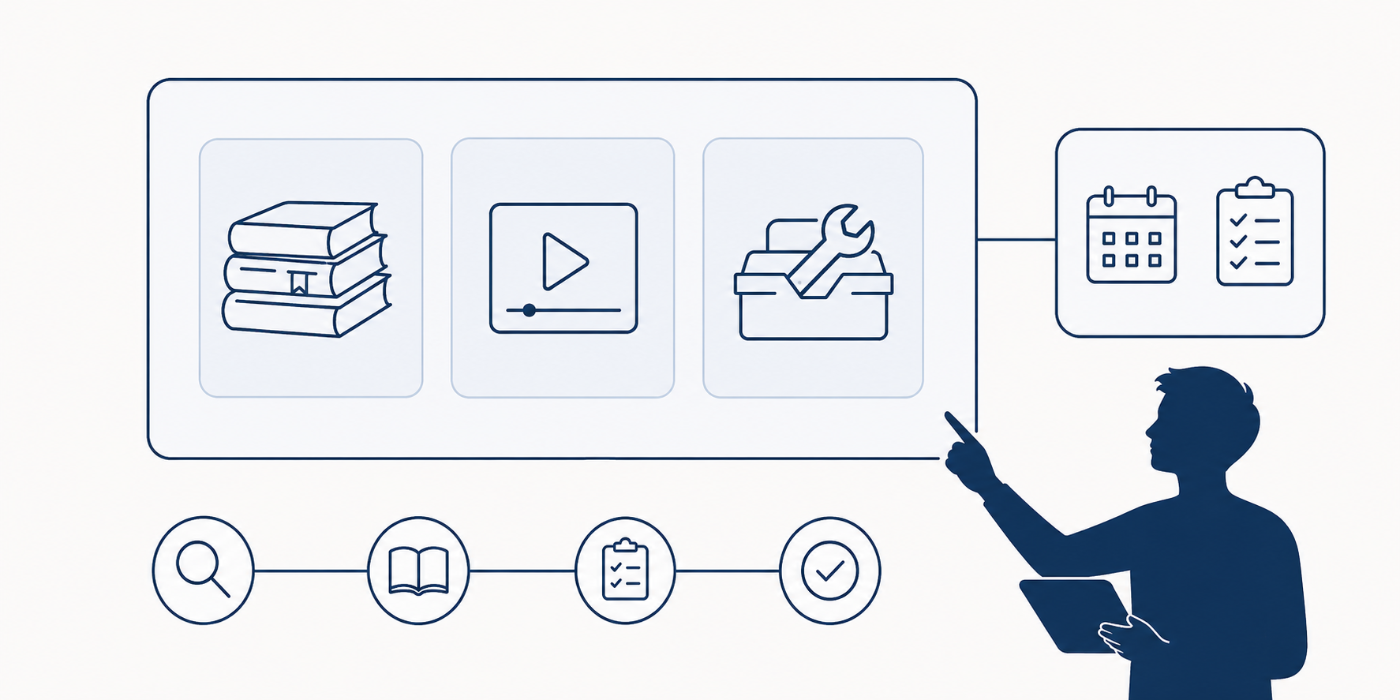
A resource stack should answer four questions: what PMI expects, what concepts you must master, what decisions you must practice, and what proof tells you that you are ready. Books give structure, courses give guided interpretation, and tools give feedback under pressure. Candidates who skip one layer usually feel the damage late: they know definitions from an agile project management glossary, understand some project execution terms, and still miss scenario questions because they cannot pick the most responsible action when every answer sounds reasonable.
The resource mistake that hurts most is passive confidence. Reading a PMP book can feel productive, watching a course can feel complete, and highlighting a study guide can feel like progress. The exam rewards decision fluency. That means you need a tight study loop: learn a concept, connect it to real project behavior, test it with questions, review why your instinct failed, and update your decision rule. This is where APMIC resources on stakeholder engagement terms, project reporting best practices, risk registers, and earned value management terms become useful supporting assets rather than random reading.
Candidates preparing before the July 2026 exam change should treat PMI’s current exam prep guidance as the source of truth for timing, eligibility training, and official prep products. PMI states that its on-demand PMP exam prep course can earn 35 training hours and fulfill the application’s training requirement. That does not mean every candidate needs the same course path. A construction PM may need heavier predictive-process reinforcement through construction project management resources, while an IT PM may need agile, hybrid, integration, and tool fluency through APMIC’s IT project manager career guide and project management software features report.
| Resource Type | Best Use | What It Fixes | How to Use It | APMIC Support Link |
|---|---|---|---|---|
| Exam blueprint | Map your study plan to PMP domains and tasks. | Prevents random reading and topic gaps. | Turn each domain into a weekly checklist. | project manager roadmap |
| PMBOK Guide | Build PMI-aligned language and value-delivery thinking. | Fixes shallow understanding of principles and domains. | Read after you understand the exam outline. | future PM skills |
| Process guide | Strengthen predictive planning, control, closure, and governance. | Fixes confusion around sequence, baselines, and control. | Convert processes into decision triggers. | execution terms |
| Agile book | Understand servant leadership, iterations, backlog flow, and adaptation. | Fixes predictive-only thinking. | Pair reading with agile scenario questions. | agile glossary |
| Hybrid notes | Compare predictive, agile, and blended delivery choices. | Fixes wrong method selection in scenarios. | Create a “which approach fits?” decision chart. | hybrid project management |
| PMP course | Get structured lessons, training hours, and accountability. | Fixes fragmented self-study. | Use the course as a spine, then drill weaknesses. | certification evolution |
| Question bank | Practice scenario judgment daily. | Fixes false confidence from reading only. | Review every wrong answer by decision rule. | certification impact |
| Mock exam | Test stamina, timing, and readiness. | Fixes exam-day shock. | Take full mocks after content coverage. | PMP salary comparison |
| Flashcards | Recall formulas, terms, roles, and artifact purposes. | Fixes slow recognition. | Use short daily review blocks. | EVM terms |
| Formula sheet | Master CPI, SPI, EAC, ETC, variance, and communication formulas. | Fixes calculation anxiety. | Practice formula meaning before formula speed. | financial terms |
| Risk drills | Train risk identification, response, ownership, and escalation. | Fixes reactive thinking. | Write triggers and responses for each scenario. | risk mitigation terms |
| Stakeholder map | Understand power, interest, resistance, and communication needs. | Fixes poor stakeholder-first decisions. | Map each question to the affected stakeholder. | stakeholder engagement |
| Change control guide | Practice baselines, impact analysis, approvals, and logs. | Fixes “act too fast” answer choices. | Identify the missing control step before choosing. | monitoring and control |
| Procurement notes | Understand RFP, RFQ, RFI, contracts, sellers, and claims. | Fixes weak vendor scenarios. | Study contract type risk allocation. | RFP, RFQ and RFI terms |
| Scrum guide notes | Clarify product owner, scrum master, team, sprint, and backlog roles. | Fixes role-confusion questions. | Separate facilitation from command-and-control behavior. | scrum glossary |
| Kanban notes | Understand flow, WIP limits, cycle time, and bottlenecks. | Fixes agile tool confusion. | Use scenarios about delays and workflow constraints. | Kanban terms |
| Agile estimation guide | Learn story points, relative sizing, velocity, and forecasting. | Fixes estimation confusion. | Compare agile forecasting with predictive estimates. | agile estimation techniques |
| Reporting template | Understand dashboards, status updates, risks, and decisions. | Fixes weak communication choices. | Practice choosing the right audience and message. | project reporting terms |
| Leadership notes | Build conflict, coaching, influence, and servant leadership judgment. | Fixes harsh or passive answer choices. | Choose responses that preserve trust and accountability. | PM leadership terms |
| Quality guide | Understand prevention, inspection, root cause, and continuous improvement. | Fixes “inspect at the end” thinking. | Link quality to process design. | TQM terms |
| Schedule drills | Practice critical path, compression, crashing, fast tracking, and delays. | Fixes timing and dependency mistakes. | Review why schedule fixes create risk tradeoffs. | schedule compression terms |
| Resource guide | Study capacity, allocation, conflicts, and team constraints. | Fixes weak team-planning scenarios. | Separate resource shortage from skill mismatch. | resource allocation terms |
| Tool comparison | Understand how tools support planning, tracking, reporting, and collaboration. | Fixes abstract tool knowledge. | Connect tool features to project control needs. | agile PM tools |
| Template library | Practice charters, logs, registers, reports, and retrospectives. | Fixes artifact confusion. | Name the artifact that solves the scenario’s problem. | PM templates and resources |
| Software feature guide | Understand dashboards, automations, permissions, integrations, and workflows. | Fixes modern PM tool blind spots. | Relate features to governance and visibility. | PM software features |
| AI and automation brief | Understand emerging automation in planning, reporting, and risk detection. | Fixes outdated PM assumptions. | Use automation as a support system, then keep judgment human. | AI adoption in PM |
| Career ROI guide | Connect PMP prep to salary, roles, and promotion strategy. | Fixes motivation drops during long prep. | Define the role outcome you want after passing. | certification salary comparison |
| Renewal guide | Plan PDUs before certification maintenance becomes urgent. | Fixes post-exam neglect. | Choose learning categories that support your next role. | PMP renewal and PDUs |
2. Build a Three-Layer PMP Resource Stack: Books, Courses, and Tools
A strong PMP prep stack has three layers. The first layer is concept depth: books, standards, glossaries, and structured notes. This is where you learn vocabulary, process logic, agile principles, governance, risk thinking, and value delivery. PMI’s PMBOK Guide page now presents the Eighth Edition and also notes that the Seventh Edition remains available for member download and purchase until 8 July 2026, which matters for candidates navigating the exam transition period. A candidate should pair official reading with practical explainers like APMIC’s waterfall glossary, agile glossary, scrum glossary, and project closure terms.
The second layer is guided interpretation. This is where courses help most. PMP questions often test judgment through phrases such as “what should the project manager do first,” “what should the project manager do next,” “how should the project manager respond,” or “what is the best way to address the issue.” A course should teach you how PMI wants you to think, especially around servant leadership, stakeholder engagement, risk escalation, change control, team empowerment, compliance, and value delivery. If a course only explains terms, it leaves you exposed. Your course notes should connect to resources on conflict resolution terms, stakeholder engagement, project monitoring and control, and project governance trends.
The third layer is performance feedback. This includes question banks, mock exams, flashcards, formula drills, mistake logs, and readiness dashboards. PMI’s Authorized Online PMP Practice Exam says it provides more than 250 practice questions and helps candidates get familiar with question format, wording, and sample content. Tools like this should be used diagnostically. A wrong answer is valuable only when you label the mistake: content gap, misread wording, weak agile judgment, wrong first action, over-escalation, under-communication, or formula confusion. Candidates who track errors against APMIC’s risk mitigation terms, EVM terms, RFP and procurement terms, and team communication terms turn mistakes into a study map.
The best books are the ones you can convert into exam decisions. A PMBOK chapter should become a one-page rule sheet. A process guide section should become a sequence diagram. An agile chapter should become a “what would a servant leader do?” checklist. A formula page should become scenario interpretation: why CPI matters, why SPI can mislead, why EAC changes, and what the numbers say about project health. Use APMIC’s financial management glossary, resource allocation guide, Gantt chart glossary, and schedule compression terms to turn abstract reading into applied reasoning.
3. Turn PMP Resources Into a Weekly Study System
A resource list becomes useful when it has a weekly operating rhythm. Start each week with one primary theme: stakeholders, risk, schedule, scope, agile delivery, quality, procurement, integration, governance, or leadership. Read the relevant book section, watch the matching course lesson, complete 40–60 targeted practice questions, update your mistake log, and write one page of decision rules. This gives you a repeatable system rather than a pile of tabs, PDFs, playlists, and saved posts. It also mirrors real PM maturity: candidates who can plan their preparation usually understand the same discipline behind project portfolio management, project reporting, and project success factors.
A practical eight-week structure works well for many candidates. Week one covers exam orientation, mindset, and baseline testing. Week two covers people, leadership, team performance, conflict, and communication. Week three covers predictive planning, scope, schedule, cost, quality, and resources. Week four covers risk, procurement, change control, and governance. Week five covers agile and hybrid delivery, including Scrum, Kanban, backlogs, estimation, and iteration planning. Week six covers business environment, benefits, compliance, value delivery, and organizational change. Week seven is mock-exam correction. Week eight is readiness refinement. Along the way, use APMIC’s agile estimation guide, product backlog and sprint backlog guide, sprint planning definitions, and agile metrics guide.
Your mistake log should be more detailed than “got it wrong.” Use columns for domain, topic, question type, wrong instinct, correct decision rule, and next drill. For example, if you choose to escalate before talking to the team, your rule may become: investigate with the closest responsible people before escalating unless there is safety, legal, contractual, or urgent governance exposure. If you approve work before analyzing change impact, your rule may become: assess impact and follow change control before changing a baseline. These rules connect directly with APMIC’s change-control and monitoring terms, risk register guide, quality management terms, and ISO standards for PM.
The highest-risk candidates usually have one of three pain patterns. Some over-read and under-practice, so their knowledge collapses under scenario pressure. Some over-practice and under-review, so they repeat the same mistake with new wording. Some study only their familiar domain, so an IT PM avoids procurement, a construction PM avoids agile, or a healthcare PM avoids benefits realization. A stronger plan forces range. Read across IT project management, construction project management, healthcare project management, and government project management so your judgment becomes portable.
The fastest PMP prep improvement usually comes from fixing one blocker, then rebuilding the study system around measurable feedback.
4. Use Practice Questions as Diagnostic Tools, Not Just Score Generators
Practice questions should teach you how your thinking fails. The score matters, but the pattern matters more. A candidate scoring 68% with clear, fixable mistakes may be closer to readiness than a candidate scoring 74% through guessing. Review every wrong answer and every lucky right answer. Ask: Did I miss a keyword? Did I choose the action that felt familiar instead of the action PMI rewards? Did I ignore the project life cycle? Did I escalate too early? Did I solve the symptom instead of the root cause? Did I confuse risk with issue, product owner with project manager, or backlog refinement with sprint planning? Use APMIC’s risk register guide, scrum glossary, Kanban terms, and agile metrics guide to correct repeat confusion.
The best review method is a five-step question autopsy. First, identify the scenario type: people, process, business environment, agile, predictive, hybrid, risk, procurement, stakeholder, or governance. Second, name the conflict: unclear requirement, resistant stakeholder, team conflict, quality escape, vendor delay, scope change, risk trigger, compliance issue, or benefits gap. Third, identify the project manager’s duty: facilitate, analyze, communicate, document, escalate, coach, protect value, or follow governance. Fourth, reject trap answers. Fifth, write the shortest rule that would help you answer a similar question next time. This method pairs well with APMIC’s project failure root-cause report, agile project failure case study, project success factors report, and top PM challenges report.
Practice tools should also train timing. PMP candidates often lose time because they reread long scenarios without knowing what to extract. Train yourself to scan for delivery approach, role, timing, trigger, constraint, and expected action. In predictive questions, look for baselines, approvals, documented plans, change control, and stakeholder communication. In agile questions, look for team empowerment, product owner involvement, backlog priorities, retrospectives, impediments, and incremental value. In hybrid questions, look for which parts are controlled predictively and which parts adapt iteratively. This is where APMIC’s methodology adoption analysis, state of agile project management report, future of remote project management, and hybrid project management forecast can strengthen applied understanding.
A full mock exam should be treated like a project simulation. Plan the time box, manage energy, track breaks, avoid emotional spirals after hard questions, and protect decision quality across the full session. After the mock, review by theme rather than question order. Create buckets: agile role confusion, risk response, change control, stakeholder communication, procurement, EVM, schedule, quality, and leadership. Then assign a repair resource to each bucket. For example, use EVM terms for calculation errors, RFP/RFQ/RFI terms for procurement mistakes, stakeholder engagement terms for communication errors, and project reporting terms for status and escalation scenarios.

5. Choose PMP Courses and Tools Based on Weakness, Budget, and Learning Style
The right PMP course depends on your weakness. If you need training hours, structure, and official alignment, prioritize a course that clearly supports the PMP application requirement and maps lessons to the exam outline. If you already have training hours but struggle with scenario logic, prioritize question review, instructor explanation, and decision frameworks. If you have experience in one domain and weak exposure elsewhere, choose a course that balances predictive, agile, hybrid, governance, procurement, and leadership. PMI also describes Study Hall as a digital learning tool with practice questions, exams, and gamified activities, which makes it a useful option for candidates who need ongoing practice feedback.
Tool selection should be ruthless. You need one main course, one core reading stack, one primary question bank, one mock exam source, one formula sheet, one glossary bank, and one mistake log. More than that can create decision fatigue. If you use five question banks, you may spend more time comparing difficulty than correcting judgment. If you watch three courses, you may hear overlapping explanations without building recall. If you download every template, you may organize resources instead of studying. Choose tools that support the career direction you want after PMP, such as project portfolio management, remote project management, international project management, or project management consulting.
Books should be chosen for clarity, alignment, and conversion into action. A core standard helps with PMI language. A process-oriented reference helps with predictive sequencing. An agile reference helps with roles, cadence, feedback loops, and team empowerment. A concise exam-prep book can help simplify complex concepts into exam-ready lessons. Yet the book only works if you actively process it. After each section, write “What decision would this change in an exam question?” For example, reading procurement should change how you answer vendor disputes. Reading stakeholder management should change how you respond to resistance. Reading quality should change how you handle defects. Support those shifts with APMIC’s vendor management terms, conflict resolution glossary, quality management terms, and project closure concepts.
Readiness should be proven through trend, consistency, and explanation quality. You should see fewer repeated mistakes, better timing, stronger confidence across domains, and the ability to explain why three answer choices are weaker than the correct one. A single high mock score can be luck. A consistent pattern across timed sets, mixed-topic quizzes, and full mocks is stronger evidence. Before scheduling the exam, candidates should also consider the career payoff and maintenance path by reviewing APMIC’s PMP salary comparison, PMP renewal guide, project management workforce trends, and future PM skills analysis.
6. FAQs About PMP Exam Preparation Resources
-
Start with the official exam outline, then use a PMI-aligned standards resource, a process-focused guide, and an agile or hybrid reference. Your goal is to cover the exam’s decision logic across predictive, agile, and hybrid environments. Support book study with APMIC’s agile glossary, waterfall glossary, scrum glossary, and project execution terms.
-
Yes, especially when your experience comes from one industry, one delivery method, or one company culture. A course helps translate experience into PMI-style judgment. A strong course should clarify what the exam expects when dealing with stakeholders, risks, conflicts, change requests, vendors, team issues, and business value. Pair the course with APMIC’s stakeholder engagement guide, risk mitigation terms, vendor management terms, and leadership communication glossary.
-
Quality matters more than a magic number. Many candidates benefit from completing enough questions to see stable performance across domains, question styles, and timed conditions. Review is the real differentiator. Each wrong answer should become a decision rule, and each weak topic should connect to a repair resource such as EVM terms, schedule compression terms, project reporting terms, or agile estimation techniques.
-
The most useful tools are a question bank, full mock exams, flashcards, a formula sheet, a mistake log, and a study calendar. Candidates who prefer visual control can also use project management software to track topics, scores, weak areas, and review dates. APMIC’s project management templates guide, PM software features report, agile project management tools review, and project management APIs guide can help candidates think like modern project operators while studying.
-
You are closer to readiness when your mock exam scores are stable, your timing is controlled, your wrong answers are decreasing by pattern, and you can explain why the correct answer is stronger than the distractors. You should also feel comfortable across people, process, business environment, agile, hybrid, predictive, risk, procurement, stakeholder, quality, and governance scenarios. Before scheduling, revisit APMIC’s project success factors report, project failure root-cause analysis, monitoring and control terms, and PMP renewal guide.
-
Yes. The exam tests broad project leadership, but your background affects your blind spots. IT project managers may need more predictive cost, procurement, and formal governance practice. Construction project managers may need more agile, hybrid, and team facilitation practice. Healthcare project managers may need sharper compliance, stakeholder, quality, and risk thinking. Government PM candidates may need procurement, documentation, approvals, and governance depth. Use APMIC’s IT project manager guide, construction PM guide, healthcare PM guide, and government PM roadmap to widen your exam lens.
