
Step-by-Step Guide: Career Path from Project Manager to Vice President of PM
Moving from Project Manager to Vice President of PM is not a bigger version of the same job—it is a complete shift in what you are trusted to do. As a PM, you manage delivery. As a VP of PM, you design the system that makes delivery repeatable across teams, leaders, budgets, and changing priorities. That means governance, talent pipelines, portfolio tradeoffs, executive reporting, and risk control.
This guide gives you the step-by-step career path, the proof assets required at each stage, the mistakes that block promotion, and the exact leadership signals hiring panels and internal executives look for when considering someone for VP of PM.
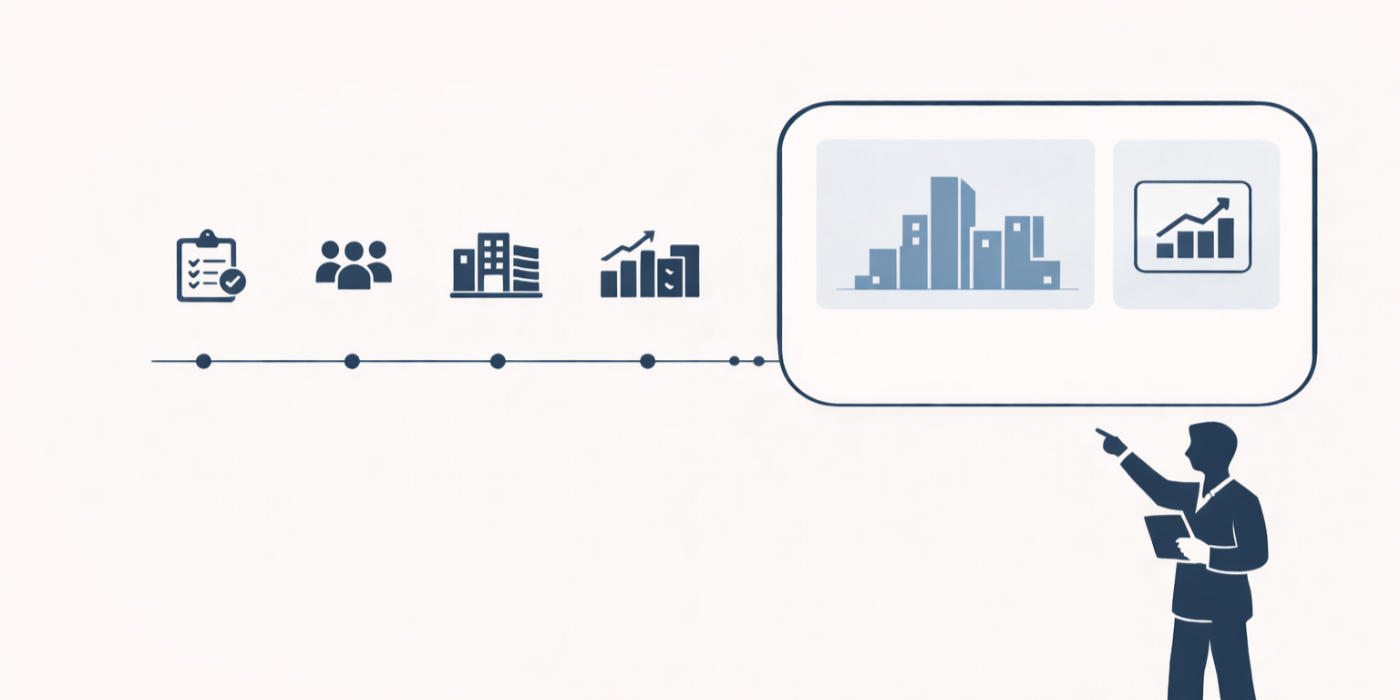
1) The PM-to-VP transition is a shift from project execution to enterprise operating design
Most strong PMs stall before Director or VP because they keep presenting themselves as “excellent delivery leaders” when the organization is evaluating for enterprise judgment. At VP level, the question is no longer “Can this person run a hard project?” It becomes: “Can this person build a PM system that reduces surprises across the business?” If your stories are still mostly about timelines, standups, and task coordination, you are signaling the wrong level. To understand how the ladder changes, compare progression expectations in a Project Management Director roadmap, the executive trajectory in Chief Project Officer (CPO) planning, and broader portfolio-thinking expectations in project portfolio manager career paths. Those role guides show the same pattern: delivery excellence is necessary, but governance and capital allocation logic are what unlock executive trust.
The promotion path also changes because the unit of value changes. A PM is judged on project outcomes; a VP of PM is judged on portfolio outcomes and organizational predictability. That includes decision speed, risk visibility, resource allocation quality, and whether the PMO (or equivalent delivery function) helps leadership prioritize intelligently. If you want to sound like future-ready leadership, anchor your thinking to the profession’s direction in Project Management 2030, the reality of blended delivery in hybrid PM methodologies, and the portfolio-level evolution discussed in future of PPM trends. Executives increasingly want leaders who can modernize systems without creating process theater.
Another hard truth: many PMs aim for VP too early by chasing titles instead of building promotion-proof assets. A title jump without operating-system experience creates fragile leaders who struggle the moment complexity rises. Your progression should build in layers: first execution control, then cross-functional governance, then program/portfolio decision systems, then talent and operating cadence. If your current environment is too narrow, you can still build the right thinking by studying different operating contexts—high-governance environments like government PM pathways, high-constraint industries like healthcare PM roles, or multi-stakeholder environments like construction PM careers. Each one sharpens executive judgment in a different way.
The VP path is also deeply tied to communication and stakeholder trust. You cannot scale authority at the executive level if your language is vague. Precision matters: what risk exists, what decision is needed, what tradeoff is recommended, and what happens if nothing changes. Strengthen the executive-facing side of your leadership by tightening vocabulary with critical project stakeholder terms, improving message architecture through project communication terms and techniques, and building signal-rich executive reporting habits via project reporting and analytics tools. These are not cosmetic upgrades—they are core promotion signals.
2) Step 1–2: Master PM fundamentals and build senior-ready proof assets (Project Manager → Senior PM)
The first phase of the VP path is where many careers quietly break. People assume they can “grow into leadership later,” but if your PM foundation is weak—especially in risk control, stakeholder communication, and scope discipline—you carry that weakness upward and it becomes much harder to fix. To earn Senior PM credibility, your work must show predictability under pressure. That means no vague statuses, no hidden dependencies, and no optimistic timelines without explicit assumptions. Build that baseline using clearer stakeholder language from stakeholder terms every PM should master, stronger message design from communication terms and techniques, and dependable reporting habits through project reporting & analytics software plus dashboard and data visualization tools.
At PM level, stop optimizing for “I handled a lot” and start optimizing for “I controlled the system.” Your portfolio should include sanitized examples of a RAID log, change register, steering pre-read, and weekly status summary that made decisions easier. If your issue handling is ad hoc, formalize it with methods supported by issue tracking software and planning discipline using Gantt chart software plus calendar and scheduling tools. The point is not software collecting—it is proving you can create visibility and control at a level leaders can trust.
Senior PM promotion also requires commercial and cross-functional maturity. If your projects involve vendors, contracts, procurement timelines, or external dependencies, you need to show you can manage those realities—not just internal team tasks. Strengthen that part of your capability with procurement management tools for PMs, contract discipline via contract lifecycle management software reviews, and data-backed cost monitoring through project budget tracking software. These signals matter because executive evaluators interpret commercial control as leadership maturity.
If you want to accelerate this stage, choose a context that sharpens constraints. PMs develop faster in environments where ambiguity is real and accountability is high. You can learn from specialized career guides like government PM roles, healthcare PM pathways, or international project management. You do not need to work in all of them—study their constraints to make your own project leadership more rigorous.
The highest-value promotion asset at this stage is a before/after delivery case study: what the project looked like before your controls, what system you implemented, what decisions changed, and what outcome improved. That format is the bridge from “worker” to “leader.”
3) Step 3–4: Become a program/portfolio-minded leader (Senior PM → Program Manager / PMO Lead)
The jump from Senior PM to program or PMO leadership is where you stop being rewarded for heroics and start being rewarded for systemization. A Senior PM can still win by personally driving difficult workstreams. A program leader must create conditions where multiple streams move with less friction, fewer surprises, and clearer escalation paths. That means dependency management, governance design, and executive decision support become core responsibilities. Build this transition using visibility systems such as reporting & analytics tools, executive-facing dashboard and visualization tools, and durable documentation practices supported by document management platforms and project knowledge management software. Program leadership fails fast when decisions and rationale are scattered.
At this level, you need to demonstrate cross-project tradeoff judgment. Executives do not promote people to PMO or program leadership because they are “organized”; they promote people who can manage resource contention, sequencing conflicts, and competing priorities without political chaos. Start building explicit resource and capacity models using resource allocation software for PMs, then connect those tradeoffs to portfolio language using future of PPM trends. You should be able to explain why Project A moved, what risk it created, and why the tradeoff was still correct.
This is also the stage where methodology maturity matters more than methodology identity. Leaders who treat Agile/Waterfall as ideology often struggle in real organizations because actual delivery environments are mixed: compliance gates, vendor dependencies, iterative product work, fixed dates, and changing stakeholder needs. Develop a “fit-for-risk” approach by studying hybrid PM methodology trends, broader future-direction thinking in Project Management 2030, and framework adaptation insights from Scrum evolution toward 2027. Executives promote leaders who can choose methods based on risk and outcomes, not brand loyalty.
Another major promotion signal here is whether you can develop other PMs. If everything depends on your direct involvement, you are not a PMO/Program leader—you are a high-performing bottleneck. Build templates, review rhythms, and coaching loops. Use process aids and scalable workflows with automation tools for PM efficiency, maintain leader throughput using productivity software for busy PMs, and support distributed leadership through mobile PM apps when you need rapid decisions away from the desk. These tools matter only when attached to a system that reduces noise and raises decision quality.
Finally, if your organization lacks a formal PMO ladder, you can still build PMO-grade proof: portfolio review templates, stage-gate criteria, risk heatmaps, and a competency rubric for PMs. Promotion committees respond to leaders who are already doing the work at the next level.
4) Step 5: Build Director-level operating systems and executive trust (PMO Lead / Program Director → Director of PM)
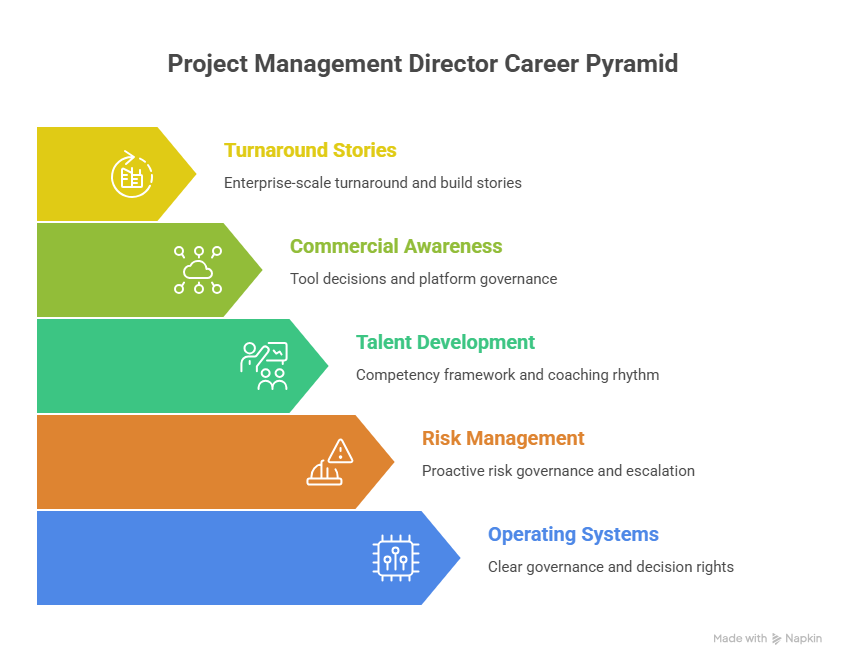
Director-level promotion is the point where your value is measured by the quality of the operating system you create, not the number of projects your team completes. This is where many capable leaders miss the mark: they bring more reporting, more meetings, and more templates, but not better decisions. A strong Director of PM reduces noise while improving control. That requires clear governance rituals, explicit decision rights, consistent standards, and concise executive visibility. Structure your thinking using the progression logic in career roadmap to Project Management Director, and strengthen your system design with dashboard/data visualization tools, project reporting & analytics platforms, and clean evidence retention through document management plus knowledge management software. Directors are expected to produce “decision-grade” operations, not administrative load.
At this stage, executive trust depends heavily on how you handle risk and ambiguity. If leadership only hears about issues when they become urgent, your system is failing. Build risk governance that moves beyond generic RAID logs into triggers, thresholds, ownership, and escalation timing. You can sharpen this by studying how high-accountability contexts structure approvals and controls through government PM roadmaps and how budget pressure changes delivery decisions in macro trend analysis like global inflation’s impact on project budgets. Directors who can connect delivery risk to business impact become trusted advisors, not status broadcasters.
Directors are also evaluated on whether they can scale talent quality. A VP will not promote a Director who runs an efficient PMO but has no succession bench. You need a competency framework, coaching rhythm, and promotion standards that produce more strong PMs, not just more process compliance. This is where role progression guides become useful as framework references: PM Director path, PM to VP path, and the broader executive endpoint of Chief Project Officer. When you can show how your PM ladder feeds enterprise capability, you start sounding VP-ready.
Commercial and technology awareness also become larger factors. Directors increasingly manage tool decisions, process automation, and platform governance across PM workflows. You do not need to be the deepest technical expert, but you must understand why platform sprawl, weak permissions, or inconsistent reporting creates risk and cost. Use best project management software for small businesses, investment in PM software surges amid economic pressures, and AI adoption in project management trends to shape an executive-friendly modernization story. The strongest Directors frame tools as governance and performance infrastructure—not shiny upgrades.
One more promotion rule that matters: Directors who get promoted to VP usually have at least one enterprise-scale turnaround story and one operating-model build story. If you cannot tell both with metrics and decision logic, start documenting now.
5) Step 6: Position for VP of PM — what executive panels evaluate, and how to prove you’re ready
The move into VP of PM is rarely a “next step promotion” based on tenure. It is a risk decision by the executive team. They are asking whether you can protect the business from delivery volatility while enabling strategic execution. That means your VP case must be built around enterprise outcomes: portfolio predictability, decision quality, resource allocation discipline, risk governance, and leadership bench strength. This is the exact transition defined in step-by-step PM to VP of PM roadmap, and it becomes even stronger when framed alongside PM Director expectations and the enterprise-delivery horizon of a CPO roadmap. Panels want to see not only that you can run the PM function, but that you can shape how the company executes strategy.
Your VP portfolio should include a small number of executive-grade proof assets rather than a giant folder of project artifacts. High-value examples include: a portfolio scorecard, stage-gate governance policy, quarterly planning cadence design, PM competency framework, executive dashboard pack, and a resource tradeoff model. Build these with strong visibility infrastructure using dashboard/data visualization tools, reporting and analytics software, and portfolio discipline supported by resource allocation software and future of PPM trends. These assets signal operating judgment and executive readiness far better than isolated project wins.
Executive panels also look for leaders who can navigate macro shocks and modernization pressure without destabilizing the organization. You should be able to discuss how economic volatility, cybersecurity risk, AI adoption, and digital transformation affect PM governance, prioritization, and tooling. Build that business-facing literacy using economic uncertainty increasing demand for agile PM, major cybersecurity concerns prompting PM software overhaul, AI adoption trends in PM, and digital transformation accelerating across PMOs. VP-level credibility comes from showing that you can modernize delivery systems while preserving governance integrity.
If you are pursuing external VP opportunities, your positioning must be market-aware. Different regions and industries hire for different PM leadership profiles, and pay bands can vary significantly. Use market context from APMIC’s regional guides like California PM careers, New York PM careers, Texas PM careers, or Chicago PM career analysis. Even when the role is hybrid or remote, executive search teams still benchmark by market and industry norms.
Finally, your VP interview stories should prove three things:
You can build systems (not just manage projects).
You can shape decisions (not just report status).
You can develop leaders (not just produce output).
If you can prove those three with metrics, tradeoff logic, and adoption evidence, your VP case becomes much harder to ignore.
6) FAQs
-
There is no fixed timeline, but the real variable is not years—it’s whether you’ve built the right proof assets at each stage. Use the progression logic from PM Director roadmap, PM to VP path, and CPO roadmap to judge readiness by capability, not tenure.
-
They present delivery success instead of enterprise operating judgment. VP panels want to see governance, portfolio tradeoffs, talent systems, and risk control. Strengthen that transition with future of PPM thinking, hybrid PM realities, and executive-grade reporting & analytics.
-
In most cases, you need PMO-like experience even if your title wasn’t “PMO Lead.” That means governance design, standards, portfolio visibility, and PM capability building. You can build this with systems supported by dashboard tools, document management, and knowledge management platforms.
-
Bring executive-grade assets: portfolio scorecards, stage-gate models, risk governance frameworks, quarterly cadence designs, PM competency frameworks, and executive dashboard packs. These become much stronger when supported by resource allocation tools, reporting tools, and dashboard/visualization platforms.
-
Specialization is a credibility accelerator because it demonstrates constraint awareness and stronger judgment. If you’re building domain depth, compare healthcare PM careers, government PM roadmaps, and construction PM pathways to see how leadership expectations change by context.
-
Sometimes, but only if they already demonstrate portfolio governance, executive influence, and talent system ownership—not just program delivery. Panels often compare your profile against PM Director expectations and PM to VP requirements, so your evidence must match that level.
-
Decision framing, tradeoff articulation, risk visibility, and concise executive updates. Sharpen your language using stakeholder terms and communication techniques, then operationalize it with reporting & analytics platforms.
