
Complete Glossary of Conflict Resolution Terms for PMs
Conflict rarely begins as a shouting match. In project work, it usually starts as unclear ownership, quiet resistance, delayed approvals, vague scope language, hidden capacity pressure, or a stakeholder who says “fine” while privately blocking progress. A strong PM needs more than soft skills; they need the language to name the tension early, connect it to delivery risk, and move people toward a documented decision. This glossary gives project managers practical conflict terms they can use inside meetings, RAID logs, escalation notes, procurement reviews, and stakeholder conversations.
1. What Conflict Resolution Means in Project Management
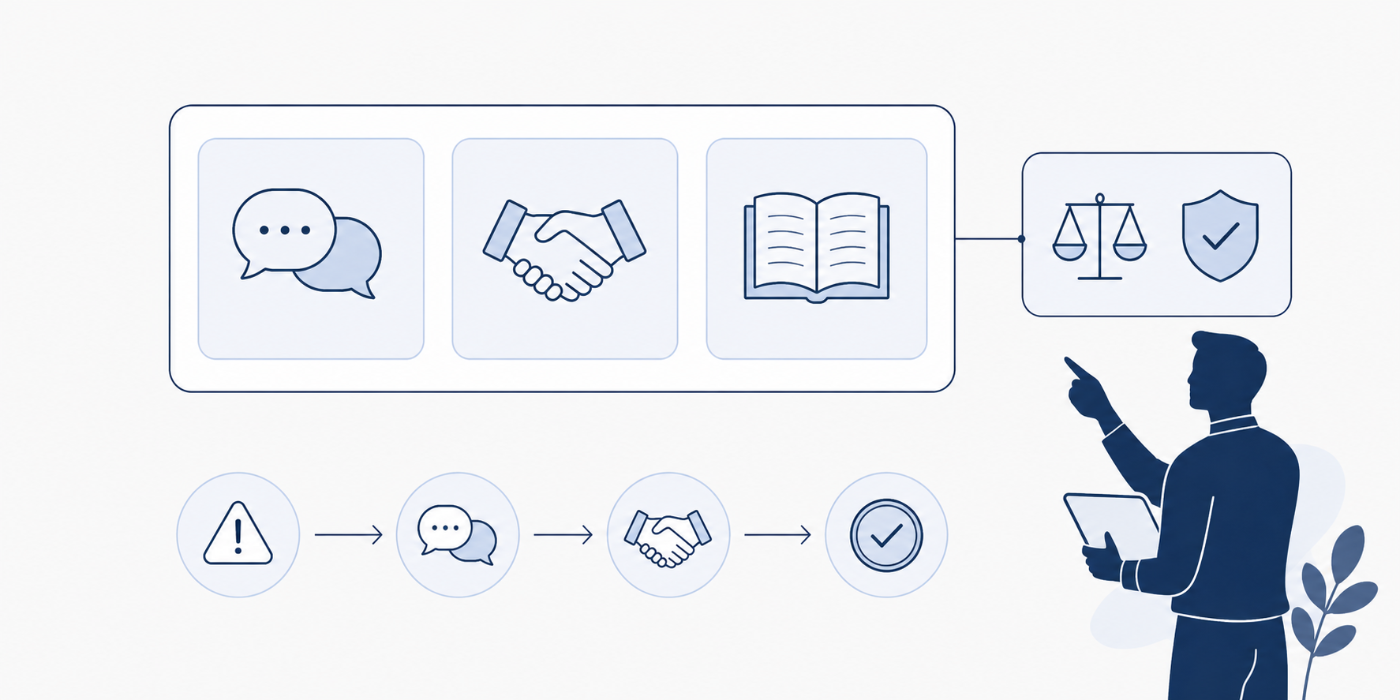
Conflict resolution in project management is the disciplined process of turning disagreement into a workable decision, action, tradeoff, or escalation path. A PM who understands project communication terms, stakeholder terminology, and project risk language can address conflict before it becomes missed work, rework, churn, or political damage.
The most dangerous conflicts are usually quiet. A sponsor delays approval, a technical lead keeps challenging scope, procurement pushes back on contract language, or a team member agrees in meetings and then avoids execution. These moments belong in the same professional system as issue tracking, requirements control, risk identification, and project reporting.
A weak PM treats conflict as personality trouble. A strong PM separates facts, interests, constraints, decision rights, assumptions, and delivery consequences. That mindset connects conflict resolution to governance, resource allocation, schedule control, and budget discipline.
| Term | What It Means | Where PMs Use It | Warning Signal | Best PM Response |
|---|---|---|---|---|
| Conflict trigger | The event, decision, constraint, or misunderstanding that starts tension. | Risk review, stakeholder meeting, issue log. | People argue symptoms instead of naming the source. | Document the trigger and connect it to delivery impact. |
| Position | What a stakeholder says they want. | Scope negotiation, vendor debate, sponsor review. | Everyone repeats demands without explaining why. | Ask what outcome the position is trying to protect. |
| Interest | The underlying need, risk, fear, or business priority behind a position. | Requirements discovery, tradeoff talks, executive alignment. | The stated request seems rigid or politically loaded. | Translate the request into business value, risk, or constraint. |
| Active listening | Listening to confirm meaning, tension, and decision needs. | One-on-ones, retrospectives, escalation prep. | The same complaint returns in every meeting. | Reflect the issue, confirm the concern, then move toward action. |
| Reframing | Restating a conflict as a shared problem instead of a personal dispute. | Cross-functional meetings, steering updates, team resets. | Language becomes blame-heavy. | Reframe around timeline, quality, cost, risk, or decision criteria. |
| Escalation path | The approved route for moving unresolved conflict to higher authority. | Governance cadence, sponsor briefings, decision logs. | Teams keep debating after authority is exhausted. | Use the agreed escalation route with options and consequences. |
| Decision rights | Who has authority to approve, reject, defer, or change a decision. | RACI, steering committee, change control. | People with influence act like approvers. | Name the decision owner before asking for resolution. |
| Compromise | Each side gives up something to reach a workable middle path. | Timeline negotiation, feature prioritization, staffing tradeoffs. | The compromise solves politics while damaging delivery. | Check the compromise against scope, cost, schedule, and quality. |
| Collaboration | Parties jointly solve the conflict by addressing root interests. | Complex stakeholder conflicts, product tradeoffs, vendor planning. | People protect departments over project outcomes. | Build options that protect the highest-value shared outcome. |
| Accommodation | One party yields to preserve relationship, speed, or strategic goodwill. | Sponsor management, stakeholder diplomacy, low-risk disputes. | One team always absorbs the pain. | Use sparingly and document the downstream effect. |
| Avoidance | Delaying or sidestepping conflict when timing or priority makes resolution less urgent. | Low-impact disagreements, immature issues, emotional cool-downs. | Avoidance becomes silence around a real blocker. | Set a review date and define the trigger for action. |
| Forcing | Using authority to impose a decision when speed, compliance, or safety matters. | Critical deadlines, regulatory constraints, emergency response. | Authority becomes a substitute for analysis. | Explain rationale, document impact, and monitor resistance. |
| Mediation | A neutral party helps conflicting groups reach a resolution. | Team conflict, vendor disputes, sponsor disagreement. | Parties no longer trust each other’s interpretation. | Use a neutral facilitator with clear ground rules. |
| Negotiation | A structured discussion to reach agreement across competing needs. | Scope, procurement, resources, contracts, timeline. | People negotiate from pressure instead of evidence. | Bring constraints, options, risks, and decision criteria. |
| BATNA | Best alternative to a negotiated agreement. | Vendor talks, resource conflicts, contract disputes. | The team accepts a weak deal because no alternative is visible. | Identify fallback options before negotiation starts. |
| Tradeoff | A choice where improving one outcome affects another. | Scope, quality, budget, schedule, staffing. | Stakeholders demand all outcomes at once. | Show what changes when one constraint is prioritized. |
| Root cause | The deeper source of the conflict beneath surface symptoms. | Retrospectives, issue analysis, lessons learned. | The same conflict repeats under different labels. | Use cause analysis before assigning corrective action. |
| Assumption clash | Conflict created because parties built plans on different beliefs. | Planning, estimates, dependency reviews. | Everyone is “right” from their own starting point. | Surface assumptions and validate them against evidence. |
| Expectation gap | The difference between what one party expects and what another believes was agreed. | Status reviews, acceptance criteria, handoffs. | Stakeholders say, “That’s not what I thought we were getting.” | Clarify acceptance criteria and document agreement. |
| Scope tension | Conflict over what is included, excluded, changed, or deferred. | Backlog refinement, change control, requirements review. | Small additions keep entering without impact analysis. | Route the request through change control. |
| Priority conflict | Competing views about what should be done first. | Roadmaps, sprint planning, portfolio reviews. | Every department labels its work urgent. | Use value, risk, dependency, and deadline criteria. |
| Resource conflict | Disagreement over people, time, tools, funds, or attention. | Capacity planning, staffing, budget reviews. | The same specialist is assigned to too many priorities. | Show capacity reality and force a sequencing decision. |
| Role ambiguity | Unclear ownership that creates overlap, gaps, or duplicated decisions. | RACI reviews, onboarding, governance setup. | Multiple people assume someone else owns the work. | Define accountable, consulted, informed, and approving roles. |
| Stakeholder resistance | Visible or hidden pushback against a project decision, change, or outcome. | Change management, adoption planning, sponsor alignment. | People comply publicly and block privately. | Identify the threatened interest and address it directly. |
| Psychological safety | The team’s ability to raise risks, mistakes, and concerns without fear. | Team health, retrospectives, risk discovery. | Bad news appears late or through side channels. | Reward early risk visibility and blame-free analysis. |
| Emotional escalation | When frustration, defensiveness, or anger overtakes problem solving. | Conflict meetings, executive reviews, vendor calls. | Tone becomes sharper than the facts require. | Pause, restate facts, and return to decision criteria. |
| Issue ownership | The named person responsible for moving a conflict-related issue forward. | Issue log, action tracker, RAID review. | Everyone agrees there is a problem; nobody owns resolution. | Assign owner, due date, next action, and escalation trigger. |
| Corrective action | A defined step taken to fix a conflict’s delivery impact. | Quality reviews, risk response, performance recovery. | Meetings end with discussion instead of movement. | Convert resolution into task, owner, evidence, and deadline. |
| Lessons learned | Captured insight that prevents similar conflict in future projects. | Closure, retrospectives, knowledge management. | The team forgets why conflict happened and repeats it. | Document trigger, impact, resolution, and prevention rule. |
| Win-win outcome | A resolution that protects key interests on both sides while supporting project goals. | Strategic negotiation, stakeholder alignment, executive facilitation. | One side “wins” and future cooperation collapses. | Test the outcome against value, trust, and execution feasibility. |
2. Core Conflict Resolution Terms Every PM Should Use With Precision
Conflict trigger is the starting point. In a project, the trigger may be a missed deadline, unclear acceptance criteria, rejected deliverable, cost increase, vendor delay, capacity shortage, or unapproved scope request. PMs should connect every trigger to a known project control area such as scope management, cost management, schedule management, or quality management.
Position is what someone says they want; interest is why they want it. A stakeholder may demand a new feature, but the interest may be regulatory comfort, customer retention, executive visibility, or fear of adoption failure. This distinction matters in stakeholder management, business requirements, project initiation, and project communication planning.
Active listening means listening for facts, emotion, risk, and decision needs. A PM should be able to say, “The concern I’m hearing is that the delivery date may hold, but the team doubts the quality threshold.” That one sentence can save a project from fake alignment. It supports team building, human resource management, project reporting, and dashboard communication.
Reframing turns blame into a solvable project question. “The vendor failed us” becomes “The vendor dependency has a two-week variance and needs a recovery option.” “The business keeps changing its mind” becomes “Decision criteria for scope approval are unclear.” Reframing strengthens procurement management, contract management, issue tracking, and risk response planning.
Escalation path is the approved route for unresolved conflict. Escalation should carry facts, options, impact, recommendation, and the exact decision requested. Poor escalation dumps drama upward. Strong escalation converts blocked work into executive choice. It belongs beside RACI thinking, governance cadence, PMO operations, and project portfolio management.
3. Stakeholder, Team, Scope, and Vendor Conflict Terms That Expose Real Risk
Expectation gap is one of the most expensive conflict terms in project work. It means one party believes the project promised something different from what the team is delivering. This usually comes from weak requirements, vague demos, casual approvals, missing documentation, or poor handoff discipline. PMs should connect expectation gaps to requirements terms, document management, knowledge management, and quality terminology.
Scope tension happens when stakeholders keep pushing extra work while pretending the deadline, budget, staffing, and risk profile are unchanged. This is where a PM earns trust. The right question is: “What should move, shrink, defer, or receive more funding if this enters scope?” That question connects conflict resolution to scope language, budgeting terms, critical path terms, and change-aware project scheduling.
Priority conflict appears when every stakeholder has a business reason, every business reason sounds urgent, and the project team has limited capacity. PMs should use visible criteria: regulatory deadline, revenue impact, customer harm, dependency risk, executive commitment, technical sequence, and team capacity. This connects directly to resource allocation software, portfolio management trends, project success factors, and project failure root causes.
Role ambiguity creates conflict because work falls between people or gets attacked by multiple informal owners. If two people can approve the same work, nobody truly owns it. If five people can block a decision, the project becomes hostage to unclear authority. Strong PMs use RACI, meeting charters, decision logs, and governance rules. These tools pair well with stakeholder terms, team terminology, project governance trends, and PM career skills.
Vendor conflict often hides inside contract wording, acceptance disputes, missed dependencies, payment milestones, service levels, or unclear responsibilities. A PM should separate relationship tension from contractual reality. What was promised? What was delivered? What evidence exists? What remedy is available? This is where procurement terminology, contract lifecycle management, procurement tools, and contract management terms become conflict resolution assets.
4. How PMs Diagnose Conflict Before It Becomes Escalation
A PM should diagnose conflict through five lenses: facts, feelings, interests, authority, and impact. Facts show what happened. Feelings reveal resistance. Interests explain why people care. Authority determines who can decide. Impact proves why the conflict matters to delivery. This diagnostic habit strengthens project reporting, dashboard design, issue tracking, and risk management.
The first diagnostic question is: “What decision is blocked?” Many teams argue for weeks because the conflict has never been converted into a decision. A PM should write the decision in plain language: approve option A, defer option B, add funding, reduce scope, extend timeline, replace vendor, accept risk, or escalate to sponsor. This works across Agile projects, hybrid project management, software delivery, and construction project management.
The second question is: “Which constraint is under pressure?” Conflict almost always touches scope, schedule, cost, quality, risk, resources, procurement, or stakeholder expectations. If a sponsor wants a launch date protected, the team may need scope reduction. If a customer wants extra functionality, budget or timeline may need adjustment. This links conflict resolution to project budgeting, cost management, quality management, and schedule control.
The third question is: “Who owns the next move?” Conflict becomes expensive when ownership stays vague. Every unresolved issue should have an owner, due date, expected output, evidence required, and escalation trigger. This is where PMs should use document management tools, knowledge management systems, project collaboration apps, and automation tools to keep agreements from vanishing after meetings.
The fourth question is: “What happens if nobody resolves this?” That question forces realism. A hidden conflict may create rework, churn, late acceptance, team burnout, vendor claims, budget drift, executive surprise, or customer dissatisfaction. PMs who quantify consequences build stronger trust with sponsors. They also make better use of project analytics, failure-rate analysis, project success research, and AI project management insights.

5. How to Build a Conflict Resolution Playbook That Protects Delivery
A conflict resolution playbook should begin with meeting rules. Every conflict meeting needs a purpose, decision owner, evidence required, timebox, decision criteria, and output format. The output should be a decision, action plan, risk response, change request, or escalation note. This structure supports project communication, project initiation discipline, stakeholder governance, and professional PM software practices.
The playbook should include a conflict log. A strong conflict log tracks conflict type, trigger, parties involved, delivery impact, current status, owner, next action, due date, decision required, and escalation threshold. This turns messy human tension into operational visibility. It works with issue tracking software, dashboard tools, project knowledge systems, and reporting software.
The playbook should define conflict categories. Common categories include scope conflict, priority conflict, resource conflict, technical conflict, vendor conflict, sponsor conflict, quality conflict, communication conflict, and role conflict. Categorizing conflict helps PMs avoid vague updates like “alignment issues.” A stronger update says, “Resource conflict is delaying testing by five days unless priority is changed.” That language connects to resource allocation, quality terminology, procurement terms, and contract terminology.
The playbook should also define escalation thresholds. Escalate when the team lacks decision authority, the issue threatens a milestone, the conflict affects cost or compliance, repeated meetings fail, a vendor dispute touches contract terms, or hidden resistance blocks adoption. Escalation becomes professional when it is timely, evidence-based, and tied to governance. This supports PMO maturity, portfolio management, government PM skills, and project management leadership.
Finally, the playbook should close the loop through lessons learned. PMs should capture what triggered the conflict, what warning signs appeared, what decision resolved it, what evidence helped, what delay it caused, and what prevention rule should be used next time. This habit improves team building, career growth, project manager competencies, and certification readiness.
6. FAQs About Conflict Resolution Terms for Project Managers
-
The most important terms are conflict trigger, position, interest, active listening, reframing, decision rights, escalation path, compromise, collaboration, mediation, negotiation, tradeoff, root cause, expectation gap, scope tension, priority conflict, resource conflict, stakeholder resistance, issue ownership, and corrective action. These terms help PMs move from vague emotional tension to clear project control. They also connect naturally to top project management terms, communication techniques, risk management terms, and stakeholder terms.
-
A PM should document the conflict trigger, affected deliverable, parties involved, known facts, assumptions, business impact, decision needed, owner, due date, and escalation threshold. The language should stay evidence-based: “Testing is blocked because acceptance criteria for workflow X remain unresolved,” rather than “The business team is being difficult.” This approach strengthens issue tracking, document control, project reporting, and knowledge management.
-
A conflict is active disagreement or tension between people, teams, vendors, or stakeholders. An issue is a current problem affecting delivery. A risk is a potential future event that may affect outcomes. A conflict can become an issue when it blocks work, and it can create risks if unresolved. PMs should manage all three through risk identification, issue tracking tools, project risk terminology, and project analytics.
-
A conflict should be escalated when the project team lacks authority to resolve it, when a milestone is threatened, when cost or compliance exposure appears, when repeated meetings produce no decision, or when a stakeholder with decision power remains unavailable. The escalation should include options, impacts, recommendation, and decision deadline. This is essential in governance-heavy projects, government PM roles, portfolio management, and executive PM career paths.
-
Collaboration is usually the strongest style for complex projects because it addresses underlying interests instead of forcing shallow agreement. Compromise can work when speed matters, mediation helps when trust is damaged, forcing can be necessary during urgent compliance or safety situations, and avoidance can be useful for low-impact tension that needs time. The right style depends on stakeholder pressure, schedule urgency, budget constraints, and team capacity.
-
Recurring conflict usually means the project has weak decision rights, unclear requirements, poor ownership, hidden capacity problems, vague communication rules, or inconsistent change control. PMs can prevent repeat conflict by improving kickoff clarity, RACI discipline, acceptance criteria, meeting outputs, escalation thresholds, and lessons learned. These prevention habits align with project initiation terms, team building terminology, project quality terms, and project success research.
