
Top 20 Schedule Compression Terms Every PM Should Know
Project schedules rarely fail in one dramatic moment.
They fail in quiet, expensive increments: approvals that slip three days, dependencies that were never challenged, resources that were assumed instead of secured, and deadlines that stay fixed while the work beneath them keeps changing. That is why schedule compression terms matter. They give project managers the language to shorten timelines without blindly increasing risk, cost, rework, or stakeholder distrust. Mastering them sharpens planning, improves escalation quality, and helps a PM defend a recovery plan with credibility.
1. Why Schedule Compression Terms Matter in Real PM Work
Most struggling schedules do not suffer from effort alone.
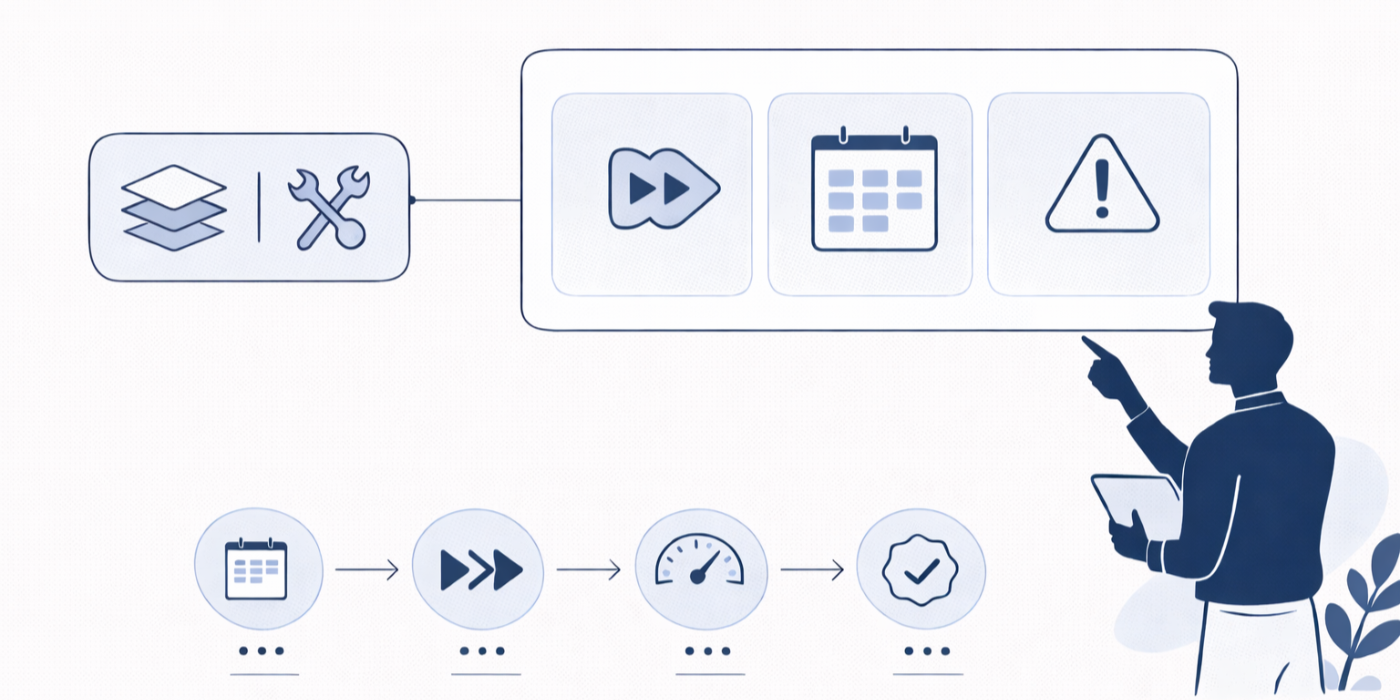
They suffer from poor diagnosis. A PM who understands the language of project initiation, project scheduling, critical path logic, risk management, and project communication can explain whether a schedule needs crashing, fast tracking, lag reduction, scope triage, or a full recovery schedule. That precision changes leadership decisions.
It also changes team behavior. When a PM uses the right terms, conversations stop sounding emotional and start sounding executable. A sponsor hears where the real delay sits. A functional lead sees which dependency can be challenged. A finance partner understands which action raises cost and which one mainly raises rework risk. That is where schedule control starts to resemble real management rather than status theatre. Strong grounding in top PM terms, budgeting concepts, cost management language, stakeholder terms, and issue tracking discipline makes schedule compression far more credible.
2. Top 20 Schedule Compression Terms Every PM Should Know
1. Schedule Compression
Schedule compression is the broader practice of shortening total project duration while protecting the intended business outcome. It sits at the intersection of project scheduling, risk assessment, budget control, stakeholder management, and project reporting. The term matters because it frames time recovery as a deliberate management act instead of a plea for harder work.
2. Crashing
Crashing means adding more resources, specialist talent, external vendor help, premium service levels, or funded overtime to accelerate critical-path tasks. Good PMs use it selectively after checking cost management, budget tracking, procurement timing, contract constraints, and resource allocation. Throwing bodies at work that is structurally blocked just increases noise.
3. Fast Tracking
Fast tracking overlaps tasks that were originally planned in sequence. A PM may start testing before every build item is complete, begin training before every approval is signed, or launch procurement prep while design closes. This approach connects tightly to Gantt logic, issue tracking, document control, knowledge management, and team collaboration. It can save time fast. It can also create an ugly rework bill when upstream work changes late.
4. Critical Path
The critical path is the longest chain of dependent activities that determines the project finish date. Every compression conversation should start here. Many PMs look busy while compressing work that sits off the finish-driving path. That is wasted energy. Strong critical-path fluency usually grows out of CPM knowledge, broader scheduling fundamentals, sharper dashboard reading, stronger reporting discipline, and practical calendar management.
5. Near-Critical Path
This is the path close enough to critical that a small slip can make it finish-driving. Recovery plans fail here all the time. The main path gets executive attention while a parallel path quietly burns the saved time away. PMs who read near-critical paths well usually manage risk registers, quality dependencies, stakeholder reviews, communication cadence, and team capacity with more maturity.
6. Float
Float tells you how much an activity can slip without damaging a target completion date. In compression work, float shows where workload can move, where overlaps may be tolerated, and where recovery effort should stay restrained. Smart PMs read float alongside resource allocation tools, productivity systems, automation support, mobile PM apps, and software selection. Float on paper means little when the operating model is chaotic.
7. Lead
A lead permits successor work to begin before predecessor work finishes. It sounds small. It can be powerful. A review team might start assessing early modules while later modules are still being built. A vendor might begin prep work on provisional data. These decisions become far safer when the PM understands quality controls, communication discipline, knowledge handoff patterns, team-building mechanics, and procurement dependencies.
8. Lag Reduction
Lag reduction means cutting the planned wait time between activities. Some lags are real. Others are inherited laziness. A PM who reviews approval buffers, review queues, vendor response windows, and internal handoff dead zones can often recover days without spending new money. This is where contract management, procurement tools, calendar systems, document workflows, and analytics platforms become surprisingly valuable.
9. Cost Slope
Cost slope measures how much money must be added for each unit of time saved. This turns crashing decisions into financial decisions instead of emotional ones. When one task can be shortened by two days at a manageable premium and another needs an ugly spend spike for half a day, cost slope makes that contrast visible. PMs who think this way usually do better with budget terminology, cost concepts, project budgeting software, reporting tools, and salary-and-value thinking.
10. Milestone Pull-In
Milestone pull-in means moving a checkpoint earlier to create urgency and expose delay sooner. A design signoff can be brought forward. A readiness review can happen earlier. A sponsor checkpoint can be forced before the schedule goes brittle. This works best when supported by project reporting, dashboard visibility, stakeholder alignment, communication planning, and project initiation control.
11. Work Package Split
Large tasks often hide parallel work. A PM who breaks a chunky work package into smaller executable pieces can reveal compression options that were invisible in the original plan. That skill draws heavily from top PM terms, scheduling fluency, resource planning tools, automation tools, and team-building logic.
12. Dependency Reclassification
Many schedules contain dependencies that are treated as mandatory even though they are discretionary, policy-based, or outdated. Reclassifying them is one of the highest-value recovery moves a PM can make. That judgment gets better when the PM understands procurement flow, contract obligations, stakeholder authority, communication routes, and project governance logic.
13. Resource Smoothing
Resource smoothing adjusts workloads to preserve the finish date while making execution more sustainable. It does not create dramatic rescue power under extreme delay, but it prevents the team from collapsing while recovery is happening. It pairs well with resource allocation software, productivity tools, mobile collaboration, human-resource PM terms, and team-building concepts.
14. Resource Leveling
Resource leveling resolves over-allocation even when the schedule must move to make that happen. In compression work, it serves as a reality check. A plan may look fast and heroic until someone asks whether the same person has been scheduled across three critical activities at once. This is where project scheduling tools, issue tracking, reporting dashboards, resource platforms, and PM software comparisons matter.
15. Rolling Wave Planning
Rolling wave planning means detailing the near term while leaving later work at a higher level until uncertainty clears. This approach is useful when time pressure is real but full downstream detail does not yet exist. It draws strength from agile thinking, hybrid methodology adoption, future-ready PM skills, project knowledge systems, and AI plus automation adoption.
16. Buffer Consumption
Buffer consumption means using contingency time already built into the plan. It can be appropriate. It becomes dangerous when it happens silently. Strong PMs link buffer use to risk language, reporting visibility, dashboard clarity, quality impact thinking, and stakeholder communication.
17. Schedule Reserve
Schedule reserve is protected contingency time for uncertainty. It exists to absorb legitimate volatility, not to fund sloppy approvals, late decisions, or hidden scope creep. PMs protect reserve better when they are strong in risk identification, project failure analysis, project success factors, stakeholder control, and budget governance.
18. Recovery Schedule
A recovery schedule is the revised sequence showing how lost time will be regained, by which actions, on which path, with what tradeoffs. It is one of the most important sponsor-facing artifacts in troubled delivery. PMs who build strong recovery schedules usually also understand project reporting, issue tracking, document control, communication architecture, and PM training platforms.
19. Calendar Optimization
Sometimes the fastest schedule gain comes from shifting work calendars, review windows, escalation routines, or vendor response expectations. Calendar optimization is often cleaner than brute-force crashing. It works especially well when supported by calendar tools, mobile PM tools, automation platforms, reporting software, and document systems.
20. Decision Latency
Decision latency is the time lost while the work waits for someone with authority to answer, approve, clarify, or choose. Many projects are late because the organization is slow, not because the team is. Strong PMs recognize this quickly and connect it to stakeholder management, communication structures, project governance trends, PMO evolution, and leadership skill shifts.
3. How Strong PMs Use These Terms In Real Recovery Conversations
Vocabulary matters most when the project is already under pressure.
A weak update says the schedule is slipping and the team is pushing hard. A serious update sounds different. It explains that delay has hit the critical path, that one near-critical stream is close to turning finish-driving, that lag reduction is possible in reviews, that one work package can be split, and that crashing should be limited to vendor onboarding where the cost slope is acceptable. That is the kind of answer that earns trust in delivery rooms and interviews. It reflects fluency built through project scheduling concepts, CPM fundamentals, risk management thinking, project budgeting control, and issue tracking systems.
This also matters for career growth. Hiring panels do not simply want someone who has “managed deadlines.” They want someone who can explain how a plan was recovered and what tradeoffs were consciously made. That is why schedule compression language connects so well to how to become a project manager, entry-to-executive PM growth, government PM pathways, project management director careers, and chief project officer roadmaps.
4. How To Compress a Schedule Without Making the Project Worse
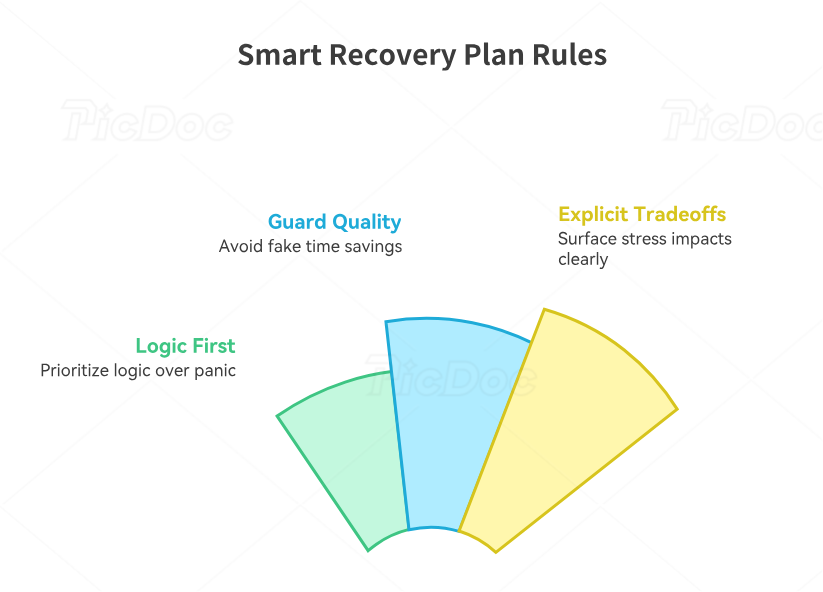
The smartest recovery plans start with logic, not panic.
First, review the actual network. Reconfirm the critical path. Test near-critical paths. Challenge every lag. Ask whether dependencies are truly mandatory. Look for work packages that can be split. Review approval timing, vendor calendars, and handoff waste. That kind of compression work is far stronger than immediately demanding longer hours. PMs get better at this when they use Gantt software, resource platforms, automation tools, calendar systems, and analytics dashboards with intention rather than decoration.
The second rule is to guard quality. Fast tracking and crashing can win time and still leave the business worse off if testing, validation, documentation, or stakeholder readiness collapse underneath them. That is why compression decisions should always be checked against project quality management, Six Sigma thinking, issue tracking controls, document management, and project knowledge systems. Time saved by creating future failure is fake savings.
The third rule is explicit tradeoffs. Compression always pushes stress somewhere else. Good PMs surface that immediately. They show whether the pressure moves into cost, rework, quality, governance, procurement, or resource fatigue. That is how schedule recovery stays honest.
5. Common Mistakes PMs Make With Schedule Compression Terms
One mistake shows up constantly: using the language without doing the thinking.
A PM says the schedule was crashed, but all that happened was indiscriminate overtime. A PM says the team fast tracked work, but the sequence never had a stable overlap logic. A PM says the baseline was updated when the truth is that the delivery date was quietly pushed to hide variance. These are credibility killers. Real fluency means the terminology improves diagnosis, approval quality, and execution control. That kind of precision usually grows through project training platforms, PMP preparation, PMP exam questions, 30-day PMP study plans, and CAPM vs PMP comparison.
Another mistake is focusing only on team speed while ignoring system drag. Many schedules slip because of vendor timing, governance layers, contract review queues, incomplete approvals, or decision latency. Those are not solved by telling delivery teams to try harder. They are solved through sharper procurement control, stronger contract management, better stakeholder design, cleaner communication systems, and more honest reporting tools.
A third mistake is compressing the wrong work. Teams celebrate motion in off-path tasks while the finish-driving sequence barely changes. That is why real schedule recovery always comes back to path logic.
. FAQs About Schedule Compression Terms
-
Crashing shortens duration by adding cost, resources, or premium capacity to critical work. Fast tracking shortens duration by overlapping activities that were originally sequential. Crashing usually raises direct spend. Fast tracking usually raises coordination and rework risk. The right choice depends on cost tolerance, dependency stability, and quality sensitivity.
-
Critical path is usually the anchor term, but interview strength comes from using it with related terms. The strongest answers combine critical path, near-critical path, crashing, fast tracking, float, tradeoff analysis, and decision latency in one coherent recovery example. That signals real operating experience rather than memorized vocabulary.
-
Sometimes. Fast tracking, lag reduction, dependency reclassification, work package split, and calendar optimization can create time savings with little immediate spend. The catch is that “no added budget” often still carries risk somewhere else, especially in rework, quality control, or sponsor burden.
-
A PM should push back when the required compression destroys the business case, creates unsafe execution, removes essential quality controls, or depends on assumptions that key stakeholders have not approved. Compression should be disciplined and documented. Hope is not a recovery strategy.
-
They fail because the first version focuses on action, not control. Teams overlap work without clarifying decisions, add resources without onboarding them properly, and move milestones without protecting dependencies. Recovery needs tighter governance, sharper reporting, and visible owner accountability.
-
No. Smaller projects often benefit even more because they operate with thinner buffers, fewer specialist resources, and less room for reporting delays. A compact project can unravel quickly when one approval slips or one dependency was modeled badly. Compression vocabulary helps the PM respond early and intelligently.
-
Study real recovery cases, not just definitions. Compare where time was lost, which path actually mattered, what tradeoffs were chosen, and what secondary damage appeared later. Then practice rewriting weak status updates into precise recovery language. That turns terminology into management skill.
