
How to Become a Project Manager: Complete Step-by-Step Career Roadmap (2026-27)
Project management in 2026–27 rewards people who can translate chaos into decisions: clear scope, measurable outcomes, disciplined communication, and delivery systems that surface risk early. The fastest path isn’t “collect certificates and hope.” It’s building proof assets (plans, dashboards, registers, status packs) that make hiring you easy—while choosing a specialization where PM work actually matters. This roadmap shows exactly how to go from “no PM title” to employable PM, then to high-trust PM—step by step, with the same tools and signals hiring panels already reward.
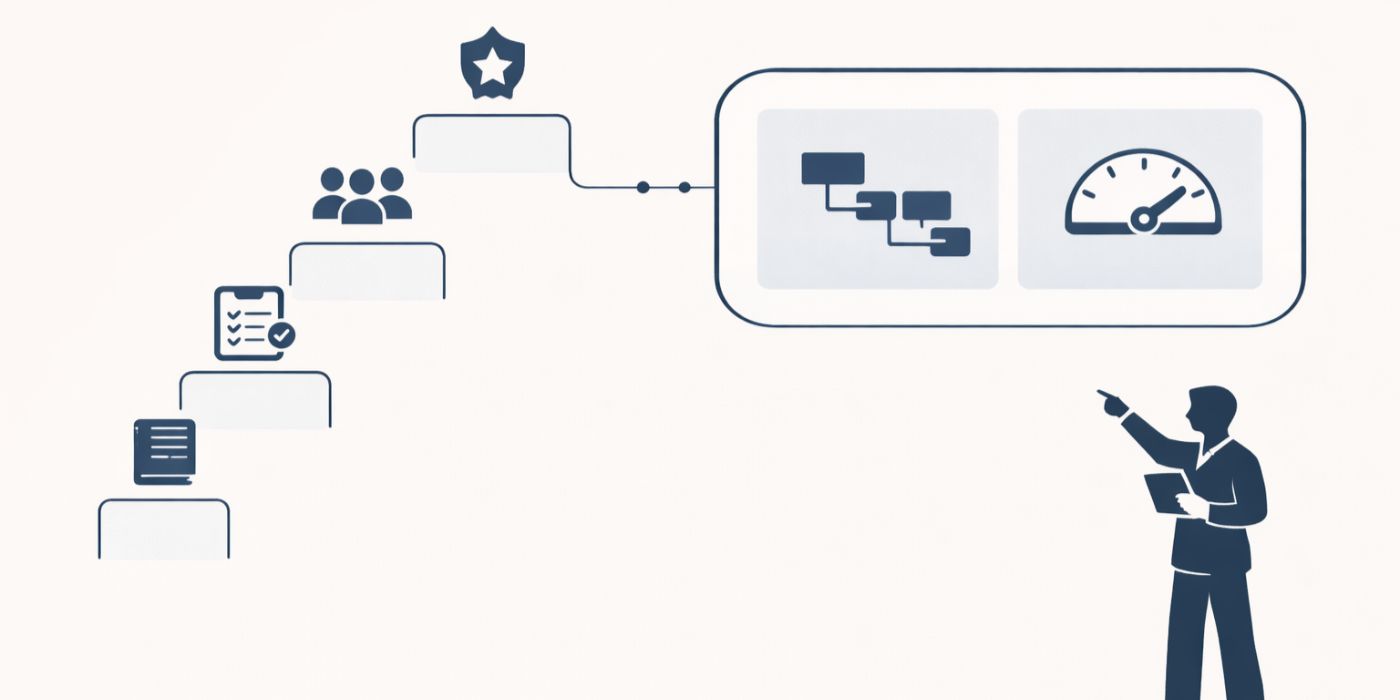
1) What a “Real” Project Manager Looks Like in 2026–27
A PM is no longer a meeting scheduler. The market is shifting toward hybrid delivery where you blend governance and agility based on risk (see the rise of hybrid project management), and you’re expected to operate with tool-driven visibility as adoption accelerates (watch the shift in AI adoption in project management). In practice, hiring managers screen for one thing: Can you produce decision clarity under pressure?
That means you can: define scope without ambiguity, create timelines that withstand dependencies, quantify risk, align stakeholders, and present status in a way executives actually act on. It’s why capability signals—like disciplined documentation and reporting—beat “years of experience” when your proof is strong (build this with project reporting & analytics software, supported by dashboard & visualization tools). If you don’t show structured outputs, you’ll keep hearing “not enough PM experience” even if you’ve done the work informally.
Your north star skill stack in 2026–27:
Outcome framing: what changes, by when, and how we’ll measure it.
Decision systems: who decides, how often, and by what criteria (tighten your language with stakeholder terms every PM should master).
Visibility systems: status, risks, issues, dependencies, budget—without noise (standardize using issue tracking software and project budget tracking tools).
Modern delivery fluency: how methodologies evolve and why (see project management 2030 methodology shifts).
If you build those, you can break into PM faster than people chasing random credentials—because you’ll look “operational” on day one.
2) Step-by-Step PM Career Roadmap (2026–27): From Zero to Hireable
This is the fastest path that doesn’t rely on luck: you build proof assets alongside skills, and you aim for roles where you can “PM without the title” first.
Phase 0: Week 1–2 — Choose your entry lane (don’t spray applications)
Pick one lane so your resume, portfolio, and keywords align:
Operations → PM: you already coordinate work; you learn formal planning and reporting.
Analyst → PM: you already work with data; you add stakeholder and delivery leadership with reporting & analytics and dashboard tools.
Coordinator → PM: classic path; you convert coordination into outcomes and decisions.
Domain specialist → PM: construction, healthcare, government—your domain credibility accelerates (use the construction PM career guide or the healthcare PM roadmap).
Remote-first PM: if your market is global/virtual, design your approach around the remote & virtual PM guide.
Deliverable by end of week 2: a one-page “PM operating system” document describing how you run scope, risks, issues, schedule, and status—supported by tools like issue tracking software and document management software.
Phase 1: Weeks 3–6 — Build your first proof pack (before you feel “ready”)
Hiring teams trust artifacts more than claims. Build a portfolio pack with templates + one filled example:
Project charter (1 page)
Milestone plan (with dependency view) using Gantt chart software
Risk register (10 risks, owners, mitigations)
Issue log (triage rules) using issue tracking tools
Weekly status report (executive version)
Budget tracker using project budget tracking tools
This is where you stop being “aspiring” and start looking employable—because your resume can now link to outputs, not vague responsibilities.
Phase 2: Months 2–3 — Convert “work you already do” into PM experience
You don’t need permission to start building PM bullets. You need structure.
Pick one initiative at work (or volunteer project) and run it with:
Stakeholder map + decision owners (use stakeholder terms)
Weekly cadence and communication plan (upgrade your language via communication terms & techniques)
Tool stack: docs + tracker + dashboard (use document management and dashboard tools)
Your resume bullets should be outcome-based:
“Reduced cycle time from X to Y by installing weekly decision cadence and blocker triage.”
“Prevented scope creep by implementing change control and milestone acceptance criteria.”
“Improved executive visibility using a standardized status pack and KPIs.”
Phase 3: Months 4–6 — Add credentials only where they amplify hiring
Certifications help most when they match your target lane and you can already demonstrate artifacts. If you’re aiming for traditional PM roles, strengthen your exam readiness using PMP exam questions answered clearly. If you’re leaning into portfolio-level work, align your narrative with project portfolio manager pathways. If you’re planning long-term leadership, understand the ladder through PM Director and beyond into Chief Project Officer.
Phase 4: Months 6–12 — Target markets and roles strategically
Stop “applying everywhere.” Choose markets where PM hiring is dense and your lane fits.
Examples of geo-targeting content you can mirror:
Use this strategy even if you’re not in the U.S.: it teaches you how to map industries, clusters, and employer types so you can aim your story at real demand, not generic job boards.
3) The “No PM Title” Strategy: How to Get Experience That Counts
Most people stall because they think PM experience only comes from PM roles. In reality, PM experience is evidence of decision leadership and delivery control.
Start by PM-ing one project that has consequences
Choose a project with at least three of these:
Multiple stakeholders
A deadline with external impact
Budget or vendor constraint
Dependencies across teams
A visible risk if it fails
Then run it like a PM:
Track issues using issue tracking software.
Keep documentation clean using document management tools.
Make schedules readable using calendar & scheduling tools and, where needed, Gantt software.
Create visibility with project reporting & analytics.
Build a portfolio pack that hiring managers can scan in 2 minutes
Your portfolio shouldn’t be a novel. It should be a “trust accelerator”:
1-page summary (objective, constraints, outcome)
One status report screenshot
One risk register screenshot
One timeline snapshot
One “lessons learned” page
If you want to stand out in tool-heavy environments, add a short “tool rationale” slide referencing how organizations are investing in tools (see software investment pressures) and how you use automation responsibly (consider automation tools for PM efficiency).
Translate experience into PM language (this is where most resumes fail)
Instead of: “Coordinated tasks and meetings.”
Write: “Installed weekly decision cadence, reduced blockers, and improved forecast accuracy via a standard status pack.”
Use consistent terminology to sound like a PM from day one (tighten your phrasing using communication terms and stakeholder terms).
4) Choose a PM Path That Actually Pays Off: Specializations With Clear Demand
Generalist PMs compete with everyone. Specialized PMs compete with a smaller pool—and get hired faster because the buyer feels less risk.
Here are high-signal lanes (and how to use APMIC content to shape your strategy):
Construction PM: Strong demand, vendor coordination, schedules, and scope discipline. Use the construction PM career guide as your pattern, then build proof artifacts around procurement and dependencies.
Healthcare PM: High stakes, compliance, change management, stakeholder complexity. Follow the healthcare PM roadmap and emphasize documentation discipline with document management software.
Government PM: Procurement and governance-heavy environments reward structure; align with the government PM roadmap.
Remote/Virtual PM: If your work is distributed, your advantage is communication design and visibility systems; use the remote PM guide and lean on mobile PM apps.
International PM: Cross-cultural coordination + time zones + vendors; structure your approach with the international PM guide.
Portfolio / PPM: If you want to move beyond single-project execution, build toward project portfolio management and understand PPM trends.
A smart strategy is to pick one “entry specialization” (easier hiring) and one “growth specialization” (higher leverage). Example: enter via construction/healthcare/government, then grow into portfolio-level work.

5) Your PM Tool Stack and Operating System (So You Don’t Look Junior)
In 2026–27, PMs are judged by how fast they create clarity. Tools are not the job—but they’re the evidence trail of competence.
The minimal stack that covers 90% of PM work
Planning: Gantt chart software when you need dependency visibility; otherwise use calendar & scheduling tools.
Execution control: issue tracking software to stop chaos from living in DMs.
Budget visibility: budget tracking tools to prevent “we found out too late.”
Reporting: project reporting & analytics + dashboard tools to keep execs aligned.
Add-ons that signal maturity:
Documentation discipline: document management software and, if your org is knowledge-heavy, project knowledge management software.
Resource planning: improve capacity realism with resource allocation software.
Automation: reduce admin drag using automation tools for PM efficiency and focus with productivity software.
Procurement-heavy projects: support vendor work using procurement tools and, where contracts matter, CLM tools.
The operating cadence that makes you look senior fast
Daily: issue triage (15 minutes), unblockers, dependency checks.
Weekly: status pack + decision queue, risks updated, milestone forecast.
Monthly: steering pack with business impact, budget variance, and tradeoffs.
This cadence aligns with where the market is heading: more tool-driven delivery visibility (see investment pressure driving PM software adoption) and more emphasis on methodologies that fit reality (see PM methodologies evolving toward 2030).
If you want to stand out, show a “sample week” in your portfolio: a status report, a risk register snapshot, an issues view, and a timeline forecast. Hiring panels rarely get that level of proof.
6) FAQs: Becoming a Project Manager in 2026–27
-
No—what you need is PM evidence: a charter, plan, risk register, issue log, and weekly status pack tied to outcomes. Build that using issue tracking tools and reporting & analytics, then rewrite your bullets around decisions and measurable impact.
-
Stop writing responsibility-based resumes. Write outcome-based bullets and attach a lightweight portfolio pack. Use stakeholder language from stakeholder terms every PM should master and communication framing from project communication techniques so you sound operational—not aspirational.
-
The best specialization is where constraints create real demand: construction, healthcare, or government. They reward structure and artifacts. Use the construction PM guide, healthcare PM roadmap, or government PM roadmap to shape your proof assets and vocabulary.
-
Learn the tools that create clarity: scheduling, issue tracking, reporting, and docs. Start with Gantt software, issue tracking, reporting & analytics, and document management.
-
Use three stories: (1) a scope conflict you controlled, (2) a risk you mitigated early, and (3) a decision you accelerated by framing tradeoffs. Bring artifacts: status pack, risk register, and a timeline snapshot using dashboard tools and your reporting template.
-
Agile is useful, but “one-method-fits-all” is dying. Many orgs want hybrid approaches that match risk and constraints (see the hybrid PM shift) and expect you to keep up with methodology evolution (see PM 2030 methodologies).
-
Months 1–3: build proof pack + run one project with artifacts.
Months 4–6: apply strategically (lane + specialization), add targeted credential prep using PMP Q&A.
Months 7–12: expand scope, improve reporting maturity using reporting & analytics tools, and target markets (e.g., California, Texas, New York).
