
Career Roadmap: How to Become a Project Management Director
Becoming a Project Management Director is not about doing more projects. It is about owning the delivery system, coaching other PMs, and turning chaos into predictable outcomes executives can bet on.
This roadmap shows exactly what to build, what proof to collect, and how to position yourself in 2026–27 so you move from “strong PM” to “delivery leader.”
1) What a Project Management Director Actually Owns in 2026–27
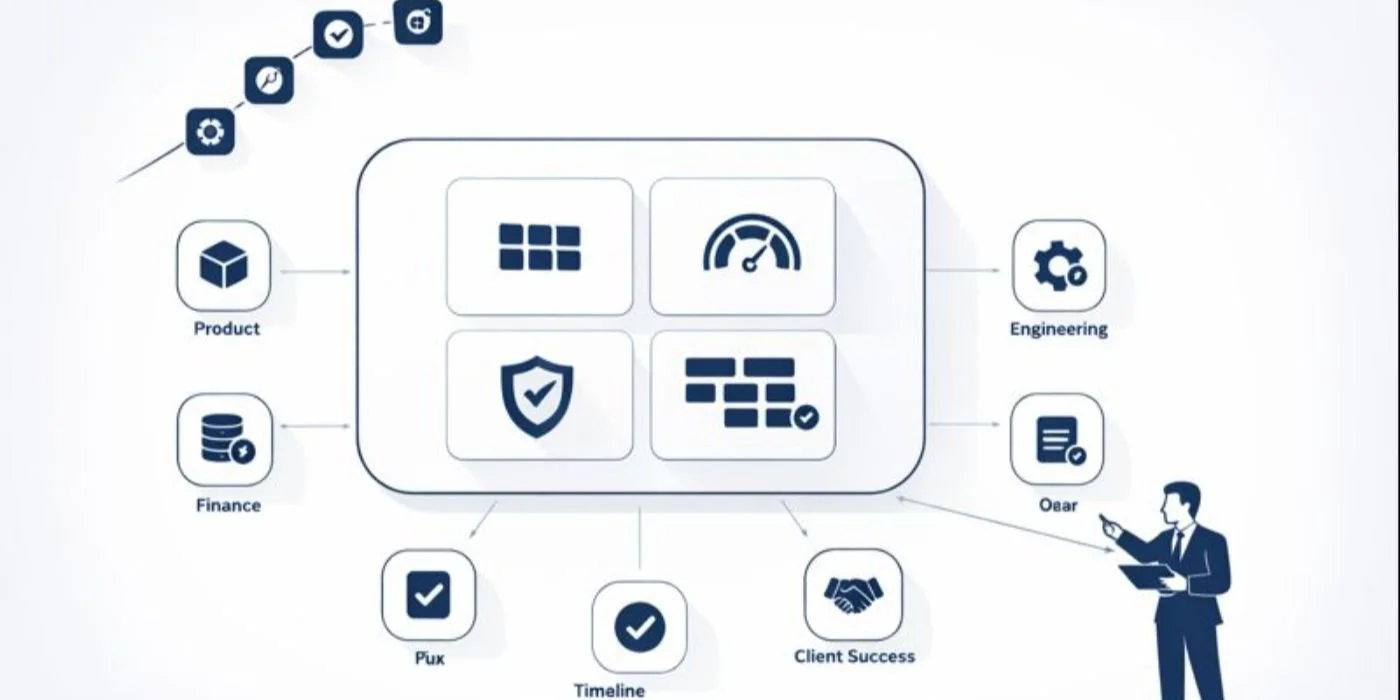
A Project Management Director is the bridge between execution and leadership confidence. You are accountable for delivery health across multiple initiatives, not just your personal workload. The role usually sits above senior PMs and program managers and below VP or CPO level leadership. If you want the cleanest mental model, the leadership ladder in the Chief Project Officer roadmap explains the senior expectations that begin to show up at director level.
Your value is measured in five outcomes.
First, portfolio clarity. Leaders want a reliable view of what is in flight, what is blocked, and what must be deprioritized. This is why portfolio thinking from the Project Portfolio Manager guide is not optional anymore.
Second, delivery predictability. A director reduces surprises by improving forecasting, surfacing risks early, and forcing better decisions. Economic pressure has made predictability more valuable than ever, which is why lessons in global inflation’s impact on project budgets matter. When budgets tighten, late delivery is not an inconvenience. It becomes a business threat.
Third, capacity realism. Directors prevent teams from being overcommitted. That requires simple capacity planning, guardrails, and the courage to say no with evidence. Organizations are spending more on tooling to gain visibility, but tools do nothing without strong operating rhythm. The macro trend in investment in project management software exists because leaders want confidence. Your job is to convert visibility into action.
Fourth, PM talent and standards. Directors build a PM bench. That means templates people actually use, coaching that improves outcomes, and a consistent delivery language across teams.
Fifth, executive trust. Directors do not “report.” They lead decisions. You bring tradeoffs, options, and a clear ask. If your updates are only status, you are still operating like a PM. If your updates drive decisions, you are operating like a director.
Director roles also reflect modern delivery trends. Hybrid execution, agile demand, and remote work models are becoming normal. The market direction in rising demand for agile project management and economic uncertainty driving agile demand should shape your leadership posture. You are not selling a framework. You are building a system that fits risk, governance, and team reality.
2) The Director Skill Stack That Gets You Promoted
Director promotions happen when leadership believes you can own delivery beyond yourself. That requires a skill stack in three layers: systems, influence, and people leadership.
Systems are your operating model. You need intake, prioritization, governance cadence, capacity planning, risk governance, and standards. The portfolio layer is central, so internalize the thinking in the Project Portfolio Manager guide and apply it daily. If you cannot explain what to stop, you are not director ready.
Influence is how you drive cross functional decisions. Directors do not chase updates. They create decision pressure. You bring options, tradeoffs, and a clear ask. The world is more budget sensitive, so the lens from global inflation’s impact becomes practical. When a decision has a cost of delay, you quantify it and make the tradeoff visible.
People leadership is the difference between senior PM and director. Directors create a PM bench. That means coaching PMs to improve judgement, raising quality standards, and creating a culture of accountability without fear. If you have not mentored at least one PM to higher performance, you are behind.
Now add modern delivery fluency. In 2026–27, agile and hybrid are common. The demand signals in agile demand trends and economic uncertainty increasing agile demand matter because directors must choose the right delivery model, not enforce a single methodology. You must be able to explain why a hybrid approach protects risk and still moves fast.
Tooling fluency also matters, but only when tied to outcomes. More organizations are investing in tools as seen in PM software investment. Directors decide what becomes the source of truth, what is noise, and how reporting becomes decision grade.
Credentials can accelerate trust when promotions are competitive. If your organization respects PMP language, structure your learning with the Ultimate PMP guide and sharpen judgement using Top PMP questions. If you operate in governance heavy environments, PRINCE2 can support director positioning using the PRINCE2 exam guide and level selection guidance from PRINCE2 Foundation vs Practitioner. If you are earlier in your career, CAPM can still be useful when paired with outcomes, supported by the CAPM passing guide and market context from CAPM salary insights.
The key is this. Certifications support credibility. They do not replace director proof. Director proof is measurable improvements in delivery health, executive trust, and PM capability.
3) Build Director Proof Through High-Leverage Projects and Artifacts
Most PMs try to get promoted by working harder. Directors get promoted by changing the system. Your mission is to create proof that you can improve delivery at scale.
Start by picking one painful delivery problem that leadership actually cares about. Common director level problems include chronic slippage, overload from unfiltered intake, stakeholder conflict, unclear prioritization, and weak forecasting. Fix one problem with a measurable outcome, then document it.
If slippage is the problem, build a slippage root cause library. Categorize causes like unclear scope, dependency delays, late decisions, resource conflicts, and weak discovery. Then create prevention controls. For example, require acceptance criteria for scope, require dependency mapping before commitment, and require executive decisions on tradeoffs. Your proof becomes “on time delivery improved quarter over quarter” rather than “I managed projects.”
If overload is the problem, create an intake and prioritization process. Use a scoring rubric tied to impact, urgency, risk, and effort. This is portfolio discipline from the Project Portfolio Manager guide turned into an operating system. Your proof becomes “we reduced unplanned work and increased throughput.”
If stakeholder conflict is the problem, force decisions into governance. Create a steering committee agenda that includes decisions needed, tradeoffs, and deadlines. Use a decision log to prevent rewriting history. Your proof becomes “decisions accelerated and conflicts reduced.”
Directors also create reusable artifacts. Your artifacts should be simple and adopted. Build a project charter template with benefits owners, a weekly status template with decisions needed, a risk register template with escalation rules, and a cutover checklist for high risk launches. Adoption matters. A director who ships templates nobody uses is still an individual contributor.
If you want to strengthen your story for remote organizations, adopt a distributed operating model. The tactics in the remote and virtual PM roles guide help you prove you can run cadence across time zones and reduce meeting overload with clean async updates.
You can also use market context to position your work. If your organization is modernizing tooling or processes, connect your leadership to macro trends like digital transformation across PMOs and AI adoption in project management. This does not mean adding AI buzzwords. It means showing you understand what executives are investing in and why.
Finally, document three director case studies. Each should include problem, baseline, intervention, governance changes, metrics, and lessons. Those case studies will become your promotion narrative and your external job narrative.
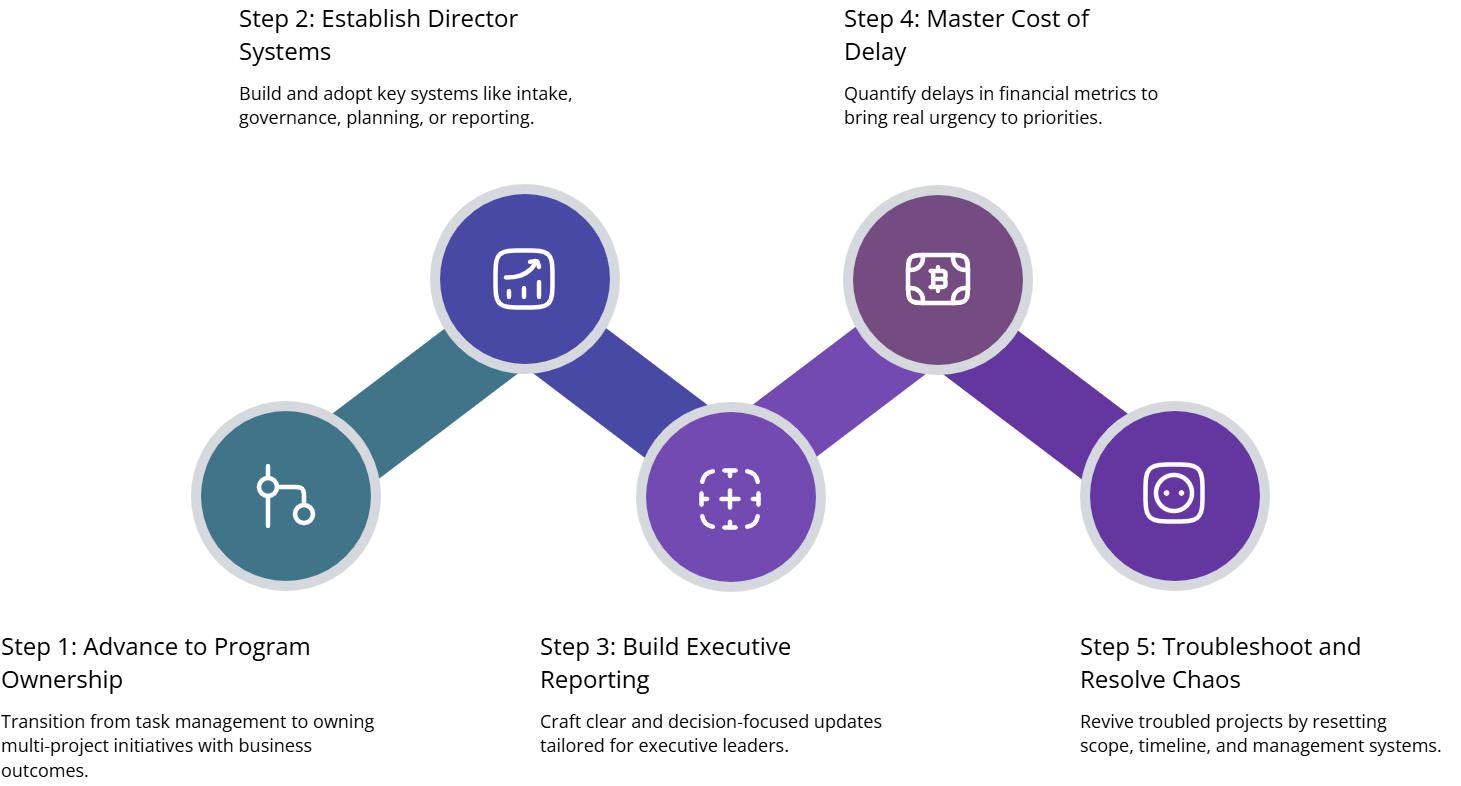
4) The Step-by-Step Career Roadmap to Project Management Director
This section is the actual roadmap. It is structured as steps you can execute, not generic advice.
Step 1: Move from project execution to program ownership.
You need to run at least one multi project initiative tied to a business outcome. Use dependency mapping, shared governance, and consistent reporting. Borrow portfolio language from the Project Portfolio Manager guide so your work is framed as outcomes, not tasks.
Step 2: Build one director-level operating system component.
Pick one component and own it: intake, prioritization, capacity planning, risk governance, or reporting. Implement it, get adoption, and show metrics. If you build intake, show reduced unplanned work. If you build capacity, show fewer missed commitments. If you build risk governance, show fewer late stage surprises.
Step 3: Create executive-grade reporting.
Your update must be short and decision driven. Include progress, top risks, key dependencies, and decisions needed. Executives want clarity. They do not want a wall of details. If you consistently drive decisions, you become trusted.
Step 4: Quantify the cost of delay.
This is the skill that separates directors. Use financial framing from global inflation’s impact. Cost of delay can be revenue loss, cost increase, compliance risk, customer churn, or opportunity cost. When you make delay measurable, priorities become real.
Step 5: Become the person who stabilizes chaos.
Take ownership of one troubled initiative. Run a recovery plan. Reset scope, rebuild timeline, surface decisions, and stabilize delivery. Then turn your recovery approach into a reusable playbook. A single high-profile rescue can change your career trajectory when documented correctly.
Step 6: Build PM talent through coaching.
Directors are measured on team capability. Start mentoring two PMs. Run monthly case review sessions where PMs bring real situations and you coach judgement. Document the improvement. Promotions and growth stories are powerful proof.
Step 7: Align your credentials with your target director roles.
If you need a formal credibility boost, choose a credential that matches your environment. For broad recognition, use the PMP exam guide and validate readiness with Top PMP questions. For governance heavy environments, build PRINCE2 readiness using the PRINCE2 exam guide and decide your level through PRINCE2 Foundation vs Practitioner. If you are earlier stage, CAPM still helps when paired with proof, guided by the CAPM passing guide.
Step 8: Package your work into a director narrative.
You need three director case studies. Each must show system improvement, metrics, and leadership influence. This is how you win internal promotions and external roles. Your resume should read like “I built and scaled delivery systems,” not “I managed timelines.”
5) How to Get Hired as a Director Faster: Positioning, Targeting, and Interviews
Director hiring is about risk. The employer is asking, “Will this person protect us from delivery failure.” Your job is to reduce perceived risk.
Start with positioning. Your headline should reflect outcomes and systems. “PMO leader improving delivery predictability and portfolio governance” is stronger than “Project manager with 8 years of experience.” Your bullets should show baseline, action, measurable outcome. You should show improvements in on time delivery, cycle time, throughput, or cost of delay decisions.
Next, target markets with more leadership roles and bigger scopes. Large markets often have more mature PMOs and more director openings. Use regional landscape guides such as Project management careers in California, New York project management career guide, Texas project management careers, and Florida project management job market. If you need city level targeting, use project management careers in New York City and Los Angeles PM opportunities.
If you want distributed director roles, build credibility with remote operating model proof. The tactics in the remote and virtual PM roles guide should appear in your narrative as a system, not as a preference.
In interviews, bring a 90 day plan. Director interviewers love specifics. Your plan should include a portfolio intake audit, a prioritization rubric rollout, a capacity planning baseline, a governance cadence design, a risk escalation model, and a standard executive reporting format. Tie each to outcomes. “Reduce unplanned work by creating intake discipline” is an outcome. “Create a form” is not.
You also need to show modern awareness without fluff. If the organization is modernizing, connect your leadership to trends like digital transformation across PMOs, tooling investment patterns from PM software investment, and planning modernization from AI adoption in PM. Then anchor it in practical governance.
Finally, be ready for methodology questions. Do not argue frameworks. Show judgement. Use agile where feedback loops matter. Use staged governance where risk is high. The macro signals in agile demand and economic uncertainty increasing agile demand support your argument, but your real credibility is how you describe tradeoffs and risk management.
6) FAQs: Career Roadmap to Project Management Director
-
You are ready when your value is no longer tied to personally driving every detail. If you can run a multi workstream program, improve delivery predictability, and coach other PMs to higher quality, you are operating at director level. The portfolio lens from the Project Portfolio Manager guide is a strong benchmark. If you can explain what to stop, what to prioritize, and why, you are close.
-
Executive decision leadership. Convert status into decisions needed, tradeoffs, and clear asks. Add cost of delay framing using the logic in global inflation’s impact. Leaders promote the person who helps them make better decisions faster, not the person who sends more updates.
-
Not always, but PMP can help with credibility filters, especially in larger organizations. If you choose that route, use the Ultimate PMP exam guide and validate your thinking through Top PMP questions. If your environment values formal governance language, PRINCE2 can also help using the PRINCE2 exam guide and level clarity from PRINCE2 Foundation vs Practitioner.
-
That can be an advantage. You can build the system. Start with intake, prioritization, and a governance cadence. Publish a simple executive scorecard. Add capacity guardrails. Track outcomes like reduced unplanned work and improved on time delivery. Use macro trends like digital transformation across PMOs to justify modernization, and connect tooling improvements to the reality in PM software investment.
-
It should read like system impact. Show baseline, action, and measurable outcome. Include examples like improving predictability, building portfolio governance, implementing capacity planning, reducing slippage, and coaching PMs. Add three director case studies as a portfolio. If you have remote leadership experience, reinforce it with skills from the remote and virtual PM roles guide.
-
Bring a 90 day plan and two case studies. Your plan should cover portfolio intake, prioritization, capacity baseline, governance cadence, risk escalation, and executive reporting. Show that you can modernize delivery responsibly using trends like AI adoption in PM and agile realities from agile demand, while staying grounded in governance and measurable outcomes.
