
Complete Guide to Starting a Career in Construction Project Management
Construction project management is one of the fastest ways to build a high-impact PM career because the work is visible, expensive, deadline-driven, and brutally honest about execution quality. Schedules slip, costs move, permits stall, subcontractors clash, and procurement delays ripple across everything—so strong PMs become invaluable very quickly.
This guide is built for people who want a real entry path into construction PM, not vague advice. You’ll learn the roles, skills, proof assets, certifications, site-to-office workflow, hiring signals, and a practical roadmap to become a construction project manager with credibility and momentum.
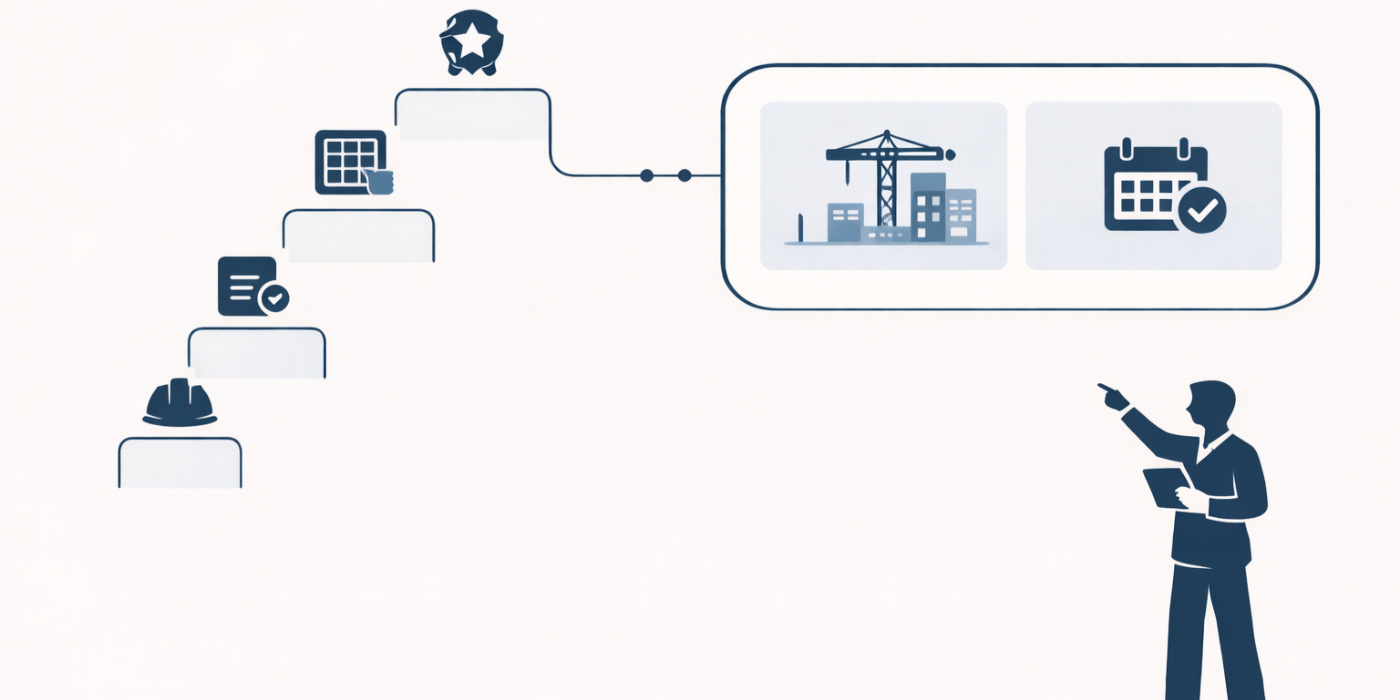
1) What Construction Project Management Really Looks Like (and Why Many Beginners Misread the Role)
A lot of people assume construction PM is mostly scheduling plus site visits. In reality, it is a control function across scope, contracts, sequencing, cost, stakeholders, risk, documentation, and execution quality. You are not just “managing a build”; you are managing a system of decisions under real-world constraints.
If you’re coming from a general PM background, first align your expectations with a broader project management career roadmap, then compare how industry specialization changes delivery expectations in the IT project manager career guide, healthcare project manager guide, and government PM roadmap. Construction is less forgiving than many environments because delays are physically visible and cost implications compound daily.
A construction PM typically operates across:
Preconstruction planning (scope clarity, budget baselines, procurement strategy)
Scheduling and sequencing (critical path, trades coordination, long-lead items)
Cost control (committed costs, change orders, burn vs forecast)
Site execution oversight (safety coordination, inspections, field constraints)
Stakeholder management (owners, architects, engineers, subcontractors, city/inspectors)
Documentation discipline (RFIs, submittals, logs, meeting minutes, closeout packages)
This is why construction PM can become a powerful long-term career base. It develops leadership pressure-handling, commercial decision-making, and operational rigor that transfer into project management director roles, VP of PM pathways, and even Chief Project Officer tracks.
The pain points beginners usually hit in the first 12 months
Most early-career candidates underestimate the documentation and coordination load. They think the challenge is “learning construction terms.” The real challenge is learning how to keep scope, schedule, and communication synchronized when 10+ parties are moving at different speeds.
Common early-career pain points:
Not knowing which issue needs escalation today vs later
Being weak in meeting documentation and action tracking
Missing long-lead procurement impacts on schedule
Treating schedule software as a reporting tool instead of a decision tool
Failing to connect field issues to cost and contract exposure
Getting overwhelmed by RFIs, submittals, and revisions
To build resilience early, study both specialization and career progression content like the entry-level to executive PM career path, project management consultant path, project portfolio manager guide, and future PM skills by 2030. These help you frame construction PM as a leadership discipline—not just a job title.
2) Entry Roles, Career Path, and What to Learn First (Without Wasting 12 Months)
The fastest way into construction PM is not always a direct “Project Manager” title. Most strong careers start in feeder roles where you learn documentation, coordination, and field realities before owning full commercial risk.
If you’re planning your move, anchor it inside a broader PM career strategy, then map your specialization using the original construction PM career guide topic path alongside adjacent role progression content like the project management consultant path, portfolio manager roadmap, and project management director roadmap. This helps you choose entry roles that build leverage, not just experience.
Common entry points into construction project management
Project Engineer (PE)
Often the best path. You learn RFIs, submittals, logs, meeting minutes, schedules, and closeout support while working directly with PMs and superintendents.Assistant Project Manager (APM)
Good for candidates with some PM, admin, engineering, or field experience. You’ll handle coordination and documentation with increasing ownership.Field Engineer / Site Coordinator
Strong for learning site sequencing, field constraints, and execution rhythms. Great if you need hands-on construction exposure.Estimator (with PM transition intent)
Excellent for cost and scope understanding. If paired with execution exposure, estimators can become commercially strong PMs.Scheduler / Planning Coordinator
Useful if you’re strong analytically. You’ll need to add contract, cost, and field coordination later.Owner-side coordinator / facilities project coordinator
Good for communication and stakeholder management; may need more contractor-side execution learning.
What to learn first (in sequence)
Beginners often chase advanced software or certifications too early. First build the habits that reduce expensive mistakes.
Priority 1: Construction workflow literacy
Project lifecycle (precon → procurement → mobilization → execution → closeout)
Roles and responsibilities (owner, architect, engineer, GC, subs, inspectors)
Core document flows (RFI, submittal, change order, meeting minutes, punch list)
Priority 2: Schedule and sequencing judgment
Trade dependencies
Long-lead material impacts
Look-ahead planning
Critical path thinking
Priority 3: Cost and change control basics
Buyout vs committed cost
Cost-to-complete forecasting
Change order documentation
Time impact awareness
Priority 4: Communication discipline
What to escalate
How to document decisions
How to write action-oriented meeting notes
How to communicate without creating contractual ambiguity
To sharpen these PM fundamentals, supplement with APMIC resources on budget tracking tools, calendar and scheduling tools, Gantt software reviews, productivity tools for PMs, and automation tools for PM efficiency. You are building a decision system, not just a software stack.
The “don’t get stuck here” warning
Many people stay too long in documentation-only roles because they become reliable admins but don’t demonstrate judgment. To move up:
Don’t just update logs—explain which items threaten schedule
Don’t just send minutes—highlight decisions required and deadlines
Don’t just track submittals—flag long-lead and critical path impacts
Don’t just report issues—propose options and trade-offs
That shift from task execution to decision support is what moves you from junior coordination into real PM trajectory—and eventually into more advanced tracks like PM leadership roles, CPO-level thinking, and consulting pathways.
3) Skills, Certifications, and Tools That Actually Improve Hiring Odds
Construction PM hiring managers want proof you can reduce risk, protect schedule, and communicate clearly under pressure. They care less about buzzwords and more about whether you can operate reliably in a complex build environment.
That said, certifications and tools can absolutely help—if they support a coherent profile. Use APMIC’s credential ecosystem strategically: CAPM vs PMP comparison, PMP exam guide, 30-day PMP study plan, PRINCE2 Foundation vs Practitioner, and PMP vs PRINCE2 based on your region, employer type, and experience level.
Which certifications make sense for early construction PM careers?
CAPM (early-career candidates): good signal if you’re breaking in without formal PM experience.
PMP (after required experience): strong credibility for broader PM maturity, stakeholder communication, and structured delivery.
PRINCE2 (depending on geography/employer): useful in environments that value controlled governance and stage-based planning.
Construction-specific safety/compliance credentials (region-specific): often highly valued because they improve field readiness and trust.
If you’re choosing between “general PM cert now” vs “construction experience now,” experience usually wins first. A cert becomes powerful when it helps you frame and communicate what you already do on projects.
Skills that create immediate hiring trust
Hiring teams often screen for these signals:
Can you write clear, professional project emails?
Can you run a coordination meeting and capture actions?
Can you maintain RFI/submittal/change logs accurately?
Can you explain a schedule risk in plain language?
Can you coordinate with field and office without causing friction?
Can you stay composed when priorities change daily?
These skills may sound basic, but they are exactly where new hires fail. Many candidates know PM terminology but can’t convert site chaos into clean project controls. That gap gets people rejected.
Tool strategy: Learn enough to support decisions, not just operate interfaces
You do not need to become a tool collector. You need proficiency in categories:
Scheduling tools (for logic, look-aheads, progress impact)
Document control / collaboration tools (drawings, submittals, RFIs)
Cost/budget tracking tools (commitments, forecasts, changes)
Reporting tools (owner updates, dashboards, executive summaries)
APMIC tool guides can help you build this stack intelligently: best software platforms for PM training, top PM mobile apps, mobile collaboration apps for project teams, project knowledge management software, and future of PM software. Learn tools in the context of workflows: what decision this dashboard supports, what delay this log prevents, what escalation this report enables.
Break in faster by fixing one blocker and building visible proof that you can support schedule, cost, and coordination.
4) How to Get Hired Without “Perfect” Experience: Resume, Proof Assets, and Portfolio Strategy
This is where most candidates lose. They assume recruiters will infer capability from job titles. In construction PM, they usually won’t. Your resume must make your controls discipline and coordination strength obvious.
If your current background is adjacent (general PM, engineering support, facilities, operations, admin, estimation, field coordination), you can still bridge in—but only if you translate your work into construction PM signals. Use broader positioning frameworks from the PM consultant career path, freelance PM roadmap, remote/virtual PM roles guide, and international PM guide to frame transferable capabilities professionally.
What hiring managers want to see on a construction PM resume
They want evidence that you can support delivery under pressure—not just “coordinate tasks.”
Show these clearly:
Project type(s): commercial, residential, infrastructure, industrial, healthcare, etc.
Project scale: budget range, timeline range, team size, number of trades/vendors
Controls work: RFIs, submittals, change orders, schedule updates, cost tracking
Coordination scope: who you interfaced with (owner, design, field, subs, city/inspectors)
Outcomes: delays prevented, turnaround improved, closeout accelerated, documentation accuracy improved
Turn weak bullets into strong bullets
Weak:
“Helped project manager with construction documentation.”
Strong:
“Maintained RFI and submittal logs across multiple trades, prioritized long-lead approval items, and flagged aging items with schedule impact to PM/superintendent.”
Weak:
“Attended weekly meetings and took notes.”
Strong:
“Prepared weekly coordination agendas and action-oriented minutes, capturing decisions, owners, due dates, and unresolved risks for owner/design/subcontractor follow-through.”
Weak:
“Updated schedule.”
Strong:
“Supported look-ahead and master schedule updates by tracking field progress, procurement dates, and trade dependencies, escalating items with potential critical path impact.”
This is the same logic used in higher-level tracks like project management director roles, VP-level PM paths, and portfolio manager positioning: responsibilities matter less than how you demonstrate business impact and control.
Build a small portfolio (the hidden advantage)
Most entry candidates submit only a resume. Build a lightweight portfolio (anonymized if needed):
Sample meeting agenda and minutes template
RFI/submittal tracker template
Weekly construction status report template
Risk and issue log with escalation triggers
3-week look-ahead template
Closeout checklist
One case study showing a coordination problem and how you resolved/escalated it
Use APMIC’s tool and process resources to improve the quality of these assets: project budget tracking software, calendar/scheduling tools, automation tools, productivity software, and PM training platforms. Your templates should show judgment, not just formatting.
Interview strategy: answer like someone who understands risk
Construction PM interviews often test whether you can think in consequences. Practice answers around:
A delayed long-lead item
A submittal bottleneck
A design clarification blocking field work
A change request with time/cost implications
A conflict between site reality and schedule assumptions
A communication breakdown between office and field
Use a structured response:
Situation
What was at risk (time/cost/quality/client trust)
How you assessed it
What you coordinated or escalated
What changed
What you’d do earlier next time
That response format also strengthens future transitions into consulting work, director-track roles, and specialized PM domains.

5) A Practical 12-Month Construction PM Career Roadmap (Beginner to Job-Ready)
You do not need to know everything before applying. You need to be job-useful fast, then compound.
This roadmap is designed for someone starting from a general PM, engineering, admin, operations, or early-career background. If you’re completely new, pair this with the core PM roadmap, PM salary perspective content, certification salary comparison, and future PM skills trends so you’re building for long-term growth, not just entry.
Months 1–2: Learn the workflow and language of construction delivery
Focus on understanding the ecosystem:
Project lifecycle stages
Core stakeholders and who approves what
RFIs, submittals, changes, inspections, punch, closeout
Basic schedule concepts (CPM, predecessors, float, look-ahead planning)
Cost basics (budget, committed costs, forecast, changes)
Output you should produce:
A one-page “construction PM process map” and a glossary you can use in interviews.
Months 3–4: Build operational templates and proof assets
Create templates (even mock/anonymized) for:
RFI log
Submittal tracker
Change order log
Weekly status report
Action-item meeting minutes
Risk/issues log
3-week look-ahead tracker
This phase matters because it turns learning into visible competence. Support your workflow design using project knowledge management tools, mobile collaboration apps, PM mobile apps, Gantt tools, and automation tools for PMs.
Months 5–6: Gain or simulate project coordination experience
Best case: secure an internship, coordinator, PE, or APM role.
If not yet possible:
Volunteer on real property renovation/fit-out projects (documentation and scheduling support)
Assist a contractor/facilities team with coordination/admin
Build 2–3 case simulations based on common issues (late submittal, scope change, inspection failure, delivery delay)
Critical point: Simulations should demonstrate judgment, not fantasy. Show how you’d communicate, escalate, and protect schedule/cost.
Months 7–9: Apply aggressively, but with role targeting
Target roles such as:
Project Engineer
Assistant Project Manager
Construction Coordinator
Field Engineer
Owner-side Project Coordinator
Estimating Coordinator (with transition intent)
Customize each application to the role’s likely pain points. For example:
Contractor-side roles: emphasize documentation speed, field coordination, schedule awareness
Owner-side roles: emphasize reporting, stakeholder communication, risk visibility
Design-build roles: emphasize coordination across design and execution interfaces
Use APMIC market and location content to tailor your search: California PM careers, Texas PM careers, Florida PM careers, Illinois PM trends, and Georgia PM opportunities.
Months 10–12: Build advancement signals once you’re in
Once hired, your first-year goal is not “work harder.” It is to become trusted with higher-risk tasks.
Do this by:
Owning one log/report end-to-end and improving its quality
Anticipating schedule impacts instead of reporting them late
Running parts of coordination meetings confidently
Building stronger owner/design communication summaries
Learning contract and change order implications from your PM
Creating repeatable templates that save team time
This is how you move from “helpful support” to “future PM.” From there, the path can branch into project management consultant work, portfolio responsibilities, industry specialization, or broader leadership tracks.
6) FAQs: Starting a Career in Construction Project Management
-
Not always. A degree can help, especially for technical roles, but many people enter through adjacent experience (project coordination, field support, estimation, facilities, operations, or general PM work). What matters most for entry roles is whether you can support documentation control, coordination, schedule awareness, and communication discipline. Strengthen your PM foundation with the core PM roadmap, then position your experience using the construction PM career guide and entry-to-executive PM path.
-
For many candidates, Project Engineer is the strongest launchpad because it builds core construction controls skills (RFIs, submittals, logs, minutes, closeout support, schedule coordination). Assistant PM can be excellent too, especially if you already have PM or construction exposure. The right choice depends on which role gives you more exposure to schedule, cost, and stakeholder coordination—not just admin work. Compare role-growth framing in the PM consultant path, PM director roadmap, and portfolio manager guide.
-
If you’re early career and need a PM credibility signal now, CAPM can help structure your learning and improve screening outcomes. If you already have enough project experience, plan for PMP because it carries broader credibility for stakeholder communication, risk, and formal delivery practices. Choose based on timing and eligibility—not on hype. Use the CAPM vs PMP comparison, PMP exam guide, and PMP study plan to map the sequence.
-
Build proof in layers:
Learn the workflows and terminology.
Create PM control templates (RFI, submittal, change, risk, weekly report).
Support a real renovation/facilities/contractor project in any coordination capacity.
Document your work as case-style examples.
Apply to feeder roles (PE/APM/coordinator/field engineer) rather than only PM titles.
This mirrors the same proof-first approach used in the freelance PM roadmap, consultancy path guide, and remote PM roles guide.
-
The biggest accelerators are:
schedule risk judgment,
clean documentation,
escalation timing,
owner-facing communication,
change-order discipline,
office-to-field coordination reliability.
People get promoted when PMs trust them with risk, not when they simply stay busy. To think beyond your first role, study leadership-oriented pathways like the PM director roadmap, VP of PM career path, and Chief Project Officer roadmap.
