
Complete Guide to Becoming an International Project Manager (2026-27 Edition)
International PM roles don’t go to the “best scheduler.” They go to the PM who can run delivery across time zones, vendors, currencies, and cultures—and still produce audit-ready documentation and predictable outcomes. If you’re aiming for international opportunities, treat it like a career transition with proof assets, not a title change. This guide gives you the exact capability stack, portfolio evidence, and targeting strategy recruiters reward—plus the tools, templates, and decision habits that separate “domestic PM” from “global delivery leader.” Use it alongside your long-term path planning in the project management career hub.
1. International PM in 2026–27: What Employers Actually Hire For
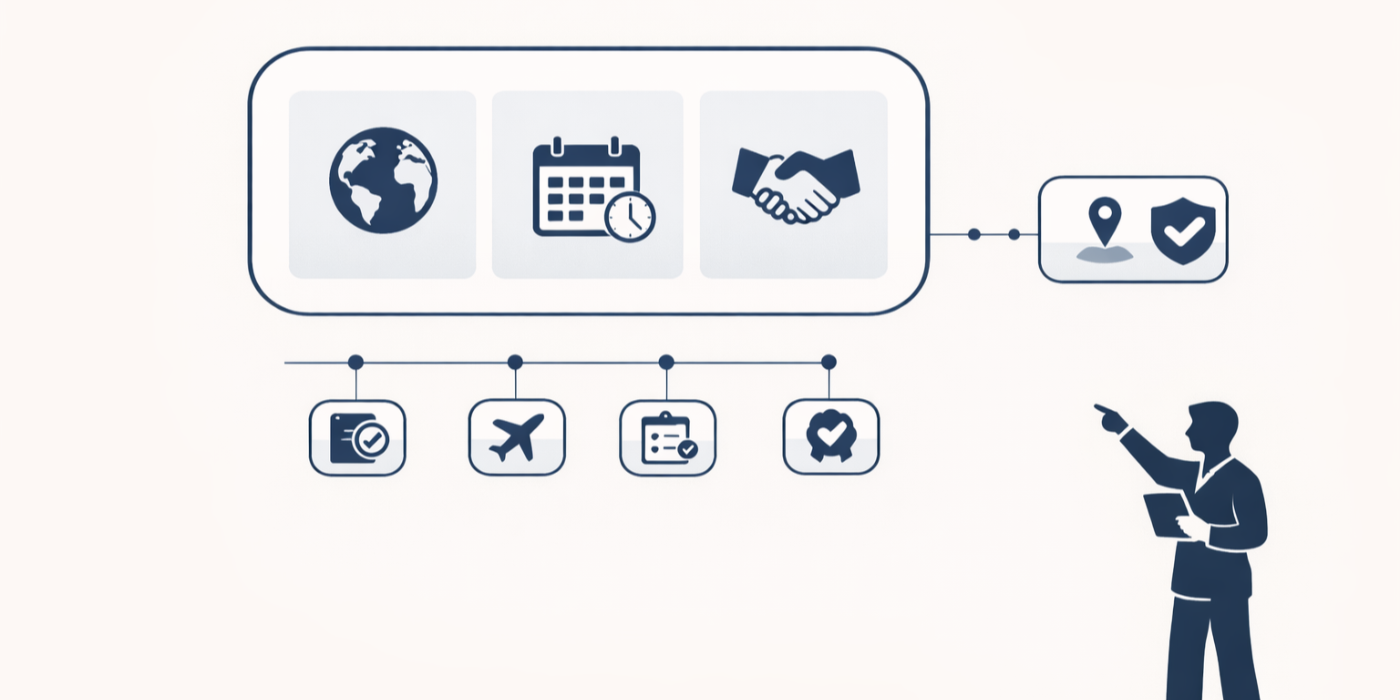
International Project Manager is less about “travel” and more about operating in constraints: cross-border procurement, multi-party governance, language friction, local compliance, and distributed execution. Hiring panels quietly screen for three things:
Complexity tolerance: Can you manage ambiguity without creating chaos? (This is why global teams value structured decision-making and escalation design you’d recognize from government PM roadmaps.)
Stakeholder fluency: International delivery means you communicate with regional executives, local SMEs, external vendors, and risk/compliance—often all in the same week. If your communication is “status update shaped,” you’ll lose credibility fast. Build this skill deliberately using frameworks from essential project communication techniques and sharpen your political vocabulary with critical stakeholder terms.
Commercial + contractual maturity: Global programs live and die in procurement, contracts, and vendor performance. If you can’t read a SOW, manage change control, or negotiate deliverables without scope creep, you become “meeting glue.” Start building this muscle through modern procurement workflows and tools like the best procurement management tools and baseline contract ops literacy using contract lifecycle management software.
International PM isn’t a niche—it’s a delivery operating system. The same logic that powers high-stakes mobility applies to complex sectors too, like healthcare project management and large-scale construction PM pathways. The difference is that global roles add distribution + jurisdiction + culture on top.
If you want a clean mental model: domestic PMs are judged on execution; international PMs are judged on risk prevention and coordination economics—reducing rework, delays, and vendor drift through systems.
2. Build a Global-Ready Skill Stack
If you want international PM roles, you need a stack that screams: “I can run global delivery without burning teams.” Here are the high-leverage capabilities to build—fast.
1) Cross-cultural leadership that prevents silent failure
The biggest global risk isn’t conflict—it’s polite agreement that hides misalignment. Train yourself to spot cultural signals: indirect disagreement, escalation avoidance, and “yes” that means “we’ll try.” Use structured clarifying questions and write decisions down so the team doesn’t re-litigate them later. Your meeting output should look like a governance pack you’d see in PM director pathways rather than informal chat.
Practical move: build an “alignment ritual” into every milestone—one page that states: scope, success metric, owner, date, dependency. Store it in your doc hub using practices aligned with document management software for project teams.
2) Distributed communication engineered for decisions
International PMs win when they reduce meeting load while increasing clarity. That means:
Pre-reads that force context
Async updates that remove status theater
Meetings designed for approvals, not “discussion”
If your stakeholders aren’t making decisions, your cadence is broken. Improve your output using the playbook mindset in project reporting and analytics and build visual clarity via dashboard and data visualization tools.
3) Procurement + contracting competence (non-negotiable)
If you can’t manage vendors, you can’t manage international delivery. Learn to:
Validate SOW deliverables and acceptance criteria
Enforce change control and milestone payments
Track vendor risks and performance indicators
Start with workflow and tooling literacy from procurement management tools and build stronger contract operations through contract lifecycle management platforms. Pair it with tight issue controls using a system like the definitive guide to issue tracking software.
4) Budgeting under volatility (FX + inflation + vendor drift)
In 2026–27, global projects face cost fluctuation from inflation, logistics, and currency movement. International PMs create stability by tracking:
burn rate accuracy
FX exposure assumptions
contingency strategy
vendor “change pressure” patterns
If you want a strong baseline, study budgeting patterns from inflation’s impact on project budgets and then formalize your tracking with project budget tracking software. You’re not just “tracking spend”—you’re protecting delivery options.
5) Methodology flexibility without losing control
Global delivery rarely fits pure Agile or pure Waterfall. You need a hybrid model that keeps governance tight while delivery stays iterative where it matters. Build your approach using the strategic view in the rise of hybrid PM and the forward-looking lens in project management 2030 methodologies. If you work with Scrum teams across regions, map differences using Scrum evolution predictions.
3. Proof Assets That Travel Across Borders
International hiring managers can’t “feel” your competence through job titles. They need portable proof. The fastest path to offers is building a small set of global-ready artifacts that reduce hiring risk.
Asset 1: One-page international delivery case study (the “executive brief”)
Create a one-page PDF-style writeup with: goal, context, constraints, approach, risks, results. Show numbers: schedule recovered, cost avoided, vendor performance improved, governance accelerated. Your language should resemble what you see in senior tracks like the project manager to VP path rather than tactical activity lists.
Asset 2: A governance pack template (exportable system)
This is your hiring cheat code: a ready-to-use set of templates for: decision log, RAID, change control, stakeholder map, weekly pack. Global organizations hire people who show “I already have a system.” Tie your pack to high-credibility tool stacks such as project reporting and analytics software and calendar and scheduling tools to demonstrate operational maturity.
Asset 3: A vendor management “SOW QA” checklist
Most candidates say “managed vendors.” Few can show how they prevented scope creep. Create a checklist that verifies: deliverables, acceptance criteria, milestones, change mechanism, reporting requirements, and dispute escalation. This aligns naturally with procurement tool fluency from procurement management tools and contract strength from CLM software.
Asset 4: A remote/global collaboration playbook
Many international roles are “global” because the team is distributed, not because you’re traveling. Your playbook should show: time zone norms, async rules, escalation windows, documentation standards, and meeting rotation fairness. This becomes even stronger when paired with a career narrative grounded in remote and virtual PM roles and supported by tooling like mobile PM apps.
Asset 5: A market-targeting list (20 companies + 20 roles + 10 keywords)
International jobs aren’t found by scrolling—they’re targeted. Build a list by region and industry focus, then map it to keywords you’ll use in resumes and interviews. If you plan to go independent internationally, shape the positioning using the blueprint from starting a PM consultancy firm or a hybrid income strategy from freelance PM careers.
4. Where the International Jobs Are and How to Target Them
International PM work clusters around complex delivery environments—places where coordination, governance, and vendor control create competitive advantage.
1) Global IT + digital transformation programs
These roles often require governance maturity, stakeholder negotiation, and change enablement across regions. If you want to look credible here, your story should include structured delivery methods (see digital transformation acceleration in PMOs) and tool competency using systems like project reporting and analytics plus document management platforms.
2) Infrastructure + construction programs with international vendors
These roles reward procurement fluency and schedule realism. Your advantage comes from showing you understand vendor timelines, dependencies, and claims risk—supported by the pathway logic in construction PM careers and strengthened by operational tooling like Gantt chart software.
3) Healthcare + regulated industries expanding globally
Regulated environments hire PMs who can build audit-ready documentation and stakeholder alignment without slowing delivery. Learn the domain framing from healthcare PM guide and pair it with precise control systems like issue tracking software and knowledge management software.
4) Portfolio and multi-project international delivery
If your long-term goal is running multiple initiatives across regions, you’re moving toward portfolio thinking. That’s where global prioritization, resource competition, and governance design become your primary value. Anchor your progression with the project portfolio manager guide and the strategic view in future of PPM trends.
How to target (without wasting months)
International job searches fail because candidates apply broadly with a vague narrative. Here’s the targeting system that works:
Pick one region you can credibly align with (time zone, language, relocation constraints).
Pick one delivery domain (IT transformation, infrastructure, healthcare/regulatory, portfolio).
Build 3 proof assets (executive brief, governance pack, vendor checklist).
Write your resume like a risk-reduction pitch—use language consistent with senior paths like PM director and PM to VP.
Then add a tool “credibility layer”: show comfort with planning + reporting platforms, referencing knowledge from top productivity software for busy PMs and automation maturity from automation tools for PM efficiency.

5. Compensation, Mobility, and Negotiation
International compensation is rarely “base salary only.” It’s usually a package that reflects mobility cost, talent scarcity, and operational risk.
What drives pay in international PM roles
Vendor + procurement responsibility (commercial ownership increases value)
Regulatory exposure (higher compliance risk increases pay)
Portfolio scale (multi-project governance increases seniority)
Distributed delivery complexity (time zones + regions + dependencies)
Outcome visibility (measurable delivery savings and cycle time improvements)
If you’re negotiating, don’t sell “hard work.” Sell risk reduction + speed. Bring proof: your governance pack, your vendor checklist, and a quantified case study. That positioning matches senior narrative tracks like CPO roadmap and PM director progression.
Remote vs relocation: the clean decision framework
Ask three questions:
Where is the decision power? If sponsors and budget owners are in-region, relocation can accelerate trust. If it’s distributed, remote can work—especially if your operating model resembles what’s taught in remote & virtual PM roles.
Is the work vendor-heavy? Vendor-heavy work often rewards local presence during procurement, kickoff, and escalation cycles. Strengthen this path by mastering procurement tools and using contract rigor via CLM platforms.
Do you have asynchronous dominance? If you can run decisions without meetings, remote becomes viable. Use systems like project reporting/analytics and strong cadence discipline backed by calendar/scheduling tools.
The negotiation line that wins (without sounding arrogant)
“I reduce delivery risk in global programs by building decision architecture, vendor control, and documentation discipline—so outcomes stay predictable across regions.”
Then you prove it with artifacts and tooling competence (e.g., budget tracking software, dashboards, and document management).
6. FAQs
-
Not always—but you need international-grade proof. Build artifacts that demonstrate distributed execution: governance pack, vendor checklist, executive brief, and a remote collaboration playbook. Use frameworks from stakeholder terms and operationalize them through project communication techniques.
-
Hiring panels care less about the badge and more about what it signals: disciplined delivery, governance, and business alignment. Pair your certifications with proof assets and tooling maturity using project reporting/analytics and issue tracking systems.
-
Don’t claim it—demonstrate it. Include examples like: rotating meeting burden across regions, reducing misunderstandings through written decision logs, building regional stakeholder maps, and preventing vendor drift through change control. Tie that narrative to senior progression language found in PM director paths and PM to VP tracks.
-
Usually one of these: weak procurement/contract experience, vague stakeholder impact, unclear evidence of distributed execution, or resumes that list tasks instead of outcomes. Fix the operational gaps with procurement tools, strengthen documentation discipline via document management, and quantify outcomes with budget tracking tools.
-
Remote is realistic when your operating model is strong: async-first updates, written decisions, clear escalation rules, and a single source of truth. Build this capability with guidance aligned to remote and virtual PM roles and support it with operational tooling like scheduling tools and dashboards.
-
Pick the path where your proof will be strongest fastest: regulated (healthcare), vendor-heavy (construction/infrastructure), transformation-heavy (IT), or multi-project governance (portfolio). Then align your learning and evidence: healthcare PM, construction PM, PPM track, and methodology strategy via hybrid PM.
-
Show competence in four categories: planning, reporting, documentation, and financial control. Strong signals include: Gantt tools, project reporting/analytics, document management, and budget tracking tools. Add procurement/contract literacy via procurement tools and CLM platforms.
