
Career Roadmap: How to Become a Project Management Director
Project Management Director is not just a “senior PM” title. It is a transition from managing projects to managing delivery systems, leadership layers, portfolio risk, executive trust, and organizational outcomes. If your current experience is strong but promotions keep stalling, the gap is usually not effort—it is evidence of director-level capability in governance, cross-functional influence, financial judgment, and talent development.
This roadmap is built to close that gap. It shows what hiring panels actually look for, what proof assets to build, which mistakes delay promotions, and how to position your experience so you are seen as director material—not “a good PM who needs more time.”
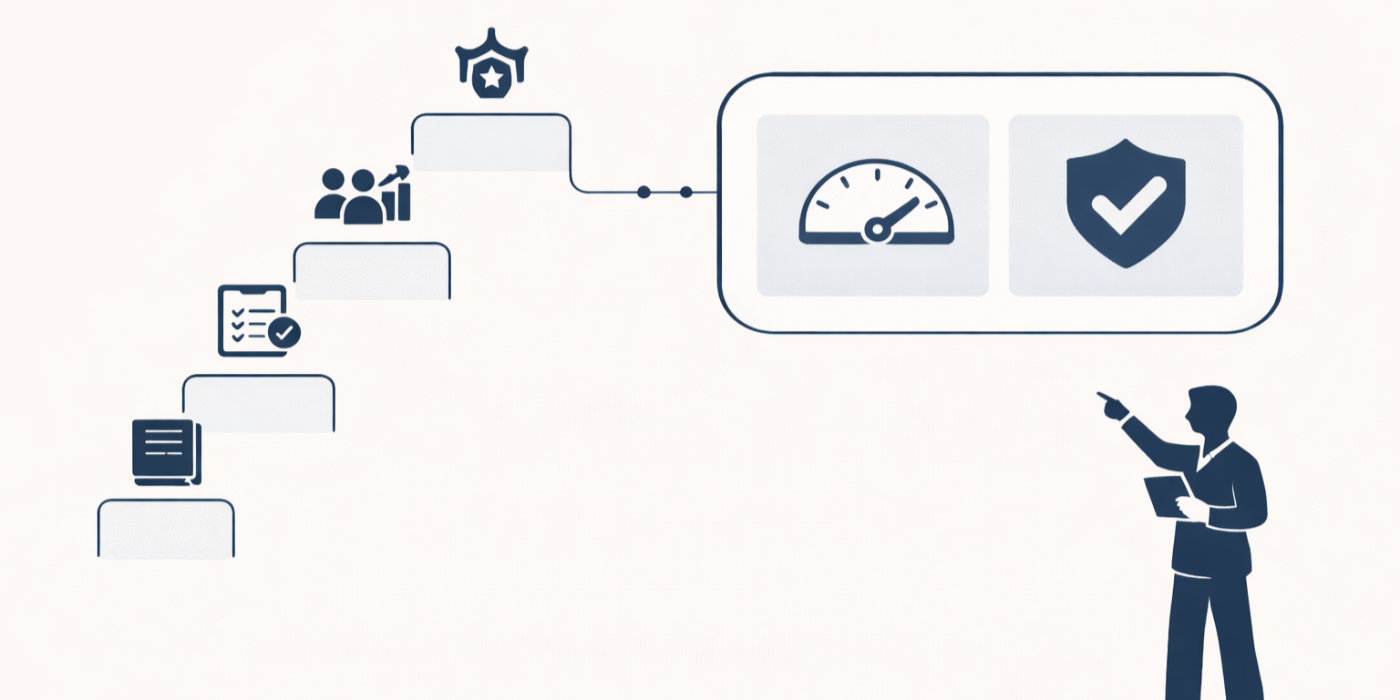
1: What a Project Management Director Actually Does (And Why Many PMs Misread the Role)
A Project Management Director is responsible for delivery performance at scale. That means they are measured less on “Did my project ship?” and more on “Can this organization consistently deliver the right work, with predictable execution, controlled risk, and executive visibility?” If you are coming from hands-on PM roles, this shift is where many careers stall.
At the PM level, you prove you can drive plans, timelines, and stakeholder alignment. At the director level, you prove you can improve operating rhythm, governance quality, portfolio prioritization, and leadership capacity across multiple teams. This is why professionals aiming for director roles should study not only core PM growth paths, but also leadership progression and portfolio-level thinking through resources like how to become a project manager, entry-level to executive PM career path, how to become a project management director, chief project officer roadmap, and project portfolio manager guide.
A director usually owns some combination of the following:
PMO standards and governance design
Portfolio intake and prioritization frameworks
Delivery forecasting and executive reporting
Escalation mechanisms across business units
Resource allocation and capacity planning
Coaching PMs, program managers, and team leads
Vendor governance and contract delivery oversight
Risk visibility, dependency management, and recovery strategy
If your resume is full of task execution but thin on systems-level decisions, hiring panels may conclude you are strong operationally but not ready to lead a delivery organization. This is also why it helps to build adjacent credibility in portfolio management trends, hybrid delivery models, future PM skills, AI in project management, and project management 2030 methodologies.
The pain point most candidates feel—but rarely articulate well—is this:
“I’ve led big projects, but interviews still treat me like a project manager, not a director.”
That usually means your examples highlight delivery effort, not organizational leverage. Director interviews reward stories about:
changing governance to reduce decision latency,
building an escalation path that prevented repeated delays,
redesigning status reporting so executives could act faster,
coaching PMs so team output improved without your direct intervention.
To bridge that gap, your roadmap must include three tracks simultaneously:
Execution mastery (you still need this),
Leadership and operating model design (the director differentiator),
Business fluency (how delivery connects to cost, risk, and strategy).
Candidates who only focus on certifications without building proof of these three tracks often stay stuck in “senior PM limbo.” Certifications help, but only when paired with visible evidence and outcomes. For that reason, you should map certifications against your career stage using PMP vs PRINCE2, CAPM vs PMP, PMI-ACP prep in 30 days, Certified Project Director exam guide, and IAPM exam insights.
2: The Career Stages From PM to Director (What to Build at Each Level)
The fastest path to Director is not “wait your turn.” It is stacking the right evidence in the right sequence. Many strong PMs stay stuck because they try to jump from delivery execution directly into executive leadership without proving program, portfolio, and people leadership in between.
Stage 1: Project Coordinator / Junior PM — Build Reliability and Documentation Strength
At this stage, your advantage comes from consistency and control. Learn how to run clean meeting cadences, maintain action logs, track decisions, document changes, and keep stakeholders aligned. If your fundamentals are weak here, they will become expensive problems later.
Use foundational career resources like step-by-step PM roadmap, entry-level to executive PM path, remote & virtual PM roles guide, top calendar and scheduling tools, and project knowledge management software guide.
Pain point to fix early: If you are always “working hard” but senior leaders still ask for clarity, your issue is not workload—it is information architecture.
Stage 2: Project Manager — Build Delivery Judgment and Cross-Functional Influence
Here, you need a track record of shipping outcomes under constraints. That includes handling tradeoffs, negotiating scope, escalating risk properly, and keeping teams moving when priorities clash. This is also where domain specialization starts helping.
Consider parallel specialization tracks such as IT project manager roadmap, construction project management career guide, healthcare project manager roadmap, government project manager career roadmap, and international project manager guide.
Pain point to fix here: Many PMs give “status” instead of decision-ready recommendations. Director-track candidates consistently frame options and consequences.
Stage 3: Senior PM / Program Manager — Build Multi-Project Governance and Recovery Ability
This is the make-or-break stage for future directors. You must show that you can govern across projects, not just run one. That means dependency management, shared resource coordination, executive reporting, and recovery planning when initiatives drift.
Deepen your systems thinking with hybrid PM future, future PM software trends, automation tools for PM efficiency, budget tracking software tools, and top productivity software for PMs.
Pain point to fix here: If you are the hero who saves everything personally, you may look strong—but not scalable. Directors build systems that reduce firefighting.
Stage 4: PMO Lead / Delivery Lead / Program Director — Build Organizational Leverage
Now the question changes from “Can you deliver?” to “Can you improve how others deliver?” Your focus should include governance standards, PM coaching, reporting templates, intake frameworks, and operating cadence redesign.
This is where adjacent leadership paths become useful reference points, including project portfolio manager path, PM consultant career path, starting a PM consultancy firm, freelance PM career roadmap, and PM Director to VP of PM path.
Stage 5: Project Management Director — Build Strategic Execution Leadership
At this stage, you lead the delivery system: prioritization, portfolio visibility, governance quality, leadership bench strength, and executive confidence. You are not only responsible for outcomes, but for how predictably the organization can create them.
Director readiness increases when your profile demonstrates:
portfolio thinking,
leadership of leaders,
executive communication,
business/financial fluency,
operational design,
measurable improvement in delivery reliability.
3: Skills, Certifications, and Proof Assets That Actually Get You Promoted
Most professionals overinvest in one bucket (usually certifications) and underinvest in the two buckets that hiring panels care about just as much: proof assets and director-level stories. The strongest candidates balance all three.
1) Core Skills You Need for Director Roles
A. Portfolio & Governance Skills
You need to show you can prioritize work, define governance, run escalations, and maintain visibility across competing initiatives. This is where project portfolio management future trends, project management 2030 methodologies, hybrid delivery models, Scrum evolution by 2027, and future PM skills by 2030 give you strategic language and context.
B. Business & Financial Fluency
Directors are expected to connect delivery to budget, risk, and business timing. If your communication sounds purely operational, you can be screened out even when your execution is excellent. Strengthen this layer through tools and systems such as budget tracking software reviews, CRM tools for PMs, best Gantt chart software, calendar & scheduling tools, and mobile PM apps.
C. Leadership & Talent Development
If you cannot coach PMs and elevate team judgment, your scope will remain limited. Directors are evaluated on team quality, not just project outcomes. Build frameworks, not just opinions.
2) Which Certifications Help (and When)
Certifications matter most when they support the next career move—not when they are collected randomly.
CAPM (early-career structure): useful if you need credibility and foundational language. Start with CAPM exam guide, CAPM salary insights, CAPM exam questions, 30-day CAPM plan, and CAPM vs PMP comparison.
PMP (mid-career acceleration): strong signal when paired with real delivery outcomes. Use PMP certification exam guide, top PMP questions, 30-day PMP study plan, PMP exam day survival guide, and PMP vs PRINCE2.
PRINCE2 (governance-heavy environments): especially useful in structured organizations. Reference PRINCE2 exam guide, PRINCE2 questions, Foundation vs Practitioner, success stories, and 4-week PRINCE2 study plan.
Agile credentials (hybrid/digital contexts): pair agile fluency with governance discipline. See PMI-ACP exam questions, PMI-ACP 30-day prep, CSM guide, Scrum vs Agile certification, and CSM exam guide.
3) Proof Assets That Make Hiring Easier
This is the difference between “I can do it” and “I have evidence I’ve already done director-level work.”
Build and save sanitized examples of:
governance cadence design,
portfolio intake framework,
executive dashboard / reporting format,
escalation matrix,
capacity planning view,
risk trigger framework,
recovery plan for an at-risk program,
PM coaching rubric,
lessons learned repository structure.
If you are serious about moving toward Director and later executive roles, map this evidence against director roadmap, VP of PM path, chief project officer roadmap, project management consultant path, and PM consultancy firm guide.
The fastest promotions usually come from fixing one blocker first, then building proof assets that make the next level obvious.
4: A 12–24 Month Director Promotion Plan (What to Do Starting Now)
If you already have PM or Senior PM experience, you do not need a vague “someday” plan. You need a promotion strategy with quarterly outputs. The goal is to create undeniable evidence that you are already operating at the next level.
Months 1–3: Diagnose the Gap and Rebuild Your Positioning
Start by identifying whether your gap is:
scope (you have not led enough),
signal (you led it but never documented it),
story (your resume/interview language is too tactical),
capability (real skill gap in finance, governance, or people leadership).
During this phase:
Audit your last 8–10 projects.
Rewrite achievements around scale, decisions, risk, recovery, and leadership influence.
Build a “Director Story Bank” (10 examples).
Identify 2–3 director capabilities you can develop in your current role.
Use APMIC’s career-path content for directional mapping and language calibration, including director roadmap, project-to-VP path, chief project officer roadmap, portfolio manager guide, and PM consultant path.
Months 4–6: Take on Director-Type Work Without Waiting for the Title
This is where many professionals lose momentum. They wait for permission to act like a director. Instead, take ownership of one system problem:
reporting inconsistency,
poor escalation discipline,
weak risk routines,
chaotic prioritization,
no capacity visibility,
postmortems with no reuse.
Build a lightweight framework and pilot it. Even a small improvement can become a powerful interview story if you can show before/after impact.
Helpful support topics include knowledge management software for PMs, automation tools for PM efficiency, top productivity software, best collaboration apps, and future of PM software.
Months 7–12: Expand Influence and Mentor Other PMs
Promotion panels look for leverage. One of the strongest signals is improving outcomes through other people. Mentor PMs on risk framing, stakeholder communication, and escalation quality. Standardize templates. Create coaching rituals. If your manager trusts your judgment on team practices, you are moving toward director territory.
This is also a good window to complete a strategic certification if it supports your next move, using PMP guide, PRINCE2 comparison and prep, PMI-ACP prep, CSM career guide, and Agile coach career path.
Months 12–24: Target Director Roles with Precision
By this point, your focus should be on matching your background to the right director environments:
transformation-heavy organizations,
PMO build-out situations,
regulated industries needing governance discipline,
scaling teams that need portfolio visibility,
consulting/internal consulting delivery leadership roles.
Customize your story by domain using IT PM roadmap, healthcare PM guide, construction PM career guide, government PM roadmap, and international PM guide.
Hard truth: If you are applying broadly without a tailored director narrative, you will lose to candidates with less experience but better positioning.

5: Resume, Interview, and Networking Strategies for Landing a Project Management Director Role
A lot of highly capable PMs do the hard part (real work) and then fail at the market part (positioning). Director hiring is not just a skill test; it is a signal test. Your resume, LinkedIn profile, and interview examples must instantly communicate scale, leadership, and business judgment.
1) Resume Strategy: Write for Director-Level Pattern Recognition
Your resume should make these points obvious within seconds:
scope of responsibility (teams, programs, budgets, stakeholders),
systems you improved (governance, reporting, risk, intake),
measurable business impact (faster decisions, fewer delays, reduced churn, stronger forecast confidence),
leadership leverage (mentoring PMs, building standards, improving team output).
Weak PM bullet:
“Managed project timeline, risks, and stakeholders for enterprise rollout.”
Director-track bullet:
“Redesigned governance cadence and escalation thresholds for a 6-workstream enterprise rollout, reducing decision delays and improving cross-functional issue resolution speed.”
Build this language using patterns from director roadmap, portfolio manager guide, PM consultant path, future PM skills by 2030, and AI + PM future impact.
2) Interview Strategy: Prepare Director Stories, Not Project Summaries
Director interviews usually probe:
governance design,
conflict resolution and prioritization,
executive communication,
team leadership and PM coaching,
recovery planning,
portfolio decisions under constraints.
Prepare at least 10 stories using this structure:
Context and stakes (what was at risk),
System problem (not just project issue),
Your decision framework (how you thought),
Actions and alignment moves,
Outcome and business impact,
What changed permanently (director signal).
If your stories end at “we delivered successfully,” you are under-selling yourself. Director stories should end with “and we changed the operating model/reporting/governance so this improved going forward.”
3) Networking Strategy: Target Conversations That Create Signal
Networking for director roles is not about collecting contacts. It is about learning how organizations define “director-level” internally and finding roles where your strengths map cleanly.
Focus on:
PMO leaders,
Delivery Directors,
Program Directors,
Heads of Transformation,
Portfolio leaders,
senior recruiters in your target domain.
Use domain and location-specific APMIC resources to target your search intelligently, such as California PM careers, New York PM guide, Texas PM careers, Florida PM market insights, and Washington state PM opportunities.
You can also narrow city-level targeting with NYC PM careers, Los Angeles PM opportunities, Chicago PM careers, Dallas–Fort Worth PM job market, and Georgia PM opportunities.
4) Common Mistakes That Delay Director Offers
Resume reads like a project log, not a leadership impact profile.
Too much methodology talk, not enough business outcomes.
Certifications listed, but no proof of better decisions or stronger systems.
Interview answers are detailed but not executive-ready.
Candidate has scale but no evidence of PM coaching or standards-building.
No domain positioning (generic PM language in specialized industries).
6: FAQs About Becoming a Project Management Director
-
There is no fixed number, but the real driver is quality of scope, not just time served. Some professionals take 12+ years because they stay in execution-only roles, while others move faster by gaining program, PMO, and leadership responsibilities earlier. If you deliberately build director-level proof assets (governance, portfolio visibility, PM coaching, executive reporting), your timeline can compress significantly. Use entry-level to executive PM path, director roadmap, portfolio manager guide, VP of PM path, and chief project officer roadmap to plan the sequence.
-
Not always, but PMP can be a strong signal—especially when employers use it as a screening benchmark. The bigger mistake is assuming certification alone will get you promoted. Hiring panels still want evidence of leadership leverage, governance design, and business judgment. If you pursue PMP, pair it with real organizational improvements and a stronger narrative. Helpful prep and comparison resources include PMP exam guide, PMP questions, 30-day PMP study plan, PMP vs PRINCE2, and project manager salary by certification.
-
A Senior PM is usually accountable for delivering complex initiatives. A Director is accountable for improving delivery performance across multiple initiatives and teams. In short: senior PMs manage execution; directors manage the execution system. That includes governance, portfolio visibility, prioritization, escalations, and PM capability development. You can see this progression more clearly through PM consultant path, portfolio manager path, Agile PM consultant transition, Agile coach career path, and future PM competencies.
-
It is possible in some organizations, but much harder. Even if you do not have direct line management experience, you should build evidence that you can coach PMs, standardize practices, influence leaders, and improve team-level decision quality. Panels want confidence that your impact can scale through others. Build this through mentoring, governance ownership, and cross-functional leadership opportunities, then position it using director roadmap, PM consultancy firm guide, freelance PM career roadmap, remote PM leadership guide, and project knowledge management software guide.
-
The best domain is one where you can build both delivery scale and constraint fluency (technical, regulatory, operational, or vendor complexity). IT, healthcare, construction, government, and transformation-heavy environments are all strong paths—but only if you develop the language and decision patterns of that domain. Explore options with IT PM roadmap, healthcare PM guide, construction PM guide, government PM roadmap, and international PM guide.
-
Lead with signals of scale + systems + leadership impact. Put achievements that show multi-project oversight, governance design, executive reporting improvements, PM coaching, recovery planning, and measurable business outcomes. Do not bury these beneath tools and task lists. Your first page should make a recruiter feel, “This person has already operated above PM level.” To sharpen that positioning, cross-reference director roadmap, portfolio manager guide, PM consultant path, global PM salary report, and future PM skills.
