
The Ultimate Guide to Getting Your Project Management Certification in Germany: All You Need to Know in 2026-2027
Germany rewards project managers who can bring structure into complexity, evidence into decision-making, and calm execution into regulated, cross-functional environments. A certificate can open doors, yet the wrong certification strategy can waste months and still leave your CV looking generic. This guide shows how to choose the right project management certification for Germany, connect it to real hiring needs, and turn it into a credible career asset through project management career planning, future PM skills, certification strategy, and international project management readiness.
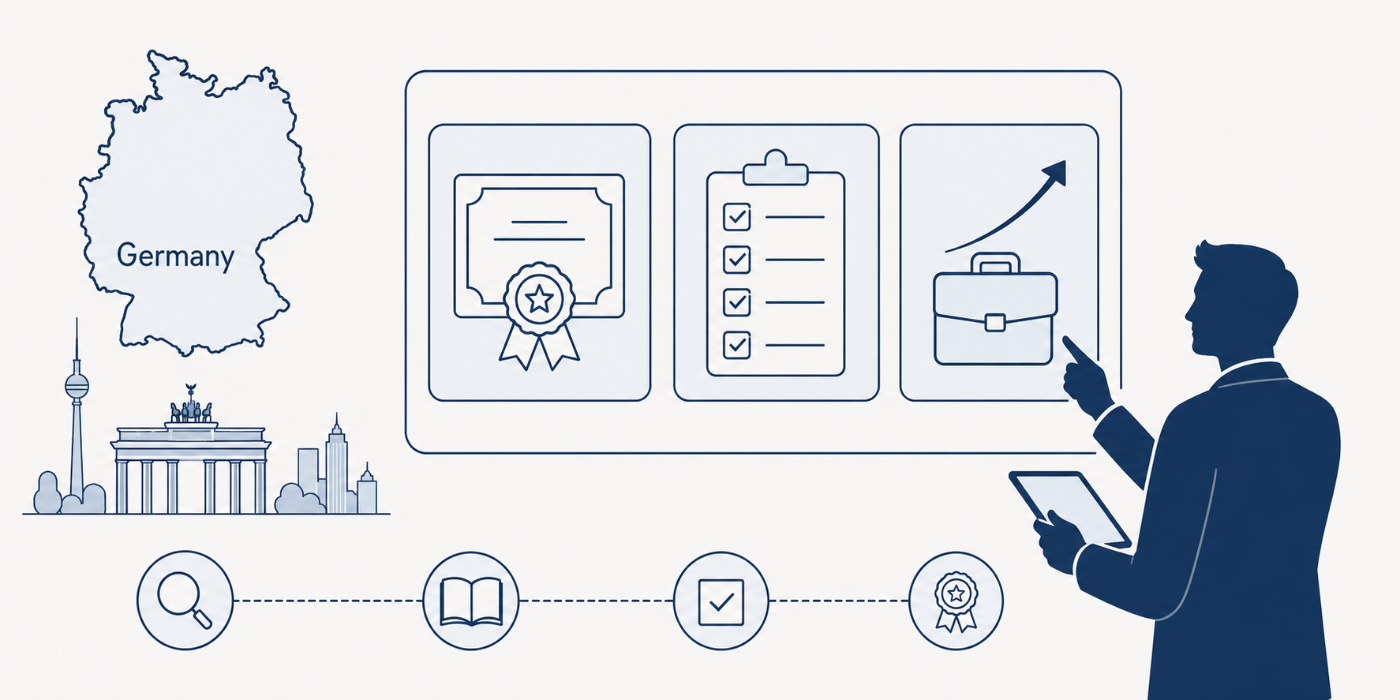
1. Why Project Management Certification Matters in Germany in 2026-2027
Germany’s project environment is serious about process, accountability, documentation, technical credibility, and stakeholder discipline. That matters because many candidates enter the market with a certificate-first mindset while hiring panels evaluate them through delivery maturity. A credential helps most when it explains how you manage scope, risk, governance, vendors, compliance, reporting, and change in environments where mistakes create financial, operational, or regulatory damage. That is why your certification plan should connect directly to a complete project management roadmap, a career path from entry level to executive, a project execution vocabulary, and a monitoring and control foundation.
The biggest mistake is treating “certified” as the final outcome. German employers still want proof that you can move work through a structured system: clarify requirements, build a plan, challenge weak assumptions, control suppliers, escalate without drama, and document decisions cleanly. A PMP, CAPM, PRINCE2, IPMA, Scrum, or Agile credential can help, yet it becomes valuable only when paired with project artifacts: RAID logs, stakeholder maps, Gantt views, sprint metrics, change records, vendor trackers, lessons learned, and executive summaries. If your background is technical, connect the certificate to IT project management, agile project management, Scrum Master growth, and remote project leadership. If your background is operations, construction, healthcare, public service, or consulting, connect it to construction project management, healthcare project management, government project management, and project management consulting.
The smartest route in Germany is role-led certification selection. A junior coordinator may gain more from CAPM or IPMA Level D than from chasing a senior credential too early. A delivery manager in software may need Agile, Scrum, Kanban, and hybrid proof before another broad certificate. A senior PM in engineering, automotive, infrastructure, defense, energy, or public-sector transformation may benefit from PMP, IPMA Level C/B, PRINCE2 Practitioner, portfolio knowledge, and governance fluency. This is where portfolio management, project governance, risk registers, and earned value management become more than theory.
| Career Situation | Best Certification Direction | Germany-Specific Hiring Signal | Proof Asset to Build | APMIC Internal Link to Support It |
|---|---|---|---|---|
| Beginner PM | CAPM or IPMA Level D | Shows structured PM knowledge before full leadership experience. | Mini project plan, RAID log, stakeholder register. | Project manager roadmap |
| Experienced PM | PMP or IPMA Level C | Signals leadership across constraints, scope, teams, and delivery pressure. | Three completed project case studies. | PM director roadmap |
| Public Sector | PRINCE2 plus governance training | Matches controlled stages, approvals, documentation, and procurement culture. | Decision gate template and escalation map. | Government PM career guide |
| IT Delivery | PMP plus Agile, Scrum, or Kanban | Shows hybrid delivery capability across software, vendors, and business change. | Sprint-to-roadmap delivery dashboard. | IT project manager roadmap |
| Scrum Path | CSM or Scrum credential | Useful for software teams, product teams, and agile transformation roles. | Retrospective actions, sprint metrics, backlog hygiene sample. | Certified Scrum Master guide |
| Agile Career | Agile PM plus facilitation practice | Helps where teams blend predictive planning with iterative delivery. | Hybrid delivery model and sprint planning checklist. | Certified Agile PM roadmap |
| Product Teams | Product Owner certification | Strong fit for digital products, platforms, SaaS, and internal tools. | Prioritized backlog and acceptance criteria library. | Product Owner guide |
| Construction | PMP or IPMA plus scheduling and contract skills | Supports infrastructure, industrial, energy, and site delivery environments. | Baseline schedule, change order log, contractor tracker. | Construction PM guide |
| Healthcare | PMP or IPMA plus compliance and stakeholder training | Useful for hospitals, digital health, medtech, and process transformation. | Compliance risk register and stakeholder communication plan. | Healthcare PM guide |
| Consulting | PMP, PRINCE2, Agile, or IPMA | Clients want repeatable diagnosis, delivery assurance, and executive clarity. | Consulting discovery template and benefits roadmap. | PM consultant roadmap |
| Freelance PM | PMP or PRINCE2 plus niche proof | Buyers need immediate trust because freelance roles carry delivery risk. | One-page service offer and project recovery case study. | Freelance PM career guide |
| Remote PM | Agile or hybrid credential plus tool fluency | Remote German teams value written clarity, async control, and decision logs. | Remote operating rhythm and weekly status pack. | Remote PM roles guide |
| Portfolio PM | Portfolio, PPM, PMP, or IPMA senior route | Signals ability to balance benefits, capacity, risk, and strategic value. | Portfolio prioritization model and benefits tracker. | Project portfolio manager guide |
| PMO Roles | PMP or IPMA plus governance and reporting | PMOs in Germany often care about standards, dashboards, templates, and assurance. | PMO reporting pack and maturity assessment. | Future PMO role guide |
| Executive Path | PMP or IPMA senior plus portfolio leadership | Senior panels expect strategy, finance, governance, and change leadership. | Transformation business case and operating model. | Chief Project Officer roadmap |
| Agile Coach | Agile coaching path plus Scrum or Kanban evidence | Useful for organizations moving from delivery theater to measurable flow. | Coaching backlog and team maturity assessment. | Agile Coach roadmap |
| Scrum to Consulting | Scrum plus Agile PM plus consulting proof | Shows movement from team facilitation to organizational problem-solving. | Transformation roadmap and stakeholder heat map. | Scrum to Agile consultant roadmap |
| Vendor Heavy Work | PRINCE2 or PMP plus procurement literacy | Helps with supplier coordination, contractual scope, acceptance, and escalation. | RFP checklist, SOW tracker, acceptance criteria sheet. | Vendor management terms |
| Risk Heavy Work | PMP or IPMA plus risk management practice | Strong for regulated, safety-critical, financial, healthcare, and infrastructure projects. | Risk register with mitigation owners and trigger dates. | Risk mitigation terms |
| Finance Control | PMP plus EVM and financial management | Supports budget control, forecasting, funding gates, and benefits reporting. | Cost baseline, forecast report, variance commentary. | Financial management terms |
| Scheduling Roles | PMP or IPMA plus Gantt and critical path skill | Useful where planning precision matters more than workshop language. | Critical path schedule and dependency tracker. | Gantt chart terms |
| Resource Planning | PMP or IPMA plus capacity management | German teams dislike vague commitments when specialist capacity is constrained. | Capacity plan and resource conflict register. | Resource allocation terms |
| Quality Focus | PMP or IPMA plus quality and ISO awareness | Manufacturing, engineering, and regulated teams value quality gates and traceability. | Quality checklist and acceptance evidence pack. | TQM terms guide |
| Reporting Gap | Any credential plus executive reporting practice | Hiring managers want concise, evidence-based status updates. | One-page weekly status report and steering summary. | Project reporting terms |
| Tool Fluency | Certification plus PM software competence | Tools matter when they support control, traceability, collaboration, and auditability. | Jira, MS Project, Smartsheet, or Monday sample dashboard. | PM templates and resources |
| AI-Aware PM | PMP or Agile plus AI workflow literacy | Useful for planning, estimation, reporting automation, and decision support. | AI-assisted estimation workflow and human review checklist. | AI and PM innovations |
| Sustainability | PMP or IPMA plus ESG project literacy | Energy transition and compliance work increasingly require sustainability awareness. | Benefits map with ESG measures and reporting cadence. | ESG project management trends |
| Cross-Border PM | PMP or IPMA plus international delivery proof | Germany-based teams often coordinate suppliers, sites, and stakeholders across borders. | Multicountry stakeholder plan and timezone governance model. | International PM guide |
2. Choosing the Right Certification Path for Germany: PMP, CAPM, PRINCE2, IPMA, Agile, or Scrum
The right certification depends on where you sit in the project economy. CAPM fits candidates who need vocabulary, structure, and confidence before leading large projects. PMP fits experienced professionals who have already led projects and need a globally recognized signal. PRINCE2 fits environments where governance, stage control, business justification, roles, and documented decision-making matter. IPMA is especially relevant in Europe because it emphasizes competence levels, experience maturity, and local professional recognition. Scrum and Agile credentials matter when delivery happens through product teams, sprints, backlog refinement, and rapid feedback loops. That choice should connect to CAPM-to-PMP planning, Agile glossary fluency, Scrum terminology, and hybrid project management.
For Germany, the best question is: “Which credential helps me look safer to hire?” A junior candidate looks safer when they can explain scope, dependencies, stakeholders, basic risk, and reporting. A senior candidate looks safer when they can show governance, benefits, procurement awareness, budget control, team leadership, and escalation maturity. A software PM looks safer with Agile, Scrum, Kanban, delivery metrics, and tool fluency. An infrastructure or manufacturing PM looks safer with scheduling, change control, cost tracking, quality gates, and supplier management. A consultant looks safer when they can diagnose messy projects and create order quickly. These signals can be sharpened through Kanban project manager terms, waterfall project management terms, stakeholder engagement terms, and conflict resolution terms.
A practical route for 2026-2027 is to choose one main credential and one supporting skill layer. For example, CAPM plus Jira or MS Project can help an entry-level candidate become credible faster. PMP plus Agile can help a traditional PM move into digital transformation. PRINCE2 plus procurement terms can help with public-sector or vendor-heavy environments. IPMA Level D or C plus German-language PM vocabulary can help candidates who want stronger local alignment. Scrum Master plus Product Owner can help candidates move closer to product-led delivery. Your supporting layer can come from project management software tools, Scrum project management platforms, waterfall software reviews, and project management APIs and integrations.
The weak route is collecting credentials without a role narrative. If your CV lists certificates yet gives thin evidence under each role, recruiters still struggle to see your value. Replace generic lines like “managed stakeholders” with proof: reduced reporting delays, created a governance rhythm, recovered a slipping milestone, improved sprint predictability, built a vendor tracker, controlled scope changes, or turned vague requirements into signed acceptance criteria. Germany’s hiring market is comfortable with precision. Give it precision through requirements control, RFP/RFQ/RFI fluency, schedule compression terms, and resource allocation language.
3. Step-by-Step Roadmap to Getting Certified and Employable in Germany
Start by mapping your current experience honestly. Count the projects you supported, led, recovered, documented, planned, reported, or delivered. Separate coordination work from leadership work. Then identify the project environments you want: IT, engineering, automotive, renewable energy, healthcare, construction, government, financial services, consulting, SaaS, logistics, or PMO. This prevents you from buying a certificate that looks impressive yet solves the wrong hiring problem. A candidate targeting Berlin software teams needs a different story from a candidate targeting Munich automotive programs or Hamburg logistics transformation. Use career planning, IT PM specialization, construction PM specialization, and financial services PM trends as your first filter.
Next, choose the certificate that removes your biggest credibility gap. If hiring panels doubt your foundations, choose CAPM, IPMA Level D, or a structured project management course. If they doubt your senior delivery credibility, choose PMP, IPMA Level C, or PRINCE2 Practitioner depending on your target industry. If they doubt your agile delivery strength, choose Scrum, Agile PM, Kanban, or Product Owner credentials. If they doubt your leadership maturity, build evidence around governance, risk, benefits, stakeholder management, communication, and conflict. This is where PM leadership terms, quality management terms, ISO standards for PM, and project closure terms strengthen your language.
Then build a study plan around exam outcomes, not passive reading. Create a weekly cadence: one concept block, one question block, one artifact block, and one reflection block. For example, learn risk management, answer exam questions, create a risk register from a real or fictional project, then write a two-minute explanation of how you would escalate a high-impact risk to a steering committee. This turns exam prep into interview prep. Add scheduling, reporting, procurement, agile metrics, estimation, and stakeholder control in the same way using agile estimation techniques, essential agile metrics, project reporting best practices, and vendor management language.
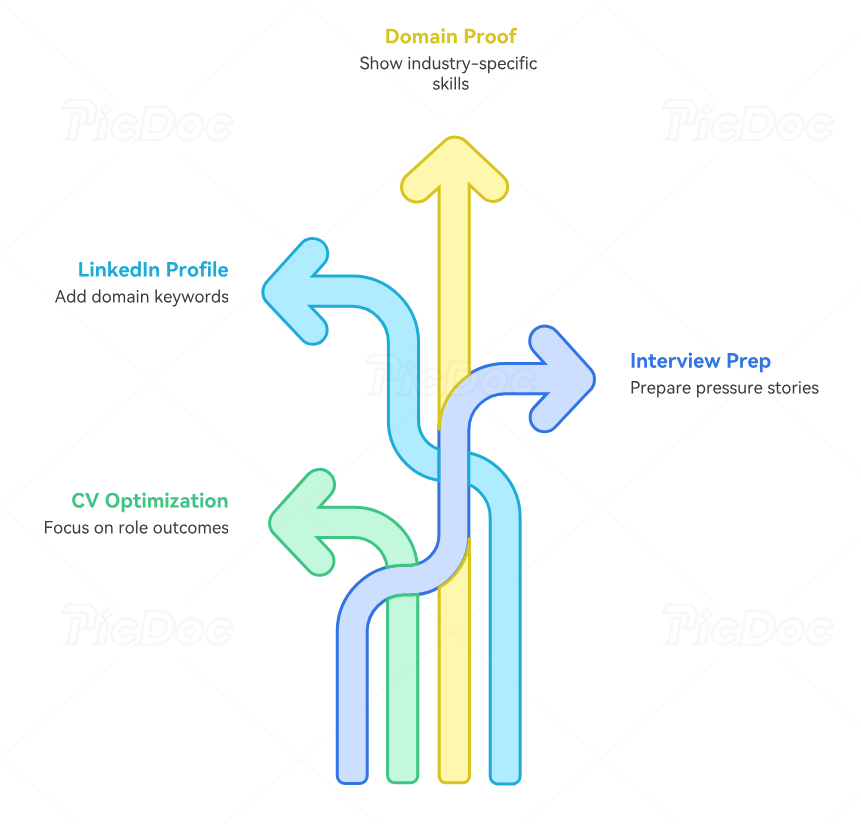
Finally, prepare your Germany-ready career assets before you sit the exam. Your CV should connect certification to outcomes, domain, tools, methods, and governance. Your LinkedIn profile should name the project types you can manage, the methods you use, and the business problems you solve. Your portfolio should include sanitized artifacts that prove how you think. Your interview stories should use situation, constraint, action, stakeholder tension, decision, and measurable result. This is especially important for candidates moving into Germany from another country because foreign experience becomes easier to trust when it is translated into structured proof. Support that move through international PM readiness, remote PM proof, freelance PM positioning, and PM consultancy positioning.
4. How to Turn Your Certification Into a Germany-Ready Job Application
A certificate must land inside a stronger application system. Start with a CV headline that names your role target and delivery environment: “Project Manager | IT Transformation | Agile-Hybrid Delivery | Vendor & Stakeholder Governance” is stronger than “Certified Project Manager looking for opportunities.” Then make each role outcome-led. A good bullet shows the problem, your control mechanism, and the result. For example: “Built a change-control register for a delayed vendor migration, reduced approval ambiguity, and improved steering committee decisions.” That kind of sentence connects directly to change management, stakeholder engagement, project reporting, and risk response planning.
Your LinkedIn profile should carry the same discipline. The “About” section should say what projects you manage, which methods you use, which industries you understand, and which business risks you reduce. Avoid certificate-only branding because hiring managers search for delivery problems, not exam names. Add keywords naturally: stakeholder alignment, cross-functional delivery, requirements control, schedule management, vendor coordination, agile delivery, governance cadence, executive reporting, benefits tracking, and risk mitigation. Then back those claims with featured artifacts or short project summaries. Use project monitoring and control terms, earned value management terms, resource allocation concepts, and schedule compression terms to sharpen your language.
Germany-ready applications also need domain proof. For IT, show Jira workflows, sprint metrics, release coordination, stakeholder demos, dependency control, and vendor handoffs. For construction, show baselines, critical paths, change orders, site coordination, contractor communication, and safety-aware planning. For healthcare, show compliance sensitivity, multidisciplinary stakeholder management, patient-impact awareness, and structured change communication. For government or public-sector work, show approvals, procurement timelines, auditability, decision logs, and documentation. This is where internal preparation through IT project management careers, construction PM careers, healthcare PM careers, and government PM careers becomes practical.
Interview preparation should focus on moments of pressure. Hiring panels learn more from your project breakdowns than from your certificate list. Prepare stories around a delayed milestone, unclear requirement, difficult supplier, stakeholder conflict, budget pressure, quality issue, scope change, failed handover, and executive escalation. For each story, explain the baseline, the risk, the people involved, the trade-off, the control you introduced, and the result. This approach makes your certification feel lived, not memorized. It also helps you show readiness for PM director growth, VP-level project leadership, portfolio management, and Chief Project Officer thinking.
5. Common Certification Mistakes Candidates Make in Germany
The first mistake is choosing a certificate because it looks globally famous while ignoring the role you actually want. PMP can be excellent for experienced PMs, yet a junior candidate may gain faster traction from CAPM, IPMA Level D, Scrum, or a tool-heavy portfolio. PRINCE2 can be powerful in governance-heavy settings, yet software teams may still ask for agile delivery evidence. IPMA can be strong in Europe, yet candidates still need clear CV proof. This is why your choice should follow a role map built from entry-to-executive PM careers, Agile PM pathways, Scrum Master careers, and Product Owner careers.
The second mistake is studying for the exam without building career evidence. Exam prep teaches concepts; job search proof shows application. Build a certification portfolio while studying. Every week, turn one knowledge area into a practical asset: risk register, stakeholder matrix, communication plan, benefits map, change log, sprint board, procurement tracker, acceptance checklist, quality gate, or executive dashboard. This gives you interview material and makes your learning stick. A candidate who can show how they use risk registers, Gantt charts, agile metrics, and project financial management will sound more credible than a candidate who only says they passed.
The third mistake is using one generic application for every German role. A PM applying to an automotive supplier, a Berlin SaaS company, a hospital transformation office, a public-sector digitization program, and a construction firm should adjust their positioning each time. The certificate stays the same; the proof changes. Tailor your summary, keywords, project examples, and artifact selection to the role’s operating risk. Show predictable delivery where predictability matters. Show iteration where agility matters. Show governance where auditability matters. Show stakeholder confidence where politics matter. Strengthen that tailoring through future PM skills, AI in project management, future project governance, and sustainability project management.
The fourth mistake is ignoring language and documentation. Many Germany-based international teams operate in English, yet German documentation culture still values clarity, traceability, structure, and accountability. Learn key German project words if you are targeting local roles: Projektmanagement, Anforderungen, Stakeholder, Meilenstein, Risiko, Berichtswesen, Lenkungsausschuss, Beschaffung, Qualitätssicherung, Abnahme, Terminplan, Budget, Änderung, and Ressourcenplanung. You do not need perfect German for every role, yet you need to show respect for the operating environment. Pair language awareness with project reporting terms, vendor terms, quality terms, and ISO standards terms.
6. FAQs About Getting Your Project Management Certification in Germany in 2026-2027
-
The best certification depends on your target role. PMP is strong for experienced project managers who want broad international recognition. CAPM works well for early-career professionals who need structured PM knowledge. PRINCE2 is useful where governance, stages, business justification, and decision control matter. IPMA has strong European relevance because it focuses on competence levels. Scrum, Agile, Kanban, and Product Owner credentials help candidates targeting software, digital transformation, and product-led teams. Choose through a role filter using certification evolution, Agile PM planning, Scrum Master planning, and international PM planning.
-
PMP can be worth it when you already have meaningful project leadership experience and want a globally understood senior signal. It works especially well when your CV proves scope ownership, stakeholder management, risk control, budget awareness, change management, and measurable delivery outcomes. PMP becomes weaker when candidates rely on the credential without showing project evidence. Pair it with project execution terms, risk mitigation terms, earned value terms, and PM leadership communication.
-
Beginners should choose based on target environment. CAPM is useful for broad project management foundations. IPMA Level D can be attractive for candidates who want a Europe-aligned competence route. Scrum is practical for candidates targeting software teams, agile delivery, product operations, or digital transformation. The best beginner path often combines one credential with proof assets: a project plan, stakeholder map, risk register, sprint board, and status report. Build the foundation through project manager career planning, Scrum glossary terms, Kanban terms, and agile metrics.
-
Many international companies, tech teams, consulting firms, and cross-border programs use English, especially in major business hubs. German skills still improve your options, especially in public-sector, healthcare, construction, manufacturing, local vendor, and regulated environments. At minimum, learn German project vocabulary and show documentation discipline. A hiring manager may forgive imperfect language faster than unclear reporting, vague ownership, or weak stakeholder control. Strengthen your readiness through stakeholder engagement, project reporting, vendor management, and government PM guidance.
-
Place the credential near your headline, then prove it inside your experience bullets. Replace vague responsibilities with controlled outcomes: improved milestone tracking, reduced scope ambiguity, built a governance cadence, recovered vendor delays, created a risk register, improved sprint predictability, or strengthened executive reporting. Add a small “Project Artifacts” section if you can share sanitized samples. Include tools, methods, industries, and delivery scale. Use project management templates, Gantt chart terms, resource allocation terms, and project closure concepts to sharpen your proof.
-
The fastest way is to study and build proof at the same time. Pick the certificate that matches your target role, create a 6-to-10-week study plan, and produce one practical project artifact per week. Then update your CV, LinkedIn, interview stories, and portfolio before applying. A certificate gets attention; evidence earns trust. Focus on the hiring pain behind each role: delivery predictability, stakeholder alignment, vendor control, budget discipline, risk management, reporting clarity, or agile flow. Use remote PM careers, freelance PM careers, consultancy firm planning, and future PM skills to turn the credential into a career system.
