
Complete Guide to Becoming an International Project Manager (2026-27 Edition)
International project management is not “project management, but with airports.” It is delivery under time zone friction, cultural misreads, currency risk, and regulatory uncertainty while stakeholders demand the same thing they demand locally: speed, predictability, and results. This guide breaks down the exact capabilities you need in 2026 to 2027, how global employers screen candidates, how to build proof fast, and what to do when cross-border delivery turns messy. If you want to lead programs across regions without becoming the bottleneck, start here.
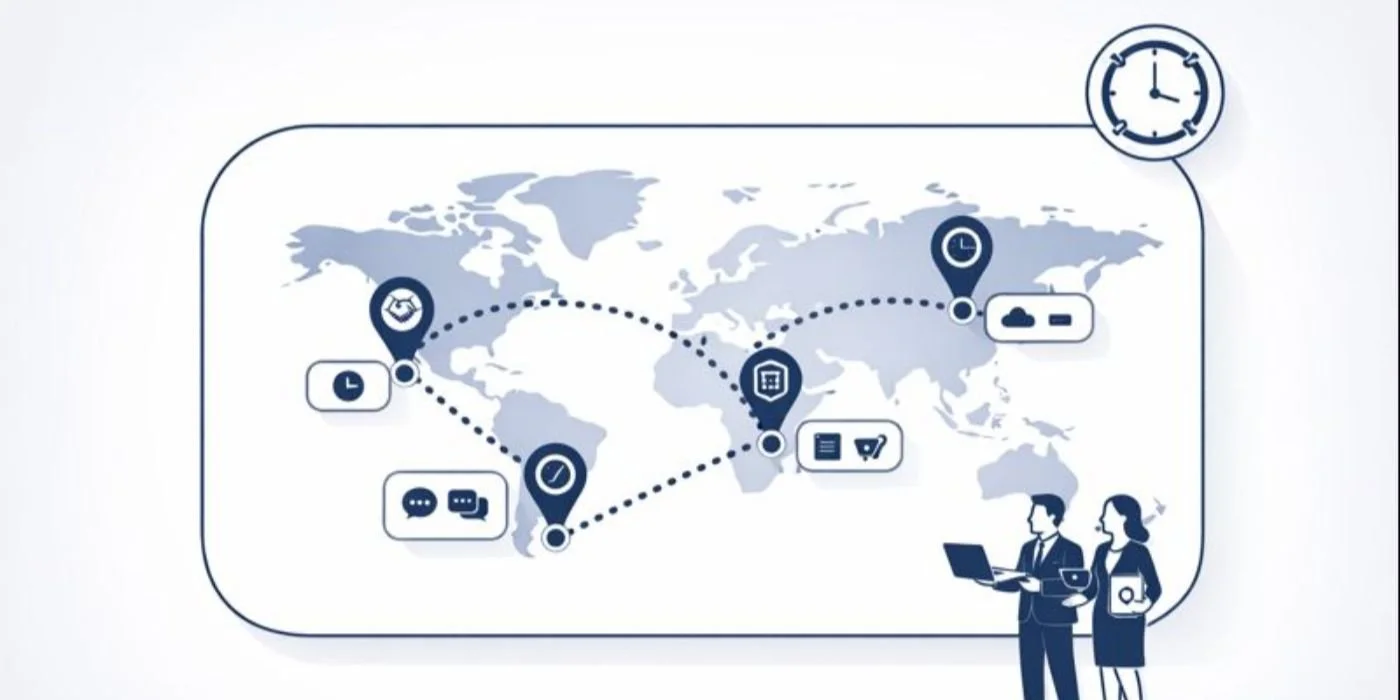
1) What “international project manager” actually means in 2026–27
International PM roles vary, but they share one brutal truth: your delivery system must survive complexity that local projects rarely face.
International PM work usually falls into five patterns:
Multi-country rollout: one solution, many markets. The trap is assuming a “global template” will fit every region. It will not. You need local variants without losing control. That is why modern organizations lean toward operating models explained in the rise of hybrid project management because strict Waterfall often collapses under regional change, while pure Agile struggles with governance and audits.
Distributed product delivery: teams in different countries ship one product. The trap is coordination debt. Your success depends on dependency clarity, release governance, and work visibility, supported by where the market is heading in the future of project management software.
Vendor-heavy execution: multiple suppliers across borders. The trap is contracts that look “done” but still allow ambiguity, cost bleed, and schedule drift. Strong governance, as described in the future of project governance, becomes a career-level differentiator here.
Regulatory-led programs: compliance drives timelines. The trap is thinking compliance is a checklist. In reality, it is a delivery constraint that changes scope, evidence, approvals, and sequencing. International PMs win by building decision systems that reduce rework.
Portfolio-level coordination: cross-region prioritization and capacity tradeoffs. The trap is local leaders optimizing for their region while global leaders need alignment. This is why a portfolio lens from future of project portfolio management is increasingly expected even for senior “project” titles.
What global employers screen for in 2026–27:
Can you lead delivery without being online 18 hours a day
Can you create decision velocity across time zones
Can you manage risk beyond “project risk” like currency, geopolitical, supplier, and regulatory risk
Can you prevent misalignment before it becomes rework
Can you run governance that is light enough to move fast and strong enough to protect outcomes, aligned with the future role of the PMO
If your resume says “managed global stakeholders” with no proof, you will blend into the pile. You need artifacts that show you can control delivery across borders.
2) The skills and competencies global employers pay for
International PMs are paid for outcomes, but they are promoted for capabilities. The difference is your ability to create delivery stability when the environment is unstable.
A) Method flexibility without chaos
Global programs often require hybridization. You might run Agile discovery while managing regulatory approvals and vendor contracts in a structured stage gate. This is why understanding project management methodologies by 2030 matters. You are not choosing a religion. You are choosing a control strategy.
B) Governance that accelerates decisions
International projects die in “waiting.” Waiting for legal review, waiting for regional approval, waiting for vendor response, waiting for the sponsor who is asleep in another time zone. You need governance that forces decisions with minimal meetings. Build your approach using the principles in future project governance and the operating logic behind the PMO’s future role.
C) Tooling fluency that reduces coordination debt
If your program runs across regions, your tool stack is your nervous system. The best international PMs design workflows that prevent noise, keep accountability visible, and reduce status meetings. Align your thinking with AI, automation, and cloud integration in PM software and how careers shift under automation in AI transforming PM careers.
D) Modern estimation and scheduling
International delivery is punished by underestimation. Travel constraints, vendor lead times, procurement steps, and compliance reviews create delays that local teams forget. Learn the future direction in machine learning for estimation and scheduling, then apply the mindset even if you are not using advanced tooling: build buffers based on risk, not hope.
E) Cross-border leadership
Leading across borders is about clarity, empathy, and relentless alignment. You need to communicate in ways that avoid embarrassment, avoid ambiguity, and avoid escalation. This maps directly to the “human” skill stack described in future project manager skills.
If you want an easy way to self-audit: can you produce an artifact for each capability? If not, your skill is not yet marketable.
3) Certifications and training paths that support international roles
International PM hiring managers do not worship certifications, but they use them as filters. Your goal is to pick the credential that matches your career stage, then turn it into proof.
If you are early career or pivoting:
Start with CAPM to build language, structure, and credibility. Use the ultimate CAPM guide, the CAPM 30-day plan, and pressure-test your understanding with CAPM exam questions. Then build a global-ready portfolio: scope map, change control, risk log, and a one-page exec update.
If you are targeting Agile-heavy international delivery:
Global Agile fails when teams cannot coordinate dependencies. PMI-ACP can support credibility when your role requires Agile fluency across distributed teams. Use PMI-ACP prep in 30 days and validate with PMI-ACP questions. If your lane is Scrum facilitation, the CSM guide is a practical foundation.
If you want a structured credential route outside PMI:
Explore the IAPM exam insights or the CompTIA Project+ guide. These can be useful when employers value structured fundamentals but you need a credential path that fits your situation.
If you want leadership credibility:
International roles often expand into PMO and portfolio responsibilities. Strengthen your leadership framing using future leadership approaches and align with portfolio expectations through PPM trends.
Certifications open doors. Proof closes deals.
4) How to build international PM proof that gets hired
International PM roles are competitive because many people want them, but few can prove they can deliver globally. You win by building a portfolio of artifacts that demonstrate control.
Artifact 1: Global stakeholder map with decision rights
Not a generic list. Build it by region, show influence and concerns, and define who approves what. Link it to an escalation path. This mirrors the execution reality behind project governance best practices.
Artifact 2: Integrated master schedule with dependency visibility
A global schedule is useless if it is just dates. You need logic, dependencies, and critical path clarity. If you want to modernize estimation thinking, align with what is coming in ML-driven estimation and scheduling.
Artifact 3: Change control system that protects scope across regions
International projects collapse when every region requests “small changes” that add up. Your change control must quantify impact in time and cost. If you need extra budget framing, study how teams are adapting under pressure in inflation impacting project budgets.
Artifact 4: Executive status pack that forces decisions
One page, not a deck. Progress, risks framed as decisions, blockers, and tradeoffs. This is how you build sponsor trust. Tie your approach to how PMOs are evolving in PMO success by 2030.
Artifact 5: Communication architecture that reduces meeting overload
Map your cadence: async updates by region, weekly sync, monthly steering. International PMs who rely on meetings fail because time zones punish them. A tool-driven operating model is why the future of PM software matters so much.
If you can show these artifacts in interviews, you stop sounding like “another PM” and start sounding like the person who will stabilize delivery.

5) A practical 90-day roadmap to become hire-ready for international roles
International roles reward preparation that is visible. Use this roadmap to build credibility fast.
Days 1–15: Pick your international lane
Choose one: global product delivery, multi-country rollout, vendor-heavy programs, compliance-led work, or PMO/portfolio coordination. Your lane determines the language you use and the artifacts you prioritize. Use future PM skills to identify which competencies to showcase.
Days 16–35: Get credential momentum and build the first proof set
If you are early career, start CAPM using the CAPM guide and the 30-day CAPM plan. If you are Agile-leaning, use PMI-ACP prep. Build your stakeholder map, decision log, and a one-page exec update.
Days 36–60: Build a global delivery simulation portfolio
Create a simulated project pack for a multi-region rollout. Include localization backlog, compliance gate plan, vendor milestones, risk heatmap, and integrated schedule. Use hybrid planning logic from hybrid PM trends and governance structure from future governance.
Days 61–75: Build credibility with international stakeholders
Stop asking for “job referrals.” Ask for feedback on your artifacts. International leaders respect competence. If you can show your executive status pack and decision flow, you will get real advice and hidden opportunities.
Days 76–90: Interview preparation with tradeoff narratives
Prepare stories about time zone friction, decision delays, vendor disputes, and scope creep. Each story should include: context, constraint, decision, impact. Align your storytelling with leadership expectations in future PM leadership.
This roadmap makes your readiness visible. That is what wins.
6) FAQs: Becoming an international project manager in 2026–27
-
International PM work amplifies friction. Time zones slow decisions, cultural nuance changes how stakeholders interpret “yes,” and regulatory or vendor constraints can reshape your plan mid-flight. Local PMs can often fix issues with quick meetings. International PMs win by designing systems: decision rights, async reporting, and governance that accelerates clarity. Study the control mindset behind future governance best practices and align with evolving PMO expectations in the future role of the PMO.
-
It depends on your lane. For foundational credibility, CAPM builds structured language fast and supports interview clarity, using the CAPM exam guide. For distributed Agile delivery, PMI-ACP supports modern delivery credibility using PMI-ACP prep. For Scrum facilitation, use the CSM guide. Your proof artifacts still matter more than the badge.
-
You reduce conflict by making meaning explicit. Confirm assumptions in writing, use decision memos, and separate “agreement” from “commitment.” Create a stakeholder map by region, define decision rights, and build an escalation path so the program does not stall. Pair this with governance patterns from project governance trends so stakeholders feel safe that decisions will not be rewritten later.
-
Tools matter when they reduce coordination debt. You need a single source of truth for status, risks, and decisions, plus workflows that enforce accountability without meetings. The direction of the market is clear in the future of PM software, and the career advantage goes to PMs who can automate visibility, supported by AI transforming PM careers.
-
Define core scope versus local variants early. Then force every change request through impact quantification: cost, time, risk, and downstream dependencies. International scope creep is deadly because small regional changes stack into major delays. A strict change control log plus clear acceptance criteria protects you, and governance discipline from future governance best practices makes it enforceable without constant conflict.
-
Treat the budget as a living forecast, not a fixed number. Build sensitivity ranges, define reforecast cadence, and align stakeholders on what triggers changes. Inflation and cost volatility can destroy credibility if you pretend they are not real. Use practical framing from inflation impacting project budgets and tie financial updates to decision points so leaders can act early.
-
Build a simulated global project pack and ask experienced leaders to critique it. Your pack should include a global stakeholder map, integrated schedule with dependencies, localization backlog, compliance gates, risk heatmap, and a one-page executive update. This proves you understand the mechanics, not just the title. Anchor your approach in modern execution patterns like hybrid project management and portfolio thinking from PPM trends.
