
Understanding ISO Standards: Essential Terms for PM
ISO language can confuse even experienced project managers because standards work is full of terms that sound simple until an audit, certification discussion, supplier review, or quality failure turns them into expensive misunderstandings. Teams say they are “following ISO,” yet cannot define scope boundaries, documented information, nonconformity handling, or what an actual corrective action requires in practice.
Project managers do better when they understand the vocabulary underneath compliance work. These terms help you translate quality expectations into delivery controls, align operations with stakeholders, reduce documentation chaos, manage cross-functional accountability, and keep standards-related work from becoming a last-minute panic exercise right before audits, client reviews, or contract renewals.
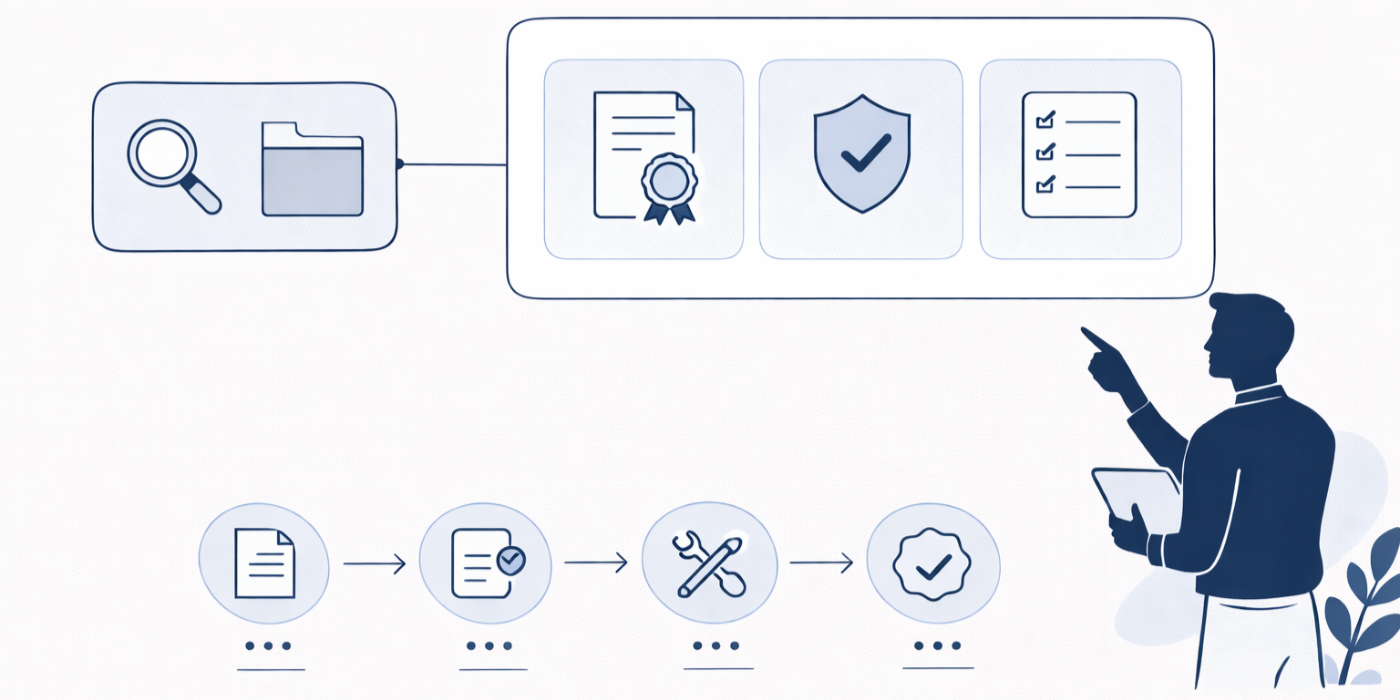
1. Why ISO terminology matters for project managers far beyond compliance
Many project managers treat ISO work as something owned by quality teams, consultants, or auditors. That assumption falls apart fast in real delivery environments. The moment a project touches regulated processes, vendor obligations, quality systems, implementation governance, service management, security controls, or repeatable documentation practices, ISO language starts affecting schedules, responsibilities, sign-offs, and risk exposure. A PM who does not understand that vocabulary is managing half the project blind.
This matters because ISO-related work rarely fails through one dramatic mistake. It breaks through vague ownership, shallow documentation, undefined controls, missing evidence, misunderstood requirements, weak stakeholder communication, and poor issue tracking. One team thinks a policy is enough. Another assumes a checklist counts as evidence. A manager believes a fix is corrective action even though root cause was never verified. Then the project hits an audit finding, a customer escalation, or a process breakdown that should have been prevented earlier.
For project managers, ISO terms create decision clarity. They improve the way you define requirements, structure risk responses, organize document management, and support quality management. They also help when dealing with suppliers, PMOs, internal auditors, procurement teams, and leadership groups that want proof, traceability, and repeatability rather than good intentions.
Most importantly, ISO vocabulary helps a PM ask better questions before damage spreads. What is the scope of the system? Which process owner controls this requirement? What evidence proves conformity? What happens when a nonconformity is found? What preventive control sits upstream of this failure? Those are not side questions. They often decide whether a project stays disciplined or turns into a cleanup operation later.
2. The foundational ISO terms every PM should know before touching audits, quality work, or controlled processes
Start with the word standard. In practical project terms, a standard is the agreed framework that defines what acceptable practice should look like. It is the reference point against which your process design, evidence, controls, and outputs may be judged. When PMs miss that, they treat standards like abstract policy instead of operational design.
Requirement is the next essential term. A requirement is something the system expects to be fulfilled. That may involve documented controls, competence, monitoring, review, traceability, risk management, or evidence retention. A common project failure happens when teams can recite a requirement but cannot show how it has been converted into actual project planning, scheduling, communication workflows, or quality controls.
Conformity means meeting a requirement. Nonconformity means failing to meet one. Those terms matter because they create the language of evidence and consequence. A PM should never wait for an auditor to discover nonconformity logic. If a document is missing approval, if a required review was skipped, if a supplier control was not followed, or if a process exists only in theory, the project already has a conformity problem whether anyone has formally written it up yet.
Documented information is one of the most useful ISO phrases for project work. It covers the records and controlled documentation needed to operate and prove the management system. PMs need this concept because delivery memory is fragile. Team members leave. Decisions get challenged later. Versions drift. A powerful meeting can redirect work, but if the change lives only in someone’s head, your system is weak. Strong document management, clear reporting structures, disciplined knowledge management, and better dashboard visibility turn documented information into operational protection rather than admin clutter.
3. The ISO terms that matter most when projects go wrong and leadership wants answers
Trouble exposes vocabulary weakness immediately. A delay happens. A release goes wrong. A customer complains. A supplier fails. A document trail collapses. That is when terms like corrective action, root cause, objective evidence, control, and traceability stop sounding formal and start sounding expensive.
Corrective action is widely misunderstood. It does not mean “we fixed the problem.” It means action was taken to remove the cause of the detected nonconformity so the issue does not recur. That distinction matters. A patch, rework, or apology may address the symptom. Corrective action asks what system failure allowed the problem in the first place. Was the approval control weak? Was the process undefined? Was training insufficient? Was ownership unclear? Was the risk response missing? Was the stakeholder map incomplete? Did the team lack proper procurement controls?
Root cause is the underlying reason the issue occurred. The strongest PMs resist shallow explanations. “Human error” is often a lazy label hiding process failure, weak training, poor interface design, unrealistic workload, or missing verification. Without root-cause discipline, organizations repeat the same breakdowns while telling themselves they learned something.
Objective evidence is the proof that something actually happened, was reviewed, was approved, was trained, was tested, or was controlled. Evidence can include records, logs, signed approvals, system outputs, audit trails, training completion records, or version-controlled artifacts. This matters because many teams believe they are compliant simply because intentions were good and meetings were held. Audits and serious reviews do not run on belief. They run on evidence.
Traceability ties all of that together. It allows a PM to show how a requirement moved into a procedure, how the procedure moved into execution, and how execution generated evidence. Without traceability, every review becomes argumentative.
4. The management-system terms that help PMs align teams, vendors, and leadership
Some ISO terms matter less at the task level and more at the system level. These are the terms that stop standards work from becoming isolated paperwork.
Context of the organization asks what internal and external realities shape the system. That includes the company’s size, operating model, customer expectations, regulatory pressure, supply-chain risk, strategic priorities, cultural maturity, and technology environment. PMs who ignore context often build beautiful controls that nobody can sustain. PMs who understand context make sharper decisions about sequencing, simplification, software enablement, automation support, and future operational trends.
Interested party is another vital term. It refers to the people or groups with relevant expectations tied to the system. That may include customers, regulators, executives, suppliers, auditors, employees, or implementation partners. For PMs, this term sharpens stakeholder mapping. It helps you separate noise from actual obligation. A customer request, a regulatory clause, a contract commitment, and an internal preference do not carry the same weight. You need to know which expectations are binding, which are strategic, and which are merely loud.
The process approach means managing work as connected processes rather than disconnected tasks. This is one of the healthiest ideas in ISO language because it pushes PMs to think about flow. Where does work enter? What transforms it? Who reviews it? What outputs should exist? Where are the handoff risks? Which process feeds the next one? That style of thinking strengthens project quality, resource planning, team coordination, and stakeholder alignment all at once.
Management review connects standards work to leadership. It is the formal evaluation of how well the system is performing and what decisions leaders should make next. Weak organizations treat management review like a slide deck ritual. Strong ones use it to test trends, examine findings, assess risks, review objectives, challenge weak controls, and decide where improvement effort should go.

5. How project managers can use ISO terminology to sound sharper, plan better, and avoid sloppy compliance theater
Many PMs lose credibility when they talk about standards in vague slogans. They say the team is “aligned to ISO” or “compliant with process,” but cannot explain the evidence chain, the ownership model, or the response path when something breaks. Leadership hears that and assumes the work is softer than it should be.
Using ISO terms correctly changes that. It lets you explain whether a problem is a nonconformity, a control weakness, a traceability gap, a competence issue, a scope misunderstanding, or a management-review blind spot. Those are more powerful statements than “we need to tighten things up.”
This language also helps with vendor oversight and cross-functional coordination. A supplier may deliver output, yet still fail your system needs if traceability is poor, evidence is incomplete, or required controls are undocumented. A team may have strong technical skill, yet still be weak on competence in the ISO sense if they have not been trained, evaluated, or made aware of how their actions affect system outcomes. A process may exist on paper, yet still fail during execution because awareness is low and documented information is fragmented across folders, chats, spreadsheets, and tribal memory. That is where stronger knowledge systems, cleaner reporting tools, better calendar and workflow control, and disciplined project software usage become part of standards success rather than separate operational topics.
There is another benefit: ISO vocabulary helps PMs reject fake compliance. Fake compliance looks polished in meetings. It has templates, folders, labels, and confident updates. Then one external review arrives and nobody can prove consistency, scope boundaries, approval history, or the effectiveness of corrective actions. Real standards maturity is quieter. The right records exist. Controls are understood. Evidence is easy to retrieve. Findings get resolved at root cause. Leadership reviews mean something. Teams know why the process matters.
That is where project managers become extremely valuable. They turn ISO language into executable discipline instead of theater.
6. FAQs
-
For PMs, ISO usually matters as a structured framework for defining requirements, controls, documentation, evidence, review mechanisms, and improvement expectations. The real value is not the acronym. The real value is the operating discipline it forces across planning, execution, review, and corrective action.
-
In standards conversations, conformity usually means meeting the stated requirements of the standard or management system. Compliance is often used more broadly and may include laws, regulations, contracts, or internal policies. In daily project work, the distinction matters because not every expectation comes from the same source.
-
Because memory is weak, staff turnover is real, and informal decisions vanish under pressure. Documented information creates repeatability, traceability, and defensible evidence. Without it, projects rely too heavily on personalities and verbal history.
-
A nonconformity is the failure to meet a requirement. It may involve a missing record, a skipped review, an uncontrolled change, an untrained role, or a process that does not match what the organization says it does. Nonconformities matter because they reveal where the system is unreliable.
-
Corrective action removes the cause of a detected problem so the issue does not happen again. Teams often confuse it with quick fixes. A quick fix handles the immediate mess. Corrective action solves the underlying condition that made the mess possible.
-
Objective evidence is verifiable proof that a requirement was met or an action occurred. It can include records, approvals, logs, system screenshots, training records, signed documents, or controlled outputs. Evidence is what lets an organization prove performance instead of merely claiming it.
