
Career Roadmap: How to Build a Successful Freelance Project Management Career
Building a freelance PM career isn’t about “being good at project management.” It’s about building a repeatable business where clients trust you fast, outcomes are measurable, scope is controlled, and cash flow doesn’t depend on luck. Most capable PMs fail here for predictable reasons: they sell generic capability, they don’t productize delivery, and they don’t build proof assets that make hiring easy. This roadmap fixes that—positioning, pipeline, pricing, delivery systems, and the exact proof signals clients look for when they pay premium rates.
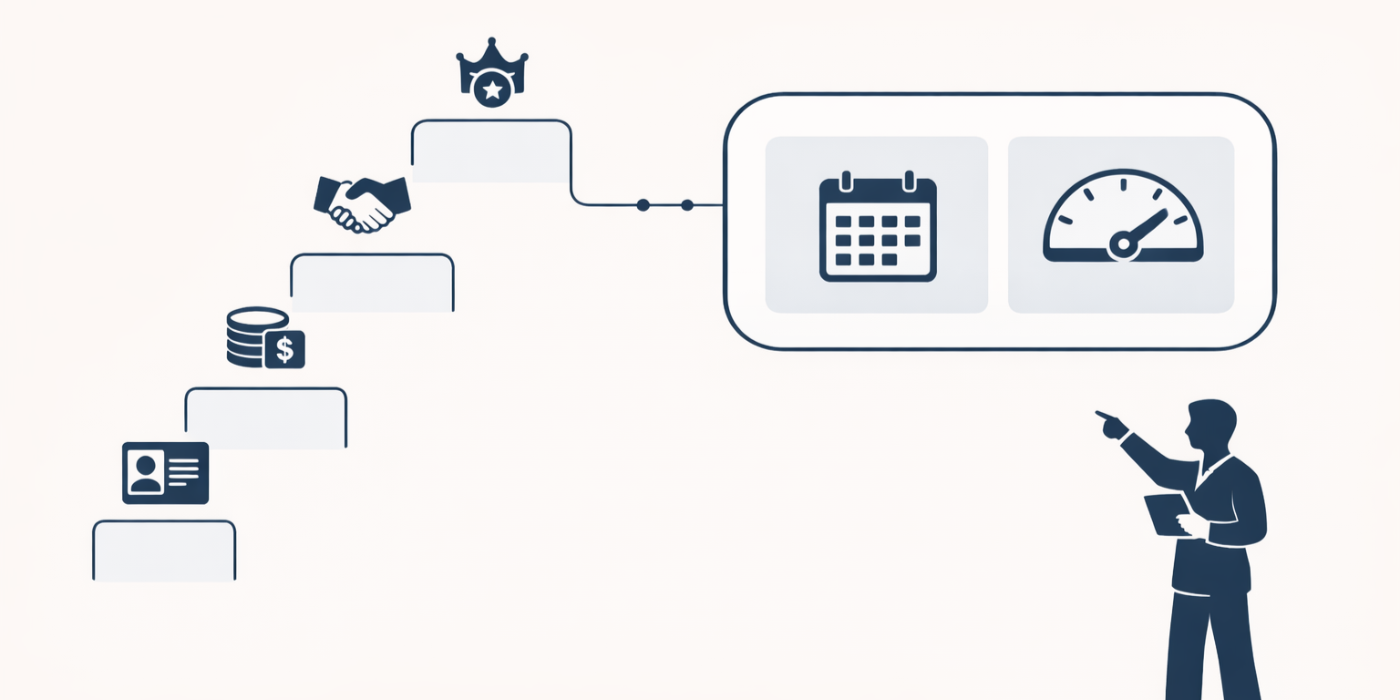
1) Decide What Kind of Freelance PM You Actually Want to Be
Freelance PM isn’t one job. It’s 4–5 different business models with totally different lead sources, pricing anchors, and risk profiles. Pick the model first, then align your skills, offers, and assets to it—otherwise you’ll keep pitching “PM support” and losing to cheaper contractors.
Freelance PM business models (choose one as your default):
Delivery PM (fixed outcome): You own a clear deliverable: “launch,” “migration,” “implementation,” “PMO reset.” This aligns well with a project management consultancy firm model because you’re selling outcomes, not hours.
Fractional PM / Program Lead (retainer): You run delivery across multiple streams and stakeholders, often remotely; your leverage improves if you master remote & virtual PM roles.
Specialized PM (regulated/high-risk): Healthcare, public sector, procurement-heavy, or cyber-adjacent work; your differentiation comes from domain fluency (see healthcare PM roadmap).
Portfolio / PPM Operator (capacity + prioritization): You fix how work flows through the org, not just one project—this pairs naturally with project portfolio manager skills.
Tooling/Reporting PM (exec visibility): You win by making delivery measurable using reporting & analytics and dashboards & visualization tools.
Reality check: If you can’t clearly explain what changes because you exist, you’ll compete on price forever. Your goal is a crisp promise: “I reduce delivery risk and speed decisions by installing governance + reporting + scope control in 14 days,” tied to proof assets and process.
Before you chase clients, fix the three silent killers:
No clear authority boundary → scope creep becomes your default. You need stakeholder clarity (start with stakeholder terms every PM should master).
No delivery system → every project feels custom; your margin collapses. Use standard tools like issue tracking software plus consistent reporting.
No pipeline → you accept bad-fit work because you’re scared of the gap. Build the pipeline before you need it.
2) Positioning That Wins: Your Niche, Your Buyer, Your “Proof-First” Offer
“Freelance PM” is not a niche. It’s a commodity label. Clients buy you when you clearly reduce a specific risk: missed deadlines, blown budgets, vendor chaos, internal politics, or broken reporting that hides problems until it’s too late.
Start with a niche that is credible (you can win now), valuable (buyers feel pain), and repeatable (you can reuse assets). A strong shortcut is to pick a domain where your operating knowledge is already high—construction, healthcare, public sector, or technology—and use APMIC’s career guides as a pattern library, like the construction PM career guide or the international PM guide.
Build the “three-layer” positioning statement
Who you serve: buyer role + environment (e.g., founders of service businesses, PMOs in mid-market, delivery leaders in healthcare).
What you fix: measurable pain (slips, rework, decision latency, vendor churn).
How you prove it: specific assets + process (dashboards, cadence, risk register, change control).
Example positioning:
“I help founders launch multi-vendor implementations without scope creep by installing governance, reporting, and change control in the first 10 days—then running a weekly steering cadence that forces decisions.”
That “how” matters. It ties into your tool system: project budget tracking tools, calendar & scheduling tools, and Gantt chart software become part of your delivery method, not random app choices.
Productize your offer so it stops being vague
Clients hesitate when they think hiring you means “a PM will show up and run meetings.” Productized offers remove ambiguity:
Offer A: Project Reset (2 weeks, fixed fee)
Outputs: stakeholder map, RACI draft, baseline plan, risk register, reporting pack, decision log.
You anchor this with an executive-ready reporting approach from project reporting & analytics and measurable visibility via dashboards & data visualization.
Offer B: Delivery Lead (8–16 weeks, milestone billing)
Outputs: weekly status cadence, dependency control, vendor coordination, change control, launch readiness gates.
Pair it with operational systems like issue tracking software so delivery doesn’t rely on heroics.
Offer C: Fractional Program PM (retainer)
Outputs: monthly steering pack, quarterly roadmap, portfolio prioritization, risk reduction, leadership visibility.
This becomes stronger if you can talk credibly about PPM trends and modern delivery blends like the rise of hybrid PM.
The proof assets that stop “price shopping”
Freelancers lose when the client can’t quickly evaluate them. Build proof that makes evaluation effortless:
1-page “Delivery System” snapshot: cadence, artifacts, and the 5 KPIs you track (ties to project management software investment surge).
Case study template: situation → constraints → actions → measurable change.
Before/after dashboard screenshot: even anonymized, it signals maturity (use dashboard tools).
Two reference stories: one about a rescue, one about a clean launch—both highlight decision-making, not “tasks.”
If you’re early and don’t have official case studies, create a “simulated” proof pack: a sample status report, risk register, and change log that demonstrates competence without pretending it’s client work.
3) Pipeline Without Panic: Build Lead Sources You Can Control
Freelance PMs don’t fail because they lack ability. They fail because they hit month 2–3 with no pipeline, then accept bad-fit projects that wreck their brand and energy. Your goal is a system where leads arrive from multiple channels, and your calendar doesn’t depend on one platform.
Use the “three-lane pipeline” model
Lane 1: Warm network (fastest close)
Reach out to past stakeholders with a specific offer, not “available for work.” Your message should reference outcomes and risk reduction. Use stakeholder language from essential project communication terms so you sound like a delivery operator, not a job seeker.
Lane 2: Authority content (compounds)
Write proof-first content that mirrors your offer and niche. The market already cares about modern delivery shifts like AI adoption in project management and economic uncertainty driving agile demand. Your content should answer: “How do I reduce risk this quarter?”
Lane 3: Direct outreach (predictable)
Pick 30 target companies, identify the buyer, and send a one-page “what I’d fix first” message. Offer a paid diagnostic. This positions you as a consultant—aligned with starting a PM consultancy firm—instead of a contractor begging for hours.
The outreach angle that gets replies
Most messages fail because they’re vague (“I can help with PM”). Use this instead:
Name the likely delivery bottleneck (decision stalls, scope drift, vendor delays).
Offer one concrete artifact as proof (sample steering pack, risk register).
Propose a low-friction next step (20-minute scoping call or paid 90-minute diagnostic).
You also win trust by speaking in tools and execution, not buzzwords. Mention how you run delivery using project scheduling tools, track budgets with budget tracking software, and keep delivery visible with reporting & analytics.
Your “freelancer funnel” should be brutally simple
Inbound: content, referrals, profile pages.
Conversion asset: a one-page offer + proof pack.
Call: structured discovery.
Close: proposal + SOW with guardrails.
Onboarding: kickoff within 5 business days.
If your funnel requires a perfect week to function, it’s not a system—it’s a hope.
4) Delivery That Creates Referrals: Run Projects Like a “System,” Not a Person
Referrals don’t come from “being nice.” They come from predictability: clients feel safe because your process prevents surprises. Your delivery system must do three things: control scope, speed decisions, and surface risk early.
Your onboarding should install control in the first 5 days
Day 1–2: Alignment
Confirm the outcome and success metrics.
Lock the “not included” list.
Identify decision owners and escalation routes (use stakeholder mastery language so it’s unambiguous).
Day 3–4: Baselines
Schedule baseline using a realistic plan (many clients respect visuals; use Gantt chart tools when it fits).
Create the budget baseline using budget tracking tools.
Create the risk register with owners and mitigations.
Day 5: Cadence installation
Weekly status + decisions call.
A single source of truth (docs + tracker) using document management software so artifacts don’t fragment.
The weekly status format that executives actually read
If your status is “green/yellow/red” without decision requests, you’re doing theater. Your status should contain:
What changed since last week (not what you did).
Top 3 risks with owners + mitigations.
Top 3 decisions needed with due dates.
Milestone forecast and what threatens it.
Budget snapshot: burn + forecast variance.
This approach becomes easier with project reporting & analytics and clean visuals from dashboard tools.
Scope creep prevention: treat it like a process flaw
Scope creep usually isn’t malice—it’s unclear decisions. Use a three-step rule:
Log the change request (what, why, impact).
Price/time impact is stated before approval.
Decision maker signs off.
If the client refuses this structure, that’s a red flag. Your margins will die slowly, and your reputation will take the blame.
Vendor-heavy projects: your leverage is clarity
Freelancers often get pulled into vendor chaos. Protect yourself with:
Acceptance criteria on each deliverable.
Vendor SLAs (response times, rework rules).
A single escalation path.
If procurement is involved, strengthen your competence with a tool-driven approach like procurement management tools and contract systems like contract lifecycle management software.

5) Pricing, Protection, and Scaling Without Burning Out
Pricing is the lever that turns a “busy freelancer” into a business owner. Your goal is to price around outcomes + risk reduction, not time.
Three pricing models that work for freelance PMs
1) Fixed fee (diagnostic/reset)
Best when you can control scope and deliver a defined artifact pack.
Great for new freelancers because it builds proof assets fast.
Position it as a “Project Reset” with immediate value.
2) Milestone billing (delivery)
Aligns payment with progress and protects cash flow.
Forces both sides to define acceptance criteria.
Reduces late-payment stress because invoices are predictable.
3) Retainer (fractional leadership)
Works when the client needs continuous decision velocity, coordination, and reporting.
Strong fit for remote & virtual PM delivery.
Protect yourself (without being “difficult”)
Your best clients respect boundaries. Put these into your SOW/working agreement:
Response-time expectations.
Meeting norms (what meetings exist, why, who attends).
Decision SLAs (if decisions are delayed, timeline shifts).
Change control rules.
This isn’t about legal complexity; it’s about operational clarity. If you want to operate like a consultancy, adopt the mindset from building a PM consultancy firm: you’re installing a delivery system, not renting out your calendar.
Scale by productizing, not by adding chaos
Scaling doesn’t mean “more clients.” It means:
Reusable onboarding templates.
Repeatable reporting packs.
Standard tool stack (issue tracking, docs, dashboards).
A defined niche with predictable problems.
As demand grows, your next step can mirror leadership trajectories found in PM to VP of PM or even PM Director—but freelance: you become the operator who installs governance across multiple teams.
A strong “scale” move is to add a portfolio layer: prioritization and capacity planning—aligned with PPM careers—so clients keep you longer because you influence how work is chosen, not just delivered.
6) FAQs: Freelance Project Management Career Questions People Get Wrong
-
Start by selling a small fixed-scope diagnostic (2 weeks) with tangible outputs: stakeholder map, baseline plan, risk register, reporting pack, and change control. These artifacts are your proof assets. Anchor your delivery method around visible systems like issue tracking software and reporting & analytics so clients feel immediate control.
-
Hourly can work short-term, but it traps you: you’re paid to be busy, not effective. A better beginner move is fixed fee for a diagnostic + milestone billing for delivery. Milestones protect cash flow and force clarity, especially when you track cost/forecast using budget tracking tools.
-
The easiest niche is where you already understand constraints: procurement-heavy environments, healthcare operations, construction delivery, or tool-led implementations. Pick a niche where buyers have high pain and low tolerance for surprises—then support your credibility using structured approaches similar to the healthcare PM roadmap or the construction PM guide.
-
Make change control feel normal and professional: log the change, state the impact (time/cost), and get approval. If they want changes without tradeoffs, the relationship will degrade anyway—because you’ll miss deadlines and be blamed. Use a clear documentation system via document management software so decisions are traceable.
-
Keep it tight:
Issue tracking (single source of truth): issue tracking software
Scheduling visibility (when needed): Gantt chart tools and calendar tools
Exec reporting: reporting & analytics
Dashboards for fast alignment: dashboard tools
Anything beyond that should be justified by the workflow, not preference.
-
You transition when you sell systems and outcomes, not hours. Productize offers (reset, delivery lead, fractional program leadership), standardize templates, and build proof assets. Then expand into adjacent services like governance installs, portfolio prioritization, or PMO modernization—skills that map well to PM Director and CPO-style operating models pathways.
-
Raise rates by increasing certainty:
Clearer offer with explicit success metrics.
Better scope control and decision cadence.
Stronger proof assets (dashboards, before/after metrics).
Reduced client risk through disciplined reporting.
When you can demonstrate reduced slippage, fewer overruns, or faster decision velocity, your rate becomes a risk premium the client is happy to pay—especially in environments shaped by modern delivery pressure like hybrid PM and accelerating tool adoption such as AI in project management.
