
Top Waterfall Project Management Software Reviewed (2026-2027 Guide)
Waterfall software earns its value when the plan has to survive approvals, vendors, contracts, fixed deadlines, regulatory gates, construction sequences, budget controls, and executive scrutiny. In 2026-2027, the best tools are the ones that make phase-based delivery visible before delays become expensive. This guide reviews 25 Waterfall-friendly platforms through scheduling strength, dependency control, baseline tracking, reporting, resource planning, and governance fit, with practical selection guidance connected to project scheduling terms, critical path management, project budgeting terms, and project reporting software.
1. How to Choose Waterfall Project Management Software Without Creating Schedule Chaos
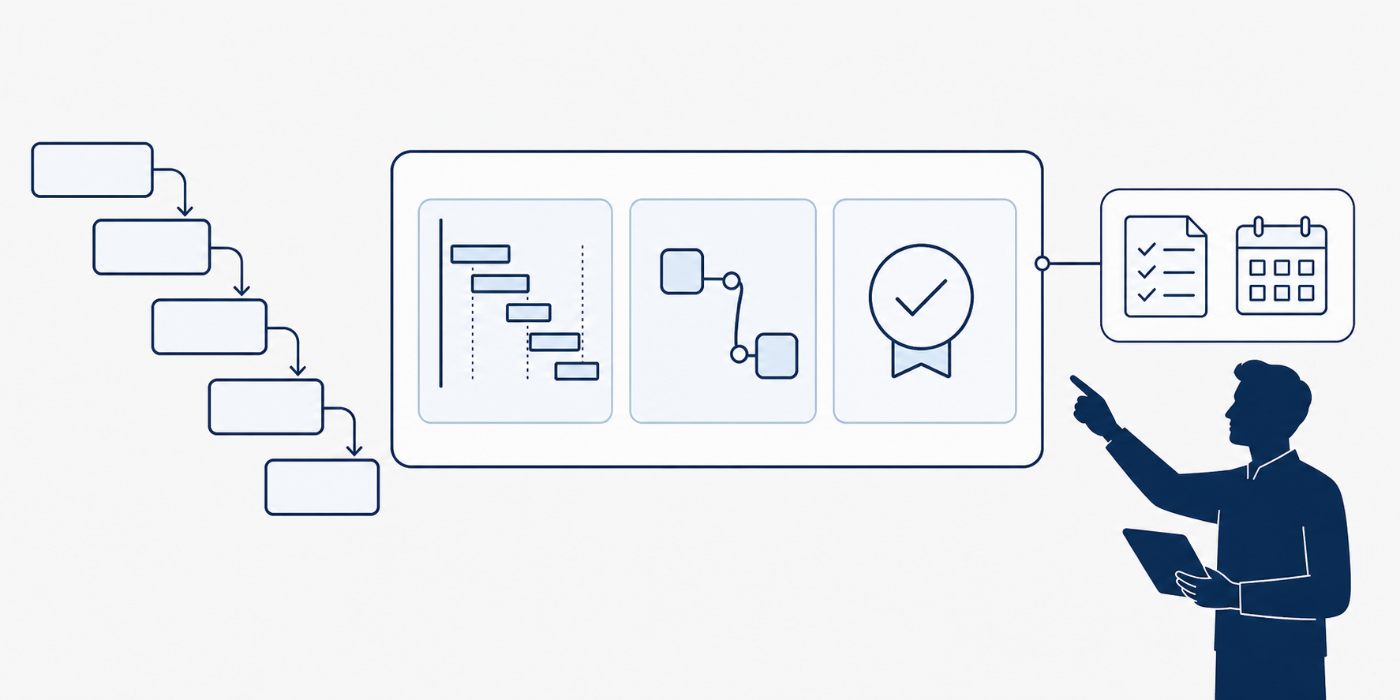
Waterfall project management software should help a PM control sequence, scope, approvals, dependencies, cost exposure, and reporting cadence. A Gantt chart is central because it maps tasks against time, shows sequence, supports planning and scheduling, and helps PMs understand parallel work, dependent work, resource tradeoffs, and likely completion windows. That matters when a project has fixed requirements, strict signoffs, external vendors, procurement lead times, or a deadline that cannot slide quietly. Strong buyers evaluate tools through project initiation terms, cost management terms, contract management terminology, procurement definitions, and risk assessment terms.
The first buying test is schedule logic. Can the software build a work breakdown structure, connect dependencies, define milestones, manage lead and lag, expose the critical path, compare baselines, and show what happens when one task slips? TeamGantt highlights drag-and-drop scheduling, live schedule visibility, files, conversations, and capacity tracking, while its feature page lists dependencies, lead/lag, visual timelines, and project tracking controls. ProjectManager’s Gantt features include dependencies, milestones, critical path, Microsoft Project imports, Excel/CSV imports, and online sharing. These are practical buying signals for anyone studying Gantt chart software, project dashboard tools, resource allocation software, issue tracking software, and project quality terms.
The second buying test is governance fit. A construction PM may need Primavera-level scheduling, resource, risk, and contractor coordination. A PMO may need portfolio rollups, financial controls, scenario analysis, and executive dashboards. A small agency may need TeamGantt, ProofHub, or Teamwork because client visibility and schedule clarity matter more than enterprise configuration. A regulated team may need audit trails, approvals, document control, and traceability. Oracle says Primavera Cloud brings planning, scheduling, resources, and risk management together for engineering and construction projects, while Primavera P6 supports large-scale program planning, secure multiuser schedules, cost coordination, and multiple project scheduling. That is why selection should connect to construction PM careers, government PM careers, portfolio management careers, project governance trends, and project failure root causes.
2. Top Waterfall Project Management Software Reviewed for 2026-2027
Microsoft Project remains one of the strongest choices for traditional project managers because it supports detailed scheduling, task structures, timelines, portfolio visibility, and familiar planning workflows. Microsoft’s current project and portfolio materials describe timeline/Gantt-style planning and portfolio roadmaps that aggregate programs and projects for broader visibility. It fits PMOs that already understand project scheduling, critical path method, project budgeting, PMP exam preparation, and PRINCE2 certification. The downside is adoption: a team that treats scheduling as clerical work will turn Microsoft Project into a static file instead of a living control system.
Smartsheet is powerful for teams that want Waterfall structure with spreadsheet familiarity, automation, forms, dashboards, reports, resource management, and portfolio oversight. Its project management materials list task and milestone tracking, resource management, dashboards, reporting, workflow management, and automation, while its Gantt material emphasizes automated timelines, real-time updates, and drag-and-drop editing. This makes it useful for project reporting analytics, dashboard visualization, resource allocation, project budget tracking, and knowledge management software. Its biggest risk is sheet sprawl. Without naming conventions, ownership rules, and template governance, visibility becomes fragmented.
Oracle Primavera P6 and Oracle Primavera Cloud serve serious construction, engineering, infrastructure, and program environments where schedule credibility can affect claims, payments, contractors, executives, and regulators. P6 supports large-scale program and project scheduling, secure multiuser schedule access, cost coordination, and multiple project scheduling. Primavera Cloud brings planning, scheduling, resource, and risk management into a cloud environment for engineering and construction teams. These tools belong in conversations about construction project management, government project management, project procurement, contract management, and project risk management. They are strongest where schedule logic must stand up to scrutiny.
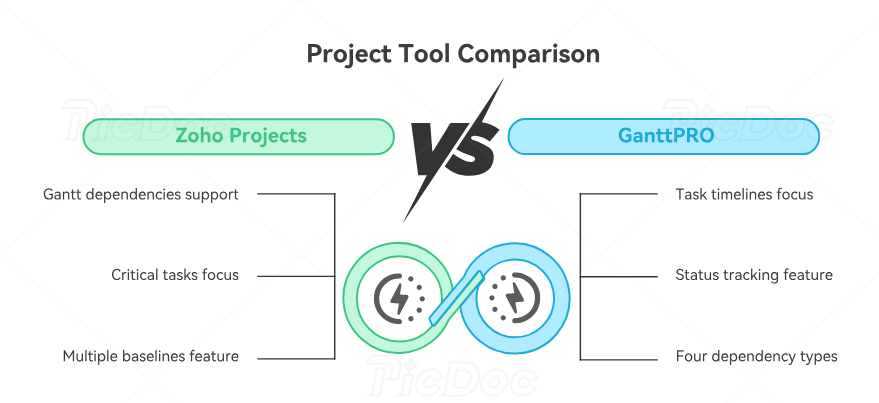
TeamGantt, GanttPRO, ProjectManager, Zoho Projects, and Wrike form the practical middle of the Waterfall software market. TeamGantt is ideal for teams that need timelines, files, conversations, capacity, and stakeholder visibility without an enterprise learning curve. GanttPRO focuses heavily on visual planning, tasks, timelines, statuses, dependencies, and assignees, with separate dependency materials explaining four standard dependency types. Zoho Projects supports dependencies, rescheduling, progress tracking, critical tasks, and multiple baselines. Wrike supports Gantt dependencies, milestones, timeline adjustments, and critical path guidance. These tools support scheduling tools, Gantt software reviews, issue tracking, communication terms, and team management terminology.
monday work management, Asana, ClickUp, ProofHub, Teamwork, and Adobe Workfront work best when Waterfall delivery lives inside cross-functional business operations. monday’s Waterfall and Gantt materials discuss sequential methodology, Gantt charts, dependencies, automations, and milestone visibility. Asana’s Gantt view helps teams plan timelines, manage dependencies, and visualize progress. ClickUp’s Gantt view supports time planning, resource management, dependencies, progress tracking, and delay resolution. ProofHub lists tasklists, Gantt charts, milestones, dependencies, calendars, proofing, approvals, workload views, and reports. Adobe Workfront supports projects, request queues, automated approvals, templates, portfolios, programs, resource capacity, reports, dashboards, and proofing. These platforms fit stakeholder management, human resource management, automation tools, productivity software, and remote project management.
Planview Portfolios, Sciforma, LiquidPlanner, OpenProject, Celoxis, Easy Projects, ProjectLibre, GanttProject, Asta Powerproject, and Deltek PIM are more specialized choices. Planview emphasizes real-time project details across staffing, financials, progress, risk, issues, resources, capacity, and portfolio risk, while its portfolio product connects programs, projects, resources, and financials with business outcomes. LiquidPlanner is often valued for predictive scheduling around priority and resource availability, and Deltek’s project scheduling materials describe activity management, resource allocation, and critical path analysis as core scheduling capabilities. These tools fit advanced PMOs working with portfolio management trends, project governance, project market reports, PM director careers, and executive PM career paths.
3. Which Waterfall Software Fits Which Team?
For construction, engineering, infrastructure, energy, and public-sector delivery, shortlist Primavera P6, Primavera Cloud, Asta Powerproject, Microsoft Project, Deltek-supported environments, Smartsheet, and Planview. These environments usually involve formal schedules, supplier dependencies, site readiness, change orders, approvals, inspections, risk logs, budget controls, and contractual accountability. The tool must help the PM explain why a delay matters, who owns the next decision, which dependency is driving the end date, and where recovery options exist. That connects directly to construction PM trends, procurement management tools, contract lifecycle management, risk management terms, and project budget tracking.
For corporate PMOs, transformation teams, product operations, IT governance, finance-led change, and compliance-heavy projects, Microsoft Project, Smartsheet, Planview, Sciforma, Adobe Workfront, Wrike, Celoxis, Easy Projects, and ProjectManager usually deserve attention. These teams need executive dashboards, portfolio status, capacity planning, baseline variance, benefits tracking, and a single source of truth for escalation. Waterfall delivery here fails when every department keeps its own version of the plan. The right platform should reduce conflicting status narratives and support portfolio manager skills, future PPM tools, project workforce trends, PM software features, and project success factors.
For small teams, agencies, consultants, healthcare administrators, training teams, and service businesses, TeamGantt, GanttPRO, Zoho Projects, monday.com, Asana, ClickUp, ProofHub, Teamwork, and OpenProject may deliver more value than heavyweight enterprise software. These teams need a plan clients can understand, a timeline the team can update, tasks with owners, dependencies that prevent false confidence, and reports that do not require a full-time scheduler. The selection should support healthcare project management, consulting career paths, freelance PM careers, small business PM software, and mobile PM apps.
The safest software choice is the one that fixes your most expensive control gap first.
4. The Waterfall Software Scorecard: Features That Actually Matter
The first scorecard category is schedule control. Look for WBS support, task hierarchy, dependency types, critical path, milestones, baselines, calendars, resource assignments, lead and lag, manual and automatic scheduling, deadline variance, and change history. Zoho Projects explicitly supports Gantt dependencies, critical tasks, and multiple baselines, while GanttPRO highlights task timelines, statuses, dependencies, assignees, and four standard dependency types. A PM who cannot defend the schedule cannot defend the project. Build this evaluation around critical path terms, project scheduling terms, risk identification terms, quality management terms, and project issue tracking.
The second category is governance and approvals. Waterfall projects often depend on business case approval, requirements signoff, procurement approval, vendor selection, design acceptance, testing acceptance, release approval, and final closure. Adobe Workfront’s product description lists request queues, automated approval workflows, templates, portfolios, programs, capacity planning, reports, dashboards, and digital proofs; ProofHub lists proofing and approvals alongside Gantt charts, milestones, dependencies, workload, and reporting. This is where software can protect a PM from vague accountability. Connect this category to project initiation, stakeholder management, contract terminology, procurement tools, and document management.
The third category is reporting credibility. A Waterfall PM should be able to show approved baseline versus current forecast, overdue milestones, critical path movement, resource conflicts, budget variance, unresolved risks, open decisions, and blocked approvals. Smartsheet emphasizes dashboards, reporting, workflow automation, resource management, and portfolio management; Planview emphasizes real-time project details across staffing, financials, progress, risk, and issues. This is where buyers should test reports before committing. Ask the vendor to recreate your actual steering committee pack, not a generic demo board. Use project reporting software, dashboard visualization, budget tracking tools, project failure analysis, and industry success research as the practical lens.
5. Implementation Playbook: How to Roll Out Waterfall Software Without Breaking Adoption
Start with a schedule governance audit. List every project phase, deliverable, approval, dependency, milestone, procurement step, resource group, reporting audience, and change-control trigger. Then decide what must live inside the tool and what can remain as supporting documentation. A Waterfall tool becomes chaotic when teams copy an old spreadsheet into new software without cleaning the process first. This rollout step should align with requirements control, project quality management, contract management, project knowledge management, and PMO governance.
Next, build a minimum viable project template. Include phase gates, WBS levels, standard milestones, mandatory dependencies, baseline dates, risk fields, owner fields, approval fields, reporting views, and escalation rules. Train teams on the logic behind the template, not only the buttons. A scheduler should know why the critical path matters. A sponsor should know what a baseline variance means. A team lead should know when to update forecast dates. This step supports PMP study planning, PRINCE2 exam preparation, CAPM preparation, project management training software, and career roadmaps.
Finally, measure software success through control outcomes. Are schedule slips visible earlier? Are approvals traceable? Are dependency delays escalated before they hit the deadline? Are baseline changes documented? Are budget impacts easier to explain? Are resource conflicts visible before work is assigned? Are steering committee updates faster and more trusted? These outcomes make the tool a career asset because they prove the PM can run predictable delivery. Use that evidence with project manager salary reports, certification salary comparisons, project consultant careers, PM director career paths, and VP of PM career growth.
6. FAQs About Waterfall Project Management Software
-
The best choice depends on project complexity. Microsoft Project is strong for traditional schedules and PMO planning. Primavera P6 and Primavera Cloud are strong for construction, engineering, and infrastructure. Smartsheet is strong for reporting, dashboards, and spreadsheet-style project control. TeamGantt and GanttPRO work well for teams that need clean visual planning. Planview fits enterprise portfolio governance. Choose through Gantt software needs, critical path control, project reporting, and project portfolio tools.
-
Primavera P6, Primavera Cloud, Asta Powerproject, Microsoft Project, and Smartsheet are usually the strongest construction shortlist because they support schedule sequencing, dependencies, milestones, contractor coordination, resource planning, reporting, and schedule accountability. Construction teams should prioritize CPM scheduling, baseline comparison, change-control evidence, and document traceability. This decision should connect with construction PM careers, construction PM trends, procurement management, and contract lifecycle tools.
-
The most important features are Gantt charts, work breakdown structures, dependency mapping, critical path visibility, milestones, baselines, approvals, resource calendars, budget tracking, risk logs, reporting dashboards, change history, and document control. The strongest tools help a PM answer one serious question: what changed, why did it change, who approved it, and what does it do to time, cost, scope, and risk? That answer depends on project scheduling terms, budgeting terms, risk management glossary, and project quality terms.
-
Yes, Asana, monday.com, and ClickUp can support Waterfall-style delivery when teams need timelines, milestones, dependencies, dashboards, automations, and cross-functional visibility. They are especially useful for business teams, marketing teams, operations teams, and hybrid environments. Test them carefully for baseline control, critical path depth, approval traceability, and portfolio reporting before using them for high-stakes fixed-scope work. Compare them against hybrid project management, PM software features, automation tools, and dashboard tools.
-
The biggest mistake is buying software before defining the control model. A team needs clear phase gates, approval rules, baseline rules, ownership rules, dependency rules, reporting rules, and escalation rules before migration. Otherwise, the new tool simply digitizes the same confusion. Good selection starts with the project’s pain points: missed approvals, weak dependencies, slow reporting, poor resource visibility, or unreliable baselines. That evaluation should use project initiation, stakeholder terms, communication techniques, and project failure causes.
-
A PM can prove improvement through baseline variance reduction, earlier dependency escalation, faster approval cycles, fewer missed milestones, cleaner budget explanations, better resource forecasting, fewer duplicate status meetings, and more trusted executive reports. Before-and-after reporting is powerful career evidence because it shows measurable control, not software activity. Use this proof in performance reviews, promotion discussions, consulting proposals, and certification-backed career growth alongside PMP certification, PRINCE2 certification, CAPM certification, and project management career paths.
