
Definitive Project Execution Terms for Successful PMs
Project execution is where plans stop sounding intelligent and start proving whether the team can actually deliver. Many projects do not fail in strategy sessions. They fail in execution language: weak handoffs, blurred ownership, unmanaged dependencies, fake status confidence, vague issue escalation, and reporting that looks clean while delivery quality erodes underneath. A project manager who does not command execution terminology will keep reacting late to problems that were visible much earlier.
This guide is built to close that gap. It defines the project execution terms that matter most in live delivery, explains how they affect performance, and shows where PMs get trapped by shallow interpretation. Along the way, it connects execution language to APMIC resources on project management terms, project initiation, risk management, project scheduling, and project communication.
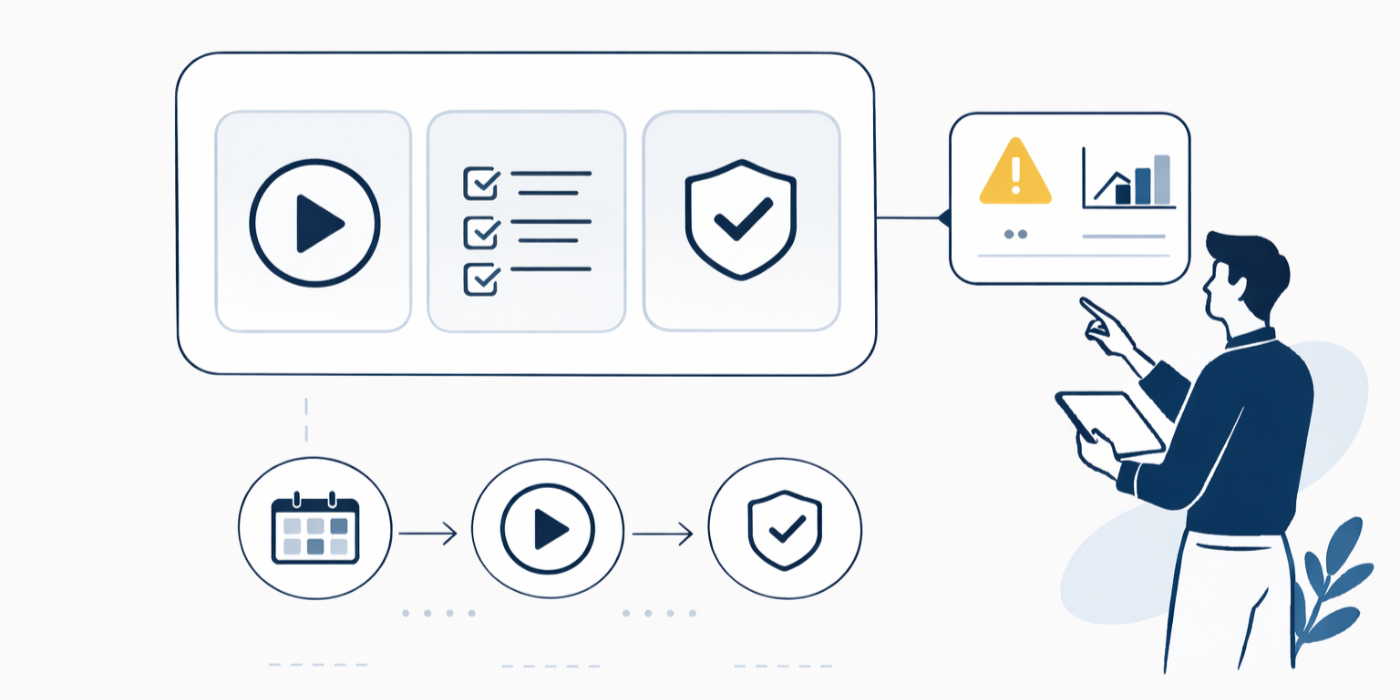
1. Why Project Execution Vocabulary Determines Whether Delivery Holds Together
Execution is where complexity compounds. The project has already been approved. Stakeholders expect movement. Budget pressure increases. Dependencies become real instead of theoretical. Teams discover that a requirement looked simple until legal, procurement, architecture, operations, and customer readiness all had to align at the same time. This is the stage where PMs must think in execution terms with precision, not approximation. That precision directly strengthens work in stakeholder management, project budgeting, cost management, and issue tracking systems.
A PM who misreads execution language usually makes predictable mistakes. They treat an issue like a risk until it is already causing damage. They call activity progress even when no milestone is protected. They say a dependency is “not a blocker yet” until sequencing collapses. They mark tasks complete while rework, approval exposure, testing weakness, and document gaps remain hidden. This is why execution terms are not administrative vocabulary. They are control points. They help the PM spot where work is slipping, where leadership needs to intervene, and where teams are confusing motion with delivery. That same discipline improves the use of project reporting software, dashboard tools, document management, and project knowledge management.
Execution vocabulary also matters because live projects are always forced through tradeoffs. Scope wants more. Schedule wants speed. Finance wants control. Quality wants rigor. Teams want clarity. Leaders want certainty. The PM needs terms that separate what is late from what is blocked, what is under control from what is only quiet, what is complete from what is only partially done, and what needs escalation from what can be solved inside the team. Without that language discipline, the project starts speaking in soft phrases such as “mostly done,” “on track for now,” “waiting on a few things,” and “minor delay.” Those phrases destroy credibility because they hide the real operating condition of the work.
| Execution Term | Practical Meaning | Why It Matters | Common PM Mistake | What Good Looks Like |
|---|---|---|---|---|
| Execution Phase | The stage where planned work is actively performed. | Converts plans into real deliverables. | Treating it as task administration only. | Use active controls across scope, schedule, cost, and quality. |
| Work Package | A manageable chunk of work with defined ownership. | Makes accountability visible. | Defining work too vaguely to manage. | Each package has owner, timeline, and output. |
| Deliverable | A tangible output produced by the project. | Anchors progress to value. | Reporting activity instead of deliverables. | Status tracks usable outputs, not effort spent. |
| Milestone | A significant checkpoint or event in the project timeline. | Measures meaningful progress. | Using too many trivial milestones. | Milestones mark major decision or delivery points. |
| Task Dependency | A link where one task relies on another. | Controls sequencing risk. | Discovering dependencies too late. | Dependencies are mapped, monitored, and escalated early. |
| Critical Path | The longest path determining project duration. | Shows schedule sensitivity. | Managing all tasks as equally urgent. | Protect critical path tasks first. |
| Constraint | A limitation affecting project execution. | Shapes tradeoff decisions. | Ignoring fixed boundaries in replanning. | Constraints are explicit and visible in decisions. |
| Assumption | A condition believed true for planning or execution. | Exposes hidden fragility. | Leaving assumptions unvalidated. | Track and test assumptions before they break work. |
| Issue | A current problem affecting execution now. | Needs active resolution. | Keeping real issues labeled as risks. | Open issue log with owners and due dates. |
| Risk Response | Action chosen to handle a potential threat or opportunity. | Prevents avoidable disruption. | Listing risks without response action. | Each major risk has trigger and response plan. |
| Action Item | A discrete follow-up step with accountability. | Turns discussion into movement. | Creating actions with no owner or date. | Owner, deadline, and success condition are explicit. |
| Escalation | Raising a matter to a higher authority for resolution. | Clears blockers faster. | Escalating too late or too vaguely. | Escalation includes impact, options, and decision needed. |
| Variance | The gap between planned and actual performance. | Shows control quality. | Reporting variance without explaining cause. | Variance includes trend, driver, and response. |
| Schedule Slippage | Delay against approved timeline. | Signals delivery risk. | Masking delay with optimistic language. | Quantify slippage and protect downstream dates. |
| Resource Loading | How much work is assigned to available resources. | Prevents overload and bottlenecks. | Pushing more work into already strained teams. | Capacity is matched to demand realistically. |
| Resource Leveling | Adjusting schedules to resolve over-allocation. | Improves feasibility. | Ignoring capacity reality. | Schedules reflect actual team limits. |
| Baseline | The approved reference point for scope, schedule, or cost. | Supports control and comparison. | Changing plan informally without baseline logic. | Changes are measured against approved baseline. |
| Change Request | A formal proposal to modify project scope or plan. | Protects control integrity. | Absorbing changes silently. | Impact assessed before approval. |
| Quality Checkpoint | A point where output quality is verified. | Stops defect leakage. | Checking quality only at the end. | Quality gates exist throughout execution. |
| Rework | Work redone due to defects, changes, or misunderstanding. | Eats schedule and budget quietly. | Hiding rework inside normal progress updates. | Track root causes and reduce recurrence. |
| Handoff | Transfer of work or responsibility between parties. | Protects continuity. | Assuming handoff happened because a file was sent. | Acceptance, clarity, and readiness are confirmed. |
| Dependency Owner | Person accountable for managing a specific dependency. | Stops vague waiting. | No one owns external follow-up. | Each high-risk dependency has one named owner. |
| Status Report | Structured communication of project condition. | Aligns stakeholders quickly. | Using status reports to decorate problems. | Clear condition, trend, risk, and next steps. |
| RAID Log | Central record of risks, actions, issues, and dependencies. | Creates execution visibility. | Maintaining a log nobody uses. | Live document tied to meetings and decisions. |
| Throughput | The rate at which work items are completed. | Helps monitor flow. | Confusing throughput with value delivered. | Used with quality and impact measures. |
| Cycle Time | Time taken for a work item to move from start to finish. | Reveals process speed. | Tracking averages without outlier analysis. | Understand why certain items stall. |
| Acceptance Criteria | Conditions required for deliverable approval. | Protects clarity and quality. | Starting execution without approval conditions. | Criteria are specific, testable, and visible. |
| Go-Live Readiness | State of preparedness for deployment or launch. | Reduces last-mile failure. | Equating development completion with readiness. | Training, support, testing, and operations are ready too. |
2. Foundational Project Execution Terms Every PM Should Control Early
The first term to get right is deliverable. Teams often drown stakeholders in task updates when the real question is whether usable outputs are moving toward completion. Deliverables are the outputs that matter. They are what customers, sponsors, users, auditors, operations teams, or downstream functions can inspect, approve, deploy, or rely on. A PM who centers execution around deliverables naturally builds better habits in project quality management, document management, stakeholder reporting, and knowledge capture.
The next term is work package. This is a manageable chunk of project work with defined scope, ownership, and expected output. Weak work packaging creates execution fog. Team members become busy without clear completion conditions. Managers think work is progressing when no one is actually protecting the outcome. Strong work packages make downstream tracking much cleaner. They support project scheduling, critical path analysis, resource planning, and budget monitoring.
Milestone is another term that gets diluted. A milestone should mark a significant decision point, delivery checkpoint, approval event, or readiness state. Teams weaken milestone logic by filling schedules with trivial markers that create noise instead of control. Good PMs preserve milestone weight. They use milestones to focus senior attention, sequence high-risk work, and surface whether the project is protecting its most important dates.
Baseline also matters far more during execution than many PMs admit. A baseline is the approved reference point for scope, schedule, or cost. Without a baseline, there is no honest control. Every conversation about delay, efficiency, overrun, or change becomes subjective. Weak PMs sometimes accept “small shifts” informally until the project suddenly feels off track without a clear moment of loss. Strong PMs use baselines to keep control visible. That discipline connects directly to project budgeting terms, cost management language, change-sensitive reporting, and project market trend analysis.
3. Risk, Issue, Dependency, and Escalation Terms That Protect the Project Mid-Flight
Execution pressure exposes whether the PM can distinguish between things that might go wrong and things that are already hurting delivery. A risk is a potential future event. An issue is a current problem affecting the project now. That distinction sounds simple, yet many teams misuse it constantly. They keep live problems in the risk register because calling them issues would force ownership, deadlines, and escalation. Good PMs do not allow that drift. They connect active issues to issue tracking tools, risk management frameworks, risk identification methods, and communication routines.
A dependency is one of the most dangerous execution terms to under-manage. It means one task, deliverable, decision, or resource relies on another. Dependencies become especially painful when they cross teams or functions. The work looks “in progress,” but nothing can actually finish until the dependency clears. When there is no named dependency owner, projects drift into the worst kind of delay: lots of follow-up, no decisive movement, and a rising pile of excuses. Strong PMs map dependencies early, quantify their downstream impact, and bring them into live review structures.
Escalation is another term teams misuse by emotion rather than logic. Some PMs escalate too early and lose credibility. Others delay escalation until leadership can no longer help without costly recovery action. Strong escalation is neither panic nor avoidance. It is a structured request for resolution with impact, timeline consequence, and decision path clearly stated. This is where execution maturity becomes visible. A PM who escalates well typically also handles stakeholder alignment, project reporting, contract-linked dependencies, and procurement timing risks much better.
Then there is the RAID log. Risks, Actions, Issues, and Dependencies should not live in four separate mental buckets that only the PM can interpret. A live RAID structure makes execution easier to inspect. It also reveals whether meetings are actually reducing uncertainty or merely recirculating status language.
4. Schedule, Flow, and Capacity Terms That Reveal Whether the Plan Is Real
Execution quality collapses quickly when the schedule looks precise but is built on fiction. Critical path is one of the most important terms for keeping that fiction under control. It identifies the chain of tasks that determines total project duration. PMs who treat all delays as equal misallocate attention. A five-day slip on a non-critical task may be manageable. A two-day slip on the critical path may damage a launch date, contract milestone, or customer readiness promise. This is why the best PMs pair execution terminology with critical path methods, calendar planning tools, Gantt software, and project scheduling mastery.
Schedule slippage should also be stated plainly. Slippage is not simply “some movement.” It is a measurable deviation from the approved timeline. Soft phrasing around delay is one of the fastest ways for a PM to lose sponsor trust. Strong status language quantifies the slip, explains the driver, identifies downstream impact, and presents a response path. That approach keeps control intact even when the news is uncomfortable.
Resource loading and resource leveling are equally important. Resource loading tells you how much work sits on available people or teams. Resource leveling adjusts the schedule to address over-allocation. Many execution failures come from pretending overloaded teams can absorb more work if the message sounds urgent enough. They cannot. Pressure can temporarily increase intensity. It cannot sustainably create capacity. Good PMs recognize this early, then align planning decisions with resource allocation tools, productivity software, automation tools, and team building terminology.
Flow metrics also matter. Throughput measures how many work items are completed over time. Cycle time measures how long a work item takes from start to finish. These are useful signals, but they become misleading when detached from quality, impact, or rework. A team can increase throughput by shipping smaller low-value items while ignoring harder work. A team can shorten average cycle time while a few critical items stall invisibly. Strong PMs use flow data as a diagnostic layer, not as a vanity dashboard.

5. Quality, Change, and Readiness Terms That Separate Controlled Delivery From Last-Minute Chaos
Execution only looks clean until quality debt surfaces. That is why acceptance criteria matter so much. They define what must be true for a deliverable to be approved. Without them, teams create their own hidden standards, and stakeholders judge completion by instinct. This leads to the most expensive category of conflict in project work: late disagreement about what “done” was supposed to mean. PMs who enforce strong acceptance criteria usually also become stronger in quality management, document control, stakeholder communication, and project reporting.
Quality checkpoints exist to detect defects or readiness gaps before they contaminate downstream work. Teams that delay quality checking until the end of execution usually create a fake sense of progress. Everything appears fine until validation begins, then schedules absorb a sudden wave of correction. That brings us to rework. Rework is one of the most underreported threats in project delivery because it hides inside normal activity updates. The PM hears that a team is “revisiting,” “tightening,” “updating,” or “making final changes,” when the real story is that work was weak, misunderstood, or approved too early. Mature PMs treat rework as a signal. They ask what caused it, where the breakdown happened, and how the system can stop repeating it.
Change request is another term that separates controlled projects from undisciplined ones. A change request is a formal proposal to modify scope, timeline, budget, or another controlled element. Silent scope expansion is poison during execution. It makes the team feel overwhelmed, the schedule feel unfair, and the sponsor feel surprised later. Strong PMs do not resist all change. They protect the project by routing change through impact assessment. That supports better work in procurement, contract management, budget control, and cross-functional software coordination.
Finally, go-live readiness deserves its own attention. Many teams assume that if the build is complete, the project is ready to launch. Real readiness includes testing evidence, support preparation, documentation, operational handoffs, training, communication, and contingency planning. Projects often stumble not because the product was unfinished, but because the surrounding environment was unprepared to receive it.
6. FAQs: High-Value Questions About Project Execution Terms for PMs
-
Start with deliverable, work package, milestone, dependency, issue, risk, action item, escalation, baseline, variance, change request, acceptance criteria, rework, status report, and go-live readiness. These terms give you control over output, timing, accountability, problem handling, and delivery quality. They also pair well with project initiation terms, top PM glossary terms, risk frameworks, communication techniques, and stakeholder language.
-
A risk is something that may happen and affect the project in the future. An issue is something happening now that already requires action. PMs who blur the two create weak ownership. Risks need monitoring and response planning. Issues need resolution, deadlines, owners, and often escalation.
-
Because many teams report activity instead of control signals. They show tasks started, meetings held, and documents shared, but they do not surface dependency delay, quality weakness, rework volume, approval gaps, or unrealistic resource loading. The project appears calm until several hidden problems converge at once.
-
A strong status report tells stakeholders the real condition of the project quickly. It should show what changed, where the project stands against baseline, what major risks or issues threaten delivery, what decisions are needed, and what actions will happen next. It should reduce ambiguity, not decorate it.
-
Rework drops when scope is clearer, acceptance criteria are stronger, handoffs are cleaner, quality checkpoints happen earlier, and stakeholders stop approving vague outputs. Most rework is born from misunderstanding, weak control, or rushed transitions rather than simple effort problems.
-
The strongest follow-ups are Comprehensive Project Risk Management Glossary, Comprehensive Guide to Project Scheduling Terms, Critical Path Method Terms Clearly Defined, Essential Project Quality Management Terms Defined, Essential Project Communication Terms & Techniques, and Critical Project Stakeholder Terms Every PM Should Master. Together they strengthen the exact control areas that determine whether execution stays stable under pressure.
