
Step-by-Step Guide: Career Path from Project Manager to Vice President of PM
Moving from project manager to Vice President of PM is not a bigger title. It is a different job. You stop being judged on how clean your plan looks and start being judged on outcomes across portfolios, leadership confidence, and delivery predictability at scale.
This guide shows the step by step path to build executive level capability, create undeniable proof, and position yourself as the person who can run a PM organization that drives business results.
1) Understand the Promotion You Are Actually Chasing
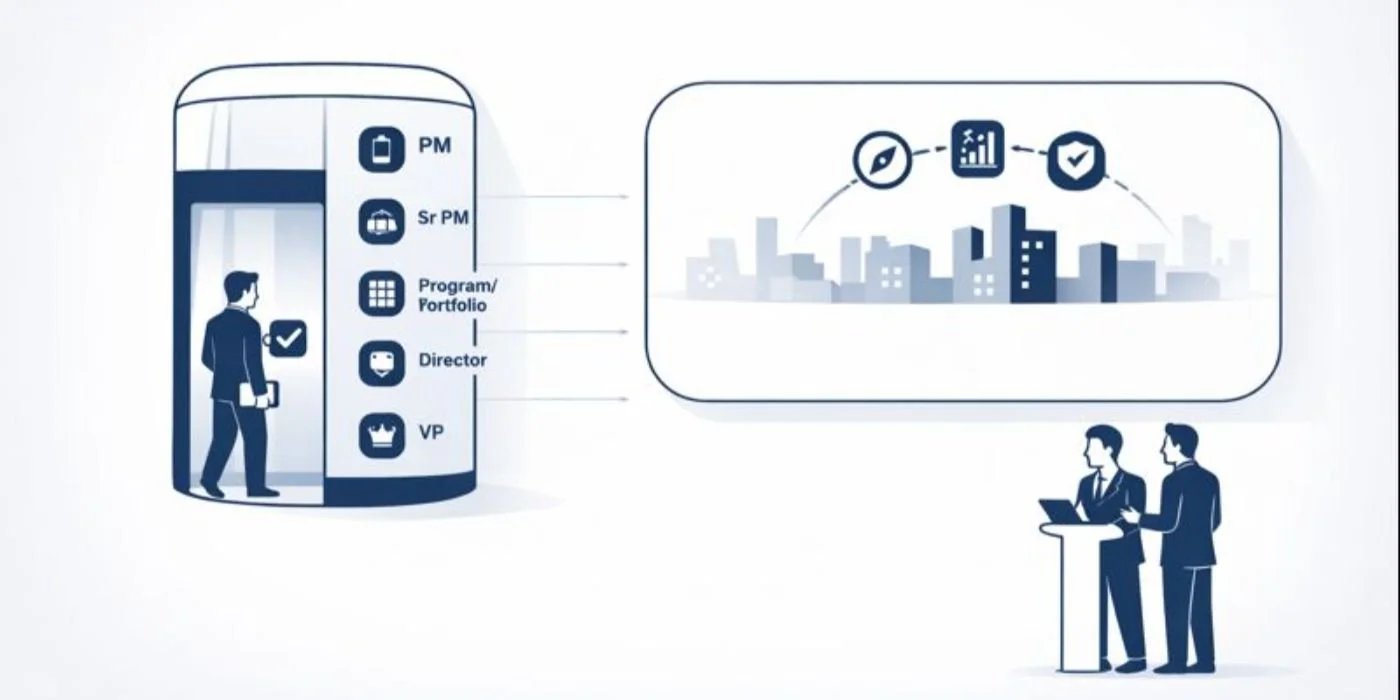
Most project managers aim at VP of PM like it is a linear “more senior PM” role. It is not. A VP of PM is a business leader who owns delivery performance across teams and programs, influences strategy, and protects the organization from execution risk. If you want a clear mental model, read the leadership trajectory in the chief project officer roadmap and then map it to your current level. You are not trying to be a perfect scheduler. You are trying to become the executive who makes delivery reliable.
At the PM level, your unit of value is the project. At the VP of PM level, your unit of value is the system. That system includes portfolio governance, prioritization, capacity planning, standards, tooling, talent, and executive reporting. This is why portfolio thinking is central. The fastest way to sound like a VP candidate is to speak in terms of outcomes, tradeoffs, and decision quality, the same language used in the project portfolio manager guide.
In 2026 to 2027, two forces make this role more intense. First, budget pressure forces leaders to demand ROI and faster cycle time. The financial context in global inflation’s impact on project budgets shows why delivery leaders must justify investment with clarity. Second, transformation work is accelerating inside PMOs. You cannot lead PM as a static function anymore, which is why the trends in digital transformation across PMOs matter for your career path.
To get promoted, you need to prove three things. You can deliver outcomes across multiple workstreams. You can build and run a scalable execution system. You can influence executives and protect them from surprises. If any one is missing, you get capped at senior PM or program manager.
A useful checkpoint is this. If you left tomorrow, would delivery collapse or would it continue with the standards you built. VPs build the machine. PMs drive the current car.
2) Step 1: Become a Program Leader Before You Ask for a VP Title
The cleanest path to VP is not asking for the title. It is doing the VP work inside your current scope. That begins by shifting from single project delivery to program leadership. A program is a set of projects that share a business outcome, a common governance structure, and cross team dependencies. If you want to see the portfolio layer clearly, study the structure in the project portfolio manager guide and copy the logic into your daily work.
Your first upgrade is owning the outcome, not just the plan. That means defining measurable success criteria, mapping benefits, and assigning benefits owners. Budget pressure is not theoretical. The drivers described in global inflation’s impact show why leadership is allergic to projects that cannot defend value. Build a one page business case for your largest initiative. Include costs, expected benefits, risks, and what happens if it is delayed.
Next, lead a multi team initiative. If you are a project manager today, find one cross functional initiative that has a clear bottleneck. Pick something like onboarding speed, CRM workflow reliability, procurement cycle time, or release predictability. Treat it as a program. Create a dependency map, a decision log, and a weekly executive update that asks for specific decisions. That executive update style is what separates high level PMs from future VPs.
Then build your methodology fluency. In 2026 to 2027, executives do not want ideology. They want execution that fits risk. Understand why agile demand is rising from agile project management demand and economic uncertainty increasing agile demand. Then apply it with judgement. Use agile for discovery and prioritization. Use staged governance for high risk releases and compliance. Your ability to justify the approach is what signals leadership maturity.
Credentials can help if your credibility is blocked by filters. If you need a fast trust boost, follow the playbook in the ultimate PMP exam guide and sharpen your thinking with top PMP questions. If you are earlier stage, use the discipline in the CAPM passing guide and align your positioning with CAPM salary and career insights. If your environment is governance heavy, the PRINCE2 exam guide and PRINCE2 Foundation vs Practitioner give you language executives already respect.
Finally, build proof. A VP candidate should have at least three case studies that show measurable outcomes, governance maturity, and cross functional influence. If you want a model for how to structure your story, the positioning in the freelance project management career roadmap and the system building thinking in the consultancy firm guide will help you tell a results narrative instead of a task narrative.
3) Step 2: Build a PMO Operating System That Executives Can Trust
You do not become VP by being the best at tracking tasks. You become VP by building a delivery system that reduces surprises. In 2026 to 2027, PMOs are being forced to modernize because transformation is accelerating. Use the macro direction in digital transformation across PMOs as your justification for upgrading standards and tooling.
Start with the executive promise. A VP of PM promises visibility, predictability, and prioritization. Visibility means executives can see what matters without digging. Predictability means delivery commitments match capacity. Prioritization means the company is not trying to do everything at once.
Build the rhythm first. A simple cadence beats a complex framework nobody follows. Weekly portfolio review, biweekly steering committees for major programs, and monthly executive scorecards. Your scorecard should contain delivery health, risks, decisions needed, and benefits progress. Tie it to outcomes, not activity.
Then fix intake and prioritization. Most organizations are clogged because every stakeholder can inject work with no cost. You need an intake rubric that scores initiatives by impact, urgency, risk, and effort. Create a backlog that executives can actually make decisions on. This is the portfolio discipline described in the project portfolio manager guide, but you must apply it with real constraints.
Capacity planning is the hidden differentiator. Many PMOs fail because they commit to more than teams can deliver. Create a simple model that shows available capacity, committed work, and where overload exists. When you show this clearly, you become the person executives trust because you prevent failure before it happens. If you are leading remote teams, borrow operating model tactics from the remote and virtual PM roles guide and standardize async updates and decision tracking.
Tooling is also part of the system, but tools do not fix chaos. Choose tools that support governance and reporting, then remove clutter. The trend in PM software investment surging exists because leaders want visibility and efficiency. Your job is to make tools serve decisions, not create noise.
Finally, adopt modern accelerators responsibly. AI is influencing how PMs plan, forecast, and report. Use the perspective in AI adoption in project management to position yourself as a leader who can modernize without sacrificing governance. The VP who understands both execution discipline and modern tooling will dominate in 2026 to 2027.
4) Step 3: Build Executive Influence and a Reputation for Decision Quality
VP roles are won through trust. Trust is built when leaders believe you see around corners, surface options early, and protect them from messy surprises. The easiest way to build that reputation is to change how you communicate.
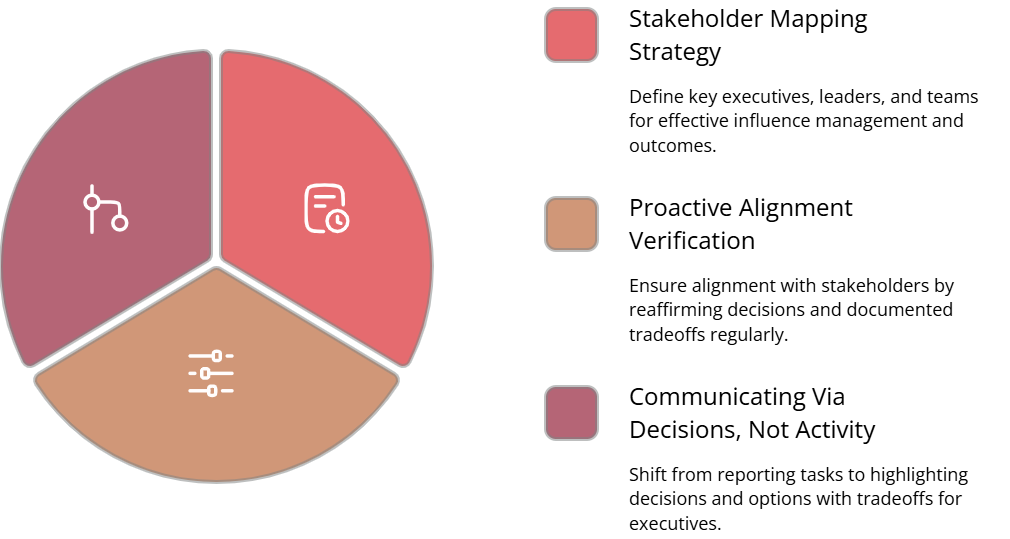
Stop reporting activity. Report decisions. Every executive update should include what happened, what matters, what is at risk, and what decision is needed. If you bring problems without options, you train executives to avoid you. If you bring options with tradeoffs, you become a leader.
Build stakeholder maps like a strategist. Identify the executives who fund work, the leaders who own outcomes, and the teams who absorb change. Then manage alignment proactively. This is where many PMs fail. They assume alignment exists because nobody objected in a meeting. VP candidates verify alignment with explicit decisions and documented tradeoffs.
Improve your financial fluency. You do not need to be finance, but you must speak ROI, opportunity cost, and budget tradeoffs. Budget pressure is rising, which is why the context in global inflation’s impact is directly relevant. If you can translate delivery conversations into financial outcomes, you become executive material.
Also build credibility with risk governance. Executives are not afraid of risk. They are afraid of hidden risk. Create a top risks view, update it monthly, and show mitigation progress. Include security and compliance risks when applicable. If your projects touch technology, connect your narrative to the market reality in cybersecurity concerns prompting PM overhaul. A VP who understands risk in plain language becomes valuable fast.
Visibility matters too. The fastest way to get promoted is to become known for fixing a painful delivery problem. Volunteer for the program that is slipping, the initiative with stakeholder conflict, or the workstream that keeps failing handoffs. Rescue missions create executive visibility. Just make sure you turn the rescue into a repeatable playbook, otherwise you become the person who is always firefighting.
If you want to build influence across geographies and distributed teams, lean into the skills described in the remote and virtual PM roles guide. Leaders value the person who can create alignment across time zones with crisp communication, not the person who needs constant meetings.
5) Step 4: Convert Your Track Record Into a VP Promotion or a VP Offer
At some point, your capability is not the blocker. Your packaging is. Many strong PMs never become VP because they cannot present their work as an executive story.
Build your VP case file. You need three case studies. Each should show a business problem, baseline, plan, governance, risks, decisions, and measurable outcomes. Use a consistent format and make it skimmable. Tie each to an executive priority: revenue, cost, risk, or growth. If you want a model for how to frame outcomes and leadership leverage, review the scale thinking in the chief project officer roadmap and the portfolio framing in the project portfolio manager guide.
Then write a 90 day VP plan. Your plan should not be vague. It should include intake reform, prioritization rubric, cadence design, capacity planning baseline, standards rollout, and executive reporting upgrade. Include what you will measure and when. This plan is your interview weapon because it proves you think at the system level.
If you are applying externally, target companies where PM maturity is rising. Look for signals like transformation programs, PMO modernization, rapid growth, or tooling investment. The macro signals in PM software investment surging and AI adoption in project management suggest many organizations are upgrading delivery capabilities. Your story should be that you help them cross that maturity gap safely.
If you want geographic leverage for better compensation and larger scopes, use market guides to target opportunity dense regions. For example, research employer density and salary trends through California project management careers, New York PM career guide, project management careers in Texas, and Florida PM job market insights. If you want city level focus, consider New York City PM careers and Los Angeles opportunities.
Finally, your certification strategy should match the jobs you want. PMP is a strong general executive filter, supported by the PMP exam guide and practice in PMP exam questions. PRINCE2 can fit governance heavy organizations, supported by the PRINCE2 exam guide and PRINCE2 Foundation vs Practitioner. CAPM supports earlier stage professionals, guided by the CAPM passing guide. Use credentials as accelerators, not substitutes for proof.
6) FAQs: Project Manager to Vice President of PM
-
It depends on scope, company size, and whether you build system level proof. Many PMs can reach a VP role by stepping through senior PM, program manager, and director of PM or PMO leadership. The fastest path is owning a program with cross functional impact, then building a repeatable operating cadence that leadership trusts. Use the leadership ladder framing in the chief project officer roadmap and the portfolio thinking in the project portfolio manager guide to design your progression intentionally.
-
A director often manages teams and improves execution within a function. A VP owns outcomes across portfolios and becomes accountable for delivery predictability at the executive level. That means stronger prioritization power, deeper financial and risk involvement, and clearer influence across departments. In 2026 to 2027, modernization pressure from digital transformation across PMOs is pushing VP roles to be more strategic and more data driven.
-
Not always, but it helps with credibility and filters, especially at larger organizations. What matters most is proof of portfolio outcomes, operating cadence, and executive influence. If you pursue PMP, use the strategy in the ultimate PMP exam guide and validate thinking with top PMP exam questions. If your environment values governance language, consider PRINCE2, supported by the PRINCE2 guide.
-
You expand scope through ownership, not permission. Lead a cross team initiative, build an intake rubric, run a portfolio review cadence, and create executive reporting that drives decisions. Then package this work into case studies. If you want a structured approach to remote influence and cross team alignment, borrow from the remote and virtual PM roles guide and apply those routines in your current role.
-
Track delivery predictability and business impact. Delivery metrics include on time delivery rate, scope change rate, cycle time, and risk burn down. Impact metrics include cost savings, revenue protection, adoption, and benefits realization post launch. Tie this to budget reality using the lens in global inflation’s impact on budgets so leadership sees you understand why tradeoffs matter.
-
Lead with a “system builder” story. Show that you modernize execution through cadence, standards, capacity planning, and clear decision reporting. Reference modernization signals like PM software investment surging and AI adoption in project management to show you understand current executive priorities, then prove your approach with case studies and a 90 day plan.
-
Yes, especially if you can create alignment and accountability without constant meetings. Remote leadership requires crisp communication, clear decision logs, and predictable cadence. Use the playbook mindset in the remote and virtual PM roles guide and make your operating model visible through artifacts and outcomes.
