
Career Roadmap for a Government Project Manager: Skills, Certifications & Salaries
Government project management is one of the fastest ways to build a stable, high-impact PM career if you understand the rules that private-sector candidates usually miss: procurement cycles, compliance-heavy documentation, approvals, audits, stakeholder hierarchy, and slower-but-higher-stakes decision paths. Many applicants are strong at delivery but weak at traceability—and that gap gets them filtered out.
This roadmap is built to close that gap. You’ll learn what hiring panels actually reward, which skills create hiring momentum, how certifications help (and where they don’t), and how to position your experience so it reads as “government-ready” instead of “generic PM.”
1) What a Government Project Manager Actually Does (and Why Many Candidates Miss the Mark)
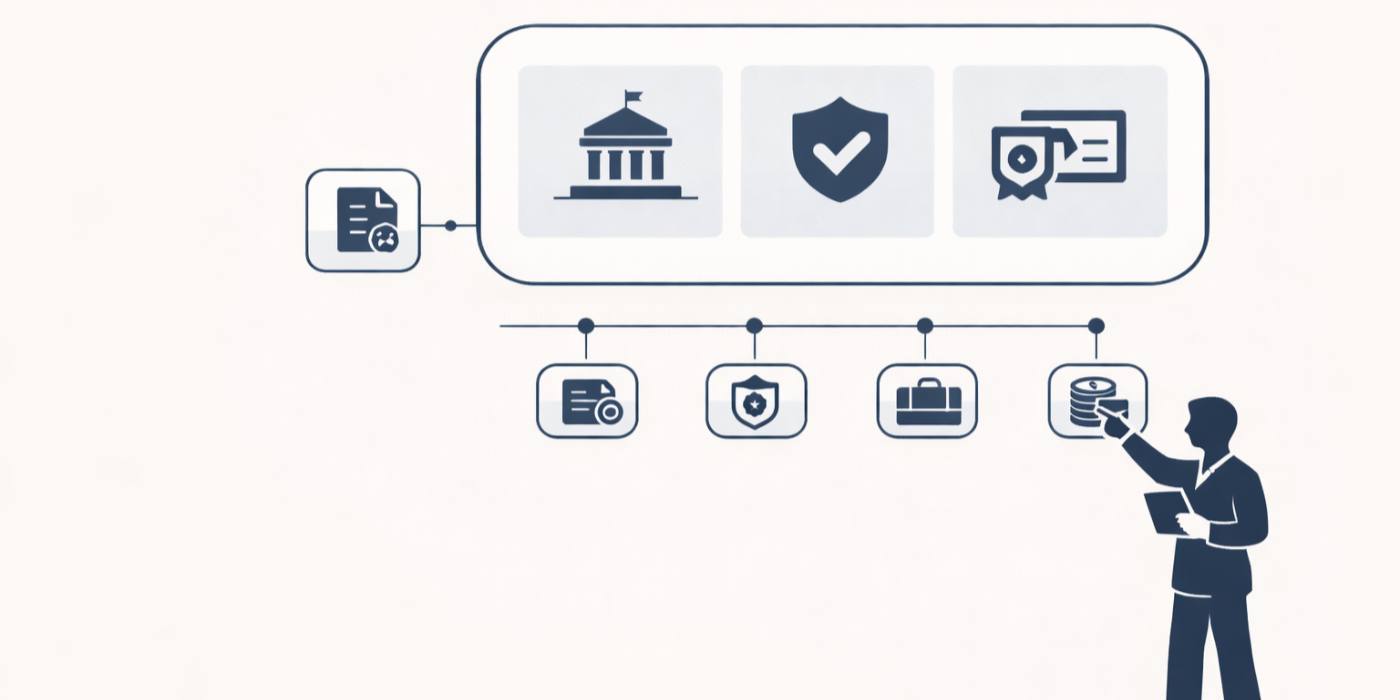
A government PM is not just a scheduler with status meetings. In many agencies and public-sector contractors, the role is a control-and-coordination function that protects taxpayer-funded outcomes through traceability, procurement discipline, compliance evidence, and escalation design. That means your value is measured less by “how busy the team looked” and more by whether your project can survive scrutiny.
Candidates who come from startup or commercial environments often underestimate how important documentation quality is. In government settings, weak requirements versioning, undocumented changes, vague approvals, and verbal decisions can become real risks. A delivery plan may look fine on paper, but if it fails audit logic, procurement logic, or governance logic, you can still lose credibility.
The fastest way to become government-PM-ready is to strengthen the skills that make projects defensible: scope control, decision records, risk escalation pathways, vendor coordination, stakeholder mapping, and milestone evidence. If you need broader PM career context first, build it through how to become a project manager, entry-level to executive PM path, project management consultant career path, and future PM skills by 2030.
You also need domain awareness. A government PM in IT project management, construction PM, or healthcare PM will face different compliance patterns, vendor structures, and acceptance criteria. The PM fundamentals transfer, but the evidence expected from you changes.
2) Step-by-Step Career Roadmap to Become a Government Project Manager
The best government PM career strategy is not “apply to everything and hope.” It is a staged build: PM foundation → compliance/documentation strength → domain credibility → public-sector positioning → promotion track. That sequence matters because government hiring panels often reject candidates who have experience but cannot prove controlled execution.
Stage 1: Build PM fundamentals that transfer anywhere
Start by mastering planning, scheduling, risk, communication, and stakeholder control. If you’re early-career, use CAPM vs PMP comparison, CAPM 30-day study plan, PMP exam guide, and top PMP exam questions to structure your fundamentals fast. Even if you delay certification, the knowledge framework helps you speak like a PM.
Stage 2: Add documentation and governance muscle
This is the stage most people skip. Create repeatable templates for status reporting, RAID logs, change requests, decision logs, and meeting minutes. Learn to write updates that show variance, impact, owner, deadline, and escalation path. This is what separates “coordinator energy” from “project manager credibility.” Strengthen this with project knowledge management software, calendar and scheduling tools, budget tracking tools, and productivity software for busy PMs.
Stage 3: Choose a government-relevant domain lane
Government PMs are hired into contexts, not just titles. Your strongest lanes are usually IT modernization, infrastructure/construction, healthcare/public health, digital services, education systems, compliance programs, and operations transformation. Build your positioning around one lane first, then generalize later. Use IT PM roadmap, construction PM guide, healthcare PM guide, and portfolio manager pathway to map your likely progression.
Stage 4: Translate private-sector experience into public-sector language
If your resume says “managed multiple projects” and “coordinated teams,” you are invisible. Rewrite your bullets to show governance and control: “maintained change control register,” “ran executive steering cadence,” “managed vendor deliverables to SOW,” “tracked variance against approved baseline,” “produced audit-ready documentation.” That language signals reduced risk to the employer. If you’re aiming higher long-term, align your growth with PM director roadmap, PM to VP of PM path, chief project officer roadmap, and future of PPM trends.
Stage 5: Build proof assets before applying
Government hiring panels respond well to evidence. Build a mini portfolio (sanitized) of PM artifacts: RAID log format, change request template, stakeholder map, status report format, milestone tracker, decision log, escalation matrix, and a sample project governance calendar. This reduces the “trust gap” in interviews. Use best Gantt tools, mobile apps for PMs, automation tools for PM efficiency, and project management software trends to modernize those assets.
3) Skills Government PM Hiring Panels Actually Reward (Not Just What Job Posts List)
Job postings often list “communication,” “leadership,” and “organization.” Those are too broad to help you get hired. Government PM interviews are won by candidates who can describe controlled delivery under constraints. That means you need skill depth in areas that reduce institutional risk.
The skill clusters that move your hiring odds
1) Governance and approvals management: Can you design a project cadence that gets decisions made instead of letting meetings become updates? Can you tell the difference between a stakeholder, approver, and blocker?
2) Change and scope control: In government environments, undocumented changes quietly destroy timelines and budgets. Panels look for PMs who can force clarity without damaging relationships.
3) Procurement and vendor coordination: You do not need to be legal counsel, but you do need to understand contract timelines, handoffs, obligations, dependencies, and acceptance points.
4) Documentation and audit readiness: Weak PMs treat documentation as admin work. Strong PMs treat it as a control system. This is a major trust signal.
5) Executive communication: Leaders want concise risk, impact, and decisions required—not raw task dumps. Build this skill early using PM consultancy skills, remote/virtual PM communication patterns, freelance PM client reporting discipline, and hybrid PM strategy thinking.
Many candidates lose interviews because they answer with theory instead of examples. Don’t say “I’m good at risk management.” Say: “I ran a RAID log with severity thresholds, assigned owners, reviewed weekly, escalated after trigger conditions, and documented decisions in the steering pack.” That answer sounds hireable.
4) Certifications for Government Project Managers (What Helps, What’s Overrated, and How to Choose)
Certifications help in government PM hiring, but they do different jobs. Some improve baseline credibility, some help with methodology alignment, and some mainly help applicant screening. The mistake is collecting certificates without building proof of execution.
Best certification strategy by experience level
If you’re early-career or pivoting into PM: Start with a foundational path like CAPM (or equivalent PM fundamentals training) to build structure. Pair it with deliverables you can show. Use CAPM exam guide, CAPM salary insights, top CAPM questions, and CAPM study plan.
If you already manage projects and need stronger screening power: PMP is often the most practical signal because employers understand it quickly. Use PMP exam guide, PMP questions, 30-day PMP plan, and PMP vs PRINCE2.
If your target environment is process-heavy and governance-heavy: PRINCE2 can be useful, especially where formal controls and defined roles are emphasized. Strengthen with PRINCE2 exam guide, PRINCE2 questions, Foundation vs Practitioner, and PRINCE2 study plan.
If the role blends agile delivery with government controls: Agile credentials help, but only if you can explain how you handle governance in hybrid environments. Learn from agile PM career roadmap, Scrum Master guide, agile coach path, and PMI-ACP prep.
The biggest truth: a certification gets attention, but your examples get offers. Your interview stories must prove schedule recovery, stakeholder conflict resolution, scope control, and documentation discipline.

5) Government Project Manager Salaries, Pay Bands, and How to Increase Earning Power
Government PM salaries vary heavily by geography, agency type, contract environment, security requirements, domain complexity (IT/infrastructure/healthcare), and seniority. The same title can pay very differently depending on whether the role is operational PM support, project lead, program-level PM, or portfolio-facing delivery leadership.
What drives salary upward (beyond years of experience)
1) Complexity handled: Managing a simple initiative and managing a multi-vendor, compliance-heavy transformation are not paid the same—even if both titles say “Project Manager.”
2) Domain scarcity: IT modernization, cybersecurity initiatives, healthcare systems, and infrastructure programs often command stronger compensation due to stakeholder complexity and execution risk. This is where adjacent knowledge from AI and PM trends, machine learning for estimation, blockchain in PM use cases, and PM 2030 methodologies can boost your strategic profile.
3) Governance maturity: Many candidates can “run a project.” Fewer can run one that is audit-ready, procurement-aware, and executive-safe. That capability premium matters.
4) Certifications + proof combo: Certification alone is weaker than certification plus artifact-based evidence (change logs, governance packs, risk control examples, schedule recovery narratives).
5) Location and market dynamics: Use APMIC’s location-specific career guides to benchmark demand and salary patterns in major markets: California PM careers, New York PM guide, Texas PM careers, Florida PM market, Washington state PM hub, NYC PM careers, Los Angeles PM opportunities, Chicago PM analysis, Dallas–Fort Worth PM jobs, and Massachusetts PM careers.
Practical salary positioning tips
When discussing compensation, speak in terms of role scope, risk, stakeholder complexity, and governance accountability—not just task management. If you can demonstrate that you protect timelines, budget, and audit exposure, you are easier to justify at a higher band. Also benchmark broader PM compensation patterns using global PM salary report and salary comparison by certification.
6) FAQs About Becoming a Government Project Manager
-
The fastest route is to reframe your experience around public-sector-compatible strengths: change control, governance cadence, vendor deliverable management, risk escalation, and audit-ready documentation. Then target roles in a domain you already understand (IT, healthcare, construction, operations) instead of starting from zero in both PM and domain knowledge.
-
Not always—but it often helps with screening and credibility. If you lack direct government experience, a recognized certification plus strong proof artifacts can reduce hiring risk. If you already have deep experience, your documentation quality and examples may matter more than adding another certification.
-
Decision logging, procurement awareness, contract/SOW reading, escalation design, and executive-ready status reporting. These are often the skills that make hiring panels trust your ability to operate in high-accountability environments.
-
Yes, especially in digital and IT programs—but only when you can explain how agile execution fits within governance, approvals, documentation, and compliance requirements. Hiring managers want adaptability without losing control.
-
Rewrite generic bullets into evidence-based PM language. Include approved baseline tracking, variance reporting, risk ownership, stakeholder governance, change requests, and measurable outcomes. Mirror the job description terminology while staying truthful. A keyword match gets the interview; your examples get the offer.
-
Create a sanitized PM portfolio: RAID log template, change request form, weekly status report, stakeholder map, decision register, milestone tracker, and escalation matrix. These assets prove you already think like a controlled-delivery PM.
