
Ultimate Guide to Becoming a Project Portfolio Manager
Becoming a Project Portfolio Manager means you stop optimizing single-project delivery and start optimizing the company’s entire investment set. You will be judged on whether the org funds the right work, sequences it correctly, and exits bad bets early without politics taking over. That requires a portfolio operating system: intake, prioritization, capacity, governance, benefits tracking, and executive decision hygiene. This guide gives you the exact skill stack, proof artifacts, and transition plan to earn a portfolio seat, plus how to perform in your first 90 days.
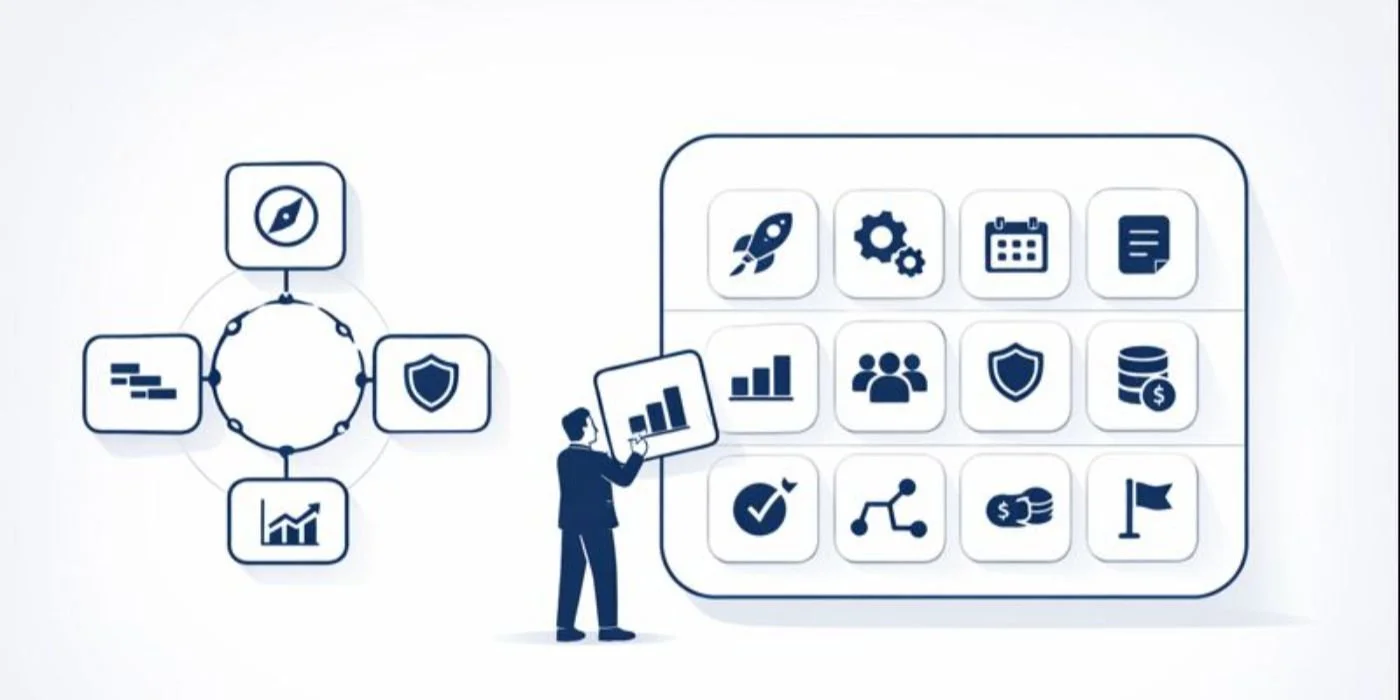
1: What a Project Portfolio Manager Really Owns (and What You Must Be Able to Prove)
A Project Portfolio Manager (PPM) owns the decision layer between strategy and execution. Your job is to turn vague demand into structured tradeoffs so leaders can fund, pause, or kill work with confidence. If you cannot force clarity and make choices visible, the portfolio becomes a graveyard of half funded initiatives and hidden overwork.
At a high level, your ownership falls into six buckets:
Demand shaping and intake quality
You define what “good requests” look like. That means standardized fields, clear sponsors, measurable benefits, risk framing, and dependency awareness. If intake is sloppy, prioritization becomes theater. This is exactly where portfolio governance is heading, as discussed in the future of project governance and how decision rights evolve in modern orgs.Prioritization and sequencing
You create the ranking method and the sequencing logic. Prioritization without sequencing is fake because the highest priority work still fails if critical dependencies land late. Your goal is to avoid “priority inflation” where everything is labeled critical. This connects directly to trends in project portfolio management and the move toward dynamic reprioritization.Capacity allocation and constraints management
PPM is not a wishlist role. You manage constraints, especially shared roles like architecture, security, data, QA, and product ops. You must be able to say, with evidence, “Here is what we can deliver with current capacity, and here is what we must stop.”Benefits realization and ROI discipline
A portfolio is not “done” when projects ship. It is done when value is realized. You create the system for tracking benefits, updating forecasts, and flagging when a business case is failing. This is where leaders trust you, or ignore you.Governance that accelerates delivery, not slows it
If governance feels like policing, teams will route around you. Your job is to make governance a decision accelerator: clear gates, fast escalation, crisp dashboards, and predictable forums. If you want the best mental model for where PMOs are going, study the future role of the PMO.Portfolio narrative and executive communication
Portfolio work is storytelling with numbers. Leaders do not want long status updates, they want the “so what.” You must translate delivery signals into strategic implications. This overlaps with leadership evolution discussed in the future of project management leadership and the skills shift in future PM competencies.
If you want to become a PPM, you must prove you can do three things better than most senior PMs: create decision clarity, manage constraints, and protect ROI across a set of initiatives.
2: The Skill Stack You Must Build (and the Portfolio Artifacts That Prove It)
If you want to be taken seriously for portfolio roles, stop describing yourself as “good at stakeholder management.” Everyone claims that. Instead, build a visible skill stack and show artifacts that demonstrate you can run a portfolio system.
Portfolio economics and value framing
Portfolio leaders trust people who can talk in ranges and scenarios, not fantasies. Learn to express benefits as: baseline, conservative, and upside. Tie benefits to leading indicators that can be measured within 30 to 60 days, not “annual savings” that never materialize. This aligns with the forecasting mindset highlighted in future PPM trends and the way modern orgs use data signals.
Artifacts to build:
A benefits hypothesis template with leading indicators.
A value leakage tracker that flags benefits at risk.
A one page initiative investment brief with assumptions.
Governance design that reduces friction
Your governance should feel like a runway, not a cage. Design forums around decisions: what is decided, by whom, with what data, and by when. If governance is vague, work multiplies and accountability disappears. Study the operating patterns in project governance best practices and the shifting responsibilities in the future PMO.
Artifacts to build:
A decision log and escalation thresholds.
A stage gate checklist with kill criteria.
A portfolio cadence calendar with agendas and pre reads.
Prioritization and sequencing under constraints
Most orgs do not fail due to bad strategy, they fail due to overcommitting capacity and hiding tradeoffs. You must be able to convert executive pressure into a clean statement: “If we do X, we stop Y.” This is where the hybrid reality matters, because work flows across different delivery modes. Use the insights from hybrid PM to design portfolio signals that fit both agile and predictive delivery.
Artifacts to build:
A capacity heatmap by role.
A portfolio WIP limit proposal.
A dependency map that highlights bottleneck teams.
Data literacy and signal design
Portfolio reporting is useless if it is vanity metrics. Build dashboards that show exceptions and trends. Think in terms of signal quality: aging work, blocked time, burn rate vs benefits confidence, delivery risk clusters. This connects with the wider tool evolution described in future PM software trends and the analytics driven shift discussed in AI and project management impacts.
Artifacts to build:
A portfolio health dashboard with definitions.
A data quality checklist and stale data alerts.
A simple scenario view for budget or headcount cuts.
Credibility signals and certifications
Certifications do not replace experience, but they can accelerate trust if you use them to structure your knowledge. If you are moving into portfolio decision work, you need a strong foundation in planning, scheduling, and governance. CAPM can be a stepping stone if you are formalizing your framework, see ultimate CAPM exam guide and CAPM salary insights. If you are operating in agile heavy environments, study the method evolution in Scrum changes by 2027 and how training expectations shift in future PM certifications.
3: Build a Portfolio Operating System (Intake, Prioritization, Capacity, Governance, Benefits)
This is where most people fail. They want the portfolio title, but they do not build the portfolio machine. A PPM creates repeatability: the org should be able to run decisions even when there is chaos.
Step 1: Fix intake so it cannot lie
Your intake form is your first defense against politics. Include fields that force honesty:
Primary objective link and value stream
Sponsor and decision owner
Benefits hypothesis with range
Cost estimate and resourcing ask
Key risks and constraints
Dependencies and “must have by” date
Kill criteria, what would make this not worth doing
Then enforce a rule: incomplete intake does not enter prioritization. This single move stops the “rush request” culture that destroys portfolios. It also aligns with the maturity direction discussed in future PMO operating models.
Step 2: Use a scoring model that executives respect
Scoring fails when criteria are vague. Make criteria measurable:
Strategic alignment score based on explicit objectives
Customer impact, quantified where possible
Risk reduction and compliance exposure
Revenue or cost impact, with confidence rating
Time sensitivity and window of opportunity
Delivery complexity and dependency risk
Reversibility, can we test cheaply first
Keep it simple enough to use, strict enough to prevent gaming. Recalibrate weights quarterly. This matches the trend toward dynamic PPM described in portfolio management trends.
Step 3: Convert prioritization into sequencing
A ranked list is not a plan. Build a sequencing view:
Identify bottleneck teams and scarce roles
Map high dependency initiatives together
Separate regulatory or risk work from growth work so it cannot be buried
Put thin slices first where learning reduces risk
This is where hybrid delivery realities matter, and why understanding hybrid PM helps you avoid forcing one reporting format on every team.
Step 4: Enforce WIP limits at the portfolio level
Most portfolio pain is caused by too many initiatives “in progress.” WIP limits are not a team concept only. Portfolio WIP limits force leadership to choose. Your message becomes: “We can have 12 strategic initiatives active at once, not 35.”
Step 5: Benefits realization is not a slide, it is a loop
Build a monthly benefits review where sponsors must answer:
Are leading indicators moving?
If not, what assumption failed?
Does scope need to change?
Should we pause, pivot, or stop?
This protects ROI and builds trust. It also stops the portfolio from being a delivery scoreboard instead of a value engine, a problem commonly discussed in future leadership patterns.
4: How to Transition Into a Portfolio Role (Without Waiting for Permission)
Most people wait for a job title. The smarter move is to start doing portfolio work in your current role and make it visible.
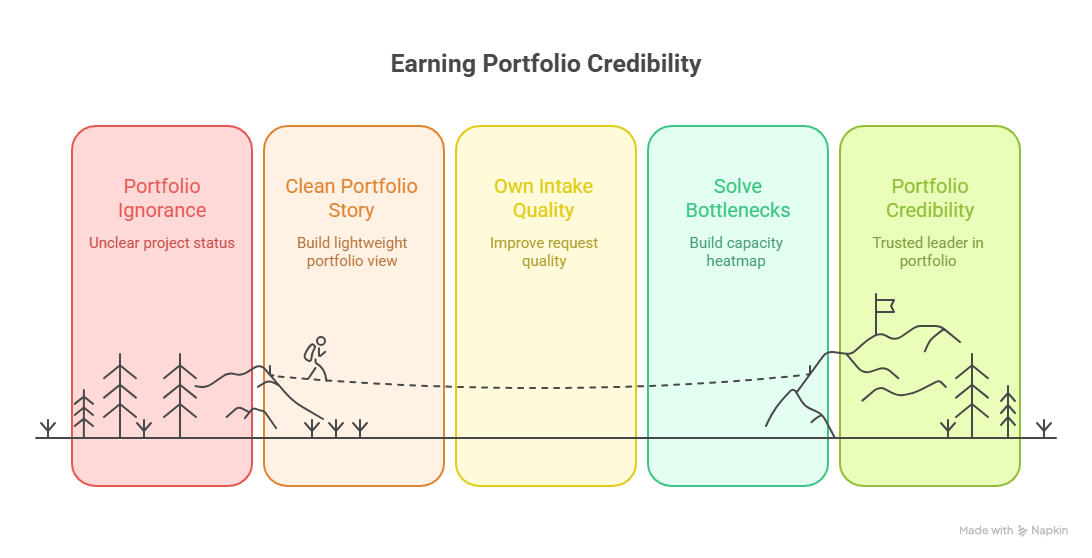
Step 1: Become the person who cleans the portfolio story
Find one executive pain: too many priorities, unclear status, too many escalations. Then build a lightweight portfolio view that answers:
What are the active initiatives?
Which are blocked and why?
Where is capacity breaking?
Which initiatives have weak benefits confidence?
What decisions are needed this month?
Do not build a 40 tab spreadsheet. Build a crisp one pager plus a decision log. This aligns with modern reporting discipline discussed in future project management software trends and the shift toward signal based reporting.
Step 2: Own intake quality for one value stream
Volunteer to run intake triage for a quarter. Your goal is to improve request quality, not to reject everything. Use a rubric and enforce basic standards. When you do this well, leadership sees you as a decision partner.
Step 3: Solve the bottleneck problem with evidence
Bottlenecks are predictable: security, data, architecture, design, QA, legal, procurement. Build a capacity heatmap and show how bottlenecks affect timelines. Then propose sequencing changes. This is how you move from reporting to portfolio control.
Step 4: Create a kill criteria culture
The fastest way to earn portfolio credibility is to save the org from bad bets. Propose explicit kill criteria at stage gates. Show that stopping work is a success when it prevents waste. This idea ties closely to governance evolution in project governance best practices.
Step 5: Pair portfolio work with structured upskilling
If you need formal credibility, pick training that supports portfolio thinking, not just delivery mechanics. CAPM study structure can help tighten fundamentals, see the 30 day CAPM plan and the broader exam guidance in CAPM expert strategies. If your org is agile heavy, understanding how frameworks evolve is useful, see Scrum vs Agile comparison.
Your goal is simple: produce portfolio artifacts that leadership can use immediately. Once your work becomes the default view leaders trust, the title usually follows.
5: Interview Playbook and Your First 90 Days as a Portfolio Manager
How to interview like a real portfolio leader
Portfolio interviews reward specificity. Replace generic claims with proof:
Instead of “I improved prioritization,” say: “I built a scoring model, reduced active initiatives from 28 to 14, and improved throughput by removing bottleneck overload.”
Instead of “I managed stakeholders,” say: “I created decision rights and a governance cadence that reduced escalations and compressed decision time.”
Instead of “I improved reporting,” say: “I shifted reporting from vanity metrics to exception signals, and introduced a decision log so execs could see tradeoffs.”
Expect these questions:
How do you prioritize when every leader says their project is critical?
How do you handle a headcount freeze mid quarter?
How do you stop work without triggering political backlash?
How do you prove benefits are real?
Anchor your answers in operating system concepts, supported by trends in PPM evolution and org design shifts in the future role of the PMO.
Your first 30 days: diagnose the portfolio truth
Your first month is discovery, not rebuilding everything.
Map the portfolio inventory, including hidden initiatives.
Identify the top three bottleneck roles and quantify their overload.
Audit intake quality, what percent of initiatives have measurable benefits?
Identify decision forums, who decides, how often, with what data?
Build a baseline portfolio health dashboard.
If the org has recently been through layoffs or restructuring, portfolio clarity becomes even more valuable because initiatives shift and accountability blurs. This is why watching how companies adapt structures can be instructive, see Microsoft workforce reduction and PM structures and how major shifts change governance.
Days 31 to 60: implement the minimum viable portfolio system
Do not boil the ocean. Implement only what fixes the biggest pain:
Standardized intake with required fields.
A scoring model with clear criteria and weights.
A capacity heatmap for bottleneck roles.
A decision log and a monthly portfolio review.
Basic stage gates with kill criteria.
This puts you in line with modern governance approaches covered in project governance trends and reduces noise.
Days 61 to 90: shift from reporting to decisions
This is where you become valuable:
Run a quarterly portfolio rebalancing with scenarios.
Recommend stopping or pausing low value initiatives.
Create sequencing changes tied to capacity realities.
Launch benefits tracking for top initiatives with leading indicators.
Your north star is simple: leadership decisions become faster, clearer, and less political because the portfolio system makes tradeoffs unavoidable.
6: FAQs
-
You need evidence that you can manage tradeoffs across multiple initiatives, not just deliver one project well. The strongest background is leading a program or running a PMO function where you owned intake, prioritization, or cross team dependency resolution. If your experience is delivery heavy, build portfolio artifacts in your current role: a capacity heatmap, a decision log, a prioritization rubric, and a benefits review cadence. Pair this with structured learning around governance and operating models, using resources like future PMO evolution and PPM trends so your approach sounds current and practical.
-
You remove opinion from the center of the process by forcing a scoring model and a constraints view. Start with criteria leaders agree on: strategic alignment, risk reduction, customer impact, ROI confidence, and time sensitivity. Then add the constraint layer: bottleneck roles and dependencies. The priority list must show tradeoffs, meaning it must show what gets delayed if one initiative jumps the line. This is why portfolio methods increasingly rely on dynamic reprioritization and scenario planning, see future of PPM and how hybrid delivery changes measurement in hybrid project management.
-
Executives care about metrics that predict outcomes, not metrics that describe activity. The most useful set is: portfolio WIP, percent of initiatives with measurable benefits, benefits confidence trend, dependency risk concentration, bottleneck role utilization, and time to decision. Add a simple indicator for initiative aging, how long items sit without meaningful progress. These signals let leaders intervene early. As tooling evolves, portfolio reporting is moving away from vanity dashboards toward exception based views, see future PM software trends and the analytics shift in AI impacts on PM.
-
You make stopping projects a governance outcome, not a personal decision. Define kill criteria at stage gates before work starts, and use benefits leading indicators to show when assumptions fail. Present options: pivot, pause, or stop, each with consequences. When leaders see that continuation requires tradeoffs, many weak initiatives will exit naturally. The backlash typically comes when stopping feels random or personal. A clear governance model with decision rights and a decision log reduces that risk, see project governance best practices and the strategic direction of the PMO.
-
Certifications are not mandatory, but they can help if they strengthen your framework and language. For portfolio roles, what matters most is your ability to manage investment decisions, governance, and benefits. If you are early career or formalizing fundamentals, CAPM can help you build structured thinking, see CAPM exam guide and the 30 day plan. If your environment is agile heavy, understanding framework differences helps you speak credibly about operating models, see Scrum vs Agile and how Scrum is evolving in Scrum changes by 2027.
-
Build one portfolio view that leaders actually use. Start with a portfolio inventory, then add a prioritization rubric, a capacity heatmap for bottleneck roles, and a decision log. Run a monthly portfolio decision meeting with a tight agenda focused on choices, not updates. Within 60 days, you should be able to show reduced WIP, clearer sequencing, and fewer escalations because tradeoffs are visible. This is how you become the portfolio operator rather than the person who reports on chaos. For modern benchmarks and patterns, align your approach with future PPM trends and the evolving responsibilities described in future PMO models.
