
Career Roadmap: How to Build a Successful Freelance Project Management Career
Freelance project management is not a side hustle. It is a delivery business built on trust, outcomes, and a system you can repeat. If you approach it like “I can manage any project,” you will attract low-budget chaos, unclear authority, and nonstop scope creep. This roadmap shows how to choose a niche, package outcomes, price with confidence, build a real pipeline, and deliver like an operator, not a task chaser.
Most freelancers fail because they sell hours instead of risk reduction and predictability. The moment you sell outcomes, you stop competing with cheap PMs and start competing with internal chaos.
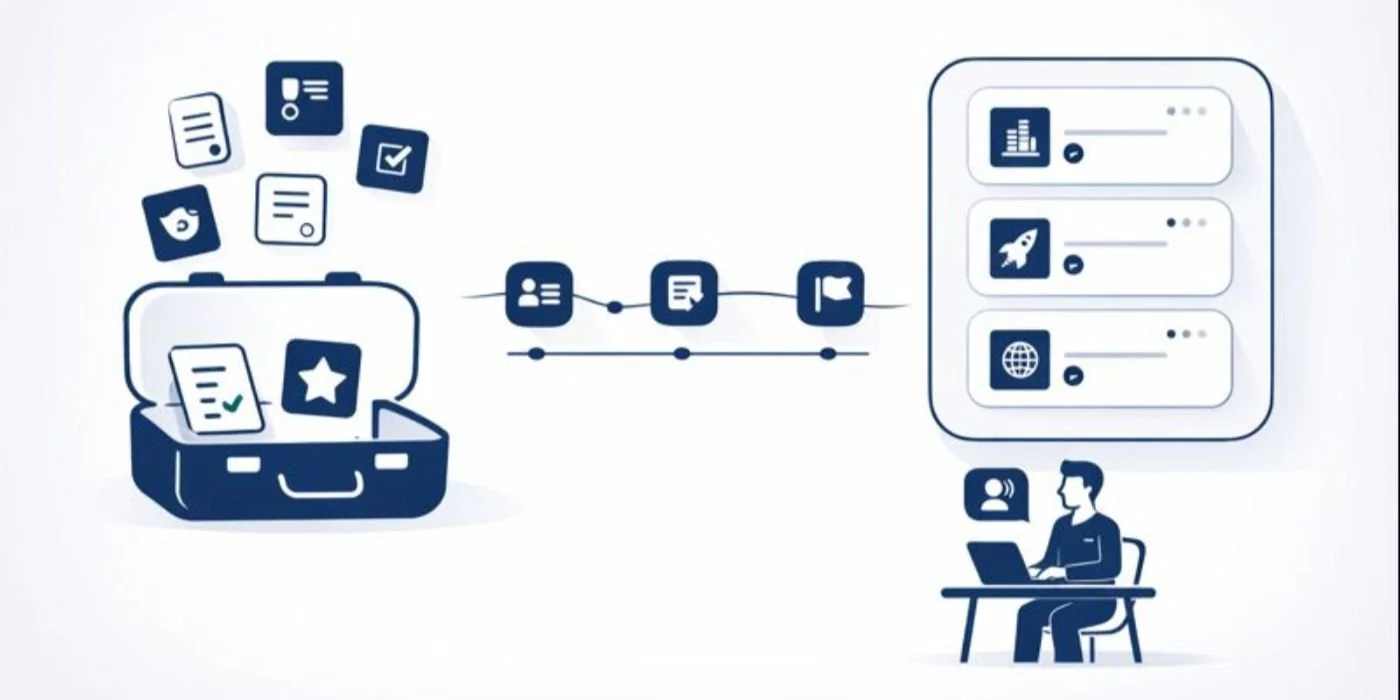
1) The Truth About Freelance PM (And The Positioning That Gets You Paid)
A successful freelance PM career starts with one decision: you are not selling “project management.” You are selling certainty. Companies hire freelancers when internal delivery is breaking, timelines are slipping, stakeholders are fighting, and nobody trusts the forecast. Your advantage is walking in, installing structure, and stabilizing outcomes fast using principles that match where the market is heading, including the future of freelance PM demand, the future PM skills employers reward, the future of PM software and cloud integration, and how automation reshapes PM careers.
The fastest way to premium pricing is to choose a lane where failure is expensive. Your “freelance lane” should map to buyer urgency: delivery rescue, portfolio cleanup, governance reset, vendor control, estimation recovery, or PMO operating cadence. If your language is still “I can manage tasks,” you will get treated like a coordinator. If your language becomes “I reduce delivery risk and protect outcomes,” you move into the tier that budgets exist for, especially in environments adopting hybrid delivery models and evolving toward 2030 methodology blends.
Pick a positioning sentence that buyers instantly understand
Your one-sentence positioning should answer: What do you stabilize, for who, in what timeframe, and how do you prove it?
Examples:
“I stabilize cross-functional launches using a governance and dependency system aligned with future governance best practices and modern PMO operating models.”
“I clean up overloaded portfolios using prioritization and capacity logic aligned with portfolio management trends and modern PM leadership expectations.”
“I fix chronic schedule slippage by improving forecasting and planning using principles from estimation and scheduling evolution and the AI impact on delivery planning.”
Build credibility without a big-name employer
Freelance credibility comes from proof assets, not logos. Build a “proof portfolio” that shows you understand modern delivery and can execute under pressure:
A one-page delivery system overview modeled on future PMO roles and governance that speeds decisions
Two case studies tied to outcomes and the kind of work clients actually fund, like portfolio clarity, predictable launches, and reduced slippage using insights from PPM trends and hybrid execution reality
A sample executive update that is decision-first, aligned with future PM leadership styles, and avoids “status theatre”
A sample risk register and dependency register that reflect modern scale patterns seen in large projects and programs like Crossrail governance lessons and shifting organizational delivery structures
If you want your method narrative to sound current, reference how frameworks themselves change over time, including the evolution of Scrum practices and why delivery increasingly blends methods as shown in hybrid PM forecasting.
| Offer / Niche | What You Deliver | Best-Fit Client | Typical Pricing Model | Proof That Sells |
|---|---|---|---|---|
| Delivery rescue | Reset plan, dependency map, risk triage, executive cadence, recovery timeline. | Teams missing launch dates, escalations weekly. | Fixed fee + urgency premium. | Forecast accuracy lift, reduced blocker aging. |
| PMO reset | Intake, prioritization, templates, governance thresholds, reporting pack. | PMO seen as bureaucracy, outcomes slipping. | 4–8 week package. | Governance cycle time drop, adoption metrics. |
| Portfolio cleanup | Stop list, reprioritization model, capacity plan, quarterly rebalance cadence. | Too many projects, nothing finishes. | Retainer for quarterly cycles. | Projects stopped early, throughput improvement. |
| Vendor control | SOW clarity, cadence, SLA tracking, scope change control. | Outsourced delivery drifting. | Monthly retainer. | Reduced rework, fewer scope surprises. |
| Estimation rebuild | Estimation method, buffers, risk-based planning, forecasting model. | Chronic overruns. | Fixed fee workshop + follow-up. | Variance reduction trendline. |
| Scheduling overhaul | Critical path, constraint mapping, milestone governance. | Complex timelines and shared resources. | Fixed fee per program. | Cycle time reduction, fewer schedule resets. |
| Launch governance | Readiness gates, cutover governance, rollback criteria. | Product or platform launches. | Fixed fee + bonus on launch quality. | Defect leakage reduction. |
| Change adoption | Adoption KPIs, enablement plan, usage verification. | Transformations failing after go-live. | Retainer with KPI targets. | Usage lift, adoption KPI attainment. |
| Risk system | Risk register, escalation rules, leading indicators. | Risk is logged, not managed. | Fixed fee build + monthly ops. | Earlier detection, avoided impact. |
| Stakeholder reset | Decision rights, meeting redesign, conflict triage. | Politics slowing delivery. | 2–4 week package. | Decision latency reduction. |
| Agile to hybrid | Hybrid model, governance, metrics, rituals. | Agile not delivering. | Fixed fee transformation. | Predictability up, churn down. |
| Benefits tracking | Benefits owners, measurement plan, verification checkpoints. | Value claims unverified. | Fixed fee build. | % benefits verified post-launch. |
| Operating cadence | Weekly/monthly/quarterly cadence design with decisions. | Meeting overload. | 2-week sprint package. | Resolution time down. |
| Capacity model | Utilization targets, buffers, skill constraints. | Overallocated teams. | Fixed fee + quarterly updates. | Missed commitment rate drop. |
| Tooling cleanup | Workflow design, fields, dashboards, automation rules. | Tool chaos, poor reporting. | Fixed fee. | Reporting trust restored. |
| Reorg delivery | Workstream governance, decision speed, capacity reset. | Teams restructuring. | Urgency retainer. | Throughput maintained. |
| Integration PM | Integration roadmap, dependencies, risk and benefits tracking. | Post-merger integration. | Retainer. | Milestones hit, value protected. |
| Vendor RFP PM | RFP timeline, stakeholder alignment, evaluation governance. | Procurement-heavy teams. | Fixed fee. | Faster selection, fewer reversals. |
| Audit-ready delivery | Evidence packs, stage gates, compliance documentation. | Regulated orgs. | Fixed fee + compliance premium. | Audit findings reduced. |
| PM coaching | Skill ladder, coaching program, standards. | Inconsistent PM teams. | Monthly retainer. | Fewer escalations, stronger bench. |
| Exec reporting | Decision-ready reporting, risk exposure, tradeoffs. | Leaders distrust dashboards. | Fixed fee build. | Approvals faster, fewer surprises. |
| Dependency mapping | Cross-team dependency register with owners and SLAs. | Programs stuck on handoffs. | Fixed fee per program. | Dependency cycle time down. |
| Program setup | Charter, governance, RAID, kickoff facilitation. | New major initiatives. | Setup package. | Fewer resets, faster start. |
| OKR delivery | OKR to initiative mapping and tracking cadence. | OKRs disconnected from execution. | Retainer. | Progress accuracy improves. |
| Construction PM | Schedule risk, subcontractor coordination, change control. | Construction programs. | Monthly retainer. | Change order discipline. |
| Renewables PM | Permitting, vendor alignment, milestone governance. | Energy build-outs. | Retainer. | Milestone reliability. |
| Freelance PMO retainer | Portfolio ops: intake, cadence, reporting, prioritization support. | Scaling orgs without PMO. | Monthly retainer. | Predictability and calm maintained. |
| Positioning package | Offer messaging, proof assets, case study structure. | New freelancers. | Fixed fee. | Pipeline conversion rate rises. |
| AI planning guardrails | Forecast inputs hygiene, planning guardrails, governance for AI outputs. | Teams adopting AI fast. | Fixed fee + coaching. | Fewer planning errors. |
| Budget recovery | Rebaseline budget, cost drivers, cost-of-delay framing. | Programs under budget pressure. | Fixed fee. | Variance trend improves. |
2) Build Your Freelance Offer Stack (So You Stop Chasing Random Work)
Your offer stack is the difference between stable income and constant panic. A “general PM” gets priced like a commodity. A specialist who reduces a specific risk gets priced like an insurance policy, especially as the market shifts described in the future freelance PM outlook and the future PM software landscape.
Step 1: Build three offers, not one vague service
High-performing freelancers use a ladder:
Entry offer: diagnostic audit using the logic of modern governance and decision speed and a clear view of PMO operating expectations.
Core offer: your signature outcome package aligned with hybrid delivery reality and the trends shaping portfolio leadership.
Continuity offer: retainer portfolio ops, which becomes more valuable as leadership evolves in the future of PM leadership and work becomes more tool-driven through AI impacts on PM.
Step 2: Price based on risk, not time
Hourly pricing creates two problems: your income caps and clients silently expand scope. Fixed-fee packages work when deliverables are clearly bounded. Retainers work when you run a cadence that protects strategy from execution chaos, which matches the model described in the future PMO role and future governance best practices. If you struggle to scope, study the planning evolution in estimation and scheduling transformation and keep your method selection grounded in dominant methodologies by 2030.
Step 3: Package deliverables like a buyer can approve
Buyers approve outcomes, not “PM hours.” Define packages as:
Governance install aligned with future governance systems
Portfolio prioritization reset aligned with PPM trends
Forecast stabilization informed by AI and planning impacts
Delivery rescue designed for real-world pressure like the kind of change companies face during reorganizations and efficiency moves (use the lessons in PM structures during efficiency shifts and large organizational changes)
3) Get Clients Without Begging (Pipeline, Proof Assets, And Outreach That Converts)
Freelance PM client acquisition is not luck. It is a pipeline system: targeting, proof, outreach, follow-up. Most freelancers fail here because they post generic content and hope someone hires them. You win by showing you can reduce uncertainty with a structured system aligned with future PM skills, future leadership expectations, and the market trends in the future of freelance PM.
Build proof assets that sell in 90 seconds
You need:
Two case studies that connect to outcomes and credibility signals in PMO success models
A decision-first executive update aligned with governance trends
A method stance that reflects hybrid PM reality and the shifts behind Scrum evolution by 2027
A clear “why now” perspective tied to AI’s impact on PM work and the direction of PM tooling ecosystems
Target markets where PM contracting demand is real
If you need a clean starting strategy, target regions and hubs where hiring, salary pressure, and employer density are strong. Build your language and targeting around APMIC’s market guides like the New York City PM market, Los Angeles PM opportunities, the Chicago PM job market analysis, the Dallas Fort Worth PM market, and Washington State PM opportunities. Then expand into region-specific fit based on your niche using Illinois PM career trends, Pennsylvania PM training demand, Georgia PM opportunities, and Arizona PM career hubs.
Outreach that gets replies because it hits pain
Your outreach must sound like you understand cost, risk, and stakeholder pressure:
Tie your pitch to the financial reality of delivery under pressure using inflation’s impact on project budgets
Show you can stabilize method confusion using PM 2030 methodology shifts and the rise of hybrid delivery
Prove you can forecast realistically using estimation and scheduling transformation and AI-driven delivery impacts
4) Deliver Like a High-End Freelancer (Intake, Governance, Scope Control, And Trust)
Freelancers do not fail because they cannot manage tasks. They fail because they cannot control scope, decisions, and accountability without authority. Your delivery system must be strong enough to hold the line even when stakeholders push.
Start with an intake and truth-setting phase
Your first 7 to 10 days should produce:
Baseline plan with explicit assumptions aligned to hybrid delivery control
Dependency map with owners and escalation rules inspired by governance best practices
Risk register with leading indicators tied to future PM skills
Governance cadence aligned with future PMO expectations
Decision-ready reporting aligned with future leadership styles
Scope control is your profit margin
The fastest way to destroy your freelance business is to accept vague scope. Fix it with:
Scope boundaries and exclusions
Change request process tied to cost and time
Decision deadlines and escalation rules
“Client responsibilities” list
Make this feel normal by aligning it to the organizational delivery direction described in future governance trends and PMO evolution. When your process matches what executives expect, you get less pushback.
Communicate in executive decisions, not activity
Your weekly update should be:
What changed
What risk is rising
What decision is needed
What happens if it delays, framed using the budgeting reality in inflation impact on projects
Your recommendation, grounded in portfolio tradeoff thinking
Use tools as a system, not a dashboard
Clients do not pay you for “using software.” They pay you for creating accountability. Your tooling choices should reflect the direction in future PM software, the workflow shifts in AI’s impact on PM work, and the career shifts in automation transforming PM roles.

5) Scale Without Burning Out (Retainers, Specialization, And Long-Term Credibility)
Scaling is not taking more projects. Scaling is increasing value per engagement and stabilizing income.
Step 1: Move from project delivery to portfolio operations
Retainers come when you become the “operator of clarity.” You run intake, prioritization support, cadence, and benefits tracking aligned with the future PMO model and PPM trends. This is where your income becomes stable.
Step 2: Specialize into a lane where failure is expensive
Choose a sector where risk is real:
Construction, guided by the pressures in construction PM trends
Renewable energy, guided by renewables PM opportunities
Financial services, guided by finance and PM innovations
Step 3: Build a credential strategy that supports your offers
Certifications help when they reinforce trust and structure. If you need fundamentals, use the CAPM ecosystem like CAPM exam mastery, the 30 day CAPM plan, and positioning clarity via CAPM vs PMP. To stay aligned with what will matter long-term, track the evolution of PM certifications.
If your niche needs process improvement credibility, build structured authority with Six Sigma Green Belt guidance. If your work is agile-heavy, keep your method decisions grounded with Scrum vs Agile comparisons and the future shifts in Scrum evolution.
6) FAQs: Freelance Project Management Career Questions
-
Pick a niche where failure is expensive and where your system creates fast relief. Delivery rescue, governance reset, portfolio cleanup, vendor control, and estimation recovery are consistently profitable because they reduce uncertainty. Align your choice with the market direction in the future of freelance PM, and make sure your skill stack matches the PM competencies needed by 2030 and the reality of hybrid execution environments.
-
Fixed-fee packages work best when deliverables are clearly bounded. Retainers work best when you run portfolio operations and governance cadence aligned with the future PMO role and future governance best practices. Hourly caps income and invites scope creep. If you struggle to estimate, improve scope discipline using estimation and scheduling evolution.
-
Use targeted outreach to roles that feel delivery pain: founders, COOs, heads of product, heads of engineering, and PMO leaders. Lead with a diagnostic offer, then convert to a core package. Target high-demand markets using APMIC location guides like NYC PM careers, Los Angeles PM opportunities, Chicago PM market analysis, and Dallas Fort Worth PM market.
-
Scope creep is controlled by governance, not arguments. Define exclusions, require change requests, enforce decision deadlines, and run a cadence where tradeoffs are explicit. This mirrors what high-performing organizations are moving toward as outlined in future governance trends and the future PMO mandate.
-
Your weekly report should be decision-first: top risks, exposure, decisions required, options, and what delays cost. Tie budget conversations to reality using inflation impacts on budgets. Tie prioritization to portfolio logic using PPM trends. This is how you build executive trust and renew retainers.
-
Shift from project execution to portfolio operations: intake, prioritization support, cadence, and benefits tracking. That is the natural evolution described in the future of the PMO and the direction of portfolio management. Retainers come when you become the “operating system,” not just a project runner.
-
If you need baseline structure, CAPM resources like CAPM exam strategies and the 30 day CAPM plan strengthen fundamentals. Use CAPM vs PMP to choose the right path. If process improvement is part of your offer, build authority with Six Sigma Green Belt guidance. Track the long-term market direction through certification evolution by 2030.
