
Detailed Roadmap: How to Become a Chief Project Officer (CPO)
Most project managers never become Chief Project Officers because they keep optimizing delivery execution while executive roles reward something else: portfolio judgment, governance architecture, capital allocation thinking, organizational influence, and the ability to scale delivery systems across functions. A CPO is not just a “senior PM.” A CPO is the executive who makes project performance predictable at the enterprise level.
This roadmap shows how to move from delivery leadership into enterprise project leadership with a practical progression: capability building, portfolio ownership, executive trust, operating model design, and promotion readiness. It is written to help you build the proof assets and decision-making depth that boards and leadership teams actually reward.
1) What a Chief Project Officer Actually Does (and Why Strong PMs Still Stall Before the C-Suite)
A Chief Project Officer (CPO) is the executive accountable for how an organization selects, prioritizes, governs, funds, and delivers strategic initiatives across portfolios—not just whether one project ships on time. In many organizations, this means owning the enterprise delivery system itself: portfolio governance, prioritization logic, PMO maturity, resource allocation, risk escalation design, delivery standards, and executive reporting frameworks.
This is why many excellent project managers plateau. They are strong at execution but still think in project terms rather than enterprise terms. A CPO must connect project outcomes to business strategy, operating capacity, financial constraints, change adoption, and cross-functional sequencing. If you are still optimizing “my project” without shaping “the organization’s project engine,” you are not yet operating at CPO level.
To build the right context, strengthen your foundations through how to become a project manager, from entry-level to executive PM career path, career roadmap to project management director, career path from project manager to vice president of PM, and ultimate guide to becoming a project portfolio manager.
A future CPO also needs a forward view of how the discipline is changing. That means studying the future project manager skills needed by 2030, project management 2030 methodology predictions, future of project portfolio management (PPM), AI and project management innovations by 2030, and future of project management software. These are not “nice-to-read” topics for a CPO candidate—they shape how you design enterprise delivery capacity.
2) Step-by-Step Career Roadmap to Become a Chief Project Officer (CPO)
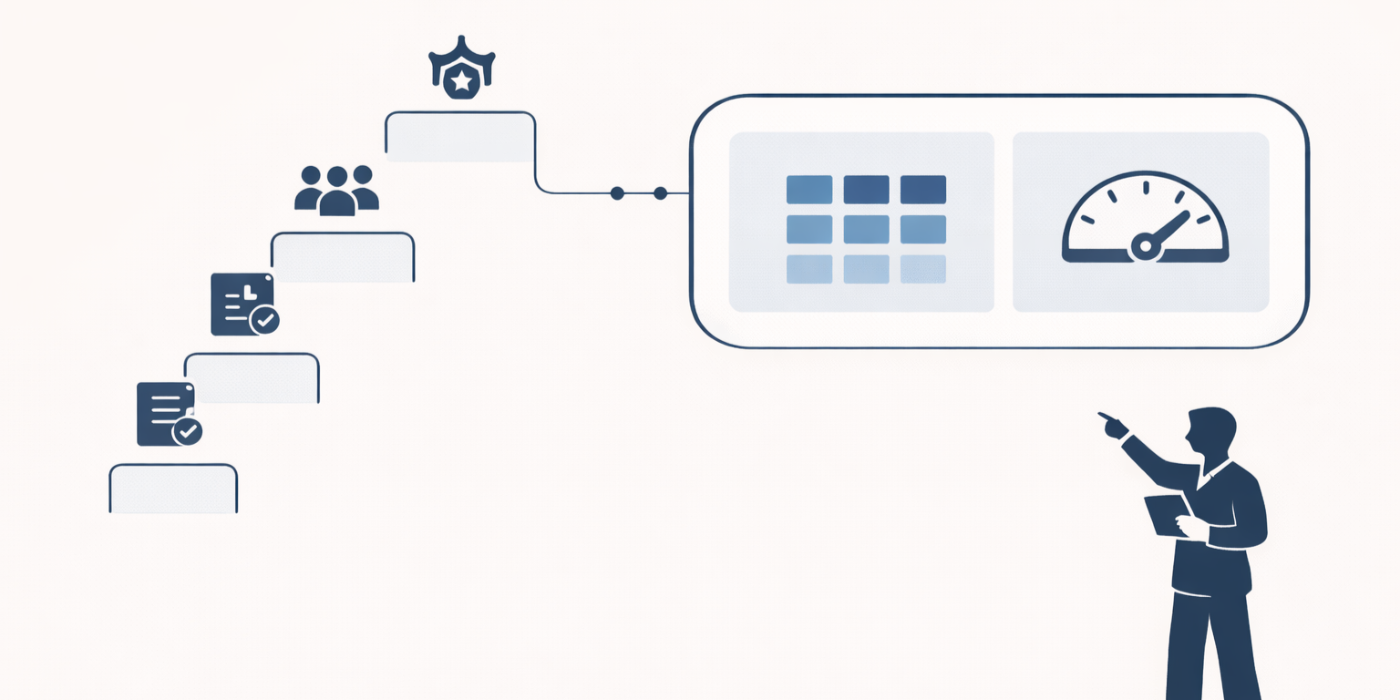
Becoming a CPO is usually a multi-stage progression, not a single promotion jump. The strongest candidates deliberately evolve from project execution to program leadership to portfolio ownership to enterprise operating model influence.
Stage 1: Build deep delivery credibility first (Project Manager → Senior PM)
You need a foundation of repeatable execution before you can lead enterprise delivery. That means proving you can recover schedules, manage scope, run governance cadence, align stakeholders, and protect outcomes under pressure. If you still need to strengthen your base, revisit how to become a project manager, remote & virtual PM career guide, freelance PM career roadmap, international project manager guide, and career path to project management consultant.
Stage 2: Move from project execution to program leadership
At this stage, your value shifts from “I delivered” to “I coordinated multiple initiatives with shared dependencies and executive visibility.” You must learn dependency orchestration, risk aggregation, and cross-team prioritization. That transition often comes through roles such as program manager, transformation lead, PMO manager, or senior delivery leader. Strengthen your systems thinking through project portfolio manager guide, rise of hybrid project management, future of PPM trends, project management 2030 forecast, and future PM skills by 2030.
Stage 3: Own portfolio decisions, not just portfolio reporting
Many leaders sit near portfolios but do not actually shape them. CPO-track candidates can define intake criteria, evaluate strategic fit, challenge weak business cases, and design prioritization logic. This is where you start becoming visible to the CFO, COO, and CEO. Build the decision and reporting muscle using top project budget tracking software tools, ultimate guide to project knowledge management software, top calendar & scheduling tools for PMs, best Gantt chart software reviewed, and top productivity software for busy PMs.
Stage 4: Influence the enterprise delivery operating model
This is the executive threshold. A CPO candidate can redesign governance, improve decision speed, raise PMO maturity, reduce portfolio overload, and standardize delivery where it matters. This often happens while serving as PMO Director, VP of PM/Transformation, or Head of Portfolio Delivery. Strengthen your promotion logic by aligning with project management director roadmap, PM to VP of PM career path, CPO roadmap overview, PM consultant leadership skills, and AI impacts on PM decision systems.
Stage 5: Build a CPO-ready casebook before the title
Do not wait for the CPO title to build CPO proof. Create an executive casebook showing:
a portfolio prioritization framework,
governance redesign outcomes,
capacity balancing decisions,
risk escalation structures,
dashboard architecture,
examples of initiatives paused/stopped/resequenced to protect enterprise value.
Use ideas from best automation tools for project management efficiency, best software platforms for PM training, project management mobile apps, best mobile collaboration apps for project teams, and future PM software predictions to modernize your operating model recommendations.
3) Core Skills a Future Chief Project Officer Must Build (Beyond Traditional PM Skills)
A CPO role rewards a very different skill stack than a project manager role. Traditional PM excellence remains necessary, but it is no longer sufficient. The shift is from execution competence to enterprise decision competence.
A) Portfolio judgment and prioritization discipline
A CPO must decide what not to start. This requires scoring frameworks, strategic alignment filters, capacity modeling, and the courage to challenge executive enthusiasm when delivery capacity or business value does not support the initiative. Candidates who cannot explain prioritization logic tend to remain in operational roles.
To sharpen this, study future of project portfolio management, project management 2030 methodology trends, future PM skills and competencies, AI in project management planning and decision support, and machine learning for estimation and scheduling.
B) Executive communication and strategic narrative building
A future CPO must frame delivery topics in executive language: growth risk, margin protection, operational resilience, customer impact, regulatory exposure, and capital efficiency. If your reporting still sounds like a weekly project status call, you are communicating below level.
Practice this by learning how different environments shape leadership conversations through project management careers in California, New York PM career guide, Texas PM career trends, Washington state PM opportunities, and Chicago PM market analysis.
C) PMO system design and governance architecture
A CPO is often the person who decides how governance works: what requires a gate, who approves what, how escalations occur, which metrics matter, and where standardization ends. This means you need operating model design skills, not just PM templates.
Build your toolkit with ultimate guide to project knowledge management software, top PM software for the software development industry, best project management software for healthcare projects, best customer relationship management tools for PMs, and top project budget tracking software.
D) Talent development and leadership bench building
CPOs are rarely promoted for personal heroics. They are promoted because they build teams and leaders who deliver consistently. If your org becomes dependent on your direct involvement, you are a high performer—but not yet an enterprise builder.
This leadership transition aligns naturally with project management director roadmap, PM to VP of PM path, agile coach career path, career roadmap from Scrum Master to agile PM consultant, and step-by-step guide to becoming a product owner.
4) Certifications and Professional Development for the CPO Track (What Helps at Senior Levels)
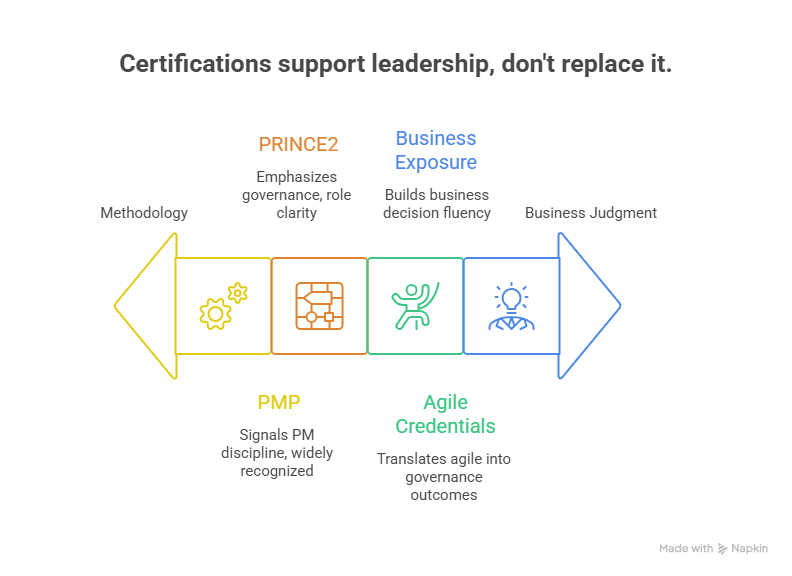
By the time you are CPO-track, certifications should support your positioning—not replace missing leadership proof. Executive hiring teams care far more about enterprise outcomes, governance design, and strategic decision quality than exam badges alone. Still, the right certifications can strengthen credibility, especially when they align with your current gap.
If you need stronger enterprise PM credibility
A PMP remains a useful credibility anchor because it signals broad PM discipline and is widely recognized by HR and leadership. If you need to refresh fundamentals or formalize your framework, use PMP certification exam guide, top 50 PMP exam questions, 30-day PMP study plan, and PMP exam day survival guide.
If your organization is governance/process-heavy
PRINCE2 can be valuable when you operate in environments that emphasize structured governance, role clarity, and stage control. It is especially useful if you must design or improve enterprise delivery standards. Build this lane through PRINCE2 certification exam guide, top 25 PRINCE2 exam questions, PRINCE2 Foundation vs Practitioner, and PRINCE2 success stories.
If you lead hybrid/agile-heavy transformation portfolios
Agile credentials can help if you can translate them into enterprise governance and portfolio outcomes. The key is not “knowing Scrum terms,” but showing how you scale agile delivery responsibly across functions. Useful resources include detailed career roadmap to certified agile project manager, complete guide to becoming a certified Scrum Master (CSM), Scrum vs agile certification comparison, and PMI-ACP exam preparation in 30 days.
If your gap is executive business judgment (not methodology)
Your best development may not be another PM certificate. It may be deeper exposure to:
portfolio finance,
strategic planning cycles,
operating model design,
executive committee decision formats,
change adoption strategy,
cross-functional governance.
In other words: spend as much time building business decision fluency as you spend collecting credentials. Support that growth with global PM salary report and market benchmarks, salary comparison by certification, project management consultancy firm guide, and future of PM software/automation/cloud integration.
5) How to Position Yourself for a CPO Role (Resume, Internal Visibility, and Promotion Strategy)
A CPO promotion is usually won before the hiring conversation starts. Organizations promote the leader they already trust to handle enterprise tradeoffs—not the one with the cleanest buzzwords. Your strategy should focus on building visible proof of executive-level judgment.
1) Reframe your achievements from project wins to enterprise outcomes
Weak positioning:
“Delivered 12 projects on time.”
Strong positioning:“Redesigned governance and prioritization process, reducing decision latency and improving portfolio throughput across three business units.”
Your bullet points should increasingly show:
enterprise scope,
cross-functional influence,
prioritization decisions,
capacity balancing,
risk reduction,
PMO or governance improvements,
leadership bench development.
Model your advancement narrative through project management director roadmap, PM to VP of PM path, chief project officer roadmap, project portfolio manager guide, and future PM competencies.
2) Build executive visibility through high-value decision work
Do not chase visibility through status meetings. Earn visibility by solving expensive problems:
portfolio overload,
poor intake quality,
slow approvals,
duplicate initiatives,
resource conflicts,
weak dashboarding,
transformation sequencing breakdowns.
When you fix those, executives remember your name. Support your solutions with modern tooling and governance practices from best automation tools for PM efficiency, top productivity software for PMs, top calendar and scheduling tools, project knowledge management software guide, and best software platforms for PM training.
3) Create a CPO-ready portfolio of proof assets
Before applying internally or externally, assemble a leadership evidence pack (sanitized and concise). Include:
portfolio prioritization model,
governance tiering model,
executive dashboard examples,
capacity planning heatmap,
escalation framework,
delivery operating model design,
PM competency framework draft,
examples of stop/start/resequence decisions.
This becomes your differentiator in executive interviews because it proves you can design and run enterprise delivery—not just talk about it.
4) Choose the right stepping-stone roles
Most CPOs do not leap straight from PM. Common stepping stones include:
PMO Director / Head of PMO
Director of Program Management
VP of PM / Delivery
Portfolio Director
Transformation Director
Enterprise Delivery Leader
If your path includes specialization before enterprise leadership, domain tracks like IT project manager career roadmap, construction PM career guide, healthcare PM career guide, government PM roadmap, and international project manager guide can strengthen your executive relevance.
6) FAQs About Becoming a Chief Project Officer (CPO)
-
A PMO Director usually leads PM standards, governance, and reporting within a PMO function. A CPO typically operates at a broader executive level with authority over enterprise prioritization, portfolio decision frameworks, strategic delivery capacity, and executive accountability for major initiatives. In some companies, the PMO Director is a stepping-stone to CPO.
-
There is no fixed timeline, but the real determinant is not years alone—it is the scope of decisions you’ve owned. Many professionals spend years delivering projects without ever owning portfolio prioritization, governance redesign, or enterprise resource arbitration. CPO readiness accelerates when you deliberately build those capabilities.
-
Not necessarily. What you need is executive-grade business judgment: prioritization, financial tradeoff thinking, governance design, strategic communication, and organizational influence. Some leaders build that through formal education; others build it through progressively larger transformation and portfolio roles.
-
PMP and PRINCE2 can support credibility depending on your environment, while agile credentials can help in transformation-heavy organizations. But at senior levels, certifications only help when paired with proof of enterprise outcomes, PMO system design, and leadership bench-building.
-
Prioritize roles or responsibilities that give you exposure to:
portfolio intake and prioritization,
cross-functional governance,
executive reporting,
capacity planning,
PMO maturity improvement,
transformation sequencing,
enterprise risk aggregation.
That experience builds the decision profile executive hiring teams actually look for.
-
Bring a sanitized executive casebook. Walk interviewers through how you prioritized a portfolio, redesigned governance, improved decision speed, reduced overload, and built repeatable delivery systems. CPO interviews are won by leaders who can demonstrate enterprise judgment with evidence—not just leadership language.
