
The Ultimate Guide to Getting Your Project Management Certification in Mexico: All You Need to Know in 2026-2027
Mexico’s project management market sits at the center of manufacturing expansion, digital transformation, infrastructure growth, nearshoring pressure, logistics complexity, fintech adoption, public-sector delivery, and cross-border work with U.S. teams. A certificate becomes valuable when it strengthens a real hiring story. The strongest candidates connect certification with a clear project management career roadmap, strong project execution terms, practical stakeholder engagement language, and proof that they can deliver under pressure.
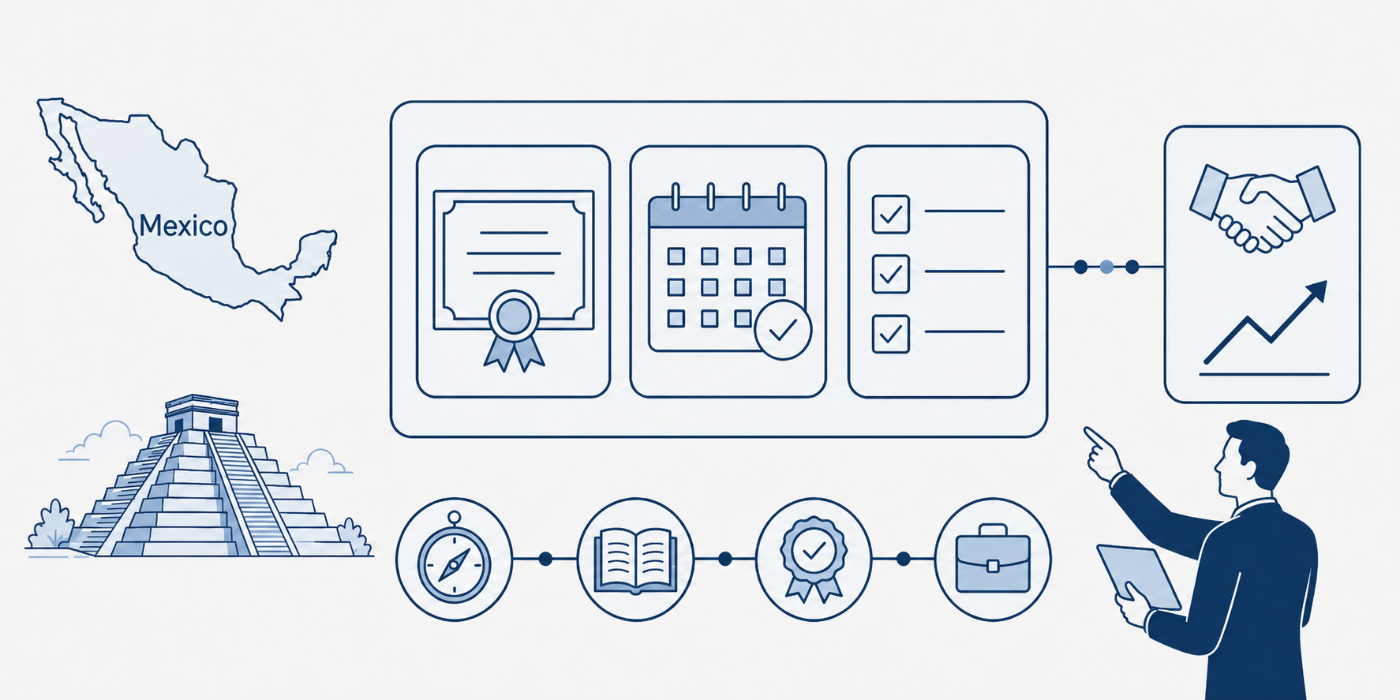
1. Why Project Management Certification in Mexico Needs a Strategic Career Plan
Mexico’s project management demand is shaped by very different work environments. A project manager in Monterrey may be dealing with industrial expansion, suppliers, equipment installation, and production readiness. A PM in Mexico City may be handling fintech delivery, banking compliance, enterprise software, consulting, or PMO reporting. A PM in Guadalajara may be working across technology, SaaS, product, and distributed engineering teams. A PM in tourism, healthcare, education, or public projects needs stakeholder patience, procurement discipline, and operational control. That variety means your credential should be tied to a specific route, using IT project management, construction project management, healthcare project management, government project management, and international project management as positioning anchors.
The painful mistake is buying a course before defining the career problem. Some candidates need foundational language. Some need PMP-level experience framing. Some need agile credibility. Some need formal governance. Some need proof they can manage vendors in Spanish and report clearly in English. Employers care about delivery signals: scope control, schedule recovery, risk ownership, vendor accountability, cost awareness, stakeholder trust, and reporting clarity. Build those signals with risk register knowledge, Gantt chart terms, schedule compression terms, project reporting best practices, and earned value management terms.
For 2026-2027, Mexico-based professionals should think in three layers: certification, sector fit, and proof. Certification gives structure. Sector fit explains why the credential matters. Proof turns it into interviews, promotions, and better offers. A manufacturing PM should show readiness gates, supplier maps, risk logs, and launch trackers. A digital PM should show backlog discipline, sprint metrics, release plans, and stakeholder demos. A PMO candidate should show dashboards, governance packs, and portfolio visibility. Support that path with hybrid project management trends, future PM skills, project management software trends, and AI in project management.
| Certification / Route | Best For | What It Proves | Mexico Career Use | Proof Asset to Build |
|---|---|---|---|---|
| CAPM | Graduates, coordinators, junior PMs | Foundational project language, delivery basics, and business analysis awareness | Useful for entry PMO, operations, IT support, and project coordinator roles | Project charter plus stakeholder register |
| PMP | Experienced project leads | Leadership, planning, risk control, stakeholder management, and business value | Strong for senior PM, delivery manager, PMO, vendor-heavy, and multinational roles | Experience log with measurable delivery outcomes |
| PRINCE2 Foundation | Professionals entering structured project environments | Governance, roles, stages, controls, and business justification | Useful for formal PMO, banking, telecom, government-adjacent, and enterprise delivery | Stage-gate governance map |
| PRINCE2 Practitioner | PMs applying controlled delivery methods | Scenario-based use of PRINCE2 principles and controls | Useful where approvals, tolerances, and escalation rules shape delivery | Exception report and escalation brief |
| PMI-ACP | Agile delivery professionals | Adaptive planning, agile values, iterative delivery, and team flow | Strong for software, fintech, SaaS, product, and digital transformation roles | Agile metrics dashboard |
| CSM | Scrum beginners, analysts, team facilitators | Scrum roles, events, facilitation, and sprint discipline | Helpful for digital teams adopting structured agile ways of working | Sprint ceremony facilitation plan |
| Product Owner Track | Business analysts, product coordinators, digital leads | Backlog ownership, prioritization, value decisions, and acceptance criteria | Useful for fintech, ecommerce, SaaS, platform teams, and internal products | Prioritized backlog with user stories |
| Agile PM Track | Traditional PMs moving into adaptive delivery | Hybrid planning, iterative work, and delivery discipline | Useful for organizations blending waterfall governance with agile execution | Hybrid roadmap with sprint and release gates |
| Construction PM Track | Civil engineers, planners, site coordinators | Schedule, contractors, cost, procurement, change control, and site reporting | Strong for infrastructure, real estate, industrial, and contractor environments | Baseline schedule plus delay tracker |
| Manufacturing PM Track | Operations, production, quality, and engineering professionals | Process coordination, constraints, equipment readiness, quality gates, and launch control | Useful for automotive, aerospace, electronics, industrial, and plant expansion projects | Production launch readiness checklist |
| Supply Chain PM Track | Logistics, procurement, sourcing, and operations teams | Supplier coordination, lead times, inventory risk, and shipment dependencies | Useful for nearshoring, export, manufacturing, retail, and distribution projects | Supplier dependency map |
| IT PM Track | Technical coordinators, system leads, implementation teams | Requirements, testing, releases, integrations, and vendor control | Strong for software, enterprise systems, fintech, telecom, and shared service centers | Requirements traceability matrix |
| Healthcare PM Track | Hospital admins, health-tech teams, quality leads | Compliance-aware delivery, stakeholder alignment, and operational change | Useful for hospital systems, clinics, patient-flow projects, and digital health work | Implementation checklist with approval gates |
| Government PM Track | Public-sector contractors, NGOs, infrastructure coordinators | Procurement, documentation, approvals, compliance, and reporting discipline | Useful for formal delivery environments with heavy documentation and public accountability | RACI plus procurement milestone tracker |
| PMO Track | Analysts, reporting specialists, governance coordinators | Standards, templates, dashboards, portfolio visibility, and compliance | Strong for enterprise PMO, transformation offices, and multinational reporting teams | Weekly steering pack |
| Portfolio PM Track | Senior PMs and PMO professionals | Prioritization, benefits, resource tradeoffs, and investment alignment | Useful for organizations managing many active initiatives at once | Portfolio scoring model |
| Program PM Track | Managers handling connected projects | Dependencies, benefits, cross-team governance, and senior stakeholder alignment | Useful for ERP, transformation, infrastructure, expansion, and regional programs | Dependency heatmap |
| Risk Management Focus | PMs in volatile schedules or high-cost projects | Risk identification, response planning, triggers, ownership, and escalation | Valuable for construction, manufacturing, finance, energy, technology, and vendor-heavy work | Top 20 risk register with response owners |
| EVM Focus | Cost and schedule control professionals | Budget performance, schedule variance, and progress measurement | Useful for engineering, capital projects, contractors, and PMO reporting | EVM sample dashboard |
| Vendor Management Track | Procurement-heavy PMs | SOW control, SLAs, acceptance criteria, and supplier accountability | Strong for outsourcing, IT implementation, construction, logistics, and manufacturing projects | SOW review checklist |
| Waterfall Track | PMs managing fixed-scope projects | Scope control, phase gates, documentation, baseline management, and signoffs | Useful for construction, compliance, hardware, enterprise systems, and public projects | Phase-gate checklist |
| Kanban Track | Operations, support, service delivery, and content teams | Flow control, WIP limits, bottleneck removal, and visual management | Useful for service teams, product ops, logistics, marketing, and technology support | Kanban board with flow metrics |
| PM Software Track | PMs who need tool credibility | Dashboards, workflows, automation, integrations, and reporting clarity | Helpful for remote, multinational, digital, and PMO roles | Tool comparison and reporting dashboard |
| Nearshoring PM Track | PMs working with U.S.-linked suppliers or clients | Bilingual coordination, supplier timelines, cross-border reporting, and dependency control | Useful for manufacturing, logistics, technology, consulting, and service delivery | Cross-border operating rhythm template |
| Remote PM Track | Mexico-based professionals targeting distributed work | Async communication, digital accountability, remote reporting, and time-zone discipline | Strong for global teams, SaaS, outsourcing, consulting, and remote-first delivery | Remote communication cadence |
| International PM Track | PMs targeting global clients or overseas organizations | Cross-cultural delivery, English reporting, global standards, and stakeholder alignment | Useful for regional headquarters, export firms, consulting, and international projects | International project case study |
| Consulting Track | Freelancers, advisors, and independent PMs | Diagnosis, proposal writing, delivery design, and client value | Useful for SMEs, startups, agencies, and transformation advisory | Discovery-to-delivery consulting offer |
| Director Path | Senior PMs moving into leadership | Strategy, people leadership, governance, portfolio oversight, and executive communication | Useful for PM Director, Head of Delivery, and transformation lead roles | 90-day PM leadership plan |
2. Choose the Right PM Certification Based on Your Mexico Career Stage
Beginners should focus on language, proof, and job alignment. CAPM, PRINCE2 Foundation, Scrum Master, or a structured beginner path can work well when your experience is limited. The goal is to understand how projects move from idea to closure, then build simple documents that prove you can think like a PM. A beginner should create a charter, stakeholder register, risk log, communication plan, timeline, and lessons learned note while studying. Support that learning with entry-level to executive PM guidance, agile project management terms, waterfall project management definitions, monitoring and control terms, and project closure concepts.
Experienced professionals should begin with evidence. If you have led schedules, coordinated vendors, managed stakeholders, supported budgets, handled risks, fixed delivery delays, or reported to leadership, PMP can be a strong route. The challenge is translating your work into project leadership language. Many candidates say “coordinated teams” when they managed dependencies. They say “prepared updates” when they created executive visibility. They say “followed up with suppliers” when they protected the schedule from vendor failure. Refine that story with PMP exam domain guidance, PMP preparation resources, PMP mistake prevention, PMP success stories, and PMP renewal guidance.
Professionals in enterprise, banking, telecom, public-sector-adjacent, or audit-heavy environments should consider governance-focused credentials and PMO training. These roles often depend on approvals, steering committees, procurement steps, phase gates, change control, audit trails, and formal reporting. PRINCE2 can help with structured delivery language, while PMP can help when leadership experience is already strong. Strengthen this path with project governance trends, RFP, RFQ, and RFI terms, vendor management terms, project financial management terms, and ISO standards for PM.
Digital and product professionals should build agile proof instead of relying on agile vocabulary. A Scrum or agile credential becomes stronger when your work shows backlog control, sprint planning, acceptance criteria, demo feedback, release discipline, issue removal, and measurable team flow. In Mexico’s technology and nearshore delivery market, bilingual communication and tool fluency can also matter. Study with Scrum glossary terms, sprint planning definitions, product backlog and sprint backlog terms, agile estimation techniques, and essential agile metrics.
3. Build a 2026-2027 Certification Plan That Employers Can Trust
Start with role research before study. Collect ten job descriptions from your target market and highlight repeated requirements. Look for terms such as risk, schedule, budget, vendor, supplier, bilingual, PMO, Jira, MS Project, Primavera, ERP, SAP, procurement, agile, Scrum, manufacturing, logistics, compliance, and stakeholder management. Then choose the certification that closes the most expensive gap. A manufacturing candidate may need supplier and launch control. A software candidate may need agile and release proof. A PMO candidate may need reporting, governance, and portfolio visibility. Build that decision with project management templates, agile PM tools, Kanban software tools, waterfall PM software, and project management APIs.
Use a layered study system. Layer one is exam knowledge: domains, terms, question patterns, and weak-area review. Layer two is applied proof: every major concept becomes a document, dashboard, checklist, or story. Layer three is career packaging: your CV, LinkedIn, portfolio, and interview stories must all support the same hiring promise. Passive studying produces fragile confidence. Applied studying produces job-ready confidence. When you study risk, build a register. When you study stakeholders, build a map. When you study cost, build an EVM-style report. When you study communication, build a steering update using project reporting terms, risk mitigation terms, resource allocation terms, and quality management terms.
A realistic 10-week plan works for many working professionals. Week one: choose the role target and certification route. Week two: build the glossary and weak-area list. Weeks three to six: study core lessons and complete topic-based questions. Weeks seven and eight: use timed practice, scenario review, and error logs. Week nine: build portfolio assets and rewrite your CV. Week ten: run mock exams and polish interview stories. Candidates moving into agile can connect this plan with certified Scrum Master guidance, agile coach career path, product owner career steps, and Scrum Master to agile PM consultant roadmap.
4. Mexico Industry Paths: Which Certification Fits Which Career Goal?
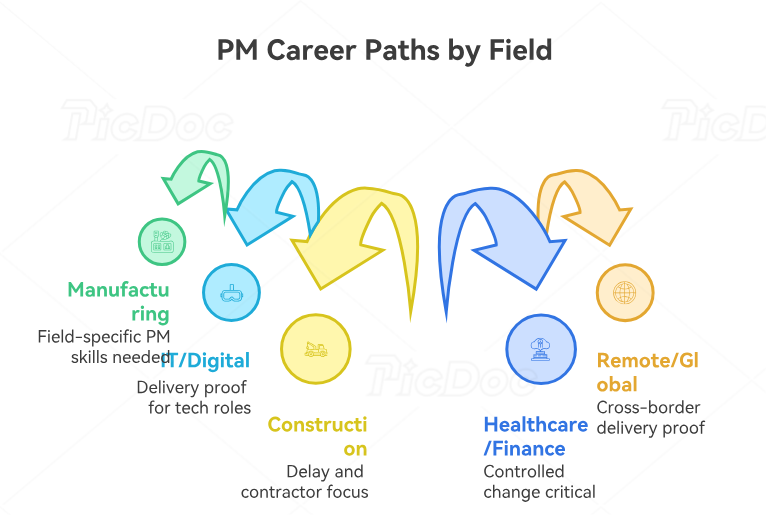
Manufacturing and nearshoring professionals should treat project management as a career accelerator. Automotive, aerospace, electronics, medical devices, industrial expansion, supplier transitions, plant upgrades, and process improvement all require schedule control, quality gates, procurement awareness, and cross-functional execution. PMP can help experienced professionals, while CAPM can help coordinators build language. A manufacturing-focused route becomes stronger when it includes supplier maps, launch checklists, risk logs, and readiness reviews. Build this path with resource allocation terms, vendor and supplier management, project financial management, risk response planning, and project execution terminology.
IT, software, and digital transformation candidates need delivery proof that survives technical scrutiny. Employers want PMs who can manage requirements, developers, testers, vendors, cybersecurity concerns, data migration, releases, demos, and user adoption. Agile credentials help when supported by actual backlog and sprint evidence. PMP helps when you own wider stakeholder, budget, and governance responsibilities. Support this route with IT PM career guidance, digital transformation PMO trends, cybersecurity project concerns, machine learning in estimation, and AI adoption in project management.
Construction and infrastructure professionals need a route built around delays, contractors, procurement, costs, site constraints, and reporting. PMP supports experienced project leaders. PRINCE2 supports structured governance. Construction-specific learning helps engineers convert technical experience into management language. The proof matters: baseline schedule, delay tracker, change log, contractor issue list, cost snapshot, and stakeholder update. Strengthen this path with construction PM career guidance, construction PM software, future construction PM trends, Gantt chart concepts, and schedule compression terms.
Healthcare, finance, and compliance-heavy professionals need controlled change. Hospital software, patient-flow improvement, clinic operations, banking systems, payment platforms, and compliance upgrades all create risk when communication is weak. These environments reward PMs who can document decisions, sequence approvals, report issues early, and protect stakeholders from operational disruption. Pair certification with healthcare PM career guidance, financial services project management trends, leadership and communication terms, conflict resolution terms, and project governance best practices.
Remote and international candidates need a profile that proves cross-border delivery maturity. Mexico-based professionals can be attractive for U.S.-linked teams, nearshore software delivery, bilingual client coordination, consulting, logistics, and distributed PMO work. A certification gives structure, while proof creates trust. Show English reporting, async updates, time-zone discipline, decision logs, dashboard habits, and stakeholder clarity. Combine the credential with remote project management roles, international project management guidance, freelance PM career building, future freelance PM trends, and project management consultancy guidance.
5. Turn Your Certification Into Interviews, Promotions, and Better Offers
After certification, rewrite your CV around outcomes. Weak CVs say “responsible for tracking tasks.” Strong CVs say “built a supplier follow-up cadence that reduced missed handoffs between procurement, engineering, and operations.” Weak CVs say “managed meetings.” Strong CVs say “created a stakeholder rhythm, escalated blockers, and improved decision turnaround.” Certification gives vocabulary; outcomes create hiring confidence. Use project reporting terms, monitoring and control terms, stakeholder engagement terms, risk register guidance, and earned value management to sharpen every bullet.
Build a portfolio before applying. Include a project charter, scope statement, RACI, stakeholder map, risk register, issue log, schedule snapshot, vendor checklist, change request form, communication plan, dashboard, backlog, acceptance criteria, and lessons learned note. This gives employers something concrete to trust. It also prepares you for interviews because every artifact becomes a story about judgment. Strengthen that portfolio with PM templates and resources, RFP and RFI guidance, project closure terms, quality management terms, and ISO standards.
Prepare interview stories around situations that reveal real project judgment. You need one story about scope change, one about a delayed supplier, one about stakeholder conflict, one about budget pressure, one about schedule recovery, and one about unclear requirements. Each story should show the pressure, the decision, the tool, the tradeoff, and the result. Senior candidates should connect this to project management director growth, PM to VP career path, chief project officer roadmap, portfolio manager guidance, and future PM leadership.
When discussing salary or promotion, connect certification to business risk. A PM who can reduce rework, protect scope, improve supplier accountability, prevent approval delays, strengthen reporting, and keep executives informed is easier to promote. This matters in Mexico because many organizations are managing fast growth, supplier pressure, bilingual communication, and cross-border expectations at the same time. Make your case with project portfolio management trends, PMO success predictions, automation and PM careers, and future certification trends.
6. FAQs About Getting Project Management Certification in Mexico in 2026-2027
-
CAPM, PRINCE2 Foundation, Scrum Master, and a structured beginner roadmap are strong options for new professionals. CAPM helps with broad project language, PRINCE2 Foundation helps with governance, and Scrum helps with agile delivery. The best choice depends on your target role first. Use entry-level PM career guidance, Scrum Master certification guidance, agile terms, waterfall definitions, and project execution terms to choose with purpose.
-
PMP can be worth it for experienced professionals who already lead projects, manage teams, control vendors, handle stakeholders, or own delivery outcomes. It is especially useful when your work crosses departments, budgets, schedules, suppliers, and business value. The certificate becomes stronger when you support it with a clear experience log and real proof assets. Prepare through PMP domains, PMP exam resources, PMP mistake prevention, PMP success examples, and PMP renewal guidance.
-
Choose PMP for broad project leadership, PRINCE2 for structured governance, agile credentials for product and digital delivery, and PMO-focused learning for reporting, standards, templates, and portfolio visibility. For Mexico-based professionals, hybrid positioning often works well because many organizations mix formal approvals with fast execution. Strengthen your route through hybrid PM trends, agile estimation, project governance, PMO success trends, and future PM skills.
-
Manufacturing and nearshoring candidates should consider PMP, CAPM, PRINCE2, PMO training, vendor management learning, and sector-specific project management routes depending on experience. The strongest profile shows supplier coordination, production readiness, quality gates, launch planning, budget awareness, and cross-border communication. Build that direction with vendor management terms, resource allocation terms, risk mitigation terms, project financial management, and project reporting guidance.
-
IT and digital candidates should consider PMP, CAPM, PMI-ACP, Scrum, Product Owner, Agile PM, or a blended path depending on experience. The best profile shows requirements control, backlog discipline, sprint planning, testing, release coordination, stakeholder demos, and tool fluency. Study with IT PM career guidance, Scrum glossary terms, product backlog terms, agile metrics, and best Scrum PM tools.
-
Use a focused weekly system. Study concepts, answer scenario questions, review mistakes, and build one proof asset each week. A working professional should avoid passive video watching because it creates weak recall. Build evidence while studying. Create a risk register when studying risk, a stakeholder map when studying communication, a schedule when studying time, and a dashboard when studying reporting. Use risk mitigation terms, stakeholder engagement terms, resource allocation terms, monitoring and control terms, and project reporting guidance.
