
The Ultimate Guide to Getting Your Project Management Certification in Brazil: All You Need to Know in 2026-2027
Brazil rewards project managers who can turn ambiguity into controlled delivery. Certification helps most when it proves you can manage scope, vendors, stakeholders, budgets, hybrid teams, and executive pressure inside real Brazilian business conditions. A strong credential plan should connect your current role, your target industry, and your evidence portfolio, whether you are entering through CAPM-style fundamentals, moving toward PMP-level leadership, pivoting into Agile delivery, or building a senior path through portfolio management.
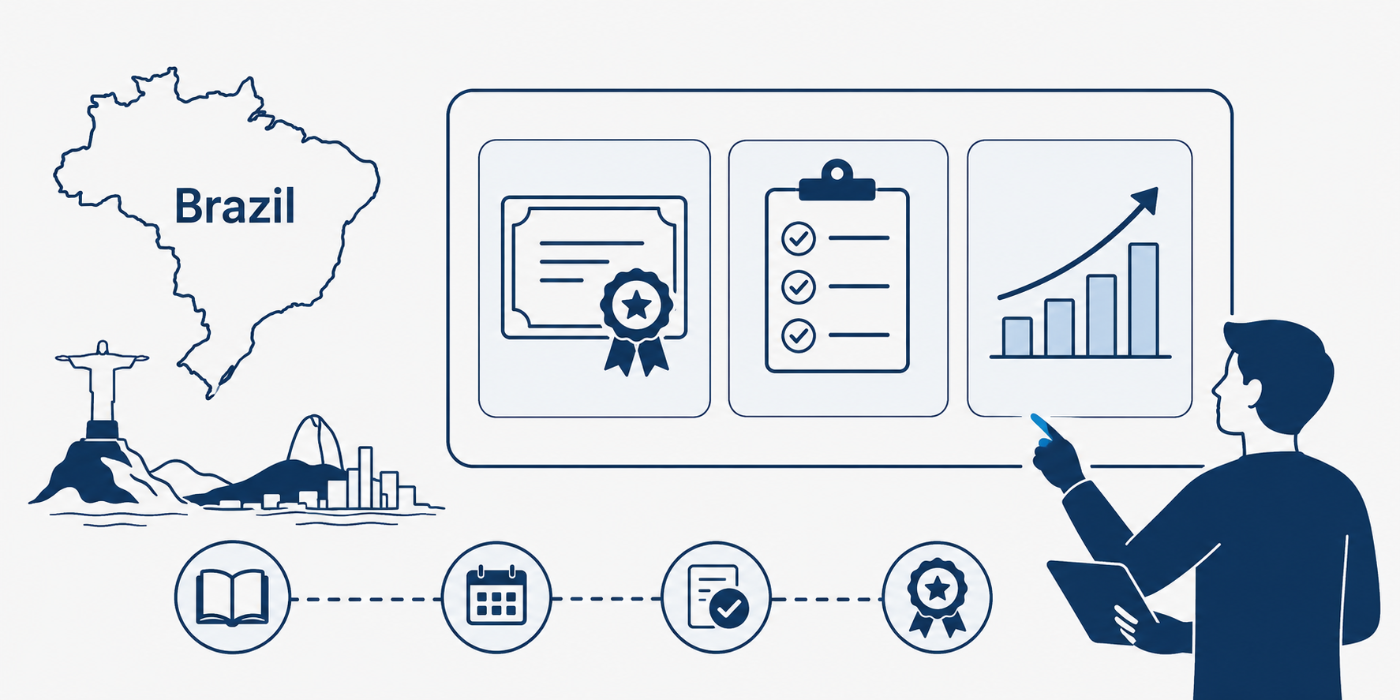
1. Why Project Management Certification in Brazil Needs a Clear Career Strategy
Getting certified in Brazil should start with the job market you want to enter. São Paulo and other major business hubs often value delivery fluency in technology, banking, fintech, consulting, telecom, operations, and digital transformation. Infrastructure, energy, construction, logistics, healthcare, and public-sector programs demand stronger governance, procurement, documentation, risk control, and stakeholder discipline. That means your certification choice should support a real career route, such as IT project management, construction project management, healthcare project management, government project management, or international project management.
The biggest mistake is treating “project management certification” as one universal move. A junior coordinator in Brazil may get more immediate value from CAPM, Scrum, Kanban, Excel reporting, and stakeholder documentation. A mid-career manager with years of delivery experience should usually prioritize PMP, hybrid delivery proof, budget ownership, and measurable business results. A delivery lead trying to move into consulting should combine project management consultant skills, Agile coaching capability, Scrum Master credibility, and Product Owner fluency.
Brazilian employers often screen for proof before personality. A certificate opens the door, while your delivery artifacts keep the conversation going. Build a portfolio with a one-page project charter, stakeholder map, risk register, procurement tracker, sprint dashboard, status report, lessons learned log, and benefits summary. These assets turn your learning into visible capability across project execution, monitoring and control, risk registers, earned value management, and stakeholder engagement.
2. Which Project Management Certification Should You Choose in Brazil?
Choose CAPM when your biggest gap is credibility at the starting line. It works well for graduates, project assistants, operations analysts, administrative coordinators, engineers entering delivery work, and professionals moving from execution into coordination. CAPM gives you a shared language for scope, schedule, cost, stakeholders, risk, procurement, quality, and delivery approaches. Pair it with project management templates, project financial management terms, Gantt chart fluency, and project closure concepts so your résumé shows working knowledge instead of course completion alone.
Choose PMP when you already have serious delivery experience and need a credential that makes hiring panels take your leadership record seriously. PMP is especially useful when your projects involved budgets, vendors, departments, clients, compliance, large teams, or executive stakeholders. In Brazil, PMP becomes stronger when your résumé translates local project complexity into globally readable outcomes: reduced delays, recovered scope, improved vendor performance, accelerated delivery, protected budget, or improved adoption. Support that story with PMP exam domain preparation, PMP study resources, PMP exam mistake avoidance, and PMP renewal planning.
Choose Scrum, Product Owner, Kanban, or Agile certification when your target role sits close to product teams, software delivery, fintech platforms, cloud migration, customer experience, process automation, or digital transformation. Brazilian employers in these spaces often care about speed, collaboration, backlog discipline, sprint health, flow metrics, and stakeholder feedback loops. A candidate who can explain Scrum terms, Agile metrics, Agile estimation, sprint planning, and product backlog management will sound far stronger than someone who only lists a badge.
Choose PRINCE2, governance, procurement, and PMO training when your target work involves public-sector contracts, regulated industries, multinational reporting, stage approvals, infrastructure, engineering, or complex vendor ecosystems. These environments reward clear roles, decision gates, exception handling, audit trails, procurement literacy, and business case discipline. PRINCE2 can fit well beside PMP because PMP signals broad leadership capability, while PRINCE2 strengthens method, governance, and tailoring. For Brazil-based candidates targeting structured organizations, combine this path with project governance, vendor and supplier management, RFP and RFQ literacy, and PMO strategy.
3. How to Build a 2026-2027 Certification Roadmap That Matches Brazil’s Hiring Reality
Start with your target job title, then work backward. A Brazil-based project coordinator targeting assistant PM roles should build foundations first: CAPM, Excel or Power BI reporting, risk logs, meeting notes, status reporting, and stakeholder mapping. A delivery analyst moving toward IT PM should add Agile, requirements control, vendor coordination, cloud or ERP vocabulary, and a project case study. A construction or infrastructure professional should prioritize schedule control, contractor coordination, procurement, change management, and cost tracking. Use IT PM career planning, construction PM planning, project monitoring controls, and schedule compression terms to sharpen that path.
Your roadmap should also account for language. PMP and CAPM have Brazilian Portuguese options, which can help candidates who think faster in Portuguese. Global roles, remote roles, multinational employers, and consulting opportunities still reward strong English project vocabulary. The best move is bilingual preparation: study the concept in Portuguese when needed, then practice explaining the same concept in English for interviews. This matters when discussing stakeholder engagement, conflict resolution, team communication tools, and remote PM operating habits.
Next, build proof while studying. Every certification topic should become a portfolio artifact. When you study scope, create a scope baseline. When you study risk, create a risk register. When you study procurement, create an RFP comparison grid. When you study Agile, create a sprint dashboard. When you study governance, create a steering committee cadence. These assets make interviews easier because you can show how you think. This turns Agile tools, Kanban tools, Scrum platforms, and waterfall software into evidence rather than buzzwords.
The fastest PM career growth usually comes from fixing the blocker hiring panels can see first.
4. The Best Study Plan for PM Certification Candidates in Brazil
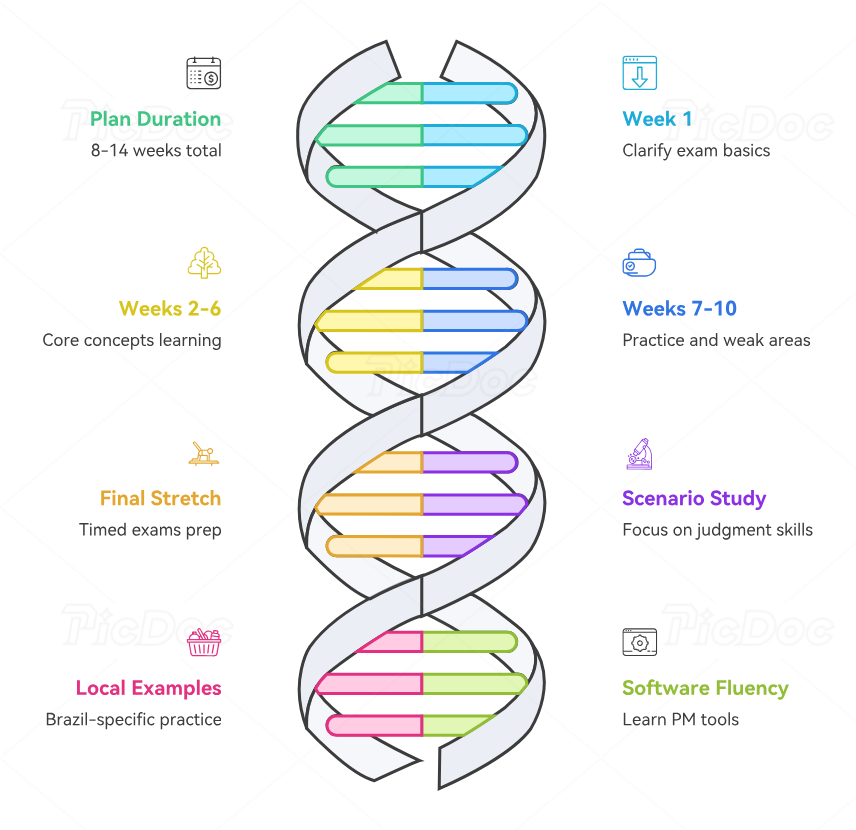
A strong Brazil certification plan should run for 8 to 14 weeks depending on your experience, English level, workload, and target exam. Week one should clarify the certification, exam language, eligibility, application requirements, and study materials. Weeks two through six should focus on core concepts and active recall. Weeks seven through ten should shift into practice questions, weak-area repair, and exam stamina. The final stretch should focus on timed exams, formula recall, scenario reading, and answer elimination. Use PMP success stories, PMP exam resources, PMP mistake prevention, and project management certification trends to keep the plan realistic.
Study by scenario, because modern PM exams test judgment more than memorization. A question may describe a stakeholder conflict, supplier delay, unclear requirement, team burnout, compliance risk, or sudden scope change. Your job is to identify the most responsible next action, not the most dramatic one. Practice asking: Who owns the decision? What evidence exists? What agreement controls the situation? Which action preserves value? Which response protects trust? This thinking connects directly to stakeholder engagement, project reporting, risk mitigation, resource allocation, and conflict resolution.
Brazil-based candidates should practice with local examples. Build scenarios around an ERP rollout in São Paulo, a logistics improvement in Santos, a healthcare system launch, a public procurement project in Brasília, a renewable energy site, a construction delay, or a fintech product release. This makes the material easier to remember and turns study into interview preparation. Add current PM software fluency as you study: dashboards, Gantt views, Kanban boards, sprint reports, resource views, and communication cadences. APMIC guides on PM software futures, AI project estimation, PM templates, and team communication platforms can support that practical layer.
5. How to Turn Certification Into Better PM Roles in Brazil
Certification should change your résumé, LinkedIn, interview stories, and proof assets. Update your headline with the target role, not only the credential. Instead of writing “PMP certified,” use a role signal such as “PMP-certified IT Project Manager focused on ERP delivery, stakeholder governance, and vendor coordination.” Your summary should mention industries, project types, budgets, team size, tools, delivery methods, and measurable outcomes. Support the positioning with IT PM career signals, remote PM role requirements, international PM expectations, and project consultant skills.
Your résumé bullets should prove business impact. Weak bullets say “managed project activities” or “worked with stakeholders.” Strong bullets say “coordinated 6 vendors across a 9-month ERP rollout, reduced unresolved change requests by 32%, and improved steering committee decision time through weekly risk escalation.” This level of detail makes certification believable. Each bullet should connect action, complexity, and outcome. Use project execution language, monitoring and control terms, financial management terms, and quality management vocabulary to sound precise.
For interviews, prepare six stories: rescued timeline, handled difficult stakeholder, controlled scope, managed vendor risk, improved reporting, and delivered measurable value. Use the STAR format, then add a “PM judgment” line at the end: “The key decision was escalating the dependency before it became a missed milestone.” That final line shows maturity. Candidates targeting senior tracks should connect certification to project management director growth, VP of PM career movement, Chief Project Officer pathways, and future PM leadership styles.
The 2026-2027 edge in Brazil belongs to PMs who combine certification with sector intelligence. Digital transformation creates demand for Agile, hybrid governance, product delivery, AI-assisted planning, and PMO automation. Renewable energy and infrastructure create demand for risk, contracts, scheduling, stakeholder management, and regulatory coordination. Healthcare and government projects require compliance, documentation, and controlled decision-making. Your certification should become the spine of a larger career system that includes AI and project management, automation in PM careers, sustainability project management, and future PM competencies.
6. FAQs About Getting Project Management Certification in Brazil
-
The best certification depends on your experience level and target role. CAPM works well for beginners and career changers. PMP is strongest for experienced professionals who can prove project leadership. Scrum or Agile certification fits software, fintech, product, and digital transformation roles. PRINCE2 supports governance-heavy environments, structured organizations, and public-sector-style delivery. For the best career outcome, match your certification to a clear role path using project manager career planning, Agile PM guidance, Scrum Master preparation, and government PM career strategy.
-
Take CAPM first if you lack the required project leadership experience for PMP or need a structured way to enter the field. Go directly to PMP if you already have enough eligible experience and can document your project roles clearly. The smarter decision comes from your evidence, not your ambition. If your résumé already shows leadership across scope, stakeholders, budget, risk, schedule, and vendors, PMP may be the better move. If your experience is scattered, CAPM plus strong portfolio assets can create a cleaner route. Support either path with PMP domain study, PMP resources, and project templates.
-
Scrum certification is useful when your target work involves product teams, software projects, fintech platforms, digital transformation, UX delivery, cloud implementation, or continuous improvement. It carries less value for roles that mainly require procurement, heavy documentation, contractor management, or waterfall governance. Scrum becomes powerful when you can explain team facilitation, backlog refinement, sprint planning, flow problems, stakeholder demos, and measurable delivery improvement. Pair Scrum with Agile terminology, Scrum glossary knowledge, Agile metrics, and sprint planning terms.
-
Yes. Most working professionals can prepare by using a structured weekly schedule: three concept sessions, two practice-question sessions, one review block, and one portfolio-building block. The danger is passive studying. Reading chapters without solving scenarios creates false confidence. Full-time professionals should study in short, high-intensity blocks, track weak areas, review missed questions, and connect every concept to a work example. Use PMP exam mistake guidance, real PMP success stories, project reporting best practices, and risk register examples to study with practical pressure.
-
Certification can help, especially when combined with English communication, remote collaboration habits, strong documentation, and measurable delivery stories. Global hiring teams want project managers who can work across time zones, write clean updates, manage async decisions, and keep stakeholders aligned without constant meetings. A credential gives your profile legitimacy, while your portfolio proves readiness. Build examples of remote status reporting, decision logs, risk escalation, sprint boards, and executive summaries. Strengthen your path with remote PM career guidance, international PM strategy, team communication tools, and future freelance PM trends.
-
After certification, update your résumé, LinkedIn headline, project portfolio, interview stories, and target job list within one week. Create a 30-day application sprint with role-specific résumés for IT, construction, healthcare, government, Agile, or consulting roles. Publish or prepare three proof assets: one status report, one risk register, and one project case study. Then practice interview answers that connect certification concepts to real delivery decisions. Long-term growth should point toward PM consulting, project portfolio management, PM director roles, and executive PM leadership.
