
Detailed Career Path: How to Become an Agile Coach
If you’re aiming to become an Agile Coach, you’re not chasing a “ceremony facilitator” title—you’re stepping into a behavior-change role where you’re paid to reduce delivery friction, de-risk outcomes, and make leadership trust the system again. Most people fail because their experience looks like “I attended standups” instead of “I removed constraints, changed incentives, and raised throughput.” This roadmap shows the exact proof assets, skill signals, and transition paths that hiring panels reward—so you can stop guessing, stop getting filtered out, and start presenting as a coach who can move a portfolio, not just a team.
1) What an Agile Coach actually does (and why most candidates get rejected)
An Agile Coach is hired for organizational performance, not Agile trivia. Your job is to increase delivery reliability by shaping systems: team habits, leadership decisions, portfolio flow, dependency management, and the feedback loops that keep work honest. If your story is mostly about ceremonies, you’ll be seen as a Scrum Master. If your story is about outcomes, you’ll be seen as a coach.
Here’s how hiring managers separate “nice-to-have coach” from “must-hire coach”:
You can diagnose constraints quickly. You know whether the problem is WIP overload, unclear priorities, missing definition of done, broken discovery, unmanaged dependencies, or governance delay—and you can prove it with artifacts and metrics. Pair this with strong stakeholder clarity using project stakeholder terms so you’re speaking leadership language, not team slang.
You can coach leaders, not just teams. Real coaching changes decision-making: intake rules, prioritization, staffing, incentives, and escalation paths. This is where your executive influence aligns with frameworks in project communication terms & techniques.
You can run hybrid reality, not Agile fantasy. Most environments are mixed delivery models. Coaches who understand the blend (and when to apply each) stand out—especially those who can explain tradeoffs like in the rise of hybrid project management.
You build trust through visible controls. Stakeholders don’t trust “we’re Agile.” They trust clear forecasting, risk visibility, and issue resolution. Coaches who operationalize this with strong tracking and reporting win—tie your narrative to systems like issue tracking software and project reporting & analytics.
Pain points you must address head-on in your blog/portfolio narrative:
“Our teams are ‘Agile’ but delivery dates slip anyway.”
“Leaders override priorities weekly, so no plan survives Monday.”
“Dependencies kill sprints, and nobody owns cross-team alignment.”
“Standups happen, but decisions don’t.”
“Metrics are gamed and nobody trusts the dashboard.” (Fix this with real dashboards & data visualization tools.)
To become an Agile Coach, your entire positioning must scream: I reduce chaos by building a system that makes delivery predictable—and I can prove it.
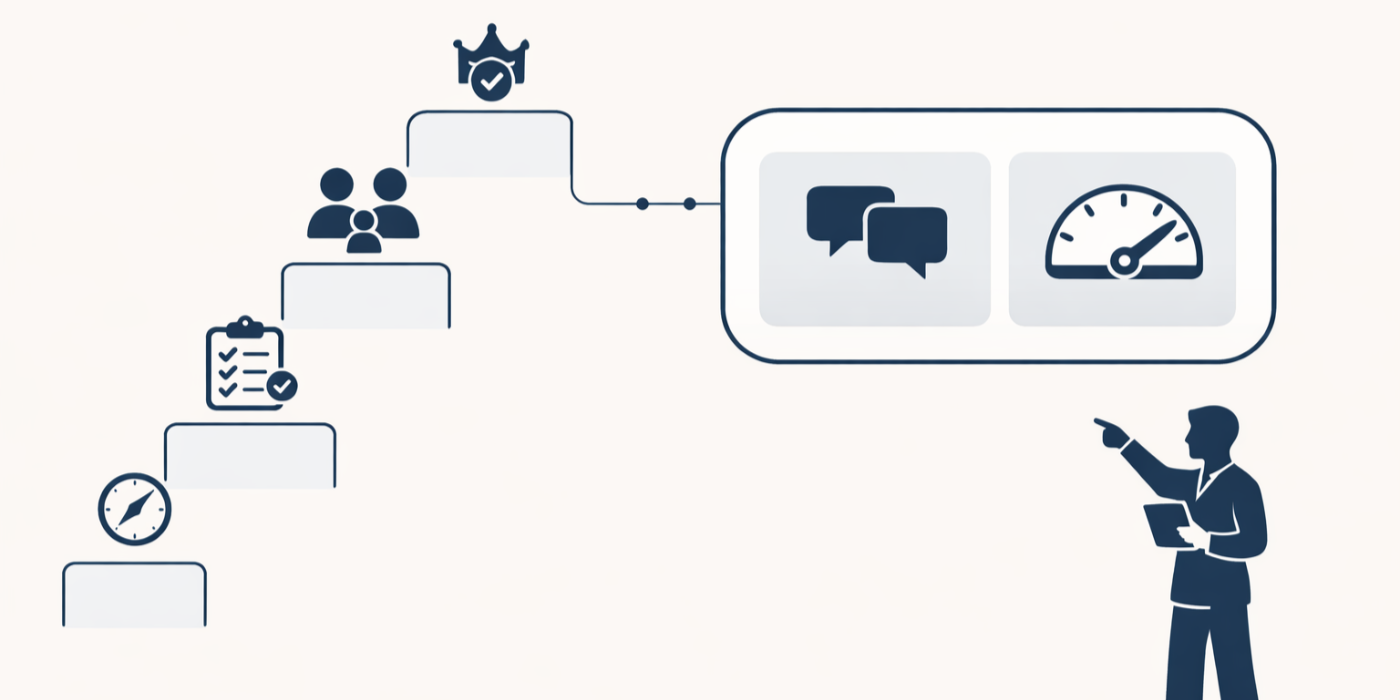
2) The 4-stage roadmap to becoming an Agile Coach (without “hoping” you get promoted)
Most Agile Coaches come from one of three paths: Scrum Master, Project Manager, or Senior Engineer/Lead. Regardless of background, your career progression must follow four stages:
Stage 1: Become a team-level delivery stabilizer (0–6 months)
Your mission is simple: make one team predictable. Don’t chase enterprise transformations yet. Stabilize basics: backlog health, definition of done, WIP control, and dependency visibility. Use pragmatic tooling and clear reporting so nobody has to “ask for status” anymore—pair your practice with proven structures like project reporting & analytics software and dashboard & visualization tools.
Proof assets to build in this stage:
A before/after flow snapshot (cycle time trend, blocked time, aging work).
A team working agreement that reduces conflict and ambiguity.
A lightweight risk + issue system aligned with issue tracking best practices.
A “decision log” that prevents the same debate from repeating.
Stage 2: Become a multi-team dependency breaker (6–18 months)
This is where you level up from “team Agile” to “delivery system.” Hiring managers love coaches who can reduce cross-team drag because that’s where most money gets burned. Your priorities:
Dependency mapping (who blocks whom, when, and why)
Integration checkpoints
Shared standards (DoR/DoD across teams)
Portfolio intake discipline
If you’re transitioning from a PM background, this is where hybrid strength becomes your advantage. Frame it using hybrid project management and show you can blend governance with flow.
Stage 3: Become a leadership coach (12–30 months)
At this stage, your “client” is no longer the team—your client is leadership behavior. You coach:
prioritization discipline (stop starting, start finishing)
capacity realism (no more secret overtime plans)
escalation paths (what gets escalated, when, and to whom)
incentive alignment (reward outcomes, not busyness)
This is where communication skill is not optional—tie your approach to project communication techniques and stakeholder clarity from stakeholder terms.
Stage 4: Become an org-level performance designer (18+ months)
This is the true Agile Coach role in many companies: design the environment so teams can succeed by default. You implement:
portfolio flow policies
governance “decision gates” that don’t stall delivery
metric integrity (stop vanity metrics)
enablement programs
sustainable tooling standards
If you can speak credibly about future delivery trends (AI, tooling, methodologies), you become “strategic,” not just operational. Reference how the discipline evolves via project management 2030 methodologies and how practices shift in the evolution of Scrum.
3) Skills, certifications, and proof assets that make hiring easy
Hiring teams don’t want to “imagine” you can coach. They want evidence that you’ve already done it. Your goal is to show signals across four categories: coaching craft, delivery systems, business fluency, and tooling intelligence.
A) Coaching craft (how you change behavior)
You need repeatable methods, not vibes:
Coaching contracts: define scope, success criteria, expectations, and sponsor behaviors.
Conflict navigation: convert disagreement into decisions, not politics.
Facilitation as design: every meeting has an output, an owner, and a decision rule.
Build a portfolio asset: a one-page “Coaching Engagement Plan” + a sample workshop agenda and outputs.
B) Delivery systems (how you create predictability)
This is where you prove you understand flow:
WIP limits, cycle time, blocked-time reduction
slicing and backlog shaping
dependency control
quality gates and definition of done
Build a portfolio asset: a “Flow Improvement Case Study” with one chart, one narrative, and one decision log snapshot—supported by credible reporting from project reporting & analytics and clean visualization via dashboard tools.
C) Business fluency (how you talk to sponsors)
Coaches fail when they can’t translate team reality into business impact. You must show:
tradeoff thinking (scope/time/cost/risk)
stakeholder mapping
governance alignment
decision velocity
Anchor your language in stakeholder terminology and strong narrative structures from project communication techniques.
D) Tooling intelligence (how you reduce admin and increase clarity)
Tool chaos is a hidden tax. Coaches who can standardize workflows and reduce status-chasing stand out. You should be able to recommend a simple, scalable stack:
issue tracking
documentation & knowledge base
scheduling & coordination
automation and reporting
Build credibility by referencing relevant tooling domains like document management software, project knowledge management software, calendar & scheduling tools, and automation tools for efficiency.
Pain point to hit hard in your story: “We waste hours creating status reports because the system can’t tell the truth.” Your answer: a workflow + dashboard + decision cadence that makes progress visible.
4) Transition paths that work (and the exact “proof swaps” you must make)
Different backgrounds have different credibility gaps. Your job is to close the gap with proof, not promises.
If you’re a Scrum Master: expand from team to system
Common failure: you sound like you “run standups.”
Your proof swaps:
Replace “I facilitated” with “I improved flow by X through WIP/dependency fixes.”
Show multi-team coordination and governance alignment using hybrid framing from hybrid delivery models.
Add tooling authority: show how you standardized delivery truth via issue tracking systems and analytics reporting.
High-value move: build a “Dependency Reduction Playbook” (one page) and demonstrate how you cut waiting time.
If you’re a Project Manager: prove coaching, not command-and-control
Common failure: you sound like you “manage people” or “push tasks.”
Your proof swaps:
Show you can coach outcomes without authority: coaching contracts, facilitation patterns, leadership influence.
Demonstrate you understand modern methodology direction using project management 2030 and how Scrum is evolving via Scrum changes by 2027.
Build lightweight documentation systems so decisions stick—powered by knowledge management practices and document management tools.
High-value move: create a “Leadership Decision Cadence” with clear decision rules and escalation thresholds.
If you’re an Engineer/Lead: prove people change + stakeholder leadership
Common failure: you sound like a “process engineer” who ignores people dynamics.
Your proof swaps:
Build facilitation and conflict skill into your story using communication techniques.
Show you can translate delivery into stakeholder confidence using stakeholder terms.
Demonstrate tool-to-process fit through systems like scheduling tools and automation tools.
High-value move: show a “reduction in unplanned work” and how you changed intake rules to protect focus.

5) How to land the Agile Coach role: resume, interview, and on-the-job success plan
Resume positioning: stop listing ceremonies, start listing systems
Your resume must read like a performance engineer for delivery.
Use bullets that include:
constraint identified → action taken → measurable outcome → artifact produced
Example structure:“Reduced cycle time by 23% by implementing WIP limits and dependency ownership; introduced a weekly decision log and portfolio intake policy.”
Back it with proof assets:
a sample dashboard screenshot (or description) referencing dashboard tools
an issue/risk workflow aligned with issue tracking software
documentation hygiene supported by document management and knowledge management
Interview questions you must be ready for (and what they’re really asking)
“How do you measure Agile maturity?”
They’re asking: can you build metrics integrity without vanity. Reference real outcome measures and reporting discipline like project reporting & analytics.“How do you handle leadership resistance?”
They’re asking: can you coach power. Use sponsor contracts, decision rules, and stakeholder alignment language from stakeholder terms.“Our teams are hybrid—can you coach that?”
They’re asking: can you operate in reality. Anchor your answer in hybrid PM.“What’s your approach to scaling?”
They’re asking: do you copy frameworks or design systems. Mention flow principles, dependency control, governance fit, and the future direction described in project management methodologies for 2030.
30-60-90 day plan (what great Agile Coaches do immediately)
First 30 days: listen, map constraints, earn trust
flow diagnostic, dependency map, decision cadence inventory
set a lightweight documentation approach using knowledge management systems
Days 31–60: remove friction with visible experiments
WIP limits, DoR/DoD alignment, blocker escalation, meeting redesign
standardize issue flow using issue tracking tools
Days 61–90: scale what works + lock in governance
portfolio intake rules, dashboard trust, leadership coaching routines
reporting integrity through project reporting & analytics with clean comms methods from communication techniques
6) FAQs
-
Certifications can help, but they don’t replace proof. Hiring panels reward evidence: case studies, metrics integrity, dependency control, and leadership coaching. Use certifications as signals, then back them with artifacts built from real delivery systems like issue tracking and reporting analytics.
-
A Scrum Master typically optimizes a team’s cadence and delivery hygiene. An Agile Coach optimizes systems across teams and leadership: portfolio flow, governance, dependency design, incentives, and enterprise adoption. The fastest way to show the difference is to demonstrate hybrid fluency and scaling design using hybrid project management plus org-level direction thinking like project management 2030.
-
Avoid single-number targets like “velocity.” Use balanced measures: cycle time trends, blocked-time reduction, throughput stability, defect escape rates, and predictability. Pair results with narrative decisions using dashboards from data visualization tools and consistent reporting via project reporting software.
-
Bring proof of influence without authority: coaching contracts, facilitation outputs, conflict resolution examples, and leadership decision cadences. Your credibility climbs when you speak stakeholder language using critical stakeholder terms and communicate tradeoffs using project communication techniques.
-
You should be fluent in systems, not brands. At minimum: issue tracking workflows (issue tracking guide), documentation systems (document management), knowledge reuse (knowledge management), and cadence planning (calendar tools). Add automation where it removes admin load: automation tools.
-
Build three proof assets:
Flow Improvement Case Study (with a constraint map + outcomes)
Coaching Engagement Plan (scope, sponsor behaviors, success criteria)
Delivery Operating System (issue workflow + reporting cadence + decision log)
Anchor each asset with credible systems like reporting & analytics, issue tracking, and documentation structure via knowledge management.
