
The Ultimate Guide to Getting Your Project Management Certification in Japan: All You Need to Know in 2026-2027
Japan rewards project managers who can combine structure, patience, quality discipline, stakeholder alignment, and delivery speed without creating chaos. A certification helps when it matches the role, sector, and proof you bring into interviews. This guide shows how to choose between PMP preparation, Agile project management, Scrum Master certification, IT project management, and Japan-focused career positioning for 2026-2027.
1. Why Project Management Certification Matters in Japan in 2026-2027
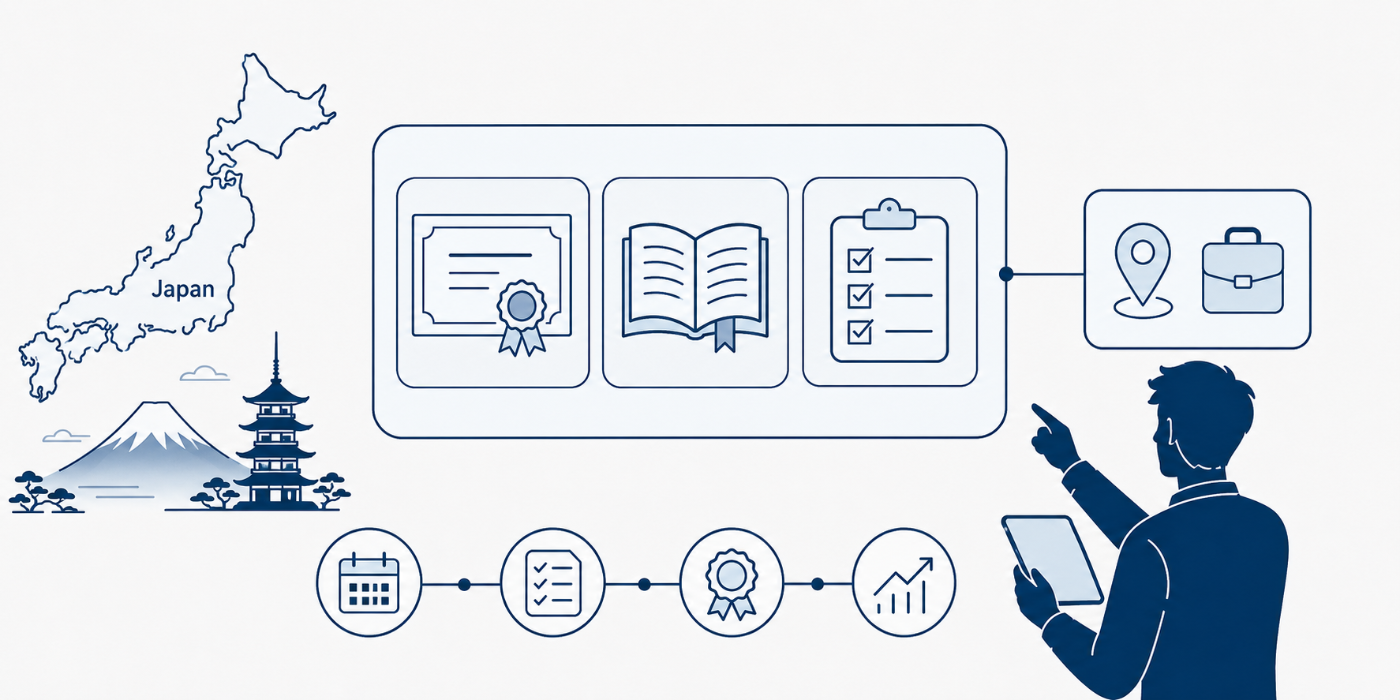
Japan’s project management market has a serious trust filter. Employers want candidates who can manage scope, schedule, vendors, approvals, documentation, risk, and communication without turning every delay into a fire drill. That matters across Tokyo tech teams, Osaka manufacturing programs, Nagoya automotive projects, Fukuoka startups, Yokohama infrastructure work, Kyoto research teams, and bilingual regional delivery roles. A certification gives structure to your experience, while a strong project manager roadmap, project execution vocabulary, stakeholder engagement knowledge, and risk register fluency show you can operate inside real delivery pressure.
The biggest pain point for candidates in Japan is credibility. A resume can say “project manager,” yet hiring panels still wonder whether the person can handle consensus-driven decisions, vendor escalation, detailed reporting, meeting discipline, quality standards, and cross-functional dependency control. That is why certification works best when paired with proof assets: a project charter, risk register, stakeholder map, issue log, schedule baseline, status dashboard, and lessons-learned summary. Candidates who connect certification with project monitoring and control terms, project reporting best practices, resource allocation concepts, and PM templates look more prepared than candidates who only list a credential.
Japan also creates a sharp distinction between global PM language and local operating reality. International employers may value PMP, Agile, Scrum, PRINCE2, or hybrid delivery language, while domestic teams may care deeply about alignment before decisions, documentation quality, vendor relationships, and steady execution. A smart candidate learns both. Use hybrid project management, waterfall project management terms, Agile terminology, and PM leadership communication terms to build a language bridge between certification study and daily work.
| Candidate Situation | Best Certification Focus | Japan Market Fit | Proof Asset to Build | Helpful APMIC Link |
|---|---|---|---|---|
| Entry-level PM | CAPM-style fundamentals | Coordinator, PM assistant, project analyst roles | Project lifecycle map with handoffs | project manager roadmap |
| IT graduate | Agile + Scrum foundation | Tokyo SaaS, fintech, gaming, systems integration | Sprint board with blockers and metrics | Agile PM roadmap |
| Scrum candidate | Certified Scrum Master path | Software delivery, product squads, digital teams | Facilitation plan and retrospective notes | Scrum Master guide |
| Product-facing PM | Product Owner + Agile delivery | Apps, platforms, internal tools, customer portals | Backlog with acceptance criteria | Product Owner guide |
| Experienced PM | PMP-style advanced credential | Senior PM, program lead, delivery manager roles | Outcome-based project portfolio | PMP exam domains |
| PMO analyst | Governance, dashboards, reporting | Enterprise PMO, finance, telecom, manufacturing | Portfolio dashboard with RAG logic | future PMO role |
| Manufacturing PM | Quality, schedule, supplier coordination | Automotive, electronics, industrial operations | Quality checklist and supplier tracker | TQM terms |
| Construction PM | Waterfall, procurement, risk control | Infrastructure, facilities, rail, real estate | Milestone schedule and change log | construction PM guide |
| Healthcare PM | Compliance + operations improvement | Hospitals, medtech, health IT, patient-flow projects | Stakeholder map and risk register | healthcare PM guide |
| Government PM | Governance + procurement discipline | Public projects, smart-city work, grants, infrastructure | Approval matrix and procurement timeline | government PM roadmap |
| Remote PM | Virtual delivery systems | Global teams serving APAC, EU, or US clients | Remote cadence and escalation rules | remote PM roles |
| International PM | Cross-cultural delivery | Bilingual teams and multinational programs | Stakeholder communication matrix | international PM guide |
| Consultant path | PM consulting + diagnostics | Transformation, process redesign, advisory projects | Discovery checklist and recommendation deck | PM consultant path |
| Freelance PM | Scope, pricing, delivery control | SME, startup, agency, implementation work | Service package and client reporting template | freelance PM career |
| Portfolio candidate | PPM and benefits tracking | Enterprise transformation and capital allocation | Portfolio scoring model | portfolio manager guide |
| Director track | Delivery leadership and governance | Head of PM, delivery director, transformation lead | Operating model and governance charter | PM director roadmap |
| Executive path | Portfolio, strategy, value realization | VP of PM, PMO director, transformation executive | Benefits realization plan | PM to VP path |
| CPO ambition | Enterprise project leadership | Multi-year transformation and strategic programs | Enterprise governance model | Chief Project Officer roadmap |
| Hybrid PM | Agile + waterfall blending | Systems integration, ERP, operations, infrastructure | Hybrid delivery playbook | hybrid PM future |
| Vendor-heavy PM | Supplier and contract management | Outsourcing, implementation partners, system vendors | Vendor scorecard and escalation log | vendor management terms |
| Finance-aware PM | Budgeting, forecasting, EVM | Enterprise PMO, banking, insurance, capex projects | Budget variance report | EVM terms |
| Schedule-control PM | Gantt, dependency, compression | Migration, construction, manufacturing, facilities | Baseline schedule and recovery plan | Gantt chart terms |
| Risk-heavy role | Risk response and mitigation | Regulated sectors and high-dependency programs | Risk register with response owners | risk mitigation terms |
| AI-aware PM | Automation and estimation tools | Digital transformation and productivity programs | AI-assisted estimation workflow | AI and PM |
| Software-tool PM | PM platforms and integrations | Distributed teams, PMO reporting, delivery governance | Tool governance checklist | future PM software |
| Agile tool user | Scrum/Kanban tooling | Product delivery and software operations | Board policy and WIP rules | Agile PM tools |
| Exam-focused candidate | Mock exams and error analysis | Professionals preparing under deadline pressure | Mock exam error log | PMP mistakes guide |
| Template-driven learner | Reusable PM documents | Candidates building interview proof quickly | Charter, RAID log, status report, closure summary | PM templates |
2. How to Choose the Right Project Management Certification in Japan
Start with the job environment. A candidate targeting software delivery in Tokyo should prioritize Agile, Scrum, product delivery, backlog health, and release coordination. A candidate targeting manufacturing or construction should emphasize planning, scope control, quality, procurement, safety, vendor coordination, and documentation. A candidate targeting PMO roles should focus on governance, reporting, portfolio visibility, escalation cadence, and executive decision support. Use IT project manager guidance, Scrum glossary terms, waterfall PM terms, and project governance trends to match your credential to daily work.
For beginners, a foundation-level path makes sense when it builds job-readiness rather than exam memory. Learn the project lifecycle, stakeholder analysis, risk logs, change control, schedule basics, status reporting, and closure discipline. Then package small projects professionally. A university event, internal process improvement, volunteer campaign, website build, relocation project, or small operations fix can become interview proof when documented correctly. Study project closure terms, resource allocation terms, stakeholder engagement terms, and project reporting terms so your experience sounds structured.
For experienced PMs, the decision usually comes down to signal strength. PMP-style certification can help when you already lead projects and need a global credential. PRINCE2-style learning can help when employers value defined roles, business cases, stage controls, and governance discipline. Scrum certification can help when you facilitate teams, remove blockers, support Agile events, and coach working agreements. Agile PM training helps when teams blend iterative delivery with fixed deadlines. Compare your target roles through PMP exam domains, Agile estimation techniques, sprint planning terms, and hybrid project management forecasts.
Language is another strategic choice. English study can support multinational employers, remote teams, APAC delivery, software companies, consulting firms, and global PMO roles. Japanese-language study can support domestic documentation, public-sector work, local stakeholder coordination, and internal corporate environments. The strongest candidates develop the ability to explain delivery decisions in plain business language across both contexts. Build that range with leadership and communication terms, conflict resolution terms, vendor management terms, and RFP/RFQ/RFI terms.
3. Step-by-Step Plan to Get Certified in Japan
First, define your target role before choosing the exam. Write one sentence: “I want to become a project manager in Japan for ___ sector, working on ___ type of projects, using ___ delivery style.” This sentence prevents random certification shopping. A software candidate may choose Scrum plus Agile. A senior delivery candidate may choose PMP. A governance-heavy candidate may choose PRINCE2-style structure. A construction candidate may prioritize scheduling, procurement, risk, and change control. Refine the decision with career path planning, construction PM guidance, healthcare PM guidance, and government PM guidance.
Second, build an experience inventory. List every project where you planned, coordinated, reported, negotiated, tracked, escalated, tested, launched, migrated, documented, or improved something. Capture objective, timeline, stakeholders, team size, vendors, risks, tools, budget exposure, and outcomes. This inventory helps with applications, interviews, salary negotiation, and advanced certification forms. It also exposes weak spots before a recruiter does. Strengthen the inventory with risk mitigation terms, earned value management terms, financial management terms, and project monitoring terms.
Third, create a study plan that matches your workload. For experienced candidates, 6 to 10 focused weeks can work when the basics are already strong. For beginners, 10 to 14 weeks gives more room for vocabulary, process logic, tools, and scenario practice. Divide preparation into concept learning, scenario drilling, mock exams, and error analysis. Track every wrong answer by cause: terminology gap, rushed reading, weak risk logic, poor stakeholder judgment, or confused Agile principle. Use PMP prep resources, PMP success stories, PMP exam mistakes, and PMP renewal guidance to avoid shallow preparation.
Fourth, build proof assets while studying. Create a mini portfolio with a charter, stakeholder register, RAID log, weekly status report, change request, schedule baseline, and lessons-learned summary. For Agile roles, add a backlog sample, sprint goal, retrospective action list, and Kanban board policy. For Japan, make the documents clean, calm, and decision-friendly. The format matters because employers use your documents to judge how you think. Support your portfolio with PM templates, Agile PM tools, Kanban tools, and Scrum software platforms.
4. How Certification Translates Into Better PM Roles in Japan
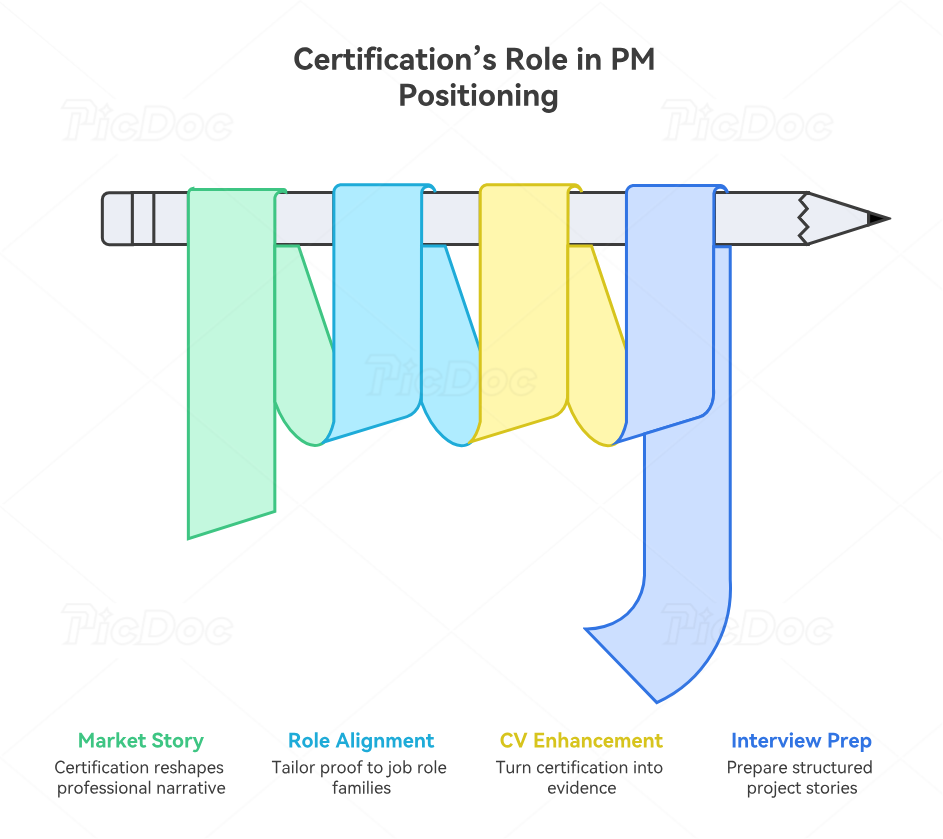
Certification helps most when it changes your market story. Instead of presenting yourself as someone who “managed tasks,” position yourself as someone who can control delivery systems: scope, schedule, risk, quality, stakeholders, vendors, documentation, and benefits. That language matters in Japan because many organizations value predictability, accountability, and clean handoffs. A project manager who can reduce confusion becomes useful quickly. Shape your story with project execution terms, schedule compression terms, quality management terms, and ISO standards for PM.
For IT and digital transformation roles, connect certification to product delivery. Show backlog discipline, sprint goals, release notes, stakeholder demos, defect triage, dependency tracking, and measurable improvements. For PMO roles, show dashboards, reporting cadence, steering committee packs, decision logs, RAID tracking, and portfolio prioritization. For manufacturing and construction, show baseline schedules, procurement trackers, supplier coordination, change control, and quality gates. The right internal proof depends on the role family. Use digital transformation PMO trends, future PM software, construction PM tools, and project portfolio manager guidance to build sector-specific positioning.
Your CV should turn certification into evidence. Replace soft phrases with outcome bullets: coordinated vendor delivery across three workstreams, created weekly executive reporting, reduced backlog aging, improved change-request visibility, recovered delayed milestones, built risk response ownership, or standardized project closure. Japanese employers and multinational hiring teams both need confidence that you can write clearly, escalate respectfully, and prevent surprises. Strengthen the CV with remote PM guidance, international PM guidance, PM consultant skills, and future project manager skills.
For interviews, prepare five stories: one project recovery, one stakeholder conflict, one risk decision, one scope-change situation, and one measurable delivery improvement. Each story should follow a clean structure: business problem, project constraint, action taken, stakeholder impact, measurable result, lesson learned. Certification gives you the vocabulary for these stories. Your examples give employers confidence. Prepare using conflict resolution terms, stakeholder engagement terms, risk register examples, and project closure concepts.
5. Common Certification Mistakes Japan-Based Candidates Should Avoid
The first mistake is choosing a credential before choosing a job target. This creates an expensive mismatch. A candidate chasing software delivery roles may need Agile and Scrum depth more than broad theory. A candidate targeting PMO work may need reporting, governance, and portfolio visibility. A candidate targeting construction may need waterfall planning, procurement, change control, and schedule recovery. A candidate targeting consulting may need diagnostic frameworks and client-facing proof. Compare your target through Scrum Master career planning, PM consulting guidance, construction PM guidance, and PMO future trends.
The second mistake is underestimating documentation. In Japan, weak documentation can make a capable candidate look careless. Build clean artifacts that show decision history, approval flow, risk ownership, dependency tracking, and status clarity. Your documents should help a busy stakeholder understand the project in minutes. That means short summaries, clear owners, dates, risks, decisions, and next actions. Improve this skill through project reporting best practices, Gantt chart terms, RFP/RFQ/RFI terms, and vendor management terms.
The third mistake is memorizing frameworks without practicing judgment. Exams and interviews both test decision-making. What should be escalated? Which stakeholder should be engaged first? How should a scope change be handled? When should a risk response move from monitoring to action? How should a Scrum Master respond when a team is blocked? These questions reward practice, not memorized definitions. Build scenario skill through PMP exam domains, Agile estimation techniques, sprint planning terms, and Agile metrics.
The fourth mistake is treating certification as the finish line. The certificate should trigger a career campaign: CV rewrite, LinkedIn update, portfolio build, recruiter outreach, interview practice, and role-specific applications. Make three CV versions: one for IT and Agile roles, one for PMO and governance roles, and one for your sector target such as construction, healthcare, government, or manufacturing. Support each version with different proof. Continue growing through PMP renewal planning, certification evolution trends, AI and PM career change, and future PM leadership.
6. FAQs About Getting Project Management Certification in Japan
-
The best certification depends on your target role. CAPM-style fundamentals suit beginners, PMP-style credentials suit experienced project leaders, PRINCE2-style structure suits governance-heavy environments, and Scrum or Agile certifications suit software, product, and digital delivery roles. In Japan, certification becomes stronger when you combine it with proof of documentation, stakeholder alignment, quality control, and risk ownership. Start with the project manager roadmap, Agile PM roadmap, Scrum Master guide, and PMP exam domains.
-
English is useful for multinational employers, global PMO roles, remote delivery, consulting, SaaS, fintech, and APAC-facing projects. Japanese is useful for local stakeholders, domestic documentation, public-sector work, manufacturing environments, and internal corporate coordination. Many candidates benefit from studying the framework in English while learning local delivery terms in Japanese. Build bilingual confidence with communication terms, stakeholder engagement terms, project reporting terms, and governance best practices.
-
Yes, especially if you target coordinator, PM assistant, project analyst, delivery support, junior Scrum Master, or PMO support roles. Limited experience becomes more credible when you show artifacts: a charter, stakeholder map, risk register, status report, Kanban board, sprint notes, or lessons-learned document. Certification proves learning; proof assets show readiness. Build your foundation with PM templates, risk register guidance, project monitoring terms, and project closure concepts.
-
Experienced candidates often prepare in 6 to 10 focused weeks, while beginners may need 10 to 14 weeks to learn concepts, terms, scenario logic, and exam rhythm. The strongest plan includes concept study, scenario practice, mock exams, error analysis, and portfolio building. A mock exam score means little until you know why each wrong answer happened. Support your study plan with PMP prep resources, PMP exam mistakes, Agile estimation, and schedule compression terms.
-
Put the certification near your professional summary, then prove it through outcome bullets. Mention delivery improvements, risk ownership, vendor coordination, stakeholder reporting, sprint predictability, milestone recovery, quality checks, dashboard creation, budget tracking, or governance improvements. Tailor the CV for each role type: Agile language for software, governance language for PMO, schedule language for construction, and compliance language for healthcare or public projects. Improve the CV with IT PM guidance, remote PM guidance, vendor terms, and EVM terms.
-
Turn the certificate into a 30-day campaign. In week one, update your CV, LinkedIn, and proof portfolio. In week two, shortlist roles by sector and delivery style. In week three, prepare five interview stories around risk, stakeholders, scope, conflict, and delivery recovery. In week four, contact recruiters and hiring managers with targeted messages. Certification pays off faster when it connects to proof, positioning, and outreach. Build that campaign with international PM guidance, freelance PM guidance, PM consultant guidance, and future PM skills.
