
How to Maintain PMP Certification: PDUs & Renewal Explained
Passing the PMP exam proves you can meet a serious professional standard, but keeping the credential active proves you are still growing after the certificate arrives. PMP renewal becomes painful when professionals wait until the deadline, misunderstand PDU categories, collect random learning hours, or forget that renewal is a structured three-year cycle. A strong renewal plan protects your credential, builds stronger project judgment, and turns required PDUs into career leverage instead of last-minute compliance work.
1. What PMP Renewal Actually Requires
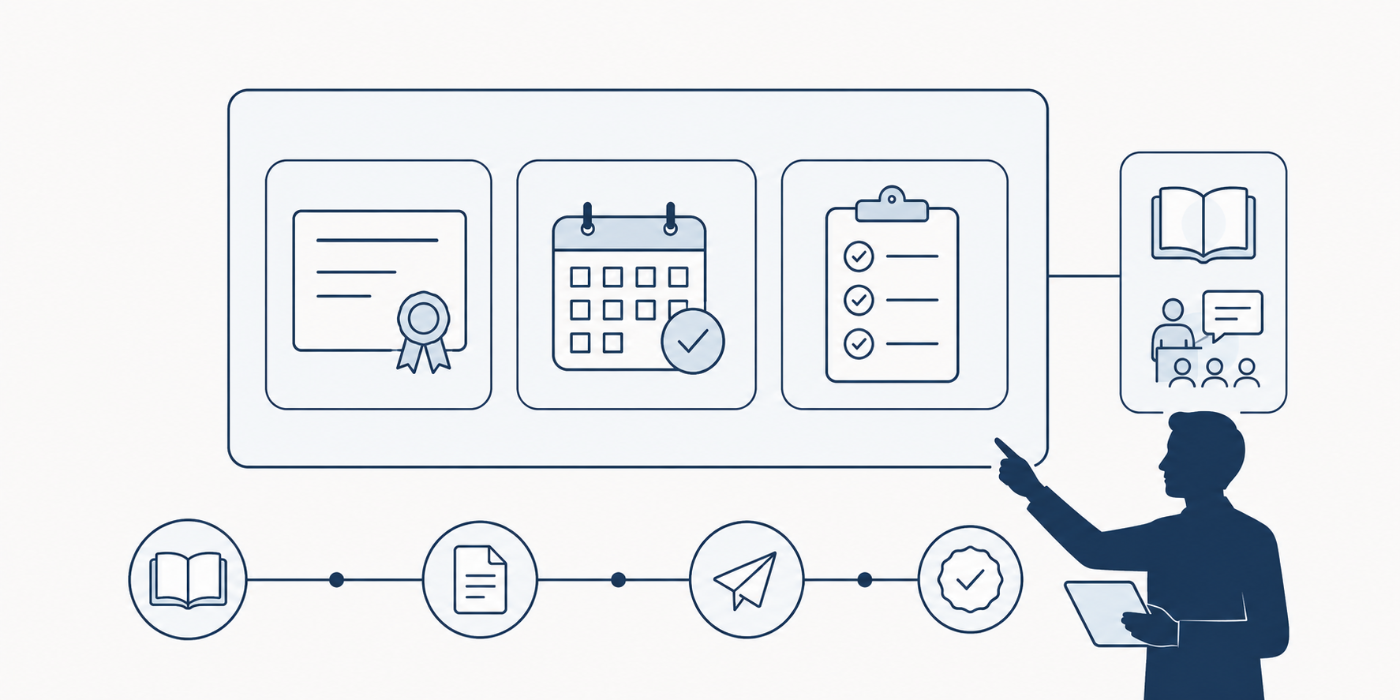
PMP certification holders must earn 60 PDUs during each three-year renewal cycle. PMI currently breaks those 60 PDUs into a minimum of 35 Education PDUs and a maximum of 25 Giving Back PDUs. Education PDUs also need coverage across the PMI Talent Triangle, with at least 8 PDUs each in Ways of Working, Power Skills, and Business Acumen. That means PMP renewal should be treated like a professional development roadmap, especially for project managers strengthening project execution skills, project monitoring and control, PM leadership communication, and career growth from project manager to executive.
A PDU is generally one hour spent in approved professional development or contribution activity, and PMI asks certification holders to report those PDUs through the Continuing Certification Requirements System. The smart PMP does more than chase hours. They build PDUs around the skills that protect real projects: estimating, scheduling, risk response, stakeholder control, procurement judgment, quality discipline, financial literacy, and leadership under pressure. Those areas connect directly with project scheduling terms, risk registers, project budgeting terms, and stakeholder engagement terms.
The biggest renewal mistake is treating PDUs as paperwork. A weak renewal cycle produces certificates but leaves skill gaps untouched. A strong renewal cycle helps a PM become sharper in hybrid delivery, vendor management, agile metrics, automation, governance, and executive reporting. This matters because project work keeps moving toward more integrated, data-driven, and business-facing expectations, as shown across AI adoption in project management, future PM skills, project governance trends, and project portfolio management trends.
PMP renewal also carries real career risk. PMI’s CCR guidance says a certification holder who misses the cycle requirements enters a one-year suspended status, cannot use the certification designation during suspension, and must complete the renewal process during that suspension period; after that, expired status can require reapplication and retaking the exam. That is why renewal planning belongs beside career roadmap planning, certification impact on project success, project management consultant skills, and PM director career development.
2. Build a 60-PDU Plan Before the Deadline Starts Pressuring You
The cleanest PMP renewal plan starts with a simple split: complete the mandatory Education PDUs early, then use Giving Back PDUs as a strategic bonus rather than a rescue plan. Since PMI allows Education PDUs to exceed the minimum, a PMP can renew entirely through learning if that fits their situation. That flexibility is useful for professionals who want targeted growth in agile estimation, schedule compression, project financial management, and project governance.
A practical three-year plan looks like this: earn 20 PDUs in year one, 20 in year two, and 20 in year three. The hidden value of this rhythm is memory. You learn, apply the idea at work, document the activity, and avoid the end-cycle scramble where every webinar starts looking acceptable. The best PMP renewal strategy creates a visible connection between learning and performance, especially in areas like resource allocation, project quality management, project reporting, and project success factors.
The Talent Triangle should guide the first 24 Education PDUs because Ways of Working, Power Skills, and Business Acumen each need at least 8 PDUs. Ways of Working can include predictive, agile, hybrid, risk, scheduling, delivery, estimation, and technical PM practice. Power Skills can include communication, leadership, negotiation, conflict resolution, stakeholder management, coaching, and decision facilitation. Business Acumen can include strategy, finance, governance, market awareness, procurement, compliance, and benefits realization. This creates a balanced PMP profile across hybrid project management, stakeholder terms, procurement terms, and portfolio management.
The remaining Education PDUs should close your weakest professional gap. A construction PM may need stronger procurement and cost control. A software PM may need agile metrics, backlog governance, and automation fluency. A healthcare PM may need compliance, risk, stakeholder communication, and quality documentation. A government PM may need contract controls, formal reporting, and governance cadence. That is why renewal planning should match your career direction across construction project management, healthcare project management, government project management, and IT project management.
3. Best Ways to Earn PDUs Without Wasting Time
The strongest Education PDUs come from activities that create usable capability the next week. Courses, webinars, conferences, workshops, self-directed learning, books, podcasts, and structured training can all work when they connect to your certification and professional development goals. The trap is collecting soft, generic learning that sounds professional but leaves your project behavior unchanged. Choose learning that helps you estimate better, escalate earlier, write clearer reports, manage vendors harder, and defend baselines with evidence. Strong choices include earned value management, risk mitigation planning, contract management terminology, and vendor management terms.
Free or low-cost PDUs can be valuable when selected carefully. A PMP can build a high-quality renewal path through PMI chapter events, professional webinars, employer training, internal lunch-and-learns, project management podcasts, PM books, agile sessions, software training, and leadership workshops. The key is documentation. Keep the activity title, provider, date, duration, category, learning summary, and proof of attendance when available. This protects you if a claim needs clarification and makes your development record more credible. Useful learning themes include PM software features, AI adoption in PM, machine learning in estimation, and digital transformation in PMOs.
Giving Back PDUs should be chosen with professional positioning in mind. Mentoring junior project managers, presenting lessons learned, writing practical guides, volunteering with a PM community, creating templates, serving in a professional organization, and applying project management professionally can all support renewal when they fit PMI rules. The best Giving Back activities also create proof assets: a slide deck, a mentoring log, a case study, a playbook, a workshop outline, or a lessons-learned summary. These assets help PMPs build credibility for project management consulting, freelance project management, remote project management roles, and PM leadership advancement.
A good PDU portfolio should look defensible to a hiring panel. If every PDU is a generic webinar, your renewal record may satisfy the system but reveal little about your growth. A stronger portfolio might include agile metrics, portfolio governance, stakeholder influence, procurement strategy, AI-enabled reporting, quality control, and financial forecasting. That mix tells a better career story. It supports movement toward roles covered in certified agile project manager roadmap, Scrum Master certification guide, product owner career path, and chief project officer roadmap.
4. How to Report PDUs Correctly and Avoid Renewal Friction
Reporting PDUs should be done as soon as possible after each activity. Waiting until the end creates three problems: forgotten dates, weak descriptions, and missing proof. A strong PDU entry explains what you did, how long it took, which Talent Triangle area it supports, and why it relates to project management. Treat each claim like a small audit trail. That habit matches the same documentation discipline needed in project closure, project quality management, ISO standards, and project reporting best practices.
The description should be specific. “Attended leadership webinar” is weak. “Completed a one-hour webinar on stakeholder escalation techniques, decision framing, and conflict language for high-risk projects” is stronger. “Read project management book” is weak. “Completed three hours of structured reading on schedule compression, risk response, and stakeholder governance, with notes applied to current project controls” is stronger. This level of detail protects the claim and builds professional memory. It also aligns learning with schedule compression terms, risk response planning, stakeholder engagement, and PM leadership communication.
Keep a simple renewal folder. Store certificates, registration emails, screenshots, agendas, reading notes, presentation files, mentoring logs, volunteer confirmation, and internal training records. Name each file with the date, activity, PDU hours, and category. This takes minutes during the cycle and saves hours if the claim needs support. The same habit improves project work because strong PMs always know where evidence lives. Evidence discipline supports project procurement, contract management, vendor control, and project financial management.
The final reporting step is to check the dashboard category balance before paying the renewal fee. A PMP may have 60 total hours but still have a category gap, especially if they ignored the required minimums across the Talent Triangle. Do not assume total hours mean renewal readiness. Check Ways of Working, Power Skills, Business Acumen, Education minimums, Giving Back maximums, and cycle dates. That kind of category control mirrors stronger project execution across agile metrics, resource allocation software, portfolio management trends, and project failure root causes.

5. How to Turn PMP Renewal Into a Career Advantage
PMP renewal can become a promotion engine when you choose PDUs around the role you want next. A project coordinator targeting PM roles should focus on scheduling, risk, stakeholder updates, issue tracking, and project execution. A PM targeting senior roles should add governance, budgeting, procurement, team leadership, and executive reporting. A senior PM targeting director roles should build portfolio thinking, strategy, benefits realization, organizational change, and PMO design. This connects directly with entry-to-executive PM career planning, PM director roadmap, VP of PM career path, and CPO career roadmap.
Industry-specific PMPs should make renewal work even harder. Construction PMPs can focus on cost, procurement, contracts, risk, and schedule control. Healthcare PMPs can focus on compliance, stakeholder sensitivity, workflow redesign, privacy-aware communication, and quality. IT PMPs can focus on agile delivery, cybersecurity concerns, software integrations, cloud workflows, and automation. Government PMPs can focus on procurement, documentation, approval gates, governance, and public-sector accountability. Those renewal choices strengthen credibility for construction PM careers, healthcare PM careers, IT PM careers, and government PM careers.
Geography also matters. A PMP in California may benefit from technology, infrastructure, healthcare, and sustainability learning. A PMP in New York may need financial services, real estate, compliance, and executive stakeholder strength. A PMP in Texas may focus on energy, construction, healthcare, and enterprise operations. A PMP in Florida may need public infrastructure, healthcare, logistics, and hurricane-resilience planning. Renewal choices become more valuable when they match market demand across California PM careers, New York PM careers, Texas PM opportunities, and Florida PM market insights.
The strongest PMP renewal record tells a clear story: “I kept my credential active while building practical capability in the areas that drive project success.” That story is stronger than “I attended enough webinars.” Hiring panels, sponsors, and consulting clients reward evidence of growth. Use the renewal cycle to build templates, case studies, lessons learned, dashboards, decision logs, and before-and-after improvements. Those assets support project management consultancy, international project management, remote PM roles, and future freelance PM opportunities.
6. FAQs About PMP PDUs and Renewal
-
You need 60 PDUs during each three-year PMP renewal cycle. PMI currently requires at least 35 Education PDUs and allows up to 25 Giving Back PDUs for PMP holders. Education PDUs must include at least 8 PDUs each in Ways of Working, Power Skills, and Business Acumen. A strong renewal plan should cover practical skills like project scheduling, risk management, project communication, and financial management.
-
Yes. PMI sets a minimum for Education PDUs, and Education PDUs can exceed the minimum. This is useful for PMPs who prefer structured learning instead of mentoring, volunteering, speaking, or writing. A fully education-based renewal path can still be powerful if it covers agile project management, earned value management, stakeholder management, and project portfolio management.
-
Education PDUs can come from structured learning that builds project management capability. Common examples include courses, webinars, professional events, workshops, self-directed learning, podcasts, reading, and training tied to the PMI Talent Triangle. The activity should clearly strengthen your project skills, leadership skills, or business understanding. Good choices include topics such as Scrum terms, Kanban terms, project procurement terms, and project quality management.
-
Giving Back PDUs generally come from contributing to the profession through activities such as mentoring, volunteering, creating content, giving presentations, sharing knowledge, or applying project management as a practitioner within PMI’s rules. Because Giving Back has a maximum limit for PMP renewal, it should support your Education plan rather than replace it. Strong Giving Back activities create proof assets that help with PM consulting, freelance project management, project closure knowledge, and PM leadership growth.
-
If you do not meet the Continuing Certification Requirements during your active cycle, PMI places the credential in suspended status for one year. During suspension, PMI says you may not refer to yourself as a certification holder or use the certification designation. If renewal is still incomplete after the suspension period, the credential can expire, and returning to active status can require a new application, fees, and retaking the exam. This is why PMPs should track renewal alongside career planning, certification value, PM software trends, and future PM skills.
-
Choose PDUs that match the job above your current role. A PM targeting senior PM roles should study governance, budget control, stakeholder escalation, vendor management, and executive reporting. A senior PM targeting director roles should study portfolio management, strategy, organizational change, PMO design, and business acumen. That makes your renewal record useful in interviews and promotion conversations. Build your plan around PM director skills, VP of PM development, portfolio management careers, and chief project officer growth.
