
The Ultimate Guide to Getting Your Project Management Certification in Thailand: All You Need to Know in 2026-2027
Thailand’s project management market rewards professionals who can keep delivery moving across digital transformation, construction, manufacturing, tourism, logistics, finance, telecom, healthcare, and government-linked programs. Certification helps when it proves more than exam memory: employers want visible control, clean communication, risk discipline, vendor confidence, and the ability to turn messy work into measurable progress.
This guide shows how to choose the right project management certification in Thailand for 2026-2027, prepare properly, and turn the credential into interviews, promotions, and stronger international options.

1. Why Project Management Certification Matters in Thailand in 2026-2027
Thailand’s project managers often work inside high-pressure delivery environments where the sponsor wants speed, vendors want clarity, teams need protection, and leadership expects progress without constant hand-holding. A certified professional who also understands how to become a project manager, project management career paths, IT project management, construction project management, and healthcare project management can show hiring panels exactly where their value belongs.
The strongest project management certification in Thailand depends on your target role. PMP fits experienced project leaders who already manage scope, stakeholders, vendors, budgets, risks, and delivery outcomes. CAPM fits coordinators, analysts, administrators, and early-career professionals who need structured credibility before full project ownership. PRINCE2 fits governance-heavy, vendor-heavy, public-facing, or international environments where business cases, stages, tolerances, and escalation rules matter. CSM fits software, product, digital banking, startup, and agile delivery teams that rely on Scrum events, backlog visibility, and team facilitation.
Certification can also fix a hidden career problem: many capable Thai professionals have real delivery experience but weak career packaging. Their resume says “coordinated tasks,” “managed meetings,” or “prepared reports,” while the actual value was risk prevention, stakeholder alignment, dependency control, vendor follow-up, or recovery planning. A smart certification plan should connect your daily work to project execution terms, monitoring and control terms, project reporting best practices, stakeholder engagement terms, and risk mitigation planning.
2. How to Choose Between PMP, CAPM, PRINCE2, CSM, and Agile Certifications in Thailand
Choosing the right project management certification in Thailand starts with the job you want next. A Bangkok-based IT coordinator aiming for ERP project management needs a different path from a construction site engineer in Phuket, a manufacturing improvement lead in Chonburi, a healthcare operations specialist in Chiang Mai, or a product delivery analyst supporting a regional fintech team. The credential should make your next role easier to explain, especially when your current title undersells your real responsibility.
PMP is the strongest fit when your work already includes decision-making, not only task coordination. You should be comfortable explaining how you handled scope changes, stakeholder pressure, supplier issues, timelines, risks, communications, and project outcomes. CAPM works better when you need formal vocabulary and early credibility before you can claim full project leadership. PRINCE2 helps when your work needs clear governance, business justification, stage boundaries, role clarity, and exception handling. CSM is a direct fit for Scrum environments where the pain is unclear backlog ownership, weak ceremonies, sprint spillover, blocker silence, or product-team confusion.
Use your sector as a second filter. IT and digital transformation candidates should study Scrum glossary terms, agile estimation techniques, essential agile metrics, sprint planning terms, and product backlog terms. Construction and infrastructure candidates should strengthen scheduling, procurement, claims, change control, and cost evidence through Gantt chart terms, schedule compression terms, RFP RFQ RFI definitions, supplier management terms, and project financial management terms.
Your English readiness also matters. Many Thai professionals understand delivery deeply but lose confidence when exam language becomes abstract or interview questions require concise English. Build bilingual competence: learn difficult concepts in the language that helps comprehension, then practice exam questions, LinkedIn summaries, and interview stories in English. For regional roles, remote work, multinational employers, and Singapore-linked teams, the ability to explain risk, scope, stakeholder alignment, vendor escalation, and lessons learned in clear English can become as valuable as the certificate itself.
3. Build a 2026-2027 Certification Plan That Converts Study Into Proof
A good certification plan has four parts: eligibility, exam readiness, proof assets, and job positioning. Many candidates focus only on study hours, then wonder why the certificate does not produce interviews. Certification should reshape how you describe your work. By the time you pass, your resume, LinkedIn, project story bank, and interview examples should already sound stronger.
Start with an experience inventory. List every project you touched in the past few years: title, organization, dates, sponsor, business problem, your role, team size, budget exposure, vendors, risks, deliverables, tools, and result. Then rewrite each experience as a project story. “Coordinated vendor meetings” becomes “maintained vendor follow-up cadence and escalated unresolved dependencies before they delayed UAT.” “Prepared reports” becomes “built weekly status visibility that helped leadership approve timeline recovery.” This rewrite connects your certificate to earned value management, resource allocation, quality management, ISO standards, and conflict resolution.
For PMP candidates, timeline planning is especially important in 2026 because exam transitions can create confusion around outdated lessons, old mock exams, and recycled slides. Ask training providers which exam content outline they are teaching, how recently their questions were updated, and whether their study plan covers predictive, agile, hybrid, people, process, business, and scenario judgment. For CAPM, focus on vocabulary, lifecycle logic, agile basics, and disciplined question reading. For PRINCE2, practice role responsibilities, business case logic, stage boundaries, product-based planning, and exception rules. For CSM, connect Scrum theory to the real problems of Thai teams: unclear product ownership, silent blockers, status-meeting overload, weak retrospectives, and unfinished work rolling across sprints.
A strong 10-week plan can work for busy professionals. Weeks 1-2: core terms, lifecycle logic, and role clarity. Weeks 3-4: scope, schedule, cost, risk, stakeholder, procurement, communications, and quality. Weeks 5-6: agile, hybrid, governance, and scenario practice. Weeks 7-8: mock exams and error logs. Week 9: weak-area repair. Week 10: exam stamina, final review, and logistics. Support your prep with PMP exam resources, PMP exam mistakes, PMP success stories, PMP renewal planning, and future certification trends.
The fastest certification growth comes from fixing one blocker, then building proof that makes hiring teams trust the credential.
4. How to Prepare for the Exam Without Losing Months to Passive Study
Passive study is the career trap. Reading slides, watching lessons, and saving practice questions can create the feeling of progress while your decision-making stays weak. Certification exams reward applied judgment. Real project jobs reward applied judgment even more. Your preparation should train you to choose the best action when a sponsor is impatient, a vendor is late, a team member is blocked, the budget is tight, or the customer keeps changing expectations.
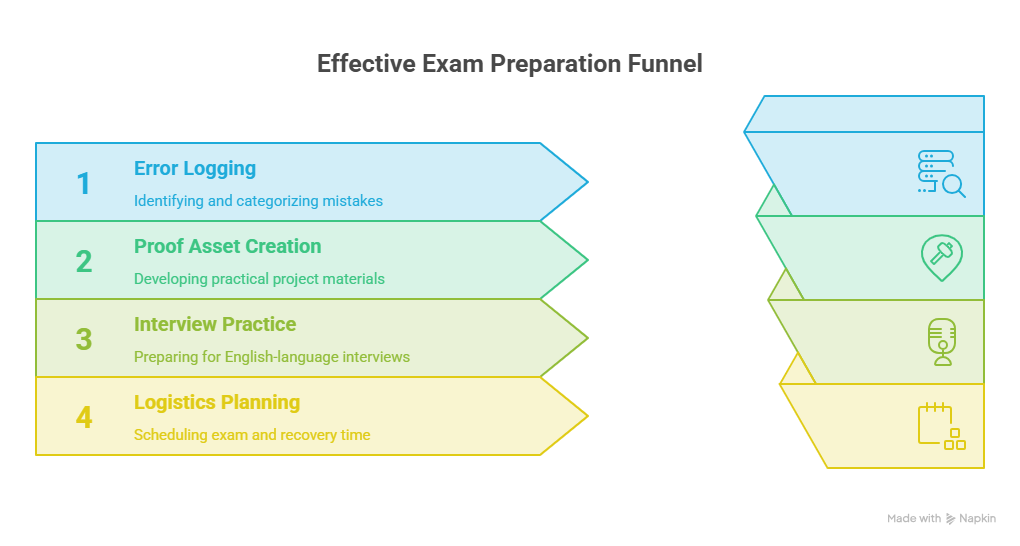
Use an error log from the beginning. Every missed question should be tagged by cause: misunderstood concept, weak vocabulary, rushed reading, wrong stakeholder priority, weak agile knowledge, weak procurement knowledge, poor risk judgment, or anxiety. After enough mistakes, your weak pattern will become obvious. Many candidates blame memory when their actual issue is prioritization. They know the term but choose the wrong response because they react to pressure instead of following project logic.
Build your proof assets while studying. When you study risk management, create a real risk register from a past project. When you study communications, write a stakeholder update you wish you had sent earlier. When you study procurement, rewrite one vendor issue as a case story with trigger, impact, escalation, and result. When you study agile, compare your team’s ceremonies against proper Scrum events and artifacts. This approach turns exam prep into career material through best project management templates, team communication tools, project management APIs, future PM software, and workforce management tools.
Thai professionals targeting global employers should also practice interview language during exam preparation. Prepare ten short project stories in English: scope change, vendor delay, stakeholder conflict, schedule recovery, cost pressure, quality concern, team resistance, risk escalation, adoption challenge, and failed assumption. Each answer should include context, decision, action, result, and lesson learned. This builds confidence for remote project management roles, international project management careers, freelance project management, project management consultancy, and project management consultant paths.
Exam logistics deserve serious planning. Schedule your exam away from project go-lives, release windows, major travel, family commitments, and high-stress work periods. Protect the final two weeks for review, mock analysis, sleep, and confidence. A candidate with fewer study hours and stronger recovery often performs better than a candidate who studies late every night and enters the exam exhausted.
5. Turn Your Certification Into Better Jobs, Promotions, and Regional Opportunities
Passing the exam is one milestone. Career conversion starts when your credential, resume, LinkedIn, and interview stories all tell the same story. Thai hiring teams need to understand which problems you solve. International hiring teams need your experience translated into universal delivery language. Recruiters should see the certification and immediately understand your lane: IT delivery, construction scheduling, digital transformation, vendor governance, healthcare operations, government programs, PMO reporting, portfolio control, or agile delivery.
Rewrite your resume around outcomes. “Handled project documentation” becomes “maintained decision, risk, and status records that improved leadership visibility.” “Worked with vendors” becomes “tracked vendor deliverables, escalated unresolved dependencies, and protected the UAT timeline.” “Supported project manager” becomes “coordinated cross-functional updates, prepared milestone evidence, and helped reduce approval delays.” This type of wording supports leadership and communication terms, project closure terms, project reporting terms, risk registers, and resource allocation.
Your LinkedIn headline should combine credential, target function, and proof area. “PMP-Certified IT Project Manager | ERP, UAT, Vendor Delivery, Risk Control” is stronger than “Certified Project Manager.” “Agile Project Manager | Scrum Delivery, Stakeholder Alignment, Digital Products” is clearer than “Agile Enthusiast.” “Construction Project Coordinator | Scheduling, Procurement Tracking, Site Reporting” gives recruiters a useful signal. The goal is simple: make your next role obvious.
Thailand-based professionals can also use certification for regional positioning. Companies working across ASEAN often value PMs who can communicate clearly across cultures, manage vendors, coordinate distributed stakeholders, and create reliable reporting rhythms. Build examples that show cross-border communication, English documentation, remote meeting discipline, decision logs, and escalation maturity. Study digital transformation PMO trends, AI adoption in PM, cybersecurity project concerns, blockchain project management, and sustainability project management to speak to future-facing work.
Salary improvement usually follows a chain: credential, proof rewrite, targeted applications, sharper interview stories, stronger negotiation, and continued performance. Certification helps you enter better conversations. Evidence helps you win them. The professional who can explain how they control risks, protect timelines, improve visibility, and make leadership decisions easier will always stand out against candidates who only list tools and duties.
6. FAQs: Project Management Certification in Thailand in 2026-2027
-
The best certification depends on your target role. PMP is ideal for experienced project managers who can document leadership across projects. CAPM fits early-career candidates who need project management structure and credibility. PRINCE2 helps professionals working in governance-heavy, supplier-heavy, or formal delivery environments. CSM fits software, product, digital, fintech, and Scrum-based teams. Your choice should reflect the job descriptions you want, not the credential that sounds most famous.
-
Choose PMP when you want broad project leadership credibility across industries and already have enough real project experience to support your application. Choose PRINCE2 when your role requires stronger method structure, business case thinking, stage controls, formal responsibilities, and governance language. Many professionals eventually benefit from both: PMP for leadership recognition and PRINCE2 for controlled-environment delivery.
-
CAPM can be useful for coordinators, analysts, junior PMs, administrators, career switchers, and graduates who need structured project management vocabulary. It works best when paired with proof assets such as a sample status report, risk register, meeting action log, project timeline, stakeholder map, or lessons-learned document. The certificate creates a foundation; practical evidence makes the foundation believable.
-
CSM helps when your target team uses Scrum or agile product delivery. It gives you language for Scrum events, roles, artifacts, impediments, and team facilitation. Project management roles often require additional strength in budgeting, procurement, governance, reporting, risk, stakeholder management, and vendor control. Pair CSM with agile tools, Kanban tools, Scrum platforms, waterfall software, and Agile PM career planning.
-
Most working professionals should plan 8-12 focused weeks, depending on experience, English comfort, exam difficulty, and schedule stability. A good plan includes concept study, mock questions, error logs, weak-area repair, timed practice, and exam logistics. Study quality matters more than raw hours. Passive reading feels comfortable, but timed scenario practice exposes the real gaps.
-
Build a globally readable profile. Translate your experience into universal project language: scope, budget, timeline, stakeholders, vendors, risks, change control, adoption, benefits, and outcomes. Prepare English project stories with numbers: team size, users affected, timeline, vendor count, budget range, defects reduced, delay prevented, or approval time improved. Combine certification with international PM preparation, remote PM career planning, freelance PM strategy, PM consultancy setup, and future PM leadership.
