
The Ultimate Guide to Getting Your Project Management Certification in New Zealand: All You Need to Know in 2026-2027
Project management certification in New Zealand can turn scattered delivery experience into a clean career signal for employers in construction, IT, government, healthcare, energy, banking, consulting, education, and remote global teams. The strongest path starts with choosing the credential that matches your experience, then building proof through real project artifacts. Use this guide alongside APMIC’s complete project management career roadmap, international project manager guide, remote project management roadmap, and future PM skills guide to convert certification into interviews, promotions, and stronger delivery authority.
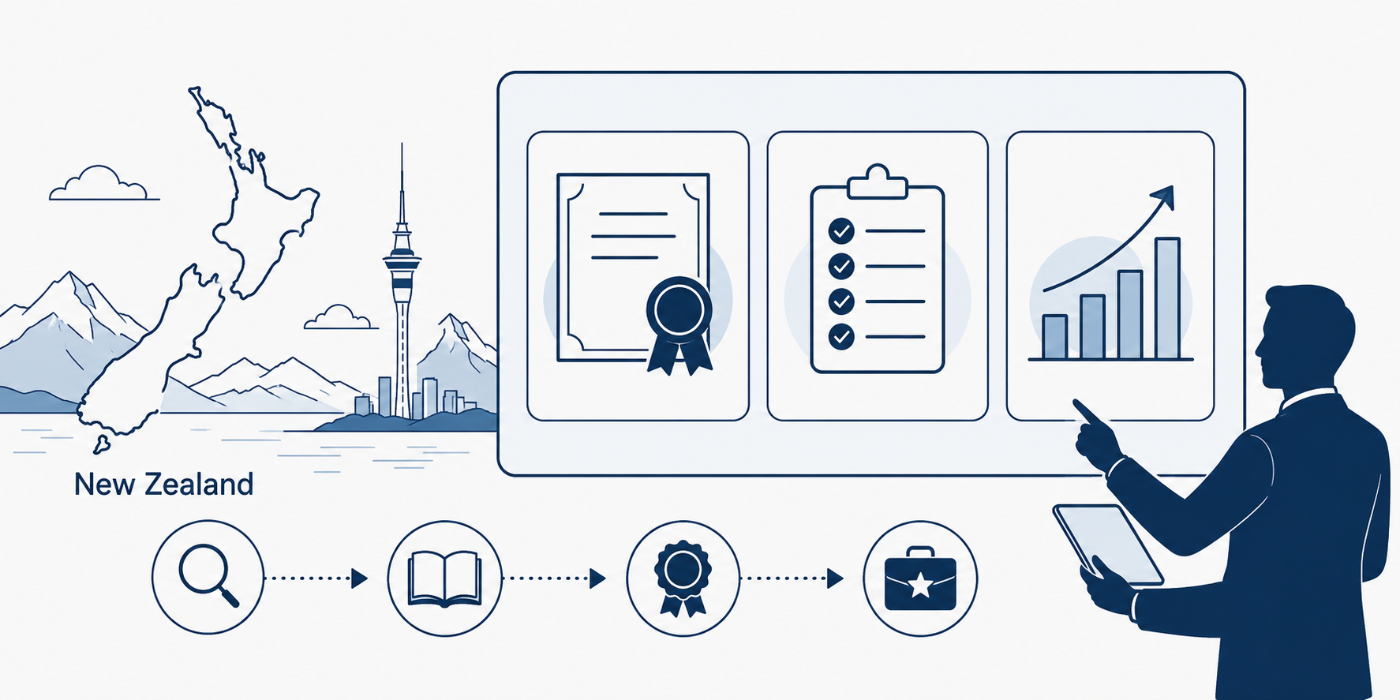
1. Why Project Management Certification Matters in New Zealand in 2026-2027
New Zealand employers often need project professionals who can handle practical delivery pressure: tight budgets, supplier constraints, stakeholder-heavy approvals, public accountability, hybrid teams, environmental expectations, and regional coordination. A certification helps you prove that your delivery experience has structure behind it. Hiring panels can quickly recognize language around scope, risk, governance, procurement, benefits, milestones, quality, and stakeholder control. That matters when your background sits across operations, engineering, administration, construction, technology, health services, or business change. Strengthen that positioning with APMIC’s project execution terms, stakeholder engagement glossary, risk register guide, and project reporting best practices.
The real hiring problem is rarely intelligence. Many professionals in Auckland, Wellington, Christchurch, Hamilton, Tauranga, Dunedin, and remote-first roles already coordinate people, vendors, budgets, schedules, approvals, and handovers. The gap appears when their CV says “managed tasks” while stronger applicants show project charters, RAID logs, RACI matrices, sprint boards, dependency trackers, change logs, budget snapshots, and lessons learned. Certification gives your experience a recognized framework. A portfolio gives employers proof. APMIC’s project templates guide, Gantt chart glossary, resource allocation terms, and earned value management guide can help you build that proof.
New Zealand also rewards adaptable project managers because many organizations blend predictive planning with agile execution. A construction PM may need formal schedule control and supplier tracking. An IT delivery lead may need Scrum, Kanban, release planning, and user acceptance testing. A public-sector project coordinator may need governance packs, approvals, business cases, and transparent reporting. A healthcare project lead may need privacy awareness, operational readiness, and stakeholder coordination. That is why APMIC’s hybrid project management forecast, IT project manager guide, construction project management guide, and healthcare PM roadmap are useful companions while choosing a certification route.
| Candidate Profile | Best Certification Direction | Proof Asset to Build | Where It Pays Off in New Zealand | APMIC Internal Resource |
|---|---|---|---|---|
| Fresh graduate | CAPM-style foundation route with basic PM vocabulary. | Mini charter, WBS, risk log, weekly status report. | Project assistant, coordinator, PMO support, graduate roles. | Project manager roadmap |
| Career switcher | Foundation PM plus sector mapping from previous work. | Transferable skills matrix and one reconstructed project case study. | Operations, business support, education, local services. | Entry-level to executive path |
| Operations coordinator | PMP pathway once leadership experience is documented. | Process improvement case study with baseline and result. | Logistics, retail, utilities, councils, service delivery teams. | Project execution terms |
| Team lead | PMP or hybrid PM certification path. | RACI matrix, escalation rules, team dashboard. | Business change, internal transformation, shared services. | PM leadership terms |
| Scrum team member | Scrum Master, Agile PM, or agile delivery route. | Sprint board, retro log, backlog refinement notes. | Software, SaaS, product, fintech, digital agencies. | Scrum Master guide |
| Product analyst | Product Owner plus agile estimation and release planning. | User story map, prioritized backlog, release notes. | Product teams, startups, SaaS, customer platforms. | Product Owner roadmap |
| IT coordinator | IT PM path with agile, vendor, and UAT evidence. | Implementation plan, dependency register, test tracker. | Cloud migration, ERP, cybersecurity, digital transformation. | IT PM guide |
| Construction professional | PMP, PRINCE2, cost control, and schedule governance. | Baseline schedule, procurement tracker, site risk register. | Infrastructure, housing, commercial builds, civil works. | Construction PM guide |
| Healthcare admin | Healthcare PM route with compliance and readiness proof. | Clinic rollout plan, stakeholder map, benefits tracker. | Hospitals, primary care, healthtech, public health programs. | Healthcare PM guide |
| Government applicant | PRINCE2, PMP, governance, procurement, reporting skills. | Steering pack, decision log, benefits realization register. | Central government, councils, agencies, public programs. | Government PM roadmap |
| Banking / finance worker | PMP plus risk, change, data, and compliance project skills. | Migration plan, risk register, business readiness checklist. | Banks, insurers, fintech, compliance transformation. | Risk mitigation terms |
| Energy project worker | PMP or PRINCE2 with supplier, safety, and sustainability evidence. | Vendor register, milestone dashboard, ESG risk notes. | Renewables, utilities, asset upgrades, infrastructure programs. | Renewable energy PM |
| NGO / community worker | Foundation PM, PRINCE2, reporting, monitoring skills. | Logframe, stakeholder register, donor-style report calendar. | Social impact, iwi partnerships, education, health programs. | Project reporting terms |
| Remote worker | Agile, Scrum, tool-based PM certification route. | Async communication plan, Kanban board, weekly dashboard. | Remote startups, Australian employers, global teams. | Remote PM guide |
| Freelancer | Client-facing PM, agile basics, consulting documentation. | Scope template, onboarding checklist, change request form. | Agencies, SMEs, founders, offshore clients, contractors. | Freelance PM guide |
| Consultant | PMP, PRINCE2, portfolio, and change leadership route. | Diagnostic report, roadmap deck, benefits realization plan. | Advisory, transformation, PMO setup, operating model work. | PM consultancy guide |
| PMO analyst | Governance, reporting, portfolio, and PMP foundation. | Portfolio dashboard, issue heatmap, dependency tracker. | Enterprise PMOs, councils, banks, large programs. | Future PMO guide |
| Portfolio coordinator | Portfolio management after solid project delivery proof. | Prioritization matrix, benefits map, capacity dashboard. | Strategy office, transformation portfolio, PMO leadership. | Portfolio manager guide |
| Mid-level PM | PMP, PRINCE2 Practitioner, hybrid delivery route. | Full project case study with scope, budget, risks, results. | Senior PM, delivery manager, transformation lead roles. | PM consultant path |
| Agile specialist | Scrum Master, Agile Coach, agile project management progression. | Team maturity assessment, coaching backlog, metrics dashboard. | Digital product, SaaS, enterprise agile transformation. | Agile Coach path |
| Hybrid PM | PMP plus agile delivery and phase-gate governance. | Hybrid delivery model, release plan, governance checklist. | Enterprise technology, infrastructure tech, business change. | Hybrid PM future |
| AI-ready PM | PM certification plus AI scheduling and automation literacy. | AI-assisted risk log, schedule prompt library, automation map. | Digital PMO, productivity programs, automation-led delivery. | ML estimation guide |
| Tool-heavy coordinator | Certification plus Jira, Trello, Asana, MS Project, Power BI fluency. | Workflow board, template pack, dashboard screenshots. | Agencies, startups, remote teams, operational PM roles. | Agile PM tools |
| Scheduler / planner | PMP-aligned schedule, EVM, Gantt, compression knowledge. | Critical path view, recovery plan, baseline schedule. | Construction, engineering, transport, infrastructure delivery. | Schedule compression terms |
| Senior manager | PMP plus director-level governance and strategy exposure. | Executive dashboard, decision log, benefits scorecard. | Program lead, project director, transformation leadership. | PM director roadmap |
| VP-track leader | Portfolio, governance, finance, and PMO leadership route. | Operating model, investment prioritization pack, capacity plan. | Head of Delivery, VP of PM, strategy execution roles. | VP of PM path |
| Executive PM leader | CPO-style progression after program and portfolio wins. | Enterprise PMO blueprint, governance charter, value model. | Chief Project Officer, transformation executive, enterprise delivery head. | CPO roadmap |
| Global applicant | PMP, PRINCE2, Agile, and remote-proof portfolio combination. | International CV, quantified case study, tool screenshots. | Australia, UK, Canada, Europe, global remote employers. | International PM guide |
2. Which Project Management Certification Should You Choose in New Zealand?
The right certification depends on your current delivery level. Early-career professionals should usually start with a foundation route that builds vocabulary, structure, and confidence. CAPM-style preparation can help graduates, coordinators, administrators, junior analysts, operations assistants, and career switchers prove that they understand project basics before chasing senior credentials. The goal is to learn how to describe scope, stakeholders, risks, schedules, requirements, change, and closure in a way employers understand. APMIC’s complete agile glossary, waterfall project management glossary, project closure terms, and project monitoring and control terms can support that foundation.
PMP is better suited to professionals who have led and managed projects with real accountability. That includes construction coordinators, IT delivery leads, operations managers, transformation analysts, government project officers, healthcare administrators, PMO analysts, and senior team leads who can document experience across people, process, business environment, and delivery outcomes. The biggest mistake is treating PMP as a badge alone. New Zealand employers will still ask what you delivered, what changed, what went wrong, what you controlled, and what results you achieved. Build stronger examples with APMIC’s risk mitigation terms, resource allocation glossary, project financial management guide, and earned value management terms.
PRINCE2 is valuable when your target roles involve governance, formal decision points, business cases, controlled stages, public accountability, procurement, and structured reporting. That makes it especially relevant for public-sector programs, council projects, infrastructure, consulting, regulated industries, and enterprise transformation. PRINCE2 language helps you speak clearly about roles, tolerances, controls, change authority, and stage boundaries. Pair it with APMIC’s government project manager roadmap, future project governance guide, RFP, RFQ, and RFI guide, and vendor management glossary.
Scrum Master and Product Owner certifications fit New Zealand professionals targeting software, digital product, SaaS, fintech, healthtech, ecommerce, agile transformation, and remote-first teams. Scrum Master learning helps if your goal is to support teams, remove blockers, improve ceremonies, and protect delivery flow. Product Owner learning helps if your work involves user stories, backlog value, prioritization, customer needs, and release decisions. Use APMIC’s Certified Scrum Master guide, Product Owner roadmap, Scrum glossary, and agile metrics guide to connect certification to workplace proof.
For many candidates, the strongest New Zealand route is hybrid: PMP or PRINCE2 for governance, Scrum or Agile for adaptability, and a portfolio that proves sector relevance. A construction PM who understands agile boards can coordinate design changes better. An IT PM who understands governance can manage executives better. A public-sector PM who understands benefits and risk can survive scrutiny better. Keep that blended career view through APMIC’s Project Management 2030 forecast, future project management software guide, AI and project management forecast, and certification evolution guide.
3. The Step-by-Step Certification Roadmap for New Zealand Candidates
Start with a delivery audit. List every project you have touched in the last five years: system rollout, site upgrade, community program, process improvement, compliance change, supplier transition, event delivery, software release, construction package, clinic improvement, training rollout, data migration, sustainability initiative, or operational change. Then map each example against scope, schedule, budget, quality, risk, procurement, stakeholders, communication, and benefits. This audit reveals whether you are ready for PMP-level positioning, foundation certification, agile certification, PRINCE2 governance, or a sector-specific path through APMIC’s IT PM roadmap, construction PM roadmap, healthcare project manager guide, and project portfolio manager roadmap.
Next, choose the certification that supports your job target. A junior coordinator chasing PMO roles needs a different route from a senior infrastructure lead chasing program leadership. A digital product worker needs different proof from a council project officer. A remote applicant needs sharper tool evidence than someone applying through a local network. Read job ads, copy recurring requirements, and group them into certification, tools, industry knowledge, stakeholder skills, reporting, and delivery methods. Compare those patterns with APMIC’s remote PM career guide, freelance PM roadmap, PM consultancy guide, and international PM guide.
Then build a 10-12 week study plan. Week one should focus on exam structure, eligibility, terminology, and your weak areas. Weeks two to seven should cover project domains, scenario thinking, risk, procurement, stakeholder engagement, communication, scheduling, agile, governance, and quality. Weeks eight to ten should focus on mock questions, error review, and time management. The final weeks should cover exam readiness, application documents, CV rewriting, and portfolio polish. APMIC’s agile estimation techniques, sprint planning terms, schedule compression glossary, and quality management terms can close knowledge gaps.
Build proof while studying. Create one complete project evidence pack from a real project or a carefully anonymized case study. Include a charter, stakeholder matrix, risk register, schedule, budget snapshot, change log, status report, lessons learned, and benefits tracker. Remove confidential details. Use generic names. Keep the structure clean enough for recruiters and interviewers. A certification tells an employer you studied. A proof pack shows how you think under pressure. Build that evidence with APMIC’s project reporting glossary, conflict resolution terms, ISO standards guide, and best PM templates guide.
4. How to Turn Certification into New Zealand PM Job Offers
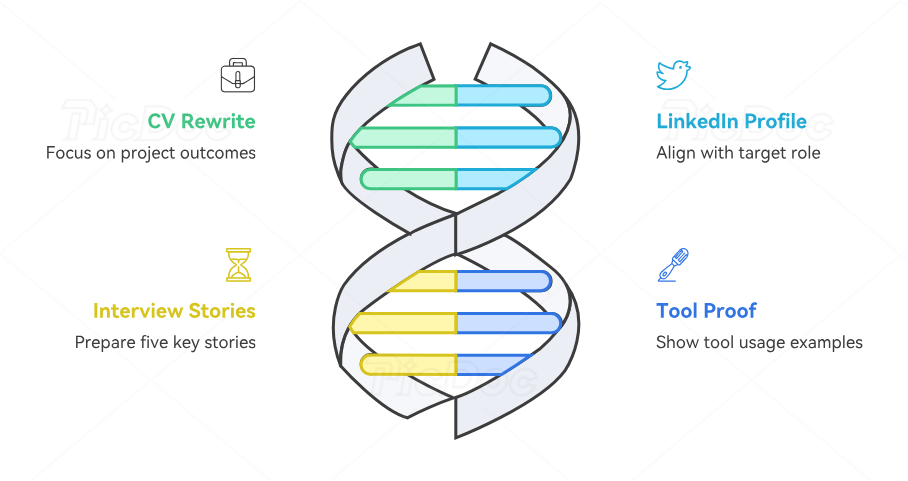
After choosing your certification, rewrite your CV around project outcomes. Replace vague lines like “supported project delivery” with evidence: “coordinated a 12-week system rollout across three teams, tracked dependencies, escalated supplier delays, and supported go-live readiness.” Replace “worked with stakeholders” with “mapped operations, finance, vendor, and compliance stakeholders, then created a weekly decision log that reduced approval confusion.” New Zealand hiring panels value practical delivery language because it shows you understand pressure, tradeoffs, and accountability. Build that language through APMIC’s stakeholder engagement terms, monitoring and control glossary, leadership communication terms, and project financial management guide.
Your LinkedIn profile should match the same positioning. A strong headline names your route: Project Coordinator | CAPM Track | PMO Support | Reporting & Risk, or Project Manager | PMP Track | Infrastructure Delivery | Vendor Control, or Agile Delivery Lead | Scrum | Product & Release Coordination. The About section should mention sectors, tools, project types, outcomes, and proof assets. Recruiters should see your target lane quickly. Use APMIC’s remote PM guide, international PM roadmap, team communication tools guide, and PM software future guide to shape a modern profile.
Prepare five interview stories before applying heavily: one stakeholder conflict story, one risk story, one supplier or dependency story, one budget or resource tradeoff story, and one benefits or lessons-learned story. Each story should include context, responsibility, constraint, decision, action, outcome, and reflection. This matters because project interviews are rarely theory tests alone. Employers want to know whether you can handle delays, ambiguity, executive pressure, unclear requirements, budget limits, vendor surprises, and competing priorities. Practice with APMIC’s risk mitigation guide, conflict resolution glossary, vendor management terms, and total quality management glossary.
Tool proof can make your certification feel real. Build sample screenshots from Jira, Trello, Asana, Microsoft Project, Monday.com, Smartsheet, Excel, Power BI, Confluence, or Google Workspace. Show a project board, Gantt chart, risk heatmap, RAID log, weekly dashboard, and decision tracker. The tool itself matters less than the thinking behind it: prioritization, transparency, ownership, escalation, and reporting. Choose tools with APMIC’s agile PM tools review, Kanban software directory, Scrum tools guide, and waterfall PM software review.
5. A Practical 90-Day Certification and Career Plan for New Zealand
Days 1-10 should focus on diagnosis. Choose one target lane: entry-level coordinator, PMO analyst, IT PM, construction PM, healthcare PM, public-sector PM, agile delivery, remote PM, consultant, portfolio coordinator, or transformation lead. Then compare job ads against your current skills. Mark every requirement as strong, weak, missing, or proof-needed. This gives your certification plan direction. Align your route with APMIC’s government PM roadmap, healthcare PM guide, construction PM career guide, and IT project manager roadmap.
Days 11-35 should focus on structured study. Create a weekly calendar with exam domains, terminology, practice questions, and one practical artifact per week. Study in short blocks if you work full-time. Use weekends for mock questions and portfolio building. Keep a weak-area log so the same mistakes stop repeating. APMIC’s complete agile glossary, Scrum glossary, Kanban terms, and waterfall glossary can make exam language easier to absorb.
Days 36-60 should combine mock exams with proof-asset building. Create a full project case study from one real or realistic project. Include the problem, objective, stakeholders, scope, risks, timeline, budget view, governance, changes, delivery result, and lessons. Then create artifacts to support it: charter, stakeholder map, risk log, schedule, status report, change log, benefits tracker, and retrospective notes. This becomes your interview engine. Sharpen it with APMIC’s project templates guide, Gantt chart glossary, project reporting terms, and project closure glossary.
Days 61-90 should cover exam booking, CV rewriting, LinkedIn updating, and targeted applications. Track each job application like a project: role title, sector, required certification, tools, hiring manager, application date, follow-up date, interview status, and missing skill. Send fewer generic applications and more targeted ones. Use your certification, portfolio, and role-specific examples together. Keep long-term growth in view through APMIC’s PM director roadmap, VP of PM path, CPO roadmap, and portfolio manager guide.
The final layer is cost discipline. Certification fees, training costs, practice exams, retakes, and time off work can add pressure. Choose the route that supports your next role rather than the one with the loudest marketing. A junior candidate may get more value from foundation certification plus a strong portfolio. A senior candidate may need PMP or PRINCE2 to pass filters. A digital candidate may need Scrum plus tool proof. Keep learning aligned with hiring demand through APMIC’s future freelance PM trends, future of PM leadership guide, future ESG project management guide, and future automation in PM careers.
6. FAQs About Project Management Certification in New Zealand
-
Beginners should usually start with a foundation-level route that builds PM vocabulary, delivery structure, and confidence. CAPM-style learning, agile basics, reporting skills, and simple project artifacts can help graduates, coordinators, administrators, operations assistants, and career switchers move toward formal PM roles. The strongest beginner profile combines certification study with a mini portfolio: charter, WBS, risk log, stakeholder map, and status report. Build that foundation with APMIC’s project manager roadmap, entry-level to executive guide, project execution glossary, and project monitoring terms.
-
PMP can be valuable for New Zealand professionals with real project leadership experience who want senior PM, program, PMO, consulting, construction, IT, public-sector, or international roles. Its value increases when your CV proves measurable outcomes and your interview stories show judgment under pressure. PMP preparation can also strengthen hybrid delivery thinking across predictive and agile environments. Use it with APMIC’s hybrid PM guide, future PM skills roadmap, AI in PM forecast, and certification evolution guide.
-
Choose PMP when your target roles emphasize broad delivery leadership, stakeholder management, risk, team performance, value delivery, and hybrid execution. Choose PRINCE2 when your target roles emphasize governance, business cases, controlled stages, formal approvals, public accountability, consulting, procurement, or structured reporting. Many professionals gain from both over time, especially in infrastructure, public sector, consulting, and enterprise transformation. Compare your route with APMIC’s government PM guide, project governance trends, RFP guide, and vendor management terms.
-
You can enter project coordination, PMO support, operations, construction support, IT delivery support, admin change roles, and implementation roles through experience and strong proof assets. Certification becomes more useful when you want to pass filters, compete for formal PM roles, or target senior and international opportunities. A strong beginner portfolio can include a charter, stakeholder map, action tracker, Gantt view, risk register, and report template. Build that proof with APMIC’s PM templates guide, risk register guide, stakeholder engagement glossary, and reporting terms.
-
Certification can help in construction, infrastructure, IT, SaaS, banking, insurance, public sector, healthcare, utilities, renewable energy, education, consulting, digital transformation, and remote global teams. Each sector rewards a different proof stack. Construction wants schedule, cost, procurement, and risk evidence. IT wants agile, release, dependency, and stakeholder proof. Public sector wants governance and reporting. Healthcare wants readiness, privacy awareness, and stakeholder coordination. Build sector depth through APMIC’s construction PM guide, healthcare PM roadmap, renewable energy PM forecast, and digital transformation PM guide.
-
Most candidates should plan for 8-12 focused weeks, depending on the exam, experience level, study schedule, and confidence with scenario-based questions. The study plan should combine official domains, terminology, mock questions, weak-area review, and practical portfolio building. Working professionals can make progress with consistent short study blocks and weekend mock review. Use APMIC’s agile estimation guide, sprint planning glossary, EVM terms, and schedule compression guide to remove weak areas before exam week.
