
The Ultimate Guide to Getting Your Project Management Certification in UK: All You Need to Know in 2026-2027
Getting a project management certification in the UK in 2026-2027 is a career-positioning move, especially if you want access to better PM roles in technology, construction, healthcare, finance, government, education, and consulting. The real challenge is choosing the right route, building proof employers believe, and avoiding a certification path that looks impressive on paper while doing little for your interviews.
This guide breaks down the UK certification decision with practical links to PMP exam domains, PRINCE2 comparison, CAPM preparation, project scheduling terms, and stakeholder engagement terms so you can turn certification into visible career leverage.
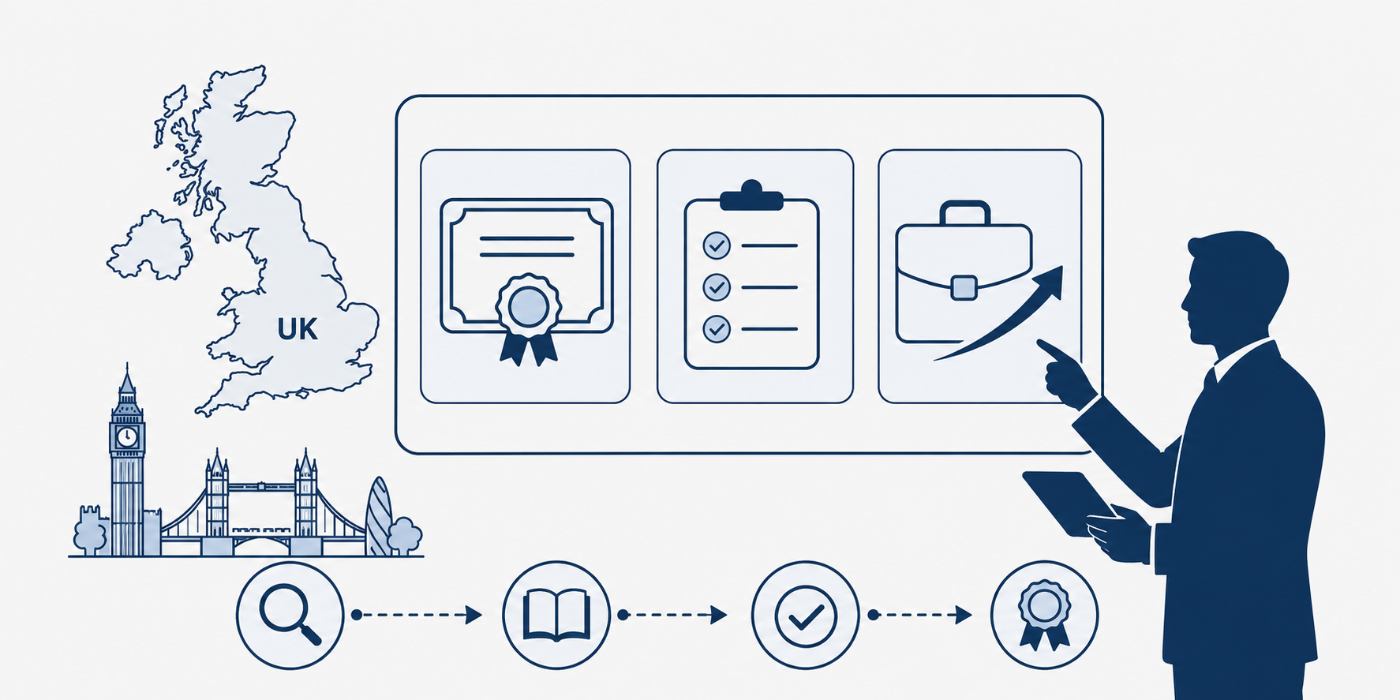
1. What UK Employers Really Want From a Certified Project Manager in 2026-2027
UK employers usually read a project management certification as proof of judgment, structure, delivery discipline, and stakeholder maturity. A certificate helps, yet the stronger signal is your ability to explain how you control scope, handle risk, manage suppliers, run governance, communicate trade-offs, and recover troubled work. That is why candidates who combine a recognised credential with practical fluency in project initiation terms, risk management language, budgeting terminology, cost management terms, and project reporting best practices often sound more hireable than candidates who only name the exam they passed.
The UK market has a particular mix of certification expectations. PRINCE2 remains highly visible in public-sector, governance-heavy, and structured delivery environments. PMP has strong recognition across global companies, technology delivery, consulting, and organisations that work across countries. CAPM can help early-career candidates prove foundation-level project knowledge, while APM qualifications carry strong UK relevance because APM is a major professional body in the country. For PMP, PMI lists eligibility routes based on education, experience leading and managing projects, and project management education, and PMI has also announced a new PMP exam coming in July 2026.
A good UK certification strategy begins with the role you want. A project coordinator targeting a first PM role should think differently from an IT project manager moving into programme delivery, a construction coordinator wanting larger contracts, or a business analyst shifting into delivery ownership. If your target roles mention Agile, build vocabulary around Scrum roles, Kanban software, agile project management tools, and team communication platforms. If the role sits in construction, public infrastructure, procurement, or supplier delivery, your CV should show comfort with RFP, RFQ, and RFI terms, procurement terminology, contract management language, and vendor management terms.
The biggest mistake is treating certification as the whole strategy. Hiring panels reward evidence. They want to see project logs, RAID examples, governance packs, lessons learned, stakeholder maps, dashboards, procurement timelines, and delivery decisions. Your certification should become the framework behind those proof assets. A candidate who can connect PMP domains to critical path method terms, connect PRINCE2 governance to project stakeholder terms, and connect delivery reporting to dashboard and data visualisation tools gives employers a clearer reason to shortlist them.
| Career Situation | Best Certification Move | Proof Asset to Build | UK Hiring Signal | APMIC Resource to Use |
|---|---|---|---|---|
| New to PM | Start with CAPM or APM foundation-level study before chasing senior credentials. | Simple project log, stakeholder list, risk register, and lessons learned note. | Shows structured learning and readiness for coordinator or junior PM roles. | CAPM exam resources |
| UK public sector | Prioritise PRINCE2 Foundation, then Practitioner if your target roles mention governance. | Business case summary, decision gates, tolerance log, and escalation route. | Signals comfort with controlled environments and formal approvals. | PRINCE2 vs PMP |
| Experienced PM | Use PMP when you can document real leadership across project constraints. | Experience tracker mapped to people, process, and business environment domains. | Shows delivery leadership beyond task coordination. | PMP exam domains |
| Construction PM | Combine certification with scheduling, procurement, risk, and contract vocabulary. | Programme baseline, change log, supplier tracker, and site-risk register. | Shows practical control in deadline-heavy environments. | Construction PM software |
| IT delivery | Pair PMP or PRINCE2 with Agile, Scrum, Kanban, and integration fluency. | Sprint dependency map, release plan, risk burndown, and Jira-style dashboard. | Shows you can work with product, engineering, and operations teams. | Agile PM tools |
| Career switcher | Use CAPM or PRINCE2 Foundation, then translate previous work into PM evidence. | Transferable-skills matrix covering scope, deadlines, stakeholders, and reporting. | Reduces the fear that your experience is too indirect. | Leverage CAPM |
| Procurement-heavy roles | Strengthen contract, supplier, RFP, RFQ, RFI, and evaluation-stage knowledge. | Procurement calendar, bid clarification log, and supplier evaluation checklist. | Shows you understand commercial pressure and approval timelines. | RFP, RFQ, and RFI terms |
| PMO candidate | Use certification to support governance, reporting, RAID, templates, and standards. | PMO pack with reporting cadence, status template, and escalation criteria. | Shows you can support portfolio visibility and delivery consistency. | Project reporting terms |
| Agile teams | Certify broadly, then prove Agile operating skill with Scrum and Kanban examples. | Backlog refinement note, sprint goal template, and blocked-work tracker. | Shows flexibility across hybrid delivery teams. | Scrum roles |
| Waterfall teams | Use PRINCE2, PMP, or APM study to prove control over baselines and approvals. | Stage plan, milestone chart, change-control record, and acceptance checklist. | Shows discipline in sequential delivery environments. | Waterfall PM software |
| Hybrid delivery | Build a mixed toolkit rather than presenting yourself as one-method only. | Hybrid delivery map showing governance gates and Agile delivery cycles. | Shows you can adapt to real UK organisations with mixed practices. | Scrum tools |
| Salary growth | Use certification to justify role scope, decision ownership, and stakeholder level. | Impact summary showing budget, team size, risk reduction, and delivery outcomes. | Shifts the conversation from credential name to business value. | PRINCE2 salary benefits |
| Exam anxiety | Choose a prep plan built around weak areas, mock review, and error logs. | Exam mistake tracker and weekly knowledge-gap map. | Improves confidence and reduces repeated exam attempts. | PMP mistakes |
| PRINCE2 retaker | Focus on tailoring, role clarity, and scenario application instead of memorisation only. | Theme-by-theme correction notes and sample scenario decisions. | Shows framework understanding rather than keyword recall. | PRINCE2 pitfalls |
| CAPM retaker | Use domain-based revision and exam-day pacing practice. | Timed question log, formula sheet, and concept-to-example map. | Builds readiness for junior PM and analyst roles. | CAPM exam day tips |
| Stakeholder issues | Strengthen engagement, conflict handling, and communication planning. | Stakeholder power-interest grid and difficult-conversation record. | Shows you can handle politics without losing delivery control. | Stakeholder engagement terms |
| Risk-heavy projects | Show risk identification, assessment, ownership, and response planning. | RAID log with risk triggers, owners, mitigations, and review dates. | Shows calm decision-making before issues become crises. | Risk identification terms |
| Schedule pressure | Learn critical path, float, dependencies, compression, and baseline control. | Milestone plan, dependency map, and schedule compression decision note. | Shows delivery realism under deadline pressure. | Schedule compression terms |
| Tool confusion | Match tools to operating model before adding software names to your CV. | Tool-selection matrix comparing reporting, task tracking, workflows, and integrations. | Shows practical technology judgment. | PM software for small businesses |
| Reporting roles | Build dashboard, KPI, status, issue, and decision-reporting fluency. | One-page status report with RAG, decisions needed, and next milestones. | Shows leadership visibility and executive-ready communication. | Reporting analytics software |
| Resource constraints | Learn allocation, capacity, utilisation, role conflicts, and dependency planning. | Resource heatmap and capacity-risk escalation note. | Shows you understand delivery pressure beyond task lists. | Resource allocation tools |
| Issue-heavy projects | Prove that you can separate risks, issues, actions, and decisions. | Issue tracker with severity, owner, ageing, and closure evidence. | Shows operational control when delivery gets messy. | Issue tracking software |
| Quality-focused roles | Connect PM certification with acceptance criteria, defects, reviews, and quality gates. | Quality checklist and acceptance-signoff tracker. | Shows you protect outcomes rather than only chasing deadlines. | Quality management terms |
| Process improvement | Add Six Sigma vocabulary when the role involves defects, waste, or operational improvement. | Before-and-after process map with measurable improvement target. | Shows stronger value in operations and transformation teams. | Six Sigma terms |
| Education PM | Match certification with academic calendars, stakeholder groups, reporting, and change adoption. | Implementation roadmap with training, communications, and risk checkpoints. | Shows readiness for institutions with complex approval chains. | Education PM tools |
| Event PM | Show timeline control, vendor coordination, communication cadence, and contingency planning. | Event run sheet, supplier contact map, and live-risk response plan. | Shows execution strength in deadline-locked environments. | Event PM tools |
| Renewal planning | Plan PDUs, CPD, or re-certification before your credential becomes a forgotten line. | Annual learning calendar and evidence folder. | Shows long-term professional discipline. | PMP renewal guide |
| Global mobility | Choose certifications and proof assets that travel across UK, Europe, Africa, and APAC markets. | International CV version with transferable delivery language. | Helps when applying to multinational employers and remote PM roles. | Germany PM certification guide |
2. Which Project Management Certification Should You Choose in the UK?
The best UK project management certification depends on your target job market, your experience level, and the type of delivery you want to be trusted with. PRINCE2 is often a smart route for candidates aiming at structured organisations, government suppliers, public-sector projects, PMO roles, and environments where controlled stages, business cases, roles, tolerances, and exception handling matter. PeopleCert’s official PRINCE2 7 pages describe current Foundation and Practitioner learning materials around exam preparation and continuous learning, which matters for candidates planning the 2026-2027 route.
PMP works well when you already have meaningful project leadership experience and want a globally understood credential. PMI’s PMP page lists eligibility routes involving project experience and project management education, while PMI’s 2026 update page says a new PMP exam is coming in July 2026. That makes timing important for candidates studying across 2026, because preparation plans should track the current exam outline and the transition window. A strong PMP candidate should review PMP exam domains, PMP exam mistakes, PMP preparation resources, real PMP success stories, and PMP renewal rules before committing money and study time.
CAPM is useful when your experience is lighter, your current title is coordinator, administrator, analyst, graduate trainee, junior delivery associate, operations assistant, or team lead without formal PM ownership. PMI lists CAPM eligibility as a secondary degree plus at least 23 hours of project management education completed before the exam. That means CAPM can help you move from “I helped on projects” to “I understand PM structure.” The next step is making that structure visible through CAPM exam resources, CAPM mistakes to avoid, CAPM career advancement, CAPM renewal requirements, and CAPM exam-day survival tips.
APM qualifications deserve serious attention for the UK because they align closely with the local professional landscape. APM describes the Project Management Qualification as a 2.5-hour online exam with 40 questions worth 90 marks, which gives candidates a clear assessment route. APM can be attractive when you want UK-specific professional credibility, especially around practical delivery, governance, stakeholder management, risk, and lifecycle thinking. To strengthen that path, build your vocabulary through top project management terms, communication techniques, human resource management terms, team-building terminology, and conflict resolution terms.
For many candidates, the strongest route is staged. Start with CAPM or PRINCE2 Foundation if you need credibility quickly. Move to PRINCE2 Practitioner, APM PMQ, or PMP once your experience and role targets justify a stronger signal. If you already manage projects, skip the “collect every badge” habit and build a sharper case around one main certification, one delivery method, one industry angle, and one proof portfolio. That portfolio should include a sample plan, a risk register, a stakeholder map, a status report, a dependency tracker, and a short business outcome summary.
3. How to Prepare for a UK PM Certification Without Wasting Time or Money
A serious study plan begins with gap diagnosis. Write down your target role, target sector, current experience level, deadline, budget, and weak areas. Then match those weak areas to study blocks. A candidate weak in planning should study Gantt chart terms, critical path method, schedule compression, project scheduling terms, and resource allocation software. A candidate weak in commercial delivery should focus on procurement terms, contract lifecycle management tools, procurement management tools, vendor management, and RFP terminology.
For PMP, preparation should be domain-led rather than chapter-led. Many candidates read passively, feel productive, then collapse under scenario questions because they cannot choose the best action under pressure. Build a wrong-answer log. For every missed question, write the concept, the reason you chose the wrong answer, the trigger phrase you missed, and the better decision rule. Connect that habit with PMP exam mistakes, PMP prep resources, PMP domains, project risk management, and stakeholder engagement so the exam becomes a decision-training system.
For PRINCE2, the danger is treating the framework as vocabulary only. UK employers care about whether you can tailor governance to a real project. That means you should know how roles, themes, practices, stages, tolerances, exception handling, business justification, and lessons learned work in practical scenarios. Use PRINCE2 exam pitfalls, PRINCE2 training providers, PRINCE2 renewal, PRINCE2 salary analysis, and PRINCE2 vs PMP as a comparison layer.
Your study plan should produce interview assets as you go. After each topic, create one artefact. After risk, make a RAID log. After stakeholders, build a power-interest grid. After scheduling, make a dependency map. After procurement, create a supplier evaluation checklist. After reporting, create a one-page RAG report. After quality, create an acceptance checklist. This turns your learning into evidence for recruiters and hiring managers. It also protects you from the common pain point where candidates pass the exam, update LinkedIn, and still cannot answer “Tell me about a project you controlled from start to finish.”
4. How to Turn Certification Into UK Interviews, Shortlists, and Job Offers
Certification only becomes valuable when your CV makes the credential believable. Recruiters scan for job titles, sector fit, tools, budgets, timelines, stakeholders, team size, governance, and outcomes. A line that says “PRINCE2 Foundation certified” has limited power by itself. A stronger profile says you used governance cadence, risk tracking, stakeholder mapping, supplier coordination, and status reporting to protect delivery. Build your CV around proof from project communication techniques, project reporting, issue tracking software, dashboard tools, and project templates.
For UK applications, match your evidence to the job description. When a role asks for governance, include decision gates, escalation routes, RACI, RAID, and reporting cadence. When it asks for Agile, include backlog management, sprint ceremonies, dependencies, releases, and stakeholder demos. When it asks for supplier management, include RFP timelines, contract milestones, vendor performance, and procurement risks. When it asks for data, include dashboards, KPIs, reporting packs, and decision logs. This approach works across Ireland certification routes, Germany certification routes, Netherlands PM certification, France PM certification, and Spain PM certification because employers everywhere reward evidence over vague claims.
Your LinkedIn profile should support the same story. Use your headline to show target role and method, such as “Project Coordinator | PRINCE2 Foundation | Risk, Reporting, Stakeholder Support” or “IT Project Manager | PMP Candidate | Agile Delivery, RAID, Governance.” Your featured section can include a sample status report, a case-style project summary, or a short post explaining how you handled scope, risk, or stakeholder pressure. For tool credibility, study project management APIs and integrations, Trello vs Basecamp, workforce management software, HR management tools, and team communication platforms.
Interview preparation should focus on five stories. Prepare one story for scope change, one for a schedule problem, one for stakeholder conflict, one for risk management, and one for delivery recovery. Each story should include context, constraint, decision, action, and measurable result. A weak answer says you communicated with stakeholders. A strong answer explains which stakeholder blocked progress, which decision was needed, how you escalated, what options you presented, and how the project moved forward. Use conflict resolution terms, stakeholder terms, risk identification, budgeting terms, and quality management terms to sharpen your examples.

5. What to Do After Certification: Renewal, Portfolio, Salary, and Long-Term UK Career Growth
The first 30 days after passing matter. Update your CV, LinkedIn, email signature, professional bio, and portfolio. Add the credential in context. Mention the certification, then connect it to skills employers value: governance, planning, risk, stakeholders, procurement, reporting, tools, and change control. Build a one-page “certification-to-proof” document with six examples: a project plan, RAID log, stakeholder map, status report, issue tracker, and lessons learned summary. Support those assets with project templates, reporting analytics tools, dashboard tools, issue tracking tools, and PM software guides.
For salary growth, certification should become part of a bigger business-value argument. A UK employer pays more when you reduce delivery risk, coordinate larger teams, manage bigger budgets, control supplier delays, improve reporting visibility, or lead work that affects revenue, compliance, cost, customer experience, or operational resilience. Instead of saying you passed PMP, PRINCE2, CAPM, or APM PMQ, say what the credential helps you do at a higher level. Link it to cost management, resource allocation, contract management, procurement management tools, and risk management.
Renewal should be planned before the credential gets buried. PMP holders need to think about PDUs and ongoing professional development, while PRINCE2 and other credentials may involve their own renewal or continuing learning expectations depending on the credential route. Use PMP renewal guidance, PRINCE2 renewal guidance, CAPM renewal requirements, team-building terminology, and Six Sigma terms to create a learning calendar that keeps your profile fresh.
Your long-term UK path should become more specialised over time. General PM knowledge gets you started. Sector fluency gets you shortlisted. Delivery proof gets you hired. Commercial confidence gets you promoted. If you want construction, study planning, procurement, suppliers, quality, and contract control. If you want technology, study Agile, releases, integrations, security, data, and stakeholder demos. If you want education, healthcare, government, or charities, study governance, compliance, adoption, reporting, and change communication. Compare international routes through South Africa PM certification, Nigeria PM certification, Kenya PM certification, New Zealand PM certification, and Switzerland PM certification if your career may move across markets.
6. FAQs About Getting a Project Management Certification in the UK in 2026-2027
-
The best certification depends on your target role. PRINCE2 is a strong choice for governance-heavy UK roles, public-sector suppliers, PMO environments, and structured delivery teams. PMP is powerful for experienced project managers who want global recognition and stronger mobility across industries. CAPM helps early-career candidates build credibility. APM qualifications are especially relevant for UK-focused professional development. Before choosing, compare PRINCE2 vs PMP, PMP domains, CAPM resources, and top PM terms.
-
PRINCE2 can be the better first move when your target UK roles mention governance, controlled delivery, stage gates, business cases, public-sector projects, or PMO support. PMP can be stronger when you already have project leadership experience and want recognition across multinational, consulting, technology, or global delivery roles. The practical answer is role-led: read job descriptions, track repeated requirements, then choose. Use PRINCE2 exam pitfalls, PRINCE2 salary benefits, PMP mistakes, and PMP exam resources.
-
Yes, especially at coordinator, junior PM, project support, PMO analyst, delivery assistant, operations project, or project administrator level. The certification helps you prove structure, while your portfolio proves readiness. Build small evidence assets: a RAID log, project plan, stakeholder map, RACI, issue tracker, and status report. Learn project initiation, stakeholder engagement, project reporting, issue tracking tools, and communication terms.
-
Preparation time depends on the credential and your background. CAPM and PRINCE2 Foundation can often be prepared faster than PMP because PMP requires broader experience-based judgment and scenario reasoning. A practical study plan should run through concepts, mock questions, weak-area review, and portfolio building. For stronger preparation, combine CAPM exam-day tips, PMP success stories, PRINCE2 training providers, project scheduling terms, and risk identification terms.
-
For IT project management, choose a credential that matches the employer’s delivery model. PMP works well for experienced delivery leaders. PRINCE2 works well in structured governance environments. CAPM helps if you are entering project work. Then build Agile and tool fluency through Agile PM tools, Scrum project management tools, Kanban software, project management integrations, and team communication platforms.
-
Construction candidates should prioritise proof around scheduling, procurement, contracts, risk, quality, suppliers, and reporting. PRINCE2, APM routes, and PMP can all support construction careers, depending on role level and employer expectations. Your portfolio should include a baseline schedule, change log, supplier tracker, risk register, site issue tracker, and quality checklist. Build the language through construction PM software, critical path method, procurement terms, contract management, and quality terms.
