
Top Challenges Facing Project Managers Today: Original Survey & Analysis (2026-27)
Project managers are being squeezed from every direction at once: executive teams want faster delivery, clients want more visibility, teams want flexibility, finance wants tighter control, and the market keeps moving underneath the plan. That is why today’s strongest PMs are no longer judged only on timelines and task tracking. They are judged on decision quality, risk visibility, stakeholder control, change discipline, tool fluency, and the ability to keep delivery stable when priorities refuse to stay still.
This 2026–27 analysis breaks down the real pressure points hurting modern project managers, why those pain points keep repeating across industries, and what hiring panels, sponsors, and PMOs increasingly reward instead. Throughout, you will also find practical patterns connected to career growth, certification choices, sector shifts, leadership positioning, and modern operating models across the APMIC ecosystem.
1) Why Project Management Feels Harder Now Than It Did Even a Few Years Ago
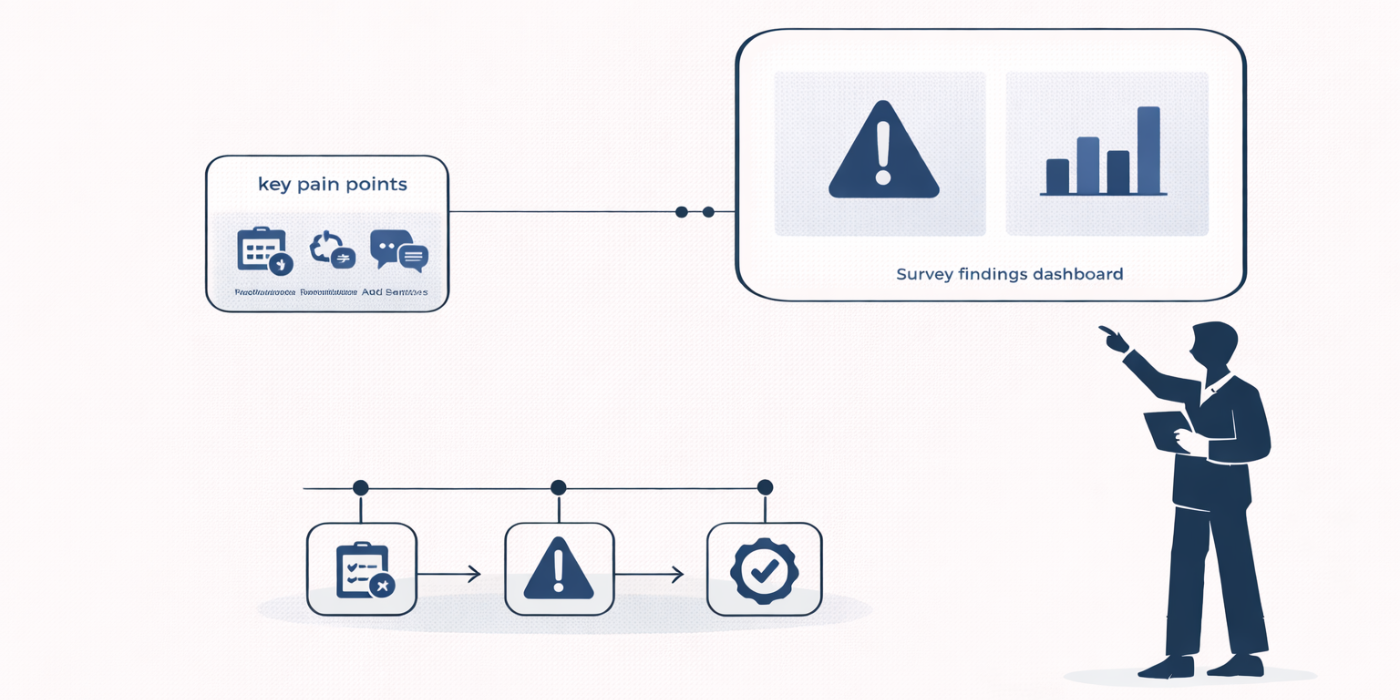
The biggest mistake people make when discussing PM burnout is assuming the problem is “too many tasks.” It is not. The real problem is that project managers now carry responsibility across multiple systems they do not fully control. A PM is expected to absorb ambiguity from leadership, coordination failure from teams, vendor slippage, shifting scope, reporting debt, tooling fragmentation, and budget pressure—then still present confidence in the steering meeting. That is why many professionals exploring how to become a project manager, the full entry-level to executive path, or the future project manager skills needed by 2030 quickly realize the job has become much more than delivery administration.
The role is harder because work itself is harder. Delivery teams are hybrid, priorities are fluid, governance expectations are rising, and cross-functional dependencies are now the norm rather than the exception. A PM handling enterprise change today often needs the communication discipline of a project management consultant, the adaptive posture of a certified agile project manager, the control mindset of a future project portfolio manager, and the executive translation ability seen in project management directors. When those capabilities are missing, the PM gets blamed for outcomes that were actually caused by upstream confusion.
Another reason the role feels heavier is that visibility has outpaced maturity. Leaders now expect dashboards, live reporting, AI-assisted forecasting, executive-ready summaries, cleaner governance artifacts, and faster decision cycles. Yet many teams still lack the process foundation to support those expectations. That mismatch is why interest keeps rising in project reporting and analytics software, dashboard and data visualization tools, document management software, project knowledge management platforms, and the broader future of project management software. Tools are improving, but weak governance still breaks delivery.
And then there is the labor market problem. Companies want PMs who can lead in uncertainty, but job descriptions still overemphasize certifications or tool familiarity while underdefining the actual business friction the PM will inherit. That is why professionals compare PMP vs PRINCE2, study CAPM vs PMP, assess the evolution of PM certifications by 2030, and analyze salary differences by certification because they know the challenge is no longer getting “a PM job.” It is becoming the kind of PM who can survive messy environments and still create confidence.
2) The Most Damaging Challenges Facing Project Managers in 2026–27
The first major challenge is scope instability. It is still the silent killer because it rarely arrives dramatically. It shows up as “small” executive asks, last-minute feature additions, cross-team favors, or unpriced stakeholder preferences that accumulate until the original plan is fiction. This is especially dangerous in hybrid environments already covered in the rise of hybrid project management, in remote and virtual PM roles, and in freelance project management work where informal requests can bypass structure faster. Strong PMs do not merely document change. They make the cost of change visible enough that stakeholders must own it.
The second challenge is prioritization collapse. Modern PMs are not only managing schedules; they are often managing collision between business units, product pressure, technical debt, compliance deadlines, and executive impatience. Without a ranked decision framework, work becomes a political contest disguised as urgency. That is why PMs increasingly study project portfolio management trends, the future role of the PMO, the future of project governance, and even economic uncertainty’s effect on agile demand. When business conditions tighten, prioritization quality becomes a survival skill, not an administrative skill.
The third challenge is weak executive alignment. PMs get punished when leaders have not actually agreed on what success means. One sponsor wants speed, another wants zero risk, another wants innovation, and another wants headcount restraint. If the PM cannot expose those tradeoffs early, the project becomes a venue for deferred conflict. This is where professionals eyeing movement toward vice president of PM roles, chief project officer tracks, or project management leadership evolution begin to separate themselves. Senior PM growth is often less about better scheduling and more about better strategic translation.
The fourth challenge is tool overload without process clarity. Many organizations bought software before fixing operating discipline. So now PMs live inside disconnected dashboards, duplicated trackers, shallow collaboration spaces, and reporting workflows that generate activity but not clarity. This is why there is rising interest in best procurement tools for PMs, contract lifecycle management software, calendar and scheduling tools, Gantt chart platforms, and automation tools for PM efficiency. The pain is not a lack of software. The pain is lack of operating design.
The fifth challenge is the shift from delivery management to business accountability. PMs are increasingly expected to understand financial logic, adoption risk, benefit realization, cross-functional politics, and workforce change. That is why industry-specific paths like IT project management, construction project management, healthcare project management, government project management, and international project management matter so much. The role now changes shape based on regulatory load, procurement logic, stakeholder density, and risk tolerance.
3) How These Challenges Show Up Differently Across Industries, Teams, and Career Stages
Early-career PMs often think the biggest challenge is credibility. In reality, credibility is usually the visible symptom of a deeper issue: they have not yet learned how to convert noise into decision-ready structure. That is why professionals exploring CAPM pathways, CAPM salary and career paths, 30-day CAPM study plans, or top CAPM exam questions should not treat certification as the finish line. Entry-level growth comes from learning how to make ambiguity smaller for the people around you.
Mid-career PMs face a different trap: they become execution-reliable but strategically underpositioned. They know how to run meetings, update plans, and close actions, but they do not yet influence portfolio sequencing, sponsor expectations, commercial tradeoffs, or resourcing negotiations. That is where paths like project management consultancy, freelance PM opportunities through 2030, and remote PM market shifts become useful mirrors. They show how much business-facing maturity the market now rewards.
Agile-oriented professionals face another version of the same stress. Many teams say they want agility but still govern through fixed expectations, rigid approvals, and incomplete backlog hygiene. So the PM or scrum leader is trapped between delivery flexibility and leadership rigidity. That is why many professionals compare the certified scrum master path, agile coach career roadmap, scrum-master-to-consultant evolution, product owner career guide, and scrum’s expected evolution by 2027. The core issue is not whether agile works. It is whether the organization has the discipline to support it.
Sector also changes the pain pattern. In construction, procurement and vendor control can dominate. In healthcare, documentation and adoption discipline matter more. In government, governance, approvals, and contract mechanics often shape the timeline before execution even accelerates. In technology, tool overload and changing scope are relentless. That is why local and regional labor-market reads such as California PM careers, Texas PM trends, New York PM opportunities, Washington state career hubs, and Chicago salary analysis are more useful than generic career advice. Geography often changes industry mix, employer maturity, and the kind of pressure PMs inherit.
The fastest PM growth usually comes from fixing one operational bottleneck first, then building proof that you can prevent it at scale.
4) What the Best Project Managers Do Differently When These Problems Start Piling Up
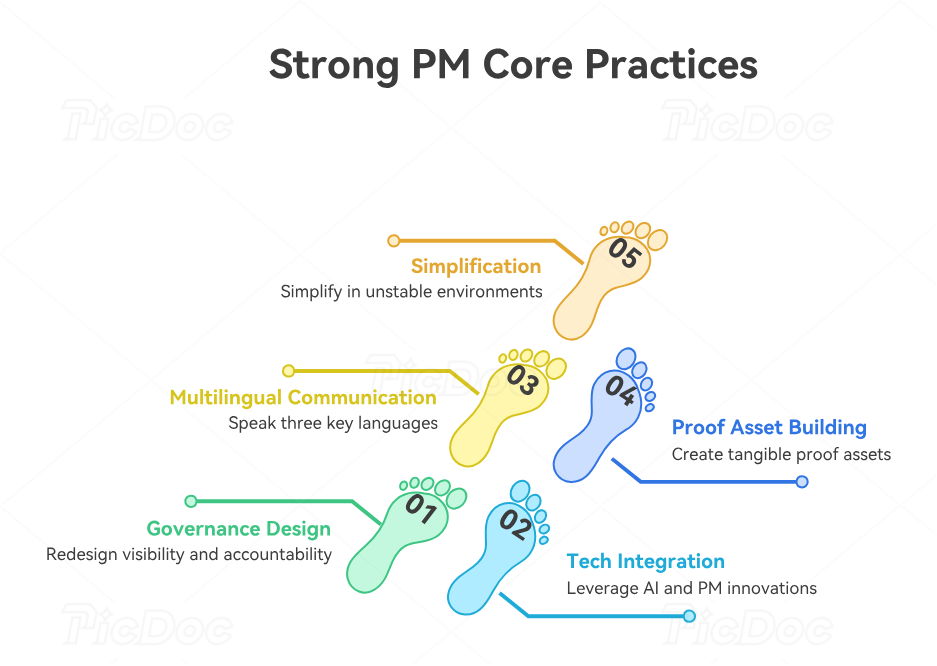
The strongest project managers do not try to personally absorb every delivery failure. They redesign visibility and accountability so weak points cannot hide. That means they use governance as a decision engine, not a meeting ritual. They tighten change control, clarify escalation paths, reduce duplicate reporting, force issue ownership, and build status narratives around business consequences instead of raw activity. That operating posture is increasingly supported by ideas found in AI and project management innovation forecasts, machine learning for estimation and scheduling, record AI adoption in PM, and digital transformation across PMOs. But again, technology only helps when the PM knows what operating problem needs fixing.
They also learn to speak three languages at once: delivery language for the team, risk language for control functions, and value language for executives. This is what often separates a competent PM from someone ready for project management director roles, vice-president-level growth, or eventually chief project officer positioning. Leaders promote PMs who reduce decision friction, not just PMs who update trackers beautifully.
Another difference is that resilient PMs build proof assets. They do not merely say they are “good with stakeholders” or “strong in governance.” They can show cleaner RAID logs, sharper steering packs, better meeting design, higher-quality baselines, stronger risk escalation discipline, and more reliable documentation systems. That is why smart professionals also invest in best software for PM training, PMP exam prep tools, ultimate PMP certification guidance, top PMP questions answered, and 30-day PMP study planning. The best certifications are valuable because they sharpen how you think, not because recruiters magically change their minds.
Finally, strong PMs know when to simplify. When an environment is unstable, adding more status meetings, more dashboards, and more tool clutter often makes execution worse. High performers instead reduce the number of competing views, define a single truth source, identify the three most dangerous risks, and drive the next two or three irreversible decisions. In a noisy market, clarity scales better than complexity.
5) A Practical 90-Day Plan for Project Managers Who Want More Control, Better Results, and Faster Career Growth
Start with visibility repair. In the first 30 days, audit where the project is losing truth. Are decisions undocumented? Are scope changes unpriced? Are dependencies unnamed? Are leadership updates inconsistent across channels? Are vendors working to different assumptions? The goal is not to fix everything instantly. The goal is to identify which information failures are causing the most downstream waste. This same mindset matters whether you work in Los Angeles PM roles, Dallas–Fort Worth PM markets, Massachusetts PM careers, Illinois opportunities, or Georgia PM career growth. Different employers change the environment, but control failures follow similar patterns.
Next, rebuild governance around decisions, not ceremonies. In days 31–60, create one executive-ready steering structure, one change control path, one dependency tracker, and one issue escalation format. That alone often reduces more pain than adding another project tool. If your environment is software-heavy, review top PM software for software development, mobile PM apps, mobile collaboration apps, budget tracking software, and productivity tools for busy PMs only after you know what operating behavior needs reinforcement.
Then use days 61–90 to build strategic leverage. This is where career acceleration starts. Present one concise analysis to leadership showing which delivery bottlenecks are structural, what business impact they create, and which interventions will reduce risk fastest. This transforms you from coordinator to operator. That is also the point where broader market knowledge becomes useful. Read North America project management outlook, Europe PM market insights, Asia-Pacific trends, Latin America PM analysis, and the broader global salary report for project management. Market-aware PMs make better career bets because they see where demand, governance maturity, and executive expectations are moving.
If you want one final rule, use this: do not chase every PM problem at once. Fix the bottleneck that most damages trust. In some organizations that is reporting chaos. In others it is sponsor misalignment, procurement delay, budget opacity, or weak change control. Once you remove the main trust leak, performance improves fast because people stop compensating for uncertainty everywhere else.
6) FAQs
-
The biggest challenge is not workload by itself. It is managing accountability across systems the PM does not fully control. Scope changes, unclear stakeholders, resourcing gaps, vendor slippage, tool sprawl, and executive indecision all converge on the PM. The most effective response is to strengthen governance, document decisions, and make tradeoffs visible early instead of trying to personally absorb every problem.
-
Because software cannot compensate for unclear ownership, poor decision design, weak prioritization, or informal scope creep. Many PMs have decent tools but weak operating discipline around them. That is why software selection should follow process clarity, not replace it.
-
Yes, but only when used strategically. Certifications help most when they sharpen thinking, improve delivery language, and support career positioning. If your problem is weak stakeholder influence or poor governance design, a certification is useful only if it helps you solve those exact weaknesses more credibly and consistently.
-
Start translating project status into business implications. Do not only report tasks completed. Report what decisions are blocked, what risks are increasing, what tradeoffs leadership must own, and what interventions will improve outcome confidence. Strategic PMs reduce executive uncertainty rather than simply forwarding team activity.
-
Decision framing, stakeholder control, risk visibility, change governance, financial awareness, tool fluency, communication under pressure, and cross-functional influence. Technical planning still matters, but PMs who rise faster are the ones who can connect delivery mechanics to business outcomes.
-
Create a formal change path immediately. Document the requested change, its effect on timeline, cost, dependencies, and resource needs, then require sponsor ownership of the tradeoff. Scope instability becomes dangerous when it stays conversational. It becomes manageable when it is made explicit, quantified, and governed.
-
Top PMs create clarity faster. They know how to reduce noise, surface the real risk, assign ownership, build trust through documentation, and convert stakeholder tension into decisions. Average PMs often work just as hard, but they stay reactive because they do not redesign the system around the problem.
