
Complete Guide to Project Management Careers in Texas: Trends & Training Opportunities
Project management in Texas is not “one market.” It is multiple markets stacked on each other: enterprise tech in Austin, energy and EPC programs in Houston, aerospace and advanced manufacturing in Dallas Fort Worth, and public sector and infrastructure across fast growing metros. If you treat Texas like a generic job board filter, you will keep missing. This guide shows you how Texas hiring actually works, what employers screen for, which training paths convert into interviews, and how to build proof so your resume stops getting ignored.

1) The Texas project management market: what is expanding and what is tightening
Texas keeps hiring project managers, but the bar is rising. Headcount growth is not evenly distributed, and “PM” titles hide different expectations.
In Austin, PM roles increasingly blend delivery with product and analytics. Employers want someone who can run a clean delivery system and also translate outcomes into measurable impact. That is why roles often reward candidates who understand AI and project management, can plan around tooling constraints, and can speak to the realities of project management software trends without sounding theoretical.
In Houston, the PM game is still dominated by capital projects, energy transition work, regulatory timelines, supplier risk, and cost volatility. You win by proving control. That means stronger estimating discipline, schedule logic that survives scrutiny, and stakeholder alignment when priorities shift. If you have not studied how teams are changing due to efficiency pressure, read the signals from reshaping project management structures and how organizations are rebuilding governance through the future role of the PMO.
In Dallas Fort Worth, you will see a mix: enterprise transformations, supply chain programs, aerospace and defense initiatives, and large scale operations modernization. These employers reward PMs who can run a governance cadence that is lightweight but unforgiving on delivery. That is where hybrid project management and the future of project governance become practical, not buzzwords.
Across Texas, three trends shape hiring:
Proof beats potential. A certificate helps, but hiring managers want deliverables: a schedule snapshot with logic, a RAID log that shows decision flow, a budget narrative, a stakeholder map, an outcomes dashboard. Build proof using guidance from the ultimate CAPM exam guide and then convert that knowledge into artifacts.
The “PM who can automate” is pulling ahead. Employers do not want someone who babysits meetings. They want someone who removes friction using workflow automation, reporting, and sane tooling. Study the workforce shift in automation and AI transforming PM careers and how estimating is evolving in machine learning for estimation and scheduling.
PMO maturity is becoming a differentiator. Companies that scale in Texas want repeatability. If you can speak to portfolio thinking, intake, prioritization, and governance, you become more than a task manager. Use PPM trends and the future of PM methodologies to sharpen your language.
2) Texas industries that hire project managers and how to position yourself to win
If you want more interviews in Texas, stop marketing yourself as a generic “project manager.” Texas employers hire for a problem category. Your resume must mirror that category.
Enterprise tech and SaaS (Austin, DFW): They hire PMs who can deliver in ambiguity. The fastest way to stand out is to show that you understand modern delivery patterns like hybrid delivery, can speak clearly about Scrum evolution, and can explain how tooling improves execution using the future of PM software.
Pain point you must address: hiring managers are tired of PMs who “run ceremonies” but cannot unblock delivery. Prove you can remove blockers with a dependency map, a decision log, and a weekly exec summary that forces clarity.
Energy, industrial, EPC (Houston and beyond): They hire PMs who can keep costs and schedule honest under volatility. If you cannot talk about budget pressure, you will lose. Build your narrative using insights from global inflation’s impact on project budgets and show risk control maturity through the future of governance.
Pain point you must address: stakeholder conflict and change orders can destroy credibility fast. Show a change control approach, vendor accountability, and escalation paths that protect timelines.
Manufacturing, logistics, aerospace and defense (DFW, statewide corridors): They hire PMs who can coordinate cross functional work without chaos. Employers care about repeatability and process discipline, which is why pairing PM knowledge with improvement methodology can be lethal. Use Six Sigma Green Belt guidance to strengthen your operational credibility, then frame your planning using PM methodologies by 2030.
Pain point you must address: employers have been burned by PMs who cannot translate progress into operational metrics. Bring a KPI tree and a weekly “variance and action” report.
Public sector, infrastructure, and large programs: They hire PMs who respect governance and documentation. If you want these roles, position yourself around PMO capability and executive reporting. Learn the language of the PMO’s future role and PPM trends, then convert it into a portfolio style status pack.
Pain point you must address: slow decision making kills delivery. Your pitch must show how you create decision velocity without breaking compliance.
3) The skills Texas employers actually screen for, and how to prove them fast
Texas hiring managers often do not reject you because you lack “experience.” They reject you because your experience is unprovable.
Here is what they test, and what proof wins:
Scope control that survives pressure. Texas programs change mid flight. If your scope language is vague, stakeholders will weaponize it. Build a one page scope statement with exclusions, acceptance criteria, and change triggers. Anchor your fundamentals with the CAPM study plan and sharpen your comparison talk track using CAPM vs PMP.
Schedule competence beyond a pretty Gantt chart. Employers want to see logic, dependencies, and risk buffers. Learn how estimation is shifting with machine learning and scheduling, then build a baseline schedule that shows critical path, float, and clear milestones.
Risk discipline that creates decisions. Many PMs maintain a risk register that no one reads. Texas execs want risk framed as “decision required.” Use a RAID format that ties each risk to an owner, a mitigation date, and the impact in dollars or time. Strengthen your governance framing with future governance best practices and PMO success patterns.
Stakeholder management that reduces politics. Texas organizations move fast, but politics still exist. The best PMs reduce politics by making tradeoffs explicit. Build a stakeholder map with influence, concerns, and preferred updates. Then build an “executive narrative” status update that summarizes progress, blockers, and decisions in five lines.
Tool fluency that improves outcomes. Do not list tools as a skills section. Show how tools support delivery: automated status reporting, intake forms, standardized templates, and fast visibility. Ground your story using future PM software and the real career shift discussed in automation and AI transforming PM careers.
Your goal is simple: turn knowledge into a portfolio. When a recruiter asks, “Do you have experience?” your answer becomes, “Here is how I run delivery, here are the artifacts, and here is the measurable outcome.”
4) Training opportunities in Texas: how to pick the right certification path without wasting months
The fastest way to waste a year is to chase the wrong credential for the role you want. Texas hiring is practical. A credential must match the work environment.
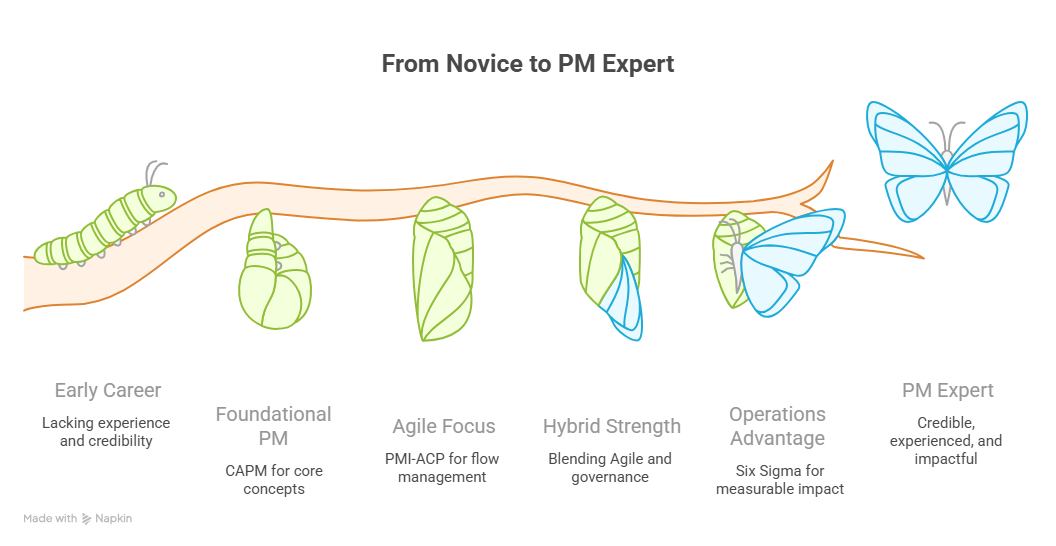
If you are early career, or pivoting into PM: Build a foundation that makes your language credible fast. Start with the ultimate guide to passing the CAPM, then tighten execution using the 30 day CAPM study plan. If you need confidence in what employers pay attention to, review CAPM salary insights and use CAPM exam questions to lock in core concepts quickly.
If you are targeting Agile heavy roles in Austin: You need more than vocabulary. You need evidence you can manage flow. Use PMI-ACP prep in 30 days and then pressure test your understanding with PMI-ACP exam questions. If you want Scrum focused roles, use the Scrum Master certification guide and understand positioning with Scrum vs Agile comparison.
If you want to be competitive in enterprise DFW programs: You need hybrid strength. Pure Agile talk can lose you interviews where governance matters. Learn why blending delivery styles is winning in hybrid PM trends and strengthen your governance language through future project governance. If you want your path mapped at a strategic level, read PM certifications evolving by 2030.
If you want operations and manufacturing advantage: Pair PM discipline with improvement and measurable outcomes. Study Six Sigma Green Belt and use it to tell a results story: defects down, cycle time reduced, throughput improved. Texas employers love measurable impact.
If you want a clean alternative PM credential path: Explore the IAPM project manager exam insights or a structured pathway like the Certified Project Director guide. If you prefer CompTIA’s route, use the CompTIA Project+ guide.
Your certification should not be your identity. It should be your proof engine. Every module you learn must convert into an artifact you can show.
5) Texas hiring strategy: a 90 day plan to get interviews, not just “apply more”
Texas job seekers lose because they copy paste one resume into three different markets. Austin, Houston, and DFW are distinct. Your approach must change.
Days 1 to 15: Pick a target lane and rewrite your story. Choose one lane from the table above. Then build a role specific resume headline and proof list. If you are targeting DFW, read Dallas Fort Worth job market insights and mirror the language in your achievements. If you are comparing broader markets, borrow positioning ideas from New York City PM careers, Los Angeles opportunities, and Chicago job market analysis to see what differentiators you need.
Days 16 to 45: Build a proof portfolio that is impossible to ignore. Create five artifacts: scope statement, baseline schedule with dependencies, RAID log with decision framing, weekly status pack for executives, and a benefits tracking sheet. Your portfolio is your defense against “no experience.” If you want long term relevance, map your artifacts to what the future project manager skills will reward and how PPM trends shape leadership expectations.
Days 46 to 70: Network like a project manager, not a job seeker. Instead of asking for jobs, ask for validation. Share your artifacts and ask, “What would you change if this were your program?” This flips the power dynamic. It signals competence, and it surfaces real hiring pain points. If you want an easy network anchor, reference market hubs like Washington state career opportunities, Massachusetts PM careers, and Pennsylvania industry trends to start conversations around market differences and best practices.
Days 71 to 90: Interview prep that actually converts. Most candidates prepare answers. You should prepare decision stories. Build three “tradeoff narratives” where you chose between time, cost, and scope. Then build two “conflict narratives” where you handled stakeholder pressure without losing control. Finally, build one “governance narrative” that shows how you create decision velocity using a lightweight cadence, supported by the future of governance and the future role of the PMO.
If you do this correctly, your applications stop feeling like lottery tickets. You become the candidate with proof.
6) FAQs: Texas project management careers, trends, and training
-
Austin is strongest for tech delivery, product adjacent PM roles, and modern Agile heavy teams, especially if you can speak to AI and PM and PM software trends. Houston is strongest for industrial programs, energy transition, EPC delivery, and stakeholder heavy cost and schedule control, where inflation pressure on budgets is a daily reality. Dallas Fort Worth is strongest for enterprise transformations, manufacturing, logistics, and aerospace programs where governance matters and hybrid delivery is common.
-
You do not “need” CAPM, but you need credibility fast. CAPM is a direct way to standardize your language and prevent interview confusion. The bigger requirement is proof: a baseline schedule, RAID log, and status pack that shows you understand execution. Use the CAPM guide and then convert every topic into an artifact. If you are deciding between paths, use CAPM vs PMP to match your career stage.
-
Pick one: PMI-ACP or Scrum, then build proof around delivery flow. For PMI-ACP, use 30 day PMI-ACP prep and validate with PMI-ACP questions. For Scrum roles, use the CSM guide and prepare a sprint dashboard narrative that proves you can improve cycle time, not just facilitate meetings.
-
You must prove control skills that transfer: schedule logic, risk discipline, and stakeholder reporting. Build a portfolio that includes a change control log, vendor tracker, and a cost narrative that explains tradeoffs. Learn how volatility impacts delivery using inflation and project budgets and strengthen governance language through the future of project governance. Hiring managers will forgive industry gaps if your execution system is mature.
-
Expect Texas employers to reward PMs who blend delivery with decision systems: portfolio thinking, automation, outcome measurement, and strong stakeholder narratives. The job is moving from coordination to optimization. Use the roadmap in future PM skills, understand the market shift in automation and AI careers, and align your approach with PPM trends. The PM who can simplify complexity will lead.
-
For many enterprise teams in Texas, hybrid wins because governance and predictability still matter. Pure Agile language can backfire if the organization runs heavy compliance, audits, or multi vendor delivery. Learn how the blend is evolving in hybrid PM trends, then use Scrum evolution to stay modern. The best answer in interviews is not “I love Agile,” it is “I pick the method that protects outcomes.”
-
They describe activity instead of decisions. Texas hiring managers want to hear how you protected scope, handled pressure, and created tradeoffs that executives could sign off on. Build stories that show governance and decision velocity using the future PMO role and governance best practices. If you cannot explain the decision you drove, your “experience” sounds like meetings.
-
Start by choosing a lane, then build a learning path that matches it. For early career structure, build CAPM fundamentals using the CAPM guide and the CAPM 30 day plan. If you are targeting Agile roles, use PMI-ACP prep or the CSM guide. If you want leadership and scale, align with PPM trends and future leadership styles, then build proof artifacts that match what Texas hiring managers actually reward.
