
Washington State Project Management Opportunities
Washington State is not a single project management market. In 2026 it is multiple markets stacked together: Seattle and Bellevue reward tech delivery and technical program leadership, Everett rewards aerospace execution discipline, Tacoma rewards port, logistics, and infrastructure, and Spokane rewards healthcare operations and public sector programs. If you try to apply one resume to all of them, you get ignored. This career hub shows where demand is strongest, what pays, which skills move the needle fastest, and how to build a training plan that turns you into a hire, not a maybe.
1) Washington State Project Management Opportunities in 2026
Washington employers hire PMs when execution is the bottleneck, and in 2026 execution is the bottleneck almost everywhere. The state has a high density of complex work that blends software, operations, compliance, and vendors. That pushes companies toward hybrid delivery, stronger governance, and measurable outcomes. If you want the macro view of why the market keeps shifting, anchor your strategy to project management methodologies shaping the next decade, the reality of hybrid project management becoming the default, and how the PMO is evolving in the future role of the PMO.
What makes Washington different is how often PMs here must translate between worlds. You might be running a cloud migration while coordinating a vendor contract, aligning security controls, and protecting a go live date tied to revenue. That is why the strongest candidates signal capability in modern tooling and forecasting. Start with future PM software trends, then build your personal stack using productivity software for busy project managers and cost visibility practices from project budget tracking software tools. When you talk like someone who protects outcomes, you stop competing on “years of experience” and start competing on value.
Washington hiring also rewards specialization. Employers want PMs who understand the domain, not just templates. If you are targeting healthcare, learn the platform expectations in project management software for healthcare projects. If you are targeting finance, study the delivery patterns outlined in financial services and project management predictions. If you want a future proof arc, align your growth with future project manager skills and competencies.
2) Washington State Salary Landscape and What Actually Drives Pay
Washington compensation is not “Seattle equals high pay, everywhere else equals low pay.” In 2026, pay follows complexity, risk, and measurable outcomes. A PM in Tacoma running a high impact logistics transformation can out earn a generalist in Seattle who only coordinates meetings. Your fastest path to higher pay is to move into work where failure has a cost. Portfolio and governance maturity accelerate pay, and that is why APMIC’s view of project portfolio management trends and future project governance best practices matters for your positioning.
In Washington, the strongest pay drivers look like this:
Outcome ownership beats task ownership.
Hiring managers do not want “kept the plan updated.” They want “reduced cycle time,” “improved adoption,” “protected revenue,” and “stabilized risk.” Train your language and approach around benefits realization the way modern PMOs are being built in the future of the PMO, and sharpen your leadership narrative using future project management leadership styles. When you can quantify your impact, you gain negotiation leverage.
Hybrid delivery is the baseline expectation.
Washington tech and enterprise organizations have matured past methodology debates. They want predictability, and that often means combining sprint execution with governance gates. If you sound like a single methodology person, you lose roles you could have won. Study the operating reality in hybrid project management, then keep your agile language modern through Scrum’s evolution by 2027. Employers pay more for PMs who can flex delivery to fit constraints.
Tooling literacy is now a pay lever.
In 2026, strong PMs in Washington build leverage with tooling. You do not win by using more apps. You win by using a stack that produces clarity. Build your baseline with top productivity software for PMs, then strengthen financial discipline using budget tracking tools. If you are implementing customer systems, expand your credibility using CRM tools for PMs.
Certifications pay when they match the environment.
Washington employers value certifications as signals of standardized execution, especially when the role sits inside a mature PMO. If you want the clearest path, compare options using PMP vs PRINCE2, then commit to a structured plan with the ultimate PMP exam guide and the 30 day PMP study plan. For PRINCE2, choose the level confidently using PRINCE2 Foundation vs Practitioner and follow a proven route with the PRINCE2 certification exam guide.
3) Where the Best Washington PM Roles Are, by City and Industry
Washington opportunities are city shaped, but not in a simplistic way. The best strategy is to map your target role to the dominant delivery problems in each region. If you need a future oriented lens for choosing industries, use AI and project management innovations, the shift described in future PM software trends, and the career impact covered in automation and AI transforming PM careers. Those forces shape hiring even when the job description does not mention AI.
Seattle and Bellevue
This is where technical program roles, platform delivery, and large scale transformation live. These employers want PMs who can manage dependencies across teams and communicate at executive level. Your advantage comes from speaking the language of portfolio and governance. Study PPM trends and align your approach with project governance best practices. Then sharpen daily execution with project management productivity software so your cadence feels enterprise grade.
Everett and the aerospace corridor
Aerospace rewards discipline. Documentation, schedule control, supplier risk, and compliance are central. If you come from software, this lane can still be accessible if you demonstrate structured delivery and quality focus. Build a strong foundation in governance and risk using future project governance, and strengthen your planning approach with modern forecasting ideas from machine learning transforming estimation. Even if you do not use ML tools, the thinking improves your credibility.
Tacoma and logistics
Tacoma is about movement, capacity, and service levels. Projects are tied to operations, vendors, and physical constraints. If you want to win here, you need strong stakeholder management and KPI discipline. Use budget tracking tools to strengthen your financial narrative, and if you touch customer workflows, build literacy with CRM tools for PMs. For an execution model that fits operations, lean into hybrid project management.
Spokane and eastern Washington
Healthcare, public sector, and operational transformation show up more here. You win by proving adoption outcomes and clean stakeholder alignment. If healthcare is your lane, anchor your tool expectations and rollout approach to project management software for healthcare, then build credibility with standardized frameworks using PMP resources and PMP exam day performance tactics.
Renewable energy and sustainability programs statewide
Washington has a long runway of sustainability related programs, and those projects often require data discipline and governance. Even if you are not an ESG specialist, you can become valuable by understanding how sustainability integrates into delivery. Build your context with sustainability and ESG in project management and pair it with portfolio thinking from PPM trends. This combination makes you relevant in industries that are evolving their reporting and procurement standards.
4) Washington Training Roadmap: Skills, Certifications, and a Real Plan
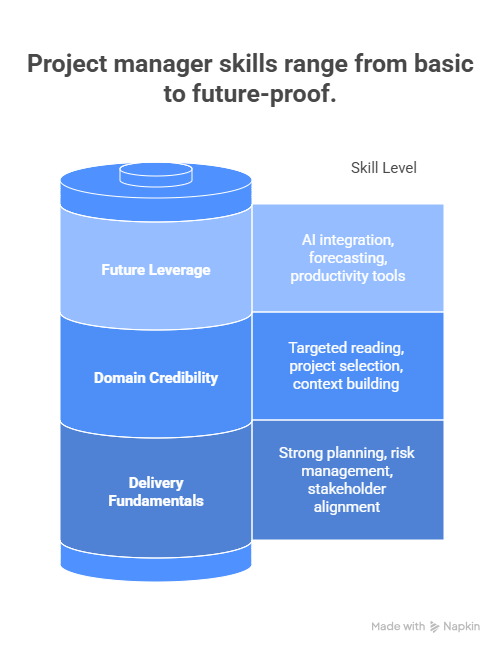
Washington employers are not looking for “training,” they are looking for capability. Training is only valuable if it changes what you can deliver. Your plan should build three layers: delivery fundamentals, domain credibility, and future proof leverage. Use future project manager competencies as your long term checklist, then align with what is happening to PM work in automation and AI career changes and AI innovations in project management.
Layer 1, delivery fundamentals that always pay
If you cannot forecast, manage risk, and drive stakeholder alignment, training will not help your job search. Start by strengthening your planning discipline with PMP exam prep resources and pressure test your understanding using PMP exam questions explained clearly. Then build a realistic study sprint using the 30 day PMP study plan and prepare your performance habits with the PMP exam day survival guide.
If PRINCE2 fits your target employers, especially governance heavy environments, choose the right pathway using PRINCE2 Foundation vs Practitioner and lock your prep structure with the PRINCE2 certification exam guide. For practice and confidence, use PRINCE2 exam questions explained and reinforce with PRINCE2 success stories.
Layer 2, domain credibility that gets you interviews
Washington roles often screen for domain context. You can build that through targeted reading and project selection.
If you want finance aligned roles, ground your understanding in delivery constraints and compliance patterns by studying financial services and project management innovations and match your governance language to future project governance. If you want healthcare aligned roles, upgrade your tooling literacy through PM software for healthcare projects and combine it with structured planning habits from PMP preparation.
If you want to speak like a modern portfolio leader, study future project portfolio management trends and how PMOs will measure outcomes in the future role of the PMO. This makes you credible for program manager, TPM, and PMO roles across the state.
Layer 3, leverage skills that protect your future
In 2026, PMs who can use AI as a planning accelerator gain speed and clarity, not magic. You do not need to be technical, you need to be effective. Build your context with AI and project management innovations and strengthen your forecasting thinking using machine learning for estimation and scheduling. Then make your daily work sharper with productivity tools for PMs and structured tool selection guidance from project management training platforms.
5) Job Search, Portfolio Proof, and Negotiation in Washington
Washington hiring filters out candidates who sound generic. Your job is to build proof that you deliver outcomes under constraints. If you want a future aligned approach, keep your positioning consistent with the future project manager skill set, the operating reality in hybrid project management, and what employers expect from modern PMOs in the future role of the PMO.
Build a proof portfolio, even if your title is junior
Create three short case studies you can tell in interviews:
A delivery save: what was failing, what risk you saw early, what you changed, and what outcome improved. Anchor your thinking in project governance best practices and show you can run a decision cadence.
A planning story: how your estimate improved through learning, and how you communicated confidence bands. Use concepts influenced by ML transforming scheduling and estimation to sound modern and precise.
An adoption story: how you drove a change that stuck, not just a launch. Your language should mirror outcome focus seen in project portfolio management trends and leadership habits discussed in future PM leadership styles.
Target titles that match your true capability
Washington roles often hide high impact work behind titles that are not “project manager.” If you can drive cross team outcomes, target program manager and TPM lanes, and build your readiness by studying future PM methodologies and future PM software ecosystems. If you want PMO adjacent roles, align your story to the future of the PMO.
Negotiate like an outcome owner
Washington employers respond to a value argument, not a feelings argument. Your negotiation should be built on measurable outcomes: cycle time reduced, risk avoided, adoption improved, budget protected. Tie your credibility to standardized practice by referencing PMP preparation or governance control patterns from PRINCE2 certification structure. When you speak like someone who protects business results, your compensation conversation changes.
Use tools to create clarity, not noise
Employers in Washington are tired of dashboards that do not drive decisions. If your stack produces clarity, you look senior. Start with productivity software for PMs, build financial credibility with budget tracking tools, and if you sit near revenue workflows, add signal with CRM tools for PMs. Your goal is to show you can run an operating cadence that leaders trust.
6) FAQs
-
Choose the lane where you can build proof fastest. If you already have exposure to software, Seattle and Bellevue TPM and delivery roles reward dependency control and exec communication. If you have operations exposure, Tacoma logistics and transformation work rewards KPI discipline and vendor control. If you have adoption and stakeholder strength, Spokane healthcare and public sector programs can be a strong fit. Use future project manager skills as your baseline, then align your lane to market shifts in automation and AI transforming careers and delivery models in hybrid project management.
-
Yes, especially in environments where standardized delivery and governance matter. PMP helps as a credibility shortcut, but only if you translate it into outcomes, forecasting discipline, and stakeholder alignment. Start with the ultimate PMP exam guide, pressure test your understanding using PMP exam questions, and follow the 30 day PMP study plan. Then train performance using the PMP exam day survival guide.
-
Choose PRINCE2 when the role is stage gate driven, governance heavy, or strongly documentation focused. It can be a strong match for programs where formal approvals, controls, and reporting cadence are central. Decide level using PRINCE2 Foundation vs Practitioner, build your prep path with the PRINCE2 exam guide, and practice with PRINCE2 exam questions. For confidence, review PRINCE2 success stories.
-
Tool choice matters less than tool outcomes. Interviewers respond to candidates who can create a single source of truth, keep budgets visible, and produce decision ready reporting. Build your stack using productivity software for PMs and financial visibility through budget tracking tools. If your work touches customer workflows, learn the ecosystem described in CRM tools for PMs. For a broader platform view, align your tool thinking to future PM software trends.
-
Turn coordination into measurable outcomes. Track decision turnaround time, reduced blocked dependencies, fewer late surprises, improved adoption rates, and cleaner forecasting. Create short case studies that show what you changed and what improved. Use outcome frameworks aligned with the future role of the PMO and portfolio thinking in PPM trends. Then sharpen your execution language by practicing structured thinking with PMP questions.
-
They apply with a generic story. Washington employers want a role specific narrative tied to industry problems, plus proof of outcomes. Fix this by targeting a lane, building domain literacy, and presenting measurable results. Build your delivery model around future PM methodologies, show you can operate in the real world of hybrid project management, and communicate like a leader using future leadership styles.
-
Build skills that survive tooling changes: prioritization, risk control, stakeholder alignment, benefits measurement, and governance cadence. Then add leverage by learning how AI can improve forecasting and decision clarity. Use future PM skills as your roadmap, study the shift in AI and project management, and modernize your planning instincts using machine learning for estimation. Pair that with clear tooling habits from PM productivity software.
