
The Ultimate Guide to Getting Your Project Management Certification in Spain: All You Need to Know in 2026-2027
Spain is a strong market for project managers who can combine delivery discipline, stakeholder calm, documentation quality, and cross-functional execution. A certification helps when it supports a clear career direction, especially across technology, construction, renewable energy, tourism, healthcare, public-sector transformation, finance, and consulting. The real advantage comes from choosing the right credential, building proof around it, and connecting it to project management career planning, international PM readiness, future PM skills, and certification strategy.
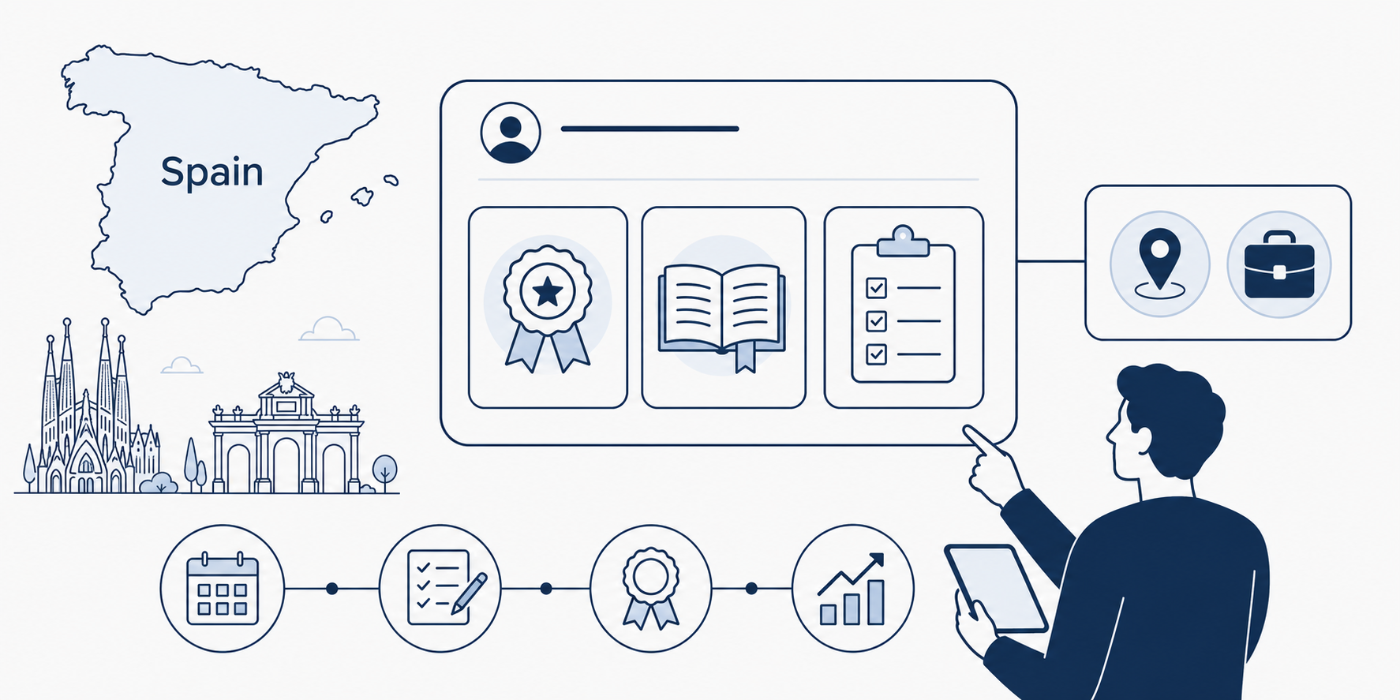
1. Why Project Management Certification Matters in Spain in 2026-2027
Spain’s project management market rewards candidates who can bring order to complex work without slowing teams down. Employers want people who can clarify scope, manage vendors, control schedules, document decisions, align stakeholders, and keep delivery moving across departments. A certificate gives hiring teams a recognizable signal, yet that signal becomes far stronger when it is backed by real project evidence. A candidate who connects certification to project execution terms, monitoring and control terms, stakeholder engagement terms, and risk register knowledge looks safer to hire.
The biggest pain point for Spain-focused candidates is vague positioning. Many people say they want “project management roles,” then apply to IT, construction, healthcare, consulting, public-sector, and operations jobs with the same CV. That weakens the certificate because each sector wants different proof. A tech employer may care about agile delivery, backlog control, sprint metrics, and release coordination. A construction employer may care about scheduling, contractors, cost control, permits, change orders, and site coordination. A public-sector or EU-funded transformation role may care about governance, documentation, procurement, auditability, and reporting discipline. That is why your certification should connect to IT project management, construction project management, government project management, and healthcare project management.
Spain is also a useful market for multilingual and cross-border project managers. Madrid, Barcelona, Valencia, Málaga, Bilbao, and Seville all support different project ecosystems, from digital products and shared services to engineering, infrastructure, energy, tourism operations, and public administration. English can help in multinational environments, while Spanish helps with local stakeholders, suppliers, public processes, and day-to-day coordination. Your certificate should therefore support a clear market story: the role you want, the project risks you can control, the tools you can use, and the business outcomes you can protect. Build that story through remote project management, freelance PM careers, project management consulting, and portfolio management.
| Career Situation | Best Certification Direction | Spain-Specific Hiring Signal | Proof Asset to Build | APMIC Internal Link to Support It |
|---|---|---|---|---|
| Beginner PM | CAPM or IPMA Level D | Shows structured PM knowledge before full ownership of complex projects. | Basic project plan, RAID log, stakeholder register. | Project manager roadmap |
| Experienced PM | PMP or IPMA Level C | Signals delivery leadership across scope, timeline, people, vendors, and risk. | Three project case studies with measurable outcomes. | PM director roadmap |
| Public Sector | PRINCE2 plus governance training | Useful where documentation, approvals, procurement, and audit trails matter. | Decision gate pack and procurement timeline. | Government PM career guide |
| IT Delivery | PMP plus Agile, Scrum, or Kanban | Strong fit for software delivery, digital platforms, integrations, and transformation. | Sprint-to-roadmap dashboard and release tracker. | IT project manager roadmap |
| Scrum Path | CSM or Scrum credential | Supports product teams, SaaS teams, fintech, telecom, and digital delivery roles. | Sprint metrics, retrospective actions, backlog hygiene sample. | Certified Scrum Master guide |
| Agile Career | Agile PM plus facilitation practice | Helps where teams blend structured governance with fast delivery cycles. | Hybrid delivery model and team cadence map. | Certified Agile PM roadmap |
| Product Teams | Product Owner certification | Useful for digital products, platforms, customer apps, and internal tools. | Prioritized backlog and acceptance criteria library. | Product Owner guide |
| Construction | PMP or IPMA plus scheduling and contract skills | Supports infrastructure, residential, transport, energy, and site delivery work. | Baseline schedule, contractor tracker, change order log. | Construction PM guide |
| Renewable Energy | PMP or IPMA plus ESG project literacy | Matches solar, wind, grid, permitting, supplier, and stakeholder-heavy projects. | Permitting tracker, ESG benefits map, risk register. | Renewable energy PM guide |
| Healthcare | PMP or IPMA plus compliance and change skills | Useful for hospital operations, digital health, medtech, and process improvement. | Compliance risk register and stakeholder communication plan. | Healthcare PM guide |
| Tourism Projects | Agile-hybrid PM plus operations knowledge | Helpful for hospitality systems, experience design, events, and seasonal operations. | Event delivery plan and peak-season risk tracker. | Event PM tools guide |
| Consulting | PMP, PRINCE2, Agile, or IPMA | Clients want diagnosis, delivery assurance, benefits clarity, and executive confidence. | Consulting discovery template and transformation roadmap. | PM consultant roadmap |
| Freelance PM | PMP or PRINCE2 plus niche proof | Spanish SMEs and international clients need fast trust before contracting. | Service offer, delivery playbook, recovery case study. | Freelance PM career guide |
| Remote PM | Agile or hybrid credential plus tool fluency | Supports distributed teams across Spain, EU clients, and global employers. | Remote operating rhythm and weekly status pack. | Remote PM roles guide |
| Portfolio PM | Portfolio, PPM, PMP, or IPMA senior route | Signals ability to prioritize projects, capacity, benefits, dependencies, and risk. | Portfolio prioritization model and benefits tracker. | Project portfolio manager guide |
| PMO Roles | PMP or IPMA plus governance and reporting | PMOs need standards, dashboards, templates, assurance, and decision clarity. | PMO reporting pack and maturity assessment. | Future PMO role guide |
| Executive Path | PMP or IPMA senior plus portfolio leadership | Senior panels expect strategy, finance, governance, transformation, and influence. | Transformation business case and operating model. | Chief Project Officer roadmap |
| Agile Coach | Agile coaching path plus Scrum or Kanban evidence | Useful for companies trying to improve delivery flow and team maturity. | Coaching backlog and team maturity assessment. | Agile Coach roadmap |
| Vendor Heavy Work | PRINCE2 or PMP plus procurement literacy | Helps with suppliers, contracts, outsourcing, acceptance, and escalation. | RFP checklist, SOW tracker, acceptance criteria sheet. | Vendor management terms |
| Risk Heavy Work | PMP or IPMA plus risk management practice | Strong for regulated, infrastructure, financial, healthcare, and energy projects. | Risk register with mitigation owners and trigger dates. | Risk mitigation terms |
| Finance Control | PMP plus EVM and financial management | Supports budget control, forecasting, funding gates, and benefits reporting. | Cost baseline, forecast report, variance commentary. | Financial management terms |
| Scheduling Roles | PMP or IPMA plus Gantt and critical path skill | Useful where delivery depends on sequencing, contractors, permits, and dependencies. | Critical path schedule and dependency tracker. | Gantt chart terms |
| Resource Planning | PMP or IPMA plus capacity management | Helps where specialist teams, shared resources, and vendor capacity create bottlenecks. | Capacity plan and resource conflict register. | Resource allocation terms |
| Quality Focus | PMP or IPMA plus quality and ISO awareness | Important for engineering, manufacturing, healthcare, and regulated delivery. | Quality checklist and acceptance evidence pack. | TQM terms guide |
| Reporting Gap | Any credential plus executive reporting practice | Hiring managers value concise, evidence-based updates and clear escalation. | One-page weekly status report and steering summary. | Project reporting terms |
| Tool Fluency | Certification plus PM software competence | Tools matter when they improve traceability, collaboration, and delivery control. | Jira, MS Project, Trello, Asana, or Smartsheet dashboard. | Agile PM tools guide |
| AI-Aware PM | PMP or Agile plus AI workflow literacy | Useful for planning, estimation, reporting automation, and decision support. | AI-assisted estimation workflow and human review checklist. | AI and PM innovations |
| Cross-Border PM | PMP or IPMA plus international delivery proof | Spain-based teams often coordinate EU stakeholders, vendors, and remote teams. | Multicountry stakeholder plan and timezone governance model. | International PM guide |
2. Choosing the Right Certification Path for Spain: PMP, CAPM, PRINCE2, IPMA, Agile, or Scrum
The best certification for Spain depends on the hiring doubt you need to remove. CAPM works well when you are early in your career and need structured project language. PMP works well when you already have meaningful project leadership experience and need a senior global signal. PRINCE2 is valuable for governance-heavy projects because it gives structure around roles, stages, business justification, control, and tailoring. IPMA is especially relevant in Spain through AEIPRO because it fits a competence-based European model. Scrum, Kanban, Agile, and Product Owner credentials are practical for digital teams, platform work, software delivery, and transformation roles. Match your choice with Agile project management, Scrum Master certification, Product Owner training, and Kanban terminology.
A Spain-focused candidate should also think geographically and industrially. Madrid often supports corporate transformation, finance, consulting, public administration, telecom, and enterprise technology. Barcelona is strong for digital products, startups, SaaS, life sciences, design-led technology, and international teams. Valencia, Málaga, Bilbao, Zaragoza, and Seville can support different mixes of logistics, engineering, tourism, energy, manufacturing, and technology. The right certification should make your target market trust you faster. A Madrid PMO candidate may need governance and reporting evidence. A Barcelona product delivery candidate may need Scrum, Agile metrics, and stakeholder demo experience. A renewable-energy PM may need risk, procurement, permitting, and benefits tracking. Build the language with project reporting terms, agile metrics, vendor management terms, and ESG project trends.
The strongest route is one main credential plus one applied proof layer. PMP plus Agile can help a traditional PM move into digital transformation. IPMA Level D plus a portfolio of project artifacts can help an early-career candidate show practical readiness. PRINCE2 plus procurement and reporting assets can help with structured delivery environments. Scrum Master plus Product Owner can help someone move toward product-led teams. CAPM plus PM tools can help an entry-level candidate become credible for coordinator, project analyst, or junior PM roles. Pair your certification with project templates, Scrum tools, waterfall software, and project management integrations.
3. Step-by-Step Roadmap to Getting Certified and Employable in Spain
Start with a role target before you start studying. Write down the exact jobs you want: junior project coordinator, IT project manager, Scrum Master, construction project manager, PMO analyst, transformation consultant, healthcare PM, renewable-energy PM, product delivery manager, or portfolio manager. Then collect five job descriptions from Spain and highlight repeated words. You will usually see patterns around scope, planning, stakeholder coordination, reporting, Agile, risk, vendors, budget, tools, documentation, and leadership. Your certification should solve the repeated requirement, and your CV should prove it. Use project manager career planning, entry-to-executive PM planning, PM consultant planning, and remote PM planning.
Next, choose your credential based on experience and target sector. Beginners can start with CAPM, IPMA Level D, Scrum, or a structured Agile pathway. Experienced PMs can consider PMP, IPMA Level C, PRINCE2 Practitioner, or a hybrid route. Candidates targeting Spanish public-sector, EU-funded, or highly governed projects should take documentation and governance seriously. Candidates targeting technology roles should prove backlog control, sprint predictability, release coordination, and tool fluency. Candidates targeting construction or energy should prove scheduling, cost tracking, contractor management, change control, and risk escalation. Strengthen that foundation through risk response planning, earned value management, Gantt chart concepts, and resource allocation terms.
Then build a study system that produces career assets. Every week, study one concept and create one artifact. If you study risk, create a risk register. If you study stakeholders, create a stakeholder map. If you study procurement, create an RFP checklist. If you study Agile, create a sprint dashboard. If you study reporting, create a one-page executive status report. This turns certification prep into job-search ammunition. It also prepares you for interviews because you can explain how the concept works in real projects. Support this system with RFP/RFQ/RFI terms, stakeholder engagement, project financial management, and project closure terms.
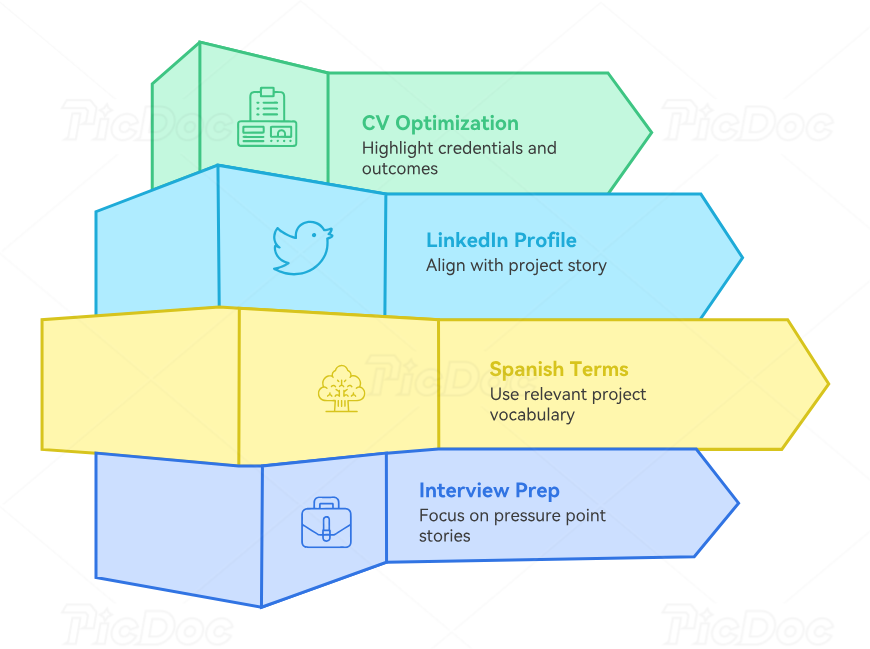
Before applying, translate your certification into Spain-ready proof. Your CV should show sector, tools, methods, project scale, stakeholder complexity, and outcomes. Your LinkedIn headline should name the project environment you target. Your portfolio should include sanitized samples that show your thinking. Your interview stories should cover scope changes, stakeholder friction, vendor delays, risk escalation, budget pressure, and timeline recovery. Certification earns attention; proof earns confidence. Build toward PMO roles, project portfolio roles, project director roles, and Chief Project Officer roles by making every claim evidence-based.
4. How to Turn Your Certification Into a Spain-Ready Job Application
A Spain-ready CV should make the certificate useful within five seconds. Put the credential near the top, then connect it to role-relevant outcomes. “Certified Project Manager” is weaker than “PMP-trained IT Project Manager | Agile-Hybrid Delivery | Vendor Coordination | Executive Reporting.” Each bullet should show a delivery problem, the control you introduced, and the business effect. For example, a strong bullet can mention a dependency tracker, stakeholder cadence, scope clarification, milestone recovery, or risk escalation. Use project execution, project reporting, risk mitigation, and communication leadership to shape sharper bullets.
Your LinkedIn should support the same story. The headline should name your target project environment, and the About section should explain the problems you manage: unclear scope, delayed vendors, weak reporting, stakeholder misalignment, budget drift, release pressure, resource conflicts, or governance gaps. Spain-based hiring teams and international recruiters want clarity. Give them project types, methods, tools, industries, stakeholder groups, and outcomes. Add selected project artifacts if possible, including status reports, dashboards, delivery plans, or sanitized case studies. Strong profiles connect naturally to PM software tools, team communication platforms, workforce management tools, and project management templates.
Your application should also show Spanish-market awareness. Learn and use the right Spanish project words when relevant: gestión de proyectos, alcance, hitos, riesgos, presupuesto, planificación, entregables, partes interesadas, proveedores, cronograma, comité de dirección, control de cambios, calidad, recursos, and cierre del proyecto. These terms help you understand job descriptions and communicate with local stakeholders. A candidate who can discuss project control in both English and Spanish can be more useful in multinational environments with local delivery dependencies. Build that language through waterfall terms, Agile glossary terms, Scrum glossary terms, and project closure terms.
Interview preparation should focus on real pressure points. Prepare stories for scope creep, vendor delay, stakeholder conflict, budget drift, schedule risk, quality issue, unclear ownership, and failed handover. For each story, explain the baseline, the risk, the people involved, your decision, the control mechanism, and the outcome. This is where certification becomes believable. You are showing that the vocabulary became behavior. Use this preparation to target PM director growth, VP of PM growth, portfolio management growth, and project leadership trends.
5. Common Certification Mistakes Candidates Make in Spain
The first mistake is choosing a certification before choosing a role direction. A candidate targeting IT delivery, construction, public-sector transformation, renewable energy, PMO work, and consulting cannot use one generic plan for all of them. The exam may be the same, yet the proof must change. A Scrum credential needs sprint evidence. A PRINCE2 route needs governance evidence. A PMP route needs leadership evidence. An IPMA route needs competence evidence. A CAPM route needs strong fundamentals and tool practice. Avoid scattered positioning by using career roadmap planning, certification planning, Agile certification planning, and Scrum career planning.
The second mistake is treating exam prep as a private study project. Certification should produce visible proof. While studying, create a portfolio of artifacts that hiring teams can trust. Build a stakeholder map, risk register, sprint board, procurement tracker, status report, benefits map, quality checklist, and lessons-learned summary. These assets help you answer interviews with evidence instead of general claims. They also help recruiters understand how you think under project pressure. Build these assets through stakeholder engagement, risk registers, agile estimation, and project financial management.
The third mistake is ignoring tools. Certification proves knowledge; tools show execution habits. Spanish employers may mention Jira, Trello, Asana, Monday, MS Project, Smartsheet, Teams, Slack, Confluence, Power BI, Excel, or ERP systems depending on the role. You do not need every tool, yet you need enough fluency to show how you plan, track, report, and escalate work. Create sample dashboards and screenshots using fictional data if you lack permission to share real work. Tie your tool evidence to Kanban software, Scrum platforms, construction PM software, and HR management tools.
The fourth mistake is writing a CV that sounds responsible without sounding accountable. “Responsible for project coordination” says little. “Created a weekly dependency tracker for six workstreams and improved milestone visibility for the steering group” says much more. Spain-based recruiters, like recruiters anywhere, need evidence of control. Replace passive responsibilities with delivery mechanisms: baseline, cadence, tracker, escalation path, acceptance criteria, risk owner, change log, dashboard, sign-off, handover, and lessons learned. This makes the certificate feel practical. Improve the wording with project monitoring terms, schedule compression terms, quality management terms, and ISO standards terms.
6. FAQs About Getting Your Project Management Certification in Spain in 2026-2027
-
The best certification depends on your career target. PMP is strong for experienced project managers who want global recognition. CAPM is useful for beginners who need structured PM foundations. PRINCE2 fits governance-heavy environments where stage control, documentation, and business justification matter. IPMA is relevant in Spain through AEIPRO and works well for candidates who want a competence-based European pathway. Scrum, Kanban, Agile, and Product Owner credentials help digital, software, and product teams. Match your route with project management certification planning, Agile PM planning, Scrum Master planning, and international PM planning.
-
PMP can be worth it when you already have solid project leadership experience and want a credential that Spanish and international employers can recognize quickly. It works best when your CV shows scope ownership, stakeholder alignment, schedule control, risk management, budget awareness, vendor coordination, and delivery outcomes. PMP becomes much more powerful when paired with sector proof, such as IT delivery dashboards, construction schedules, PMO reports, or transformation case studies. Build that proof with project execution terms, risk mitigation terms, earned value management, and PM leadership communication.
-
Beginners should choose based on the roles they want. CAPM is useful for broad project management foundations. IPMA Level D can be attractive for candidates who want a Europe-aligned competence route through Spain’s IPMA ecosystem. Scrum is practical for candidates targeting software teams, startups, digital platforms, and agile delivery. The best beginner path usually combines one certification with proof assets: a project plan, risk register, stakeholder map, sprint board, and status report. Build that base with project manager career planning, Scrum glossary terms, Kanban terms, and agile metrics.
-
Spanish skills can widen your options, especially for local stakeholders, suppliers, public-sector projects, healthcare, construction, tourism operations, and domestic companies. English can still be enough in some multinational, startup, software, consulting, and remote roles. The safest strategy is to build professional Spanish vocabulary around scope, schedule, risk, budget, stakeholders, vendors, reporting, and governance. Language matters because project managers spend much of their time creating clarity between people. Strengthen that clarity through stakeholder engagement, project reporting terms, vendor management terms, and government PM guidance.
-
Make the certificate part of a stronger delivery story. Add it near your headline, then prove it with measurable bullets. Mention the project type, team size, budget range if shareable, timeline pressure, stakeholder complexity, tools, methods, and business result. Add a project artifacts section if you can share sanitized examples. Use wording that shows control: created, recovered, aligned, escalated, forecasted, reduced, clarified, implemented, tracked, and closed. Support the proof with project management templates, Gantt chart terms, resource allocation terms, and project closure concepts.
-
The fastest way is to connect the certification to one target role, build proof assets while studying, and update your CV before the exam result fades into a generic line. Each week, create one practical artifact tied to your target market: risk register, status report, sprint dashboard, stakeholder map, procurement tracker, benefits map, or schedule baseline. Then use those assets in applications and interviews. A certificate gets attention; proof makes trust easier. Build toward remote PM careers, freelance PM careers, consultancy firm planning, and future PM skills.
