
Original Report: AI & Automation Adoption in Project Management (2026-27)
AI and automation are no longer side conversations in project management. They are quickly becoming part of how serious teams estimate work, surface risk, standardize reporting, reduce admin drag, and keep delivery moving when complexity rises faster than headcount. But adoption is not separating winners from losers simply because some teams bought shiny tools. It is separating them because some project leaders know how to turn AI into operational leverage while others are still treating it like a gimmick layered on top of broken workflows.
That distinction matters more in 2026-27 than most professionals realize. The market is not rewarding PMs who merely mention AI in interviews. It is rewarding those who can connect AI and automation to decision speed, delivery visibility, forecast quality, governance discipline, and team capacity. The strongest advantage comes from combining the thinking behind AI and project management innovations by 2030, the future of project management software, automation and AI impacts on PM careers, and the broader future project manager skills needed by 2030.
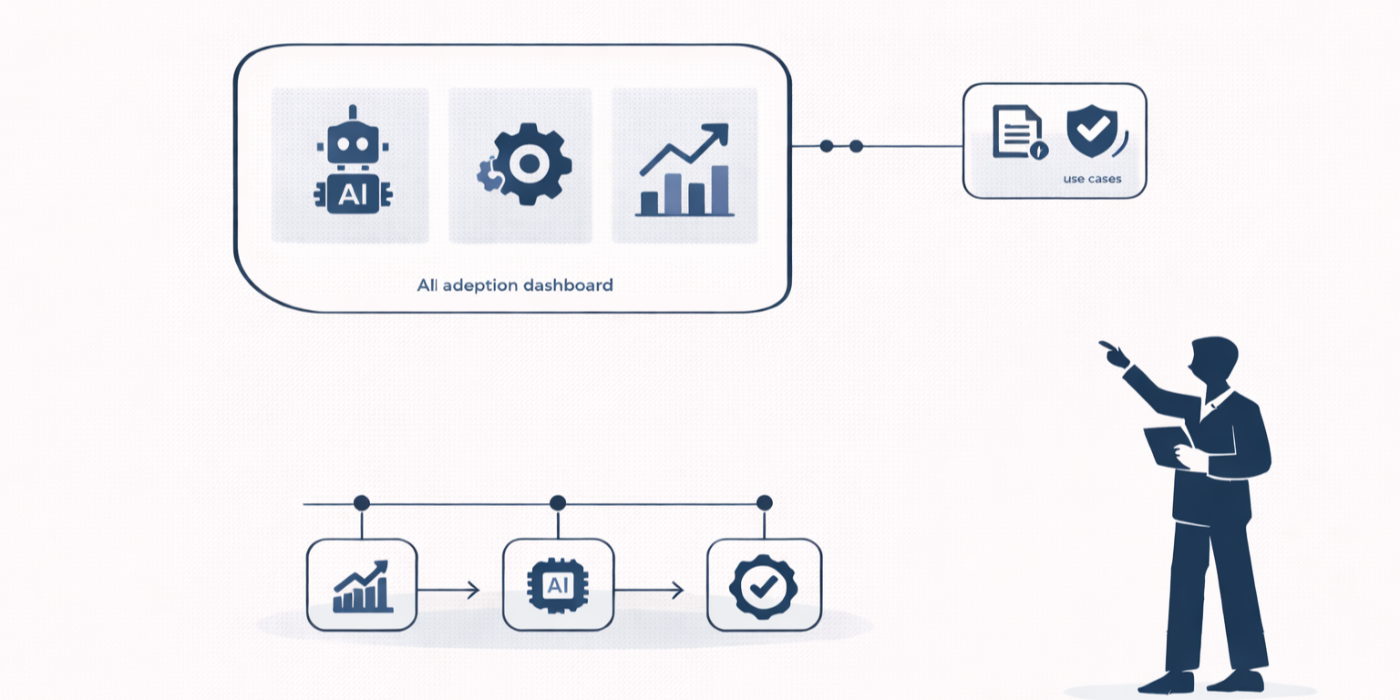
1. Why AI and automation adoption is accelerating in project management now
The acceleration is not happening because project teams suddenly became more innovative. It is happening because the old delivery model is becoming too expensive. Organizations are under pressure to execute more initiatives with leaner teams, tighter budgets, higher scrutiny, and less tolerance for schedule drift. PMs are being asked to manage increasing cross-functional complexity while also producing sharper reporting, faster decisions, better resource visibility, and stronger governance. That combination creates the perfect environment for AI and automation adoption, especially when paired with project reporting and analytics software, dashboard and data visualization tools, automation tools for project efficiency, and top productivity software for busy project managers.
The biggest driver is not abstract digital transformation. It is the sheer amount of PM time lost to repetitive coordination. Project managers spend huge portions of their week chasing updates, cleaning status reports, translating task movement into executive language, following up on dependencies, reconciling conflicting information, preparing meeting notes, logging decisions, and rebuilding visibility that should already exist. AI and automation become attractive when leaders realize that highly paid PM capacity is being burned on information maintenance instead of delivery control. That realization also connects to the rise of digital transformation across PMOs, investment in project management software under economic pressure, future PMO success models, and future project governance practices.
A second adoption driver is executive impatience with reporting lag. Senior leaders do not want beautifully formatted updates that arrive too late to matter. They want earlier risk signals, clearer forecast variance, sharper dependency visibility, and better prioritization logic. AI-powered summarization, anomaly detection, forecast support, pattern recognition, and automated update flows are becoming attractive because they help reduce the time between change in the work and visibility at the leadership layer. This is exactly why more teams are linking AI experimentation with project portfolio management trends, machine learning for estimation and scheduling, project management 2030 methodologies, and the future role of PM leadership.
A third driver is talent pressure. Companies do not just want more project managers; they want higher-output project managers. They want professionals who can govern multiple workstreams, communicate across functions, and maintain control without turning the delivery environment into a meeting factory. AI and automation offer leverage, but only for teams that first understand workflow design. This is why candidates exploring remote and virtual project management roles, freelance project management careers, project management consultancy, and international project management are increasingly expected to understand automation value, not just general PM frameworks.
2. Where adoption is actually happening first and why some PM environments move faster than others
Adoption is not evenly distributed across project management. It tends to move fastest where information volume is high, workflow repetition is painful, and the value of earlier visibility is obvious. PMOs are one major hotspot because they live under constant pressure to standardize reporting, improve portfolio visibility, and reduce the administrative burden of governance. When a PMO uses AI well, it can summarize status across multiple projects, flag anomalies, normalize data for executive review, and create better portfolio conversations. This makes AI especially relevant in organizations focused on project portfolio management, PMO transformation, project governance improvement, and dashboard-driven project oversight.
Adoption is also moving quickly in software delivery, platform rollout, and implementation-heavy environments because those teams already live inside digital tools and structured workflows. Their work produces enough machine-readable data for AI to add value. When teams have task systems, dependency maps, ticketing platforms, meeting records, approval chains, and release cadences in place, AI can assist with summarization, planning support, risk surfacing, and handoff improvement. That is why the connection between software industry PM tools, hybrid project management models, the evolution of scrum, and AI-enabled project software matters so much.
By contrast, adoption moves slower in environments where work is highly political, poorly documented, weakly digitized, or fragmented across email, spreadsheets, side conversations, and undocumented approvals. In those environments, AI often amplifies the existing mess instead of fixing it. If your inputs are inconsistent, your outputs become polished confusion. This is one reason professionals in construction project management, government project management, healthcare project management, and international project management need to think beyond the tool and focus hard on governance maturity first.
Another major adoption divide appears between leaders who view AI as a way to increase PM judgment and leaders who view it as a substitute for PM judgment. The first group tends to implement AI in targeted ways: draft faster, flag risk earlier, route work more cleanly, surface patterns sooner, and reduce admin fatigue. The second group often expects AI to resolve poor ownership, bad stakeholder behavior, weak baselines, or broken decision culture. That always disappoints. The most effective adoption strategies therefore sit at the intersection of future PM leadership, project management career evolution, future PM competencies, and best software platforms for PM training.
3. The highest-value AI and automation use cases in project management through 2026-27
The strongest use case is not glamorous. It is reporting compression. Most project organizations are drowning in status effort. Teams write updates in different formats, PMs clean them up, leaders still complain they are unclear, and everyone spends too much time producing visibility instead of acting on it. AI becomes powerful here because it can compress raw project movement into concise summaries, trend statements, and structured sponsor views. But the real value is not the summary itself. It is the speed at which leaders can see what changed, why it matters, and what decision or escalation is needed. This pairs naturally with best project reporting software, top dashboard tools, knowledge management software, and top productivity tools for PMs.
The second major use case is schedule and dependency intelligence. Traditional schedules often fail not because teams cannot make timelines, but because reality changes faster than the schedule logic does. AI can help identify patterns of slippage, recurring dependency pain, overloaded contributors, and milestone sequences that are drifting toward failure. It does not remove the PM’s need to think, but it gives the PM more signal earlier. This is where machine learning in estimation and scheduling, best Gantt chart software, calendar and scheduling tools, and project budget tracking software gain much more strategic value.
The third high-value use case is workflow automation around governance. This includes auto-routing approvals, triggering reminders, logging decisions, classifying risks, escalating stuck actions, managing change requests, and maintaining clean handoffs. These applications matter because they turn governance from a PM memory exercise into a more reliable system. In many organizations, governance failure is not caused by lack of policy. It is caused by too much manual execution. Smart automation can reduce that risk significantly, especially when aligned with procurement management tools, contract lifecycle management software, document management platforms, and project governance best practices.
The fourth major use case is PM capacity recovery. Many strong project managers are trapped doing work that feels necessary but should not require their full attention: reminder chasing, note production, template generation, repetitive intake review, dashboard refreshing, and action-item follow-up. AI and automation can recover a surprising amount of that time. The point is not to make PMs less important. It is to return them to the work only humans can do well: judgment, stakeholder handling, tradeoff framing, priority negotiation, and risk conversation. That is why adoption is especially meaningful for professionals building careers in remote and virtual PM roles, project management consultancy, freelance PM work, and future-facing pathways like project management director.
The best AI adoption strategies do not begin with tools. They begin by fixing one expensive workflow that keeps wasting project manager time.
4. The biggest adoption mistakes: why many AI project initiatives create noise instead of control
The most common mistake is automating chaos. Teams often bolt AI or workflow automation onto processes that are still full of hidden approvals, unclear ownership, inconsistent naming, weak baselines, and undocumented exceptions. When that happens, the automation layer does not create order. It simply accelerates confusion. You end up with more notifications, more generated content, and more polished dashboards built on unstable logic. Before teams automate, they need basic process clarity. That is why serious adoption depends on the same discipline found in project governance best practices, project management 2030 methodology evolution, future PM leadership styles, and hybrid delivery models.
A second mistake is treating output quality as equal to insight quality. AI-generated content often looks polished enough to fool busy stakeholders. That makes it dangerous. A clean summary can still omit the real blocker. A forecast can still rest on broken assumptions. A prioritization model can still ignore political constraints or hidden resource realities. Strong PMs review AI outputs the same way they review human outputs: against the business context, the project reality, and the likely consequences of being wrong. Professionals who understand this distinction will be much more valuable in the next wave of AI and project management innovation, future PM software ecosystems, automation-driven PM career changes, and future PM competency expectations.
A third mistake is measuring AI success by novelty rather than operational gain. Teams celebrate chatbots, auto-generated decks, or flashy dashboards without asking whether they reduced reporting lag, improved forecast accuracy, accelerated decisions, cut cycle time, improved risk response, or recovered PM capacity. If no meaningful delivery pain got fixed, adoption has not actually succeeded. It has simply produced a demonstration. Mature teams therefore tie AI and automation to measurable delivery outcomes, especially in contexts involving project portfolio management, PMO effectiveness, budget visibility, and project reporting quality.
A fourth mistake is underestimating the people side of adoption. Project professionals often worry that AI will reduce their value, expose weak work habits, or shift control away from them. Sponsors may fear transparency. Functional leads may resist structured data capture. Teams may distrust summarization or automated escalation. These are not side issues; they are adoption realities. That is why successful implementation requires communication, workflow co-design, trust-building, and a clear explanation of what AI will and will not do. This people-centered layer is inseparable from future project leadership, project manager career development, from entry-level to executive PM growth, and project management director pathways.

5. What project managers should do now to stay valuable as AI and automation adoption increases
First, PMs should stop thinking about AI as a software topic and start thinking about it as an operating model topic. The question is not “Which tool should I learn?” The question is “Which expensive coordination problem in my environment can be reduced through better data flow, workflow design, summarization, prediction, or automation?” That shift immediately makes your thinking more strategic. It also aligns your growth with the realities shaping future PM skills, future PM software evolution, PMO transformation, and AI impacts on PM careers.
Second, build strength in workflow thinking. PMs who understand only methodology will get squeezed. PMs who understand how information moves through a system will become more valuable. Learn to map approval paths, handoffs, decision points, escalation thresholds, update flows, reporting inputs, and dependency structures. Once you can see the workflow clearly, you can identify where automation belongs and where human judgment must remain central. This makes you more credible in roles spanning project management consultancy, remote PM operations, portfolio management, and chief project officer pathways.
Third, strengthen your evidence muscle. In the coming market, simply claiming AI awareness will not help much. You need examples. Show where you reduced reporting time, improved action closure, flagged resource problems earlier, cleaned up governance workflows, or made project knowledge easier to access. Even small wins matter if they prove you can connect technology to delivery control. This is especially powerful when paired with global project management salary trends, certification salary comparisons, PMP preparation pathways, and PMI-ACP preparation.
Fourth, keep sharpening the human capabilities AI cannot own. These include stakeholder trust, executive framing, risk conversation, conflict handling, cross-functional alignment, tradeoff judgment, and the ability to make sense of ambiguity when the data is incomplete or politically distorted. The irony of AI adoption is that it often increases the value of truly strong project managers because it strips away more of the admin camouflage. What remains visible is whether you can actually lead. That is why future-proofing your career means blending project consultant skills, agile leadership pathways, scrum and agile role evolution, and future PM leadership styles.
6. FAQs: high-value questions about AI and automation adoption in project management
-
AI will replace portions of project administration faster than it will replace project leadership. The work most exposed includes summarization, template drafting, repetitive follow-up, basic routing, note capture, and certain reporting layers. But projects still fail or succeed based on clarity, decision quality, tradeoff judgment, stakeholder alignment, and risk handling under imperfect conditions. That remains human work. PMs who combine strong execution judgment with AI-enabled project tools, future software ecosystems, automation-driven career shifts, and future PM skills should become more valuable, not less.
-
Start with processes that are repetitive, rules-based, high-volume, and painful when delayed. Good examples include action reminders, status collection, approval routing, meeting note extraction, issue intake classification, and standard report generation. These are easier wins than trying to automate complex judgment-heavy work immediately. Teams often get the best returns when they align first-wave automation with project reporting tools, document management systems, calendar and scheduling tools, and project productivity software.
-
Most underperform because teams automate weak processes, trust polished outputs too quickly, or fail to define a business problem worth solving. They launch AI features without fixing ownership, process clarity, or data consistency. As a result, they generate more motion without more control. Stronger implementations tie adoption directly to measurable delivery pain and build from workflow reality. That logic connects strongly to project governance best practices, PMO evolution, portfolio management discipline, and future PM methodology shifts.
-
PMs who already think structurally will benefit most. That includes professionals who know how to design workflows, translate messy inputs into decisions, maintain stakeholder trust, and tie delivery operations to business outcomes. AI amplifies strong operating logic better than it rescues weak operating logic. The biggest upside will likely go to PMs in remote and virtual roles, consulting and freelance work, portfolio and PMO leadership, and senior tracks like project management director.
-
Yes, but the value of certification depends on whether it strengthens execution in your target lane. Certification still helps signal discipline, vocabulary, governance understanding, and role seriousness. But in an AI-shaped environment, the market will care even more about whether you can apply that knowledge to system design, prioritization, reporting quality, and delivery judgment. Candidates should therefore think in terms of PMP versus PRINCE2, CAPM versus PMP, scrum versus agile certification, and PMI-ACP preparation in relation to the work they want to win.
-
Treat AI as leverage, not authority. Use it to accelerate visibility, sharpen pattern recognition, reduce administrative waste, and improve workflow consistency. But keep human ownership over meaning, judgment, escalation, and tradeoff decisions. The PMs who win in 2026-27 will be the ones who know exactly where automation belongs and exactly where leadership cannot be outsourced. That mindset aligns naturally with future PM leadership, future PM competencies, AI-driven PM software evolution, and the broader future of project management careers.
