
Certification does not rescue weak delivery culture, but it changes success rates when it sharpens decision quality, planning discipline, stakeholder control, and risk visibility. The mistake many organizations make is treating certification as a résumé badge instead of an operating capability. In 2026-27, the real question is not whether credentials look impressive on LinkedIn. It is whether certified project professionals reduce rework, improve forecast accuracy, escalate risk earlier, and protect delivery value under pressure. This report examines how certification affects project outcomes, where the impact is strongest, and why the wrong certification strategy still produces expensive underperformance.
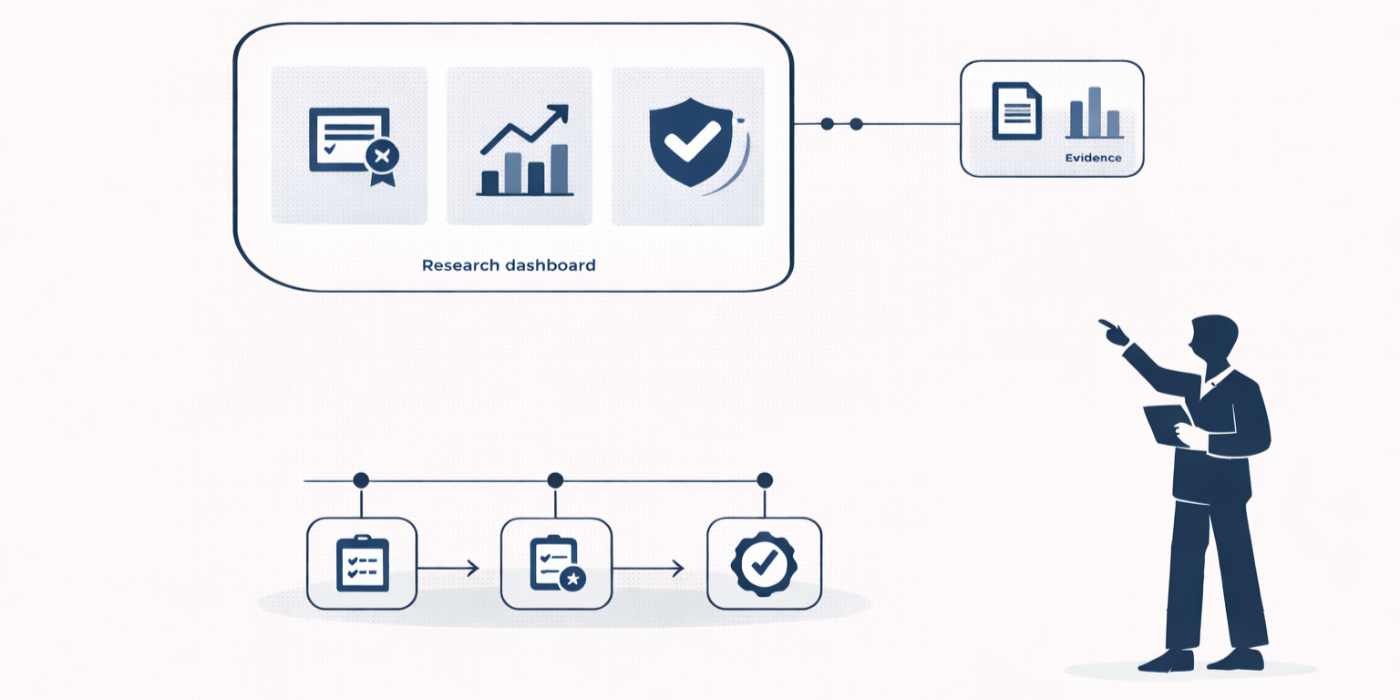
1. Why certification matters only when it changes delivery behavior
The shallow debate around certification usually swings between two bad extremes. One side claims credentials are everything. The other says real-world experience makes them irrelevant. Both miss the point. Certification only influences project success rates when it changes how people define scope, challenge assumptions, structure governance, estimate uncertainty, manage stakeholders, and control recovery. That is why professionals comparing PMP certification paths, PRINCE2 preparation routes, CAPM pathways, PMI-ACP preparation, and Certified Project Manager IAPM insights should focus less on prestige language and more on control habits.
A certified PM who still accepts fantasy timelines, avoids escalation, hides risk in green dashboards, and treats governance as meeting theater will not materially improve delivery success. By contrast, a certified PM who uses structured methods to clarify benefits, sequence work realistically, define decision rights, and protect stakeholder alignment can significantly reduce failure probability. This is why certification connects directly with project governance best practices, future PM leadership styles, project portfolio management maturity, future PM competencies, and how AI is reshaping PM careers.
The effect is strongest in environments where ambiguity is high and delivery mistakes are expensive. In IT project management, construction project delivery, healthcare project management, government project work, and international project environments, certification often improves not only language and methodology, but escalation discipline and decision consistency across teams.
Another reason certification matters is organizational trust. Leaders are more willing to give planning authority, stakeholder-facing responsibility, and budget influence to PMs who demonstrate structured mastery. That can lift success rates indirectly because better authority improves faster issue resolution. The real value, then, is not the certificate itself. It is the upgraded operating behavior and the stronger decision rights that often follow it.
2. Where certification improves project success rates the most
Certification has its strongest effect in four zones: planning quality, governance stability, communication clarity, and cross-project consistency. The first is planning quality. Certified professionals are typically better at breaking scope into manageable work, identifying assumptions, creating defensible estimates, and recognizing dependency risk before execution starts. That improves schedule reliability and reduces costly recovery work. This is why readers should connect certification strategy with estimation and scheduling transformation, Gantt chart software reviews, calendar and scheduling tools, project reporting platforms, and dashboard and visualization tools.
The second zone is governance stability. Certification often introduces better escalation logic, cleaner role definition, and more disciplined change control. In organizations where decisions linger and scope expands informally, that alone can materially raise success rates. Teams move from “we thought someone else owned that” to explicit accountability. This matters even more inside future governance models, PMO operating evolution, project management 2030 methodology shifts, future leadership in PM, and future project certifications.
The third zone is communication clarity. Certified PMs tend to describe risk, status, assumptions, constraints, and trade-offs with more precision. That improves sponsor confidence and reduces false alignment. Executives make fewer bad decisions when information is cleaner. Teams also waste less time untangling ambiguous language. The fourth zone is cross-project consistency. Once enough certified professionals operate with similar frameworks, organizations stop reinventing planning from scratch on every initiative. That reduces variation and helps portfolio-level success.
The impact is especially visible among professionals moving from coordination-heavy roles into leadership-heavy roles. Someone transitioning through entry-level to executive PM growth, project consultant pathways, agile coach career development, product owner evolution, and project management director development often sees certification as the turning point that converts task tracking into real control authority.
3. Where certification does not improve outcomes nearly enough
Certification loses power when organizations expect it to compensate for structural dysfunction. A highly trained PM cannot fully offset absent sponsors, overloaded portfolios, weak procurement discipline, executive indecision, or a culture that rewards optimism over truth. This is why certification must be evaluated inside the broader environment of project failure root causes, economic uncertainty and agile demand, inflation impacts on project budgets, digital transformation in PMOs, and AI adoption in project management.
The first weak-impact scenario is certification without application. Teams memorize terminology, pass exams, then return to unstructured delivery habits. The second is certification mismatch. A professional may hold a highly respected credential that does not fit the project environment. For example, a predictive-heavy certification may not fix backlog chaos in an adaptive product setting, while an agile-focused credential may not rescue a procurement-heavy public-sector program. That is why reading PMP vs PRINCE2 comparisons, CAPM vs PMP decisions, Scrum vs Agile certification comparisons, PRINCE2 level selection, and CPD certification guidance matters before committing time and money.
The third weak-impact scenario is low organizational maturity. A company may hire certified PMs while leaving authority with informal power centers. In those environments, the credential raises expectations but not influence. PMs know what to do, but cannot enforce it. That creates frustration, not success. The fourth weak-impact scenario is credential inflation in hiring. When everyone lists certifications, employers stop assuming that certificates equal control skill. Candidates then need proof of changed outcomes, not proof of passed exams.
4. What the strongest certification-to-success pathways look like in practice
The most valuable certification pathways are not always the most famous ones. They are the ones that fit the role, sector, delivery model, and maturity level of the professional. For early-career talent, CAPM preparation, 30-day CAPM study planning, top CAPM exam questions, project manager career roadmaps, and state-level PM career guides can create fast structure and reduce beginner-level planning errors.
For mid-career professionals managing cross-functional delivery, PMP exam preparation, top PMP questions, 30-day PMP study planning, PMP exam day tactics, and salary comparison by certification often produce stronger benefits because those professionals already have enough context to apply the methods immediately.
For adaptive delivery roles, PMI-ACP preparation, Scrum master certification guidance, certified Scrum master career paths, agile project manager roadmaps, and Scrum-to-consultant pathways matter because they improve reprioritization quality, facilitation depth, and delivery adaptability.
For strategic leadership, certification works best when combined with expanded authority. That is where project portfolio manager development, VP of PM pathways, chief project officer roadmaps, consultancy firm pathways, and future PM leadership thinking become more relevant than exam tactics alone.

5. What this means for hiring, training budgets, and PM career strategy in 2026-27
For employers, the smartest question is no longer “Should we prefer certified PMs?” The smarter question is “Which certifications improve which outcomes in our environment, and how will we make that learning operational?” If organizations spend on training without changing governance, reporting standards, escalation expectations, and decision ownership, they will get weak returns. Certification ROI rises when employers connect it to PM software ecosystems, automation tools for project efficiency, project reporting systems, knowledge management platforms, and training software for PM education.
For candidates, certification remains a strong accelerator, but only when paired with evidence. Hiring teams increasingly want to hear how a credential changed delivery behavior. Did it help you stabilize scope, forecast more honestly, reduce issue aging, improve stakeholder mapping, or lead cross-functional governance more effectively? Those answers matter far more than listing acronyms. This is especially true in competitive markets like New York project management careers, Texas PM roles, Florida PM opportunities, Chicago PM careers, and Dallas-Fort Worth PM markets.
The bigger career reality is that certification is now part of a broader trust equation. Experience gets you into the room. Certification can strengthen your credibility. Results keep you there. In 2026-27, the PMs who stand out are the ones who combine credentialed structure, real delivery judgment, and visible business impact. That combination consistently raises both project success rates and career velocity.
6. FAQs
-
Yes, but only when they change delivery behavior. Certification improves outcomes when it strengthens scope discipline, estimation quality, risk escalation, governance clarity, and communication precision.
-
There is no universal winner. PMP often has strong impact in broad cross-functional environments, PMI-ACP and Scrum-focused paths help more in adaptive delivery, and CAPM helps entry-level professionals reduce foundational mistakes.
-
Because credentials cannot fully offset weak sponsorship, poor culture, overloaded portfolios, weak authority, or organizations that reward optimism instead of honest forecasting.
-
It helps both, but in different ways. Juniors gain structure and shared language. Experienced PMs often gain more leverage because they can apply the methods immediately to complex delivery situations.
-
They should prefer relevant certifications, not use them blindly. The better approach is role-based alignment: choose certifications that fit project type, sector, delivery model, and organizational maturity.
-
Treating certification as a hiring checkbox or training perk without redesigning governance, reporting, role clarity, and escalation behavior around the new capability.
-
They should explain what changed after certification: better risk handling, cleaner planning, improved stakeholder alignment, stronger reporting, or lower rework. Outcome language beats acronym language.
