
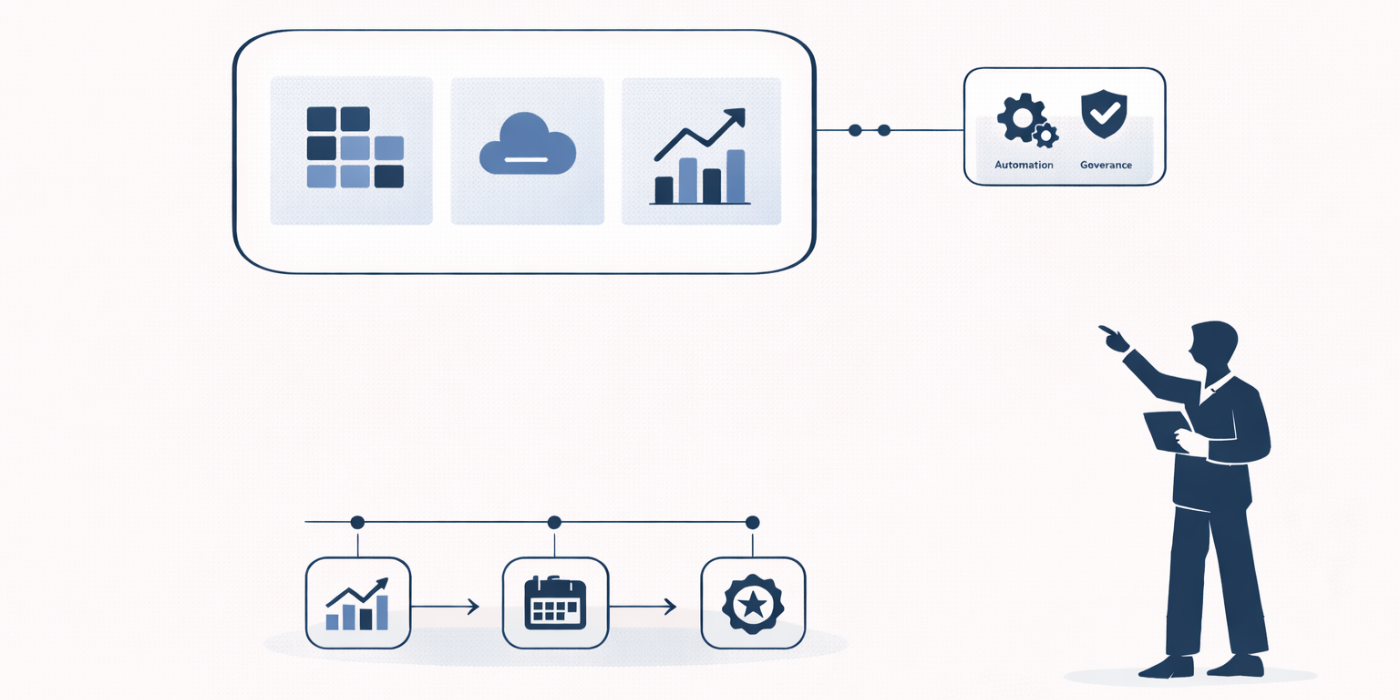
Project portfolio management platforms are no longer judged by whether they can log projects, display timelines, or produce colorful dashboards. In 2026–27, the real question is whether a PPM tool can help leaders allocate capital faster, kill weak work earlier, govern risk before it spreads, and prove portfolio value in language executives actually trust. As AI and project management, future PMO design, and project governance evolve together, PPM software is becoming an operating system for portfolio decisions rather than a reporting layer.
1. Why PPM Tools Are Entering a New Era of Strategic Pressure
Most organizations do not fail at portfolio management because they lack projects. They fail because they cannot compare work consistently, stop politically protected initiatives, forecast resource collisions early enough, or connect spend to measurable outcomes. That is exactly why the next generation of PPM tools is being shaped by pressures already visible in digital transformation across PMOs, rising AI adoption in project management, expanding dashboard and data visualization needs, and the broader future of project management software.
The old model treated PPM as an executive mirror. Data went in late, reports came out polished, and leadership made decisions after momentum had already hardened into sunk cost. The 2026–27 model is much harsher and much more useful. Executives want tools that can expose weak business cases, connect demand intake to capacity constraints, trace strategic themes across dozens of initiatives, and alert the PMO when portfolio risk starts concentrating in one function, vendor, region, or dependency chain. That expectation connects directly with shifts in project portfolio management trends, automation for PM efficiency, project reporting and analytics, and the emerging skill profile of the future project manager.
Another change is buyer maturity. Teams no longer want one bloated platform that claims to do everything yet creates manual work in every critical workflow. They want tools that reduce portfolio drag. That means stronger demand for scenario planning, smarter prioritization engines, budget visibility, contract awareness, integrated document control, workload modeling, and governance workflows that do not depend on heroic PMO administrators. You can see the same market pressure in the growth of budget tracking tools, document management software, knowledge management platforms, and calendar and scheduling tools.
The organizations that benefit most from this shift will not just buy better software. They will redesign intake, governance, portfolio review, and resource decision-making around evidence. That is where PPM becomes powerful: not when it stores projects, but when it changes how leaders decide.
2. The Defining Trends That Will Shape PPM Platforms in 2026–27
The first major trend is the move from static portfolio reporting to live decision support. Buyers are tired of tools that make a portfolio look organized while hiding weak assumptions underneath. The next wave of platforms will be expected to model scenarios in real time, show likely resource collisions, and expose outcome tradeoffs before executives approve more work. That trend sits directly beside the future of PPM, the future of PM software, and broader demand for project reporting and analytics software.
The second trend is AI moving from assistant to portfolio analyst. In weak implementations, AI will generate summaries and status notes. In strong implementations, it will identify similar past projects, highlight mismatches between forecast and historical delivery patterns, recommend risk-based review intensity, and flag when a business case no longer matches current budget or capacity realities. This is the serious version of what many teams only discuss vaguely when reading about AI innovations in PM, machine learning in estimation and scheduling, and automation reshaping PM careers.
The third trend is governance becoming embedded instead of ceremonial. Mature buyers no longer want governance that depends on PowerPoint rituals and email chases. They want rules built into intake, funding, approvals, exception handling, and evidence capture. This is why PPM platforms will increasingly overlap with project governance best practices, future PMO structures, document management tools, and contract lifecycle management software.
The fourth trend is hybrid execution support. Few enterprises run pure waterfall or pure agile at scale. They run a messy blend of regulatory delivery, product increments, infrastructure milestones, procurement gates, and vendor dependencies. PPM tools that cannot model hybrid work will increasingly feel artificial inside real organizations. This connects tightly to the rise of hybrid project management, the evolution of Scrum, the ongoing relevance of the product owner role, and the practical demands placed on agile project managers.
The fifth trend is stronger portfolio visibility into adjacent functions that used to live outside PPM altogether. Procurement timelines, legal review, cyber checkpoints, vendor renewals, and benefits realization are entering the portfolio layer because executives now understand that delays often come from cross-functional friction, not just delivery execution. That is why smart PPM buyers are also studying procurement management tools, budget tracking software, knowledge management software, and even mobile PM apps as part of the same ecosystem.
The sixth trend is enterprise appetite for sharper portfolio pruning. The best-run organizations in 2026–27 will not merely prioritize better. They will stop work better. That is an uncomfortable shift because many PMOs are still built to monitor approved initiatives, not challenge them. But in inflationary, resource-constrained, transformation-heavy environments, tool value will increasingly depend on whether it helps leaders terminate weak initiatives before they consume talent needed elsewhere. That reality aligns with the portfolio discipline discussed in economic uncertainty and agile demand, global inflation’s impact on project budgets, software investment under pressure, and the broader global project management salary and market signals.
3. What Buyers Should Demand From a Future-Ready PPM Platform
The biggest buying mistake is evaluating PPM tools as feature catalogs instead of management systems. A platform can offer demand forms, dashboards, resource charts, financial fields, and AI summaries, yet still fail the real test: Does it help leadership make cleaner portfolio decisions under pressure? Buyers need to examine workflow depth, not just module count. That means pressure-testing how the tool handles intake discipline, cross-project dependencies, funding changes, role-based approvals, contract-driven delays, and executive reporting. This is the same discipline leaders should apply when evaluating project governance trends, PMO evolution, and the future of project leadership styles.
Buyers should also demand evidence that AI features reduce decision friction instead of adding another layer of noise. A flashy assistant that rewrites updates is not enough. Stronger use cases include portfolio prioritization support, anomaly detection in schedules and forecasts, benefit-risk pattern recognition, and natural-language querying that helps executives interrogate the portfolio without waiting for analysts. This is where understanding AI adoption trends, future PM competencies, automation tools for PMs, and project analytics platforms becomes a commercial advantage.
Integration strength should be non-negotiable. A PPM platform that cannot connect cleanly with finance, collaboration, document control, procurement, and reporting systems will create manual reconciliation work that quietly destroys trust in the data. Portfolio credibility dies when finance has one number, the PMO has another, and delivery leaders explain the difference in side meetings. That is why serious buyers should compare the PPM shortlist against the surrounding ecosystem of document management solutions, dashboard tools, calendar and scheduling tools, budget tracking software, and knowledge management platforms.
Another crucial demand is proportional governance. Many tools fail because they force every initiative through the same approval logic. Small internal improvements do not need the same workflow as transformation programs with vendor risk, regulatory implications, or major spend. The right tool should let organizations vary rigor by risk, investment size, dependency complexity, and strategic importance. That is especially important for teams operating in sectors influenced by construction PM realities, healthcare project complexity, government PM constraints, and international PM demands.
Finally, buyers must demand proof of adoption design. Too many PPM rollouts fail because the system is technically capable but behaviorally rejected. Executives do not want ten clicks for one approval. Project managers do not want duplicate entry. Finance does not want another disconnected forecast layer. The best tools in 2026–27 will win because they reduce administrative drag while strengthening governance. That combination, not feature inflation, is what turns a platform into a portfolio advantage.
The fastest portfolio gains usually come from fixing one trust gap first: prioritization, integration, governance, or capacity visibility.
4. How AI, Automation, and Governance Will Reshape PMO Workflow
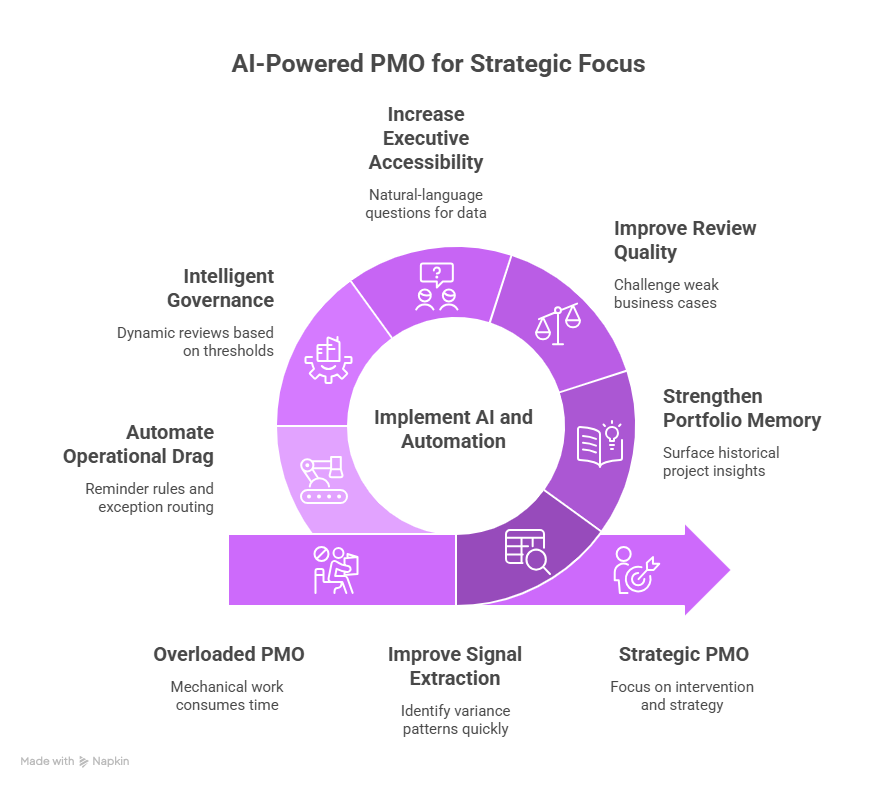
The PMO of 2026–27 will spend less time collecting updates and more time interpreting portfolio signals. That shift matters because many PMOs are still overloaded with mechanical work: chasing status reports, cleaning inconsistent fields, rebuilding dashboards, and translating project noise into executive slides. Modern PPM tools will increasingly automate those administrative layers so PMO teams can focus on the harder job of intervention. This is exactly where automation for PM efficiency, future PMO trends, top productivity software for project managers, and AI-enabled PM innovation begin to converge.
AI will likely reshape PMO workflow in four meaningful layers. First, it will improve signal extraction by identifying variance patterns, emerging delays, missed dependencies, and conflicting forecasts that humans often miss in large portfolios. Second, it will strengthen portfolio memory by surfacing similar historical projects, known delivery risks, and comparable estimate patterns from the knowledge base. Third, it will improve review quality by helping PMOs challenge weak business cases with better evidence. Fourth, it will increase executive accessibility through natural-language questions that pull immediate answers from live portfolio data. These capabilities build naturally on the logic behind knowledge management software, analytics platforms for PMs, machine learning in estimation, and the changing role of the future project manager.
Governance will also become more intelligent and less ceremonial. Instead of monthly review meetings full of static summaries, stronger PPM environments will trigger reviews dynamically. A project with rising cost variance, delayed procurement, unresolved cybersecurity concerns, and shifting benefits assumptions should not wait for the next calendar checkpoint. The system should escalate it based on thresholds and evidence. That design aligns with the next phase of project governance, cybersecurity concerns affecting PM software, procurement tool importance, and contract lifecycle visibility.
Automation will matter just as much in the less glamorous areas that quietly determine whether portfolios stay credible. Reminder rules, stage-gate triggers, exception routing, document requests, approval handoffs, and dependency alerts are not exciting in a demo, but they are exactly what reduce operational drag in real PMOs. The companies that gain the most value from PPM platforms in 2026–27 will not be the ones with the prettiest dashboards. They will be the ones whose workflows are hard to break because portfolio discipline is built into the operating rhythm.
5. How Organizations Should Prepare for the Next Generation of PPM Tools
The first preparation step is not software selection. It is portfolio clarity. If an organization cannot define how work enters the system, how investment is approved, what counts as value, who owns benefit realization, and how resource tradeoffs are decided, even the best PPM platform will become a prettier layer on top of confusion. That is why tool readiness starts with governance design, not procurement. Teams should borrow thinking from the future role of the PMO, future project governance, and the strategic path of leaders moving toward project management director and chief project officer roles.
The second step is cleaning the surrounding data ecosystem. PPM decisions degrade when project, finance, contract, and resource data use different structures. Organizations preparing for 2026–27 should standardize taxonomy for initiative types, portfolio categories, risk themes, benefit types, resource skills, approval levels, and forecast logic. This makes future AI far more useful because the platform can only detect patterns in data that is structured consistently. That preparation has direct links to document management maturity, knowledge management readiness, data visualization practices, and budget tracking discipline.
The third step is redesigning portfolio review behavior. Many executive forums are overloaded with updates and underpowered on decisions. In a future-ready model, the PMO should use the PPM platform to frame choices, not just distribute status. Which initiatives no longer justify their spend? Which dependencies threaten multiple programs? Where is scarce talent being consumed by low-strategy work? Which business cases weakened after procurement realities changed? Those are the questions modern PPM tools should help answer. They also align with the leadership logic behind portfolio manager roles, vice president of PM pathways, consultancy-style PM thinking, and enterprise project management leadership trends.
The fourth step is adoption by role, not by announcement. Executives need fast decision views. PMO analysts need deep drill-down capability. Project managers need clean update workflows. Finance needs trustworthy forecast logic. Procurement and legal need targeted visibility where portfolio timing depends on them. A future-ready rollout succeeds when each group sees less friction and clearer value. That principle is reinforced by what we already know from remote and virtual PM environments, freelance and consultancy PM models, software investment pressure, and the long-range direction of project management through 2030.
The final preparation step is cultural courage. Better PPM tools will expose uncomfortable truths faster: overloaded teams, weak business cases, duplicated initiatives, political pet projects, shallow benefits logic, and governance gaps that were easier to hide in fragmented systems. Organizations that embrace that transparency will gain speed, capital discipline, and stronger portfolio outcomes. Organizations that resist it will buy advanced platforms only to recreate old habits inside newer software.
6. FAQs: Future Trends in Project Portfolio Management (PPM) Tools
-
The biggest change is the shift from reporting systems to decision systems. Traditional tools helped teams log work and display status. Next-generation tools will increasingly support scenario planning, dynamic prioritization, capacity tradeoffs, and risk-based governance. That direction mirrors the broader future of PPM, the rise of AI in PM, and the evolution of project governance practices.
-
No. AI will remove low-value administrative work and improve pattern detection, but portfolio leaders will still be needed to interpret tradeoffs, challenge assumptions, and navigate organizational politics. The stronger impact is role elevation, not role elimination, which matches the changing competency profile described in the future project manager skills guide and the evolving future role of the PMO.
-
Finance, document management, procurement, analytics, scheduling, and knowledge systems matter most because those are the places where portfolio truth often fragments. Buyers should assess the ecosystem around budget tracking tools, document management software, contract lifecycle tools, dashboard platforms, and calendar tools.
-
Because organizations often automate chaos instead of fixing it. Weak intake, inconsistent data, unclear value definitions, poor governance design, and role confusion will break adoption regardless of tool quality. The software becomes a victim of operating-model weakness. That is why readiness depends on portfolio structure, not just vendor selection.
-
Yes. Most enterprise portfolios span agile product work, compliance-driven delivery, infrastructure timelines, procurement gates, and vendor-managed milestones. A tool that assumes one delivery model will distort reporting and weaken portfolio comparisons. That is why understanding the rise of hybrid project management, the role of the Scrum master, and the evolution of agile coaching remains important even for portfolio buyers.
-
They should ask how the platform handles scenario planning, resource bottlenecks, benefit realization, role-based approvals, cross-project dependencies, dynamic risk escalation, and initiative sunset decisions. They should also ask what manual work still remains outside the tool. A demo is valuable only if it reveals how the platform improves decision quality under pressure, not how attractive the interface looks.
