
Project Management Methodology Adoption: Waterfall vs. Agile vs. Hybrid (2026-27 Data)
Project methodology is no longer a philosophical choice. It is an operating model decision that changes delivery speed, stakeholder trust, budget control, governance clarity, and failure risk. In 2026-27, the real debate is not whether Waterfall, Agile, or Hybrid is “best” in the abstract. The real question is which method fits the volatility, compliance burden, decision cadence, and cross-functional complexity of the work in front of you. Teams that get this wrong do not just lose efficiency. They create rework, reporting noise, stakeholder fatigue, and preventable delivery friction.
That is why methodology adoption deserves a deeper analysis than the usual Agile-versus-Waterfall talking points. The highest-performing teams are not choosing methods based on trend pressure. They are choosing based on risk profile, governance needs, change frequency, vendor dependence, technical uncertainty, and organizational maturity. This report breaks down where each methodology wins, where it fails, and why Hybrid is becoming the default operating reality for many serious project environments.
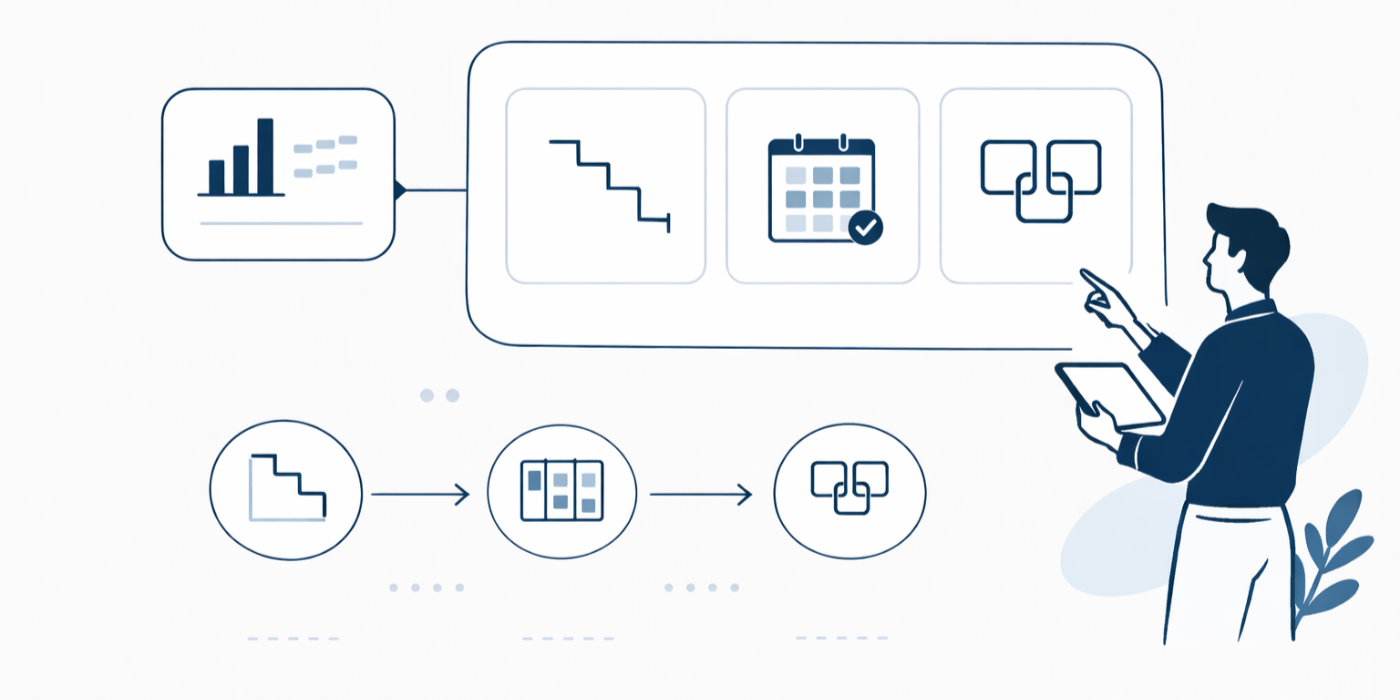
1. Why Methodology Adoption Has Become a Strategic Business Decision, Not Just a Delivery Preference
For years, methodology discussions were often framed as identity statements. Teams were “Agile shops,” “traditional PMOs,” or “transformation-first” environments. That framing is now too shallow for the complexity of modern delivery. Methodology affects how fast decisions move, how clearly risk gets surfaced, how funding gets released, how stakeholders interpret progress, and how often teams are forced into expensive rework. That means methodology choice now belongs in business strategy, not just project kickoff documents.
A project team choosing the wrong operating model usually feels the damage in predictable ways. If a fixed-scope initiative is forced into loose iteration without governance strength, leaders lose forecast confidence. If a highly uncertain product build is trapped inside rigid stage gates, teams discover user and technical truth too late. If a cross-functional enterprise program tries to run entirely in pure Agile without enough steering discipline, dependencies become invisible until they turn into executive escalations. That is why professionals studying future trends in project portfolio management tools, project failure rates and root causes, factors driving project success, and top challenges facing project managers today need to treat methodology as a performance lever.
Waterfall still matters because some work is fundamentally sequence-driven. Infrastructure, procurement-led programs, highly regulated implementations, and vendor-dependent rollouts often require stronger upfront baselines, clearer approvals, and tighter control over change. Agile still matters because uncertainty is expensive when discovered late. Product development, digital experience work, evolving customer needs, and innovation-heavy programs benefit from shorter feedback loops and adaptive planning. Hybrid matters because most organizations no longer operate in clean methodological purity. A large initiative may need Agile delivery inside workstreams while still requiring Waterfall-style governance for funding, contracts, compliance, and executive oversight. That is exactly why the rise of hybrid project management, future PMO evolution, future project governance, and future project manager skills by 2030 are becoming central conversations.
There is also a talent implication. Hiring panels increasingly want project managers who can operate across methods instead of defending one methodology like doctrine. A PM who understands how to become a project manager, career progression from entry-level to executive, the agile project manager roadmap, and the path to becoming a project portfolio manager is far more marketable than someone who only knows ceremonies or only knows stage gates.
The strongest organizations are not asking, “Are we Agile?” They are asking better questions. How stable are our requirements? How costly is late change? How many dependencies exist across teams and vendors? How formal is the governance environment? How much user feedback is required before scaling? How often do priorities shift? What level of forecast confidence does leadership need? Those questions create methodology fit. And methodology fit creates delivery credibility.
2. Waterfall Adoption in 2026-27: Where It Still Wins, Why It Persists, and When It Becomes Expensive
Waterfall is often discussed like an outdated relic, but that view is lazy. Waterfall persists because some environments genuinely need predictability, traceability, controlled approvals, and sequence discipline. When requirements are stable, dependencies are formal, procurement matters, contracts lock scope, or compliance gates are non-negotiable, Waterfall still offers real business value. The problem is not Waterfall itself. The problem is using it where learning must happen faster than planning.
Waterfall performs best when the cost of uncontrolled change is high. Think infrastructure programs, public-sector initiatives, capital projects, vendor-led implementations, regulated process rollouts, and enterprise environments where approvals, security reviews, audit trails, and executive funding gates are part of the normal operating model. In those settings, teams need baselines, design decisions, dependency mapping, documented signoffs, and clear accountability before downstream work begins. That is why professionals exploring government project management careers, construction project management paths, healthcare project management roles, and international project management still see strong Waterfall logic in many real environments.
The biggest advantage of Waterfall is decision clarity. When roles, gates, milestones, and approvals are defined early, leadership can see what is committed, what is funded, what is blocked, and what must happen next. In complex organizations, that clarity reduces stakeholder confusion. It also helps align procurement, legal, finance, PMO, and executive sponsors around a shared delivery path. Strong content on future project governance, future role of the PMO, global inflation’s impact on project budgets, and project management software features shows why leadership still values this structure.
But Waterfall becomes expensive when it confuses documentation completeness with learning completeness. A team can produce beautiful plans and still be wrong about the user need, the integration complexity, the data quality, or the pace of change in the business. The later these truths surface, the more rework becomes politically and financially painful. This is exactly where case studies on why Agile projects fail and original analysis of project failure causes become useful. They remind us that failure often comes from discovering reality too late.
Another weakness appears when teams use Waterfall as an emotional shelter. Some organizations choose it not because the work requires it, but because leaders feel safer with large plans, longer reporting cycles, and fewer visible changes. That creates a false sense of control. Instead of confronting uncertainty early, teams bury uncertainty under governance language. The result is often delayed escalation, optimistic forecasts, and milestone theater.
That does not mean Waterfall should be discarded. It means it should be used deliberately. If your work has stable requirements, low tolerance for uncontrolled change, formal vendor commitments, clear deliverables, and high documentation needs, Waterfall remains highly defensible. But if your project relies on discovery, evolving customer feedback, technical experimentation, or rapid shifts in business priority, Waterfall alone will likely force expensive late-stage correction.
The best Waterfall practitioners today are not rigid traditionalists. They are disciplined pragmatists. They know how to create traceability without suffocating teams. They know when a requirement is truly fixed and when it is still assumption disguised as certainty. They know how to plan in layers, escalate early, and use governance as decision support rather than bureaucratic theater. That is a far more valuable skill than merely saying, “We follow Waterfall.”
3. Agile Adoption in 2026-27: Why It Still Dominates Change-Heavy Work and Why So Many Organizations Still Misuse It
Agile remains powerful because uncertainty is now normal in many delivery environments. Customer expectations shift quickly. Digital products evolve continuously. AI-enabled workflows change operating assumptions. Stakeholders refine needs midstream. Technical discovery exposes hidden complexity. In these conditions, shorter feedback loops are not trendy. They are protective. Agile helps teams reduce the cost of being wrong by discovering truth earlier and adjusting faster.
Agile adoption is strongest where value emerges through iteration rather than upfront certainty. Product development, customer-facing software, experimentation, digital transformation workstreams, user experience improvements, service redesign, and fast-moving internal tools all benefit from incremental learning. Teams can release, observe, refine, and improve before making large irreversible investments. That is why effectiveness of agile project management tools, state of agile project management, future of remote project management, and AI and automation adoption in project management connect so naturally with Agile operating logic.
The best thing Agile gives organizations is not speed alone. It gives earlier signal quality. Teams see sooner whether assumptions hold, whether users care, whether dependencies are blocking flow, whether scope is too broad, and whether technical debt is accumulating. That improves decision-making. It also makes stakeholder conversations more honest because progress is visible in smaller increments. Strong Agile teams do not promise certainty they do not have. They promise learning speed and disciplined adaptation.
Yet many organizations still misuse Agile in three destructive ways.
The first misuse is adopting Agile ceremonies without Agile decision behavior. Teams run standups, sprint planning, and retrospectives, but priorities still change chaotically, leadership still interrupts flow, dependencies remain unmanaged, and no one protects the backlog from executive noise. This creates the appearance of agility with none of the underlying discipline. Professionals following how automation and AI will transform project management careers, future of project management software, future Scrum evolution, and project management 2030 methodologies need to understand that methodology theater solves nothing.
The second misuse is treating Agile like a permission slip to avoid planning. Strong Agile is not planless. It simply plans differently. It plans in rolling layers, ties work to outcomes, limits work in progress, and uses feedback as a planning input. Weak Agile teams confuse flexibility with vagueness. Then they wonder why stakeholders lose confidence.
The third misuse is trying to run enterprise complexity with pure team-level Agile alone. A single product squad can operate elegantly with Agile rhythms. A multi-vendor, cross-functional, compliance-heavy, enterprise-wide program usually cannot. Once funding governance, procurement, executive reporting, and portfolio dependencies enter the picture, Agile needs a larger control frame around it. This is where many organizations hit pain. They do not actually need less Agile. They need Hybrid.
4. Hybrid Adoption in 2026-27: Why It Is Becoming the Default for Serious Organizations
Hybrid is rising because real-world delivery has become structurally mixed. Many organizations need iterative execution at the team level and formal control at the leadership level at the same time. They need backlog flexibility inside workstreams while still maintaining milestone commitments, governance checkpoints, budget oversight, vendor controls, and executive reporting. Hybrid is not a compromise for indecisive teams. When designed well, it is an intentional architecture for complexity.
Hybrid works especially well in large transformation programs, enterprise system rollouts, regulated digital initiatives, multi-workstream modernization, and cross-functional portfolios where different parts of the work behave differently. Discovery and configuration may need Agile loops. Procurement may need Waterfall structure. Security approvals may require documentation and gates. Executive sponsors may want milestone clarity. Users may need iterative pilots before broader rollout. Only Hybrid can hold those realities together cleanly.
This is why future project portfolio management, future leadership in project management, future PMO success, and future of remote and virtual project management roles increasingly point toward blended delivery capability rather than methodological purity.
The strongest Hybrid environments do four things well.
First, they separate governance from work execution without disconnecting them. Delivery teams are allowed to work iteratively where that adds value, but the program still has clear milestones, steering structures, risk reviews, and funding logic. This prevents executive confusion without forcing all work into rigid sequencing.
Second, they define what is fixed and what is flexible. In bad Hybrid setups, everything becomes negotiable and no one knows where decisions belong. In strong Hybrid setups, leaders define which constraints are locked, such as budget ceiling, compliance dates, contractual deliverables, or launch windows, and which elements can evolve, such as feature sequencing, team-level workflows, or solution refinements.
Third, they translate Agile progress into language that enterprise stakeholders can trust. A mature Hybrid PM can show sprint-level movement while also explaining milestone readiness, dependency risk, financial exposure, and decision needs. That skill is increasingly valuable for professionals pursuing project management director roles, vice president of PM tracks, chief project officer pathways, and project management consultancy careers.
Fourth, they protect teams from methodological confusion. Hybrid should reduce friction, not multiply it. If teams are being forced to satisfy every ceremony, every artifact, every status format, and every governance expectation at once, the model is broken. Hybrid is supposed to align the right controls with the right work, not layer bureaucracy on top of iteration.
A painful truth is that many organizations already operate in Hybrid but refuse to name it. They tell teams they are Agile while still demanding Waterfall-style commitments, formal stage approvals, forecast certainty, and cross-functional governance. That disconnect creates chronic frustration because the methodology story and the operating reality do not match. Naming the environment honestly is the first step toward fixing it.
Hybrid is not automatically superior. Poorly designed Hybrid becomes confused, slow, and document-heavy. But when complexity is high and organizational needs are mixed, Hybrid often provides the most honest operating model available. It accepts that delivery work is adaptive while enterprise accountability still matters.

5. How to Choose the Right Methodology Based on Risk, Requirements, Stakeholders, and Organizational Maturity
The most useful way to choose a methodology is not by asking what is fashionable. It is by asking what kind of uncertainty, control, and coordination the work requires. Methodology should follow delivery reality. That sounds obvious, but teams still get this wrong all the time because leadership pressure, vendor habits, certification bias, and organizational identity often override practical fit.
Start with requirement stability. If requirements are well understood, unlikely to change materially, and expensive to revise after approval, Waterfall or Waterfall-heavy Hybrid usually makes more sense. If requirements are evolving, user-driven, or likely to shift as the team learns, Agile or Agile-heavy Hybrid is safer. The central issue is not speed. It is how expensive late learning will be.
Then evaluate governance pressure. If your project lives inside a compliance-heavy, audit-sensitive, procurement-led, or executive-stage-gated environment, pure Agile may create reporting and approval gaps unless you deliberately design governance around it. This is why professionals following government PM career paths, healthcare PM growth, construction PM development, and project management opportunities in California need more than team-level methodology knowledge. They need environment-level judgment.
Next, assess stakeholder behavior. Some leaders genuinely understand iterative delivery. Others say they do but still expect static dates, locked scope, and full certainty upfront. If executive behavior is still milestone-driven, your methodology must translate progress into forms they can act on. Otherwise stakeholder trust erodes even when teams are delivering responsibly. Reading project management industry outlook in North America, Europe market insights, Asia-Pacific trends, and Latin America industry analysis helps frame how market maturity affects methodology expectations.
Then examine organizational maturity. Agile is not magical. If prioritization is chaotic, product ownership is weak, dependencies are unmanaged, and leadership interrupts delivery constantly, simply announcing Agile adoption will not solve the core issue. Likewise, Waterfall will not save an organization that avoids escalation and hides uncertainty. Methodology amplifies management quality more than it replaces it.
Finally, choose with pain prevention in mind. Ask where your current delivery model is bleeding value. Are you discovering change too late? Are executives lost in Agile terminology? Are teams buried in governance that adds no decision value? Are dependencies invisible until deadlines break? Are vendors working to milestone plans while internal teams work sprint to sprint with no integration discipline? Those pain points usually reveal the right model faster than ideology does.
For project managers building their careers, this diagnostic ability is a major differentiator. Professionals who understand methodology fit are better equipped for IT project management careers, remote project management roles, project management consultancy firms, and freelance PM careers. Organizations will increasingly pay for leaders who can match methodology to business reality instead of reciting frameworks.
6. FAQs About Waterfall vs. Agile vs. Hybrid Methodology Adoption
-
Hybrid is increasingly the most practical choice in complex environments because many organizations need iterative team delivery and formal governance at the same time. Pure Waterfall and pure Agile still exist, but large enterprise work often demands a blend.
-
No. Waterfall is still highly useful when requirements are stable, compliance is strict, contracts matter, and leadership needs formal milestone control. It becomes a problem only when teams use it in discovery-heavy or rapidly changing environments.
-
Agile often fails because organizations adopt ceremonies without changing decision behavior. Priorities still shift chaotically, product ownership is weak, dependencies are unmanaged, and leadership expects certainty without protecting focus. The label changes, but the operating system does not.
-
Hybrid is better when delivery teams need iteration but the larger organization still requires governance, funding controls, executive reporting, vendor alignment, compliance checkpoints, or cross-functional dependency management. It is especially useful in transformation and enterprise rollout work.
-
Start with requirement stability, stakeholder expectations, compliance needs, dependency complexity, and the cost of late change. Stable, sequence-driven work leans Waterfall. Discovery-heavy, fast-changing work leans Agile. Mixed environments with both uncertainty and formal controls usually need Hybrid.
-
No. Strong Hybrid does not mean piling every practice onto every team. It means deliberately deciding which parts of the work need iterative delivery and which parts need formal planning, controls, or approvals. Good Hybrid is selective, not bloated.
-
Methodological versatility is usually best for career growth. Employers increasingly value project managers who can operate across Waterfall, Agile, and Hybrid environments and translate delivery into language that both teams and executives trust.
