
Complete PRINCE2 Renewal & Re-certification Guide: Stay Certified Easily
PRINCE2 renewal becomes stressful when professionals treat it like a date on a certificate instead of a career-maintenance system. The real risk is showing up to a promotion, contract bid, PMO interview, or employer audit with a credential that looks stale. This guide gives you a practical renewal plan: how to choose the right route, protect your PRINCE2 status, build proof of ongoing competence, and connect renewal to stronger project management career growth.
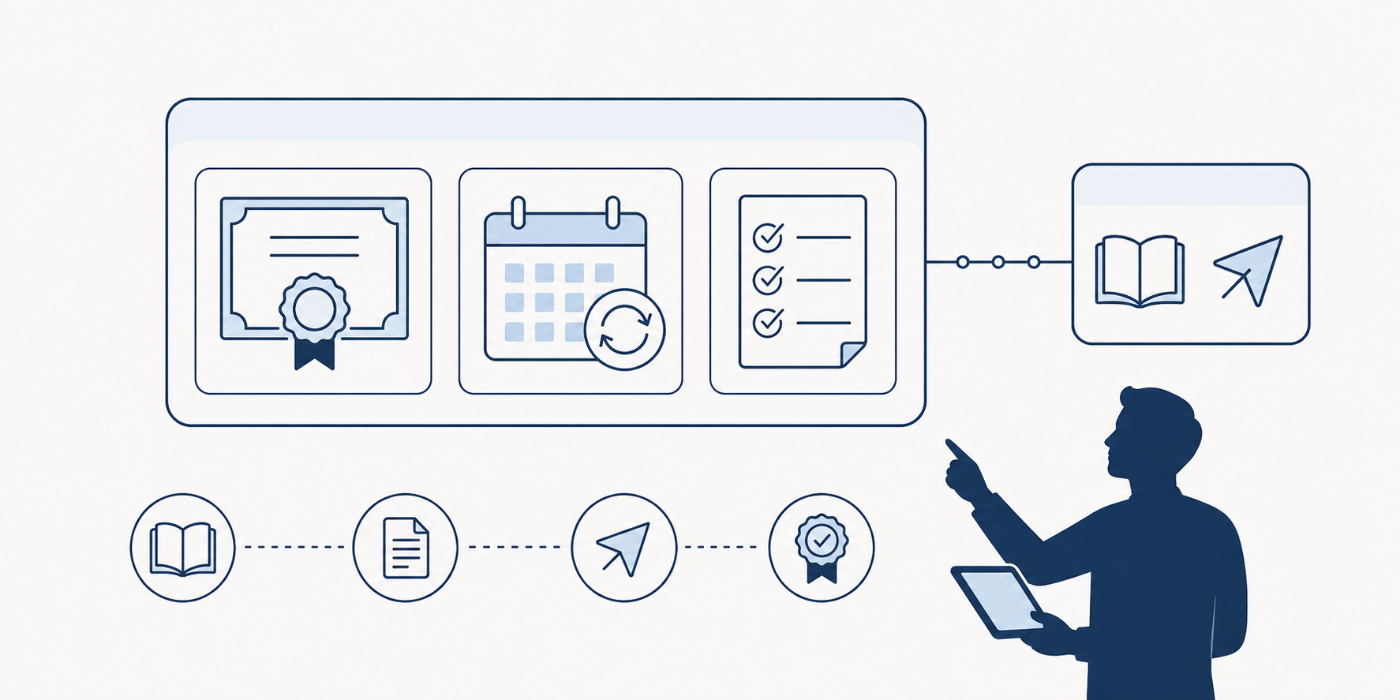
1. PRINCE2 Renewal Rules You Need to Understand Before Your Certificate Becomes a Problem
PeopleCert’s current guidance says certifications covered by its renewal scheme need to be renewed every three years from the original certification date, and the listed renewal categories include PRINCE2 Project Management 5th, 6th, and 7th editions plus PRINCE2 Agile. The main renewal routes are CPD through PeopleCert Plus, passing another exam in the same Product Suite before the renewal date, or retaking the same certification exam. PeopleCert also states that credentials left unrenewed remain visible on verification services but receive an “outdated” note.
That last detail matters for anyone using PRINCE2 to compete for roles in structured delivery, governance-heavy PMOs, consulting, government projects, vendor implementation, or transformation programs. A project manager reading career roadmap for a government project manager, comparing project management director growth, or planning a move from PM to vice president of project management should treat renewal as reputation maintenance, not admin.
PeopleCert describes the CPD route as logging 20 CPD points per year across three consecutive years through PeopleCert Plus, which creates a 60-point renewal rhythm across the cycle. The PRINCE2 7 Practitioner page also shows 60 CPD points needed for renewal, and PeopleCert’s membership page explains the 20-points-per-year structure.
The smartest move is to decide early whether your renewal should prove continuity, progression, or specialization. Continuity means keeping your certificate current with the least disruption. Progression means using renewal to move from Foundation to Practitioner, from PRINCE2 to PRINCE2 Agile, or into portfolio and programme territory. Specialization means connecting PRINCE2 to a stronger career lane, such as IT project management, construction project management, healthcare project management, or international project management.
The painful mistake is waiting until the renewal deadline forces a rushed decision. That creates bad choices: paying for the wrong exam, studying without a plan, logging weak development activity, or renewing the certificate while leaving the resume exactly the same. A stronger PRINCE2 renewal plan connects your credential to governance language, project controls, benefits tracking, risk ownership, stakeholder evidence, and the kind of delivery maturity covered in project monitoring and control terms, project reporting best practices, and stakeholder engagement terms.
2. Choose the Renewal Route That Protects Your Career With the Least Waste
The easiest PRINCE2 renewal route depends on your current role, deadline, budget, and career target. CPD works best when you already use project management daily and can record meaningful development over time. A same-suite exam works best when you want the renewal to create a new credential, such as moving deeper into PRINCE2 Agile, programme management, portfolio management, or governance. A retake works best when your certificate is close to renewal and you want the cleanest direct reset.
The route should match your next job, not your past course. A delivery coordinator moving into structured project roles may get more from reviewing project execution terms, Gantt chart basics, resource allocation terms, and project closure concepts. A Scrum Master targeting governance-heavy work should connect PRINCE2 renewal to Agile estimation techniques, sprint planning terms, Scrum glossary terms, and the Scrum Master to Agile PM consultant roadmap.
For mid-career project managers, renewal should strengthen the weak point employers can sense quickly. Some PMs have a certificate but weak change-control language. Some have delivery experience but poor benefits-realization proof. Some can run meetings but cannot explain tolerances, exception reporting, or stage governance clearly. That is why renewal planning should include earned value management terms, risk mitigation planning, conflict resolution terms, and leadership communication terms.
A strong decision filter is simple: choose the route that produces the best proof in the shortest safe time. If your employer only needs current status, CPD may be efficient. If recruiters keep questioning your applied delivery experience, an exam alone may need portfolio proof round project boards, RAID logs, benefits maps, reporting cycles, and lessons learned. If your goal is a sector move, connect renewal to market pages such as New York project management careers, Texas PM careers, Florida project management insights, or Washington State PM opportunities.
3. Build a 90-Day PRINCE2 Renewal Plan That Hiring Managers Can Actually See
A 90-day plan is enough to turn PRINCE2 renewal from a compliance task into a career asset. The first 30 days should be diagnostic. Check your official certification status, confirm your renewal deadline, choose your renewal route, and identify the delivery gaps that hurt you most. This is the right time to revisit PRINCE2 exam pitfalls, compare your credential strategy with PMP renewal planning, and rebuild your baseline knowledge using project management glossary resources.
Days 31 to 60 should create evidence. Do not simply “study PRINCE2.” Build a renewal folder with examples from real or simulated work: a change request, risk register, benefits review, stakeholder map, RACI, stage boundary checkpoint, highlight report, exception note, lessons log, and decision record. These artifacts make the certificate believable. They also support roles tied to IT project management, construction PM software, team communication platforms, and project management templates.
Days 61 to 90 should update your public career story. Add current PRINCE2 status, renewal activity, and delivery proof to your resume, LinkedIn, interview examples, and internal promotion documents. A recruiter should see a direct line from certification to project outcomes. For example: “Used PRINCE2-based stage controls to reduce decision delays,” “maintained change traceability across vendor implementation,” or “created governance cadence for cross-functional delivery.” That sounds stronger than listing a certificate beside unrelated tasks.
This plan also protects you from the silent credibility gap. Many certified PMs mention PRINCE2 but cannot explain how they used it to control scope, manage exceptions, protect benefits, or align stakeholders. That weakness becomes obvious in interviews for project portfolio manager, project management director, Agile coach, and Product Owner roles.
4. Turn Renewal Into Career Evidence, Not Just Another Admin Deadline
The highest-value PRINCE2 renewal strategy is to turn every renewal activity into proof of project judgment. If you attend a workshop, record what it changed in your governance practice. If you complete a course, connect it to a better reporting template or stakeholder decision flow. If you prepare for a retake, extract the weak areas and convert them into stronger interview examples. That is how renewal becomes useful for career growth from project manager to VP of PM, chief project officer planning, and international PM careers.
A strong renewal evidence folder has five parts. First, certification status: renewal date, route, and completion proof. Second, capability proof: risk, scope, stakeholder, change, reporting, and benefits artifacts. Third, sector proof: examples aligned with IT, construction, healthcare, government, finance, renewable energy, or software delivery. Fourth, tool proof: dashboards, templates, workflows, and communication systems. Fifth, outcome proof: fewer delays, clearer decisions, reduced rework, improved visibility, better handoffs, or cleaner closure.
This matters because PRINCE2 is often judged through the behavior it creates. Hiring teams rarely care that you can recite themes if you cannot run a clean governance cadence. They care whether scope changes get logged, whether risks have owners, whether decisions reach the right board, whether benefits remain visible, and whether the project stays justifiable. Those same habits appear in project governance trends, PMO success predictions, sustainability and ESG project management, and future project portfolio management.
Your resume should show PRINCE2 renewal as active competence. Weak line: “PRINCE2 Practitioner certified.” Stronger line: “Maintained current PRINCE2 certification while applying stage controls, risk escalation, and change governance across cross-functional delivery.” Best line: “Used PRINCE2-aligned governance to clarify decision rights, reduce approval delays, and improve change traceability across vendor-led implementation.” The stronger versions connect certification to business impact, which is what employers reward.

5. Avoid the Renewal Mistakes That Make Certified PMs Look Unprepared
The first mistake is renewing too late. When the date is close, every option becomes more expensive in time, focus, or stress. A late retake means rushed revision. Late CPD means weak logging. A late career update means the certificate stays disconnected from your actual work. Professionals targeting competitive markets like Los Angeles PM roles, Chicago PM careers, Dallas-Fort Worth PM jobs, or Massachusetts PM careers need current credentials before recruiters start checking.
The second mistake is treating CPD as a points game. CPD should strengthen your delivery story. Choose learning that fixes your gaps: benefits if you struggle to explain value, risk if issues keep surprising you, stakeholder management if decisions stall, and financial control if budget conversations expose weakness. Use resources around risk response planning, project financial management, stakeholder engagement, and project reporting to make the renewal cycle useful.
The third mistake is choosing a renewal route without considering your next role. A project coordinator may need stronger baseline project language. A Scrum Master may need stronger governance language. A senior PM may need stronger portfolio and benefits language. A consultant may need stronger client-assurance language. Your renewal route should match that direction. That means pairing PRINCE2 with resources like Agile project manager certification, Kanban terms, Waterfall definitions, and hybrid PM trends.
The fourth mistake is leaving the certificate isolated on your resume. PRINCE2 renewal should sit beside measurable project outcomes. Add governance artifacts, delivery metrics, decision cadence, vendor controls, risk response examples, and stakeholder alignment proof. A hiring manager should understand what your renewed certification helps you do. That is especially important in roles connected to digital transformation PMOs, AI adoption in project management, blockchain in project management, and project management software innovation.
The final mistake is assuming renewal alone will move your career. Renewal protects credibility. Career growth requires positioning. Use the credential to support a lane: PMO analyst to PM, PM to senior PM, Scrum Master to Agile consultant, project manager to portfolio manager, or practitioner to director. A renewed certificate paired with the right proof can support promotion, contract bids, consulting credibility, and cross-sector movement. A renewed certificate with no updated story usually stays invisible.
6. FAQs About PRINCE2 Renewal and Re-certification
-
PeopleCert’s current renewal guidance says covered certifications need renewal every three years from the original certification date, and the renewal list includes PRINCE2 Project Management and PRINCE2 Agile. Check your PeopleCert account for your exact renewal date because your timeline depends on your original award date.
-
For many professionals, the easiest route is PeopleCert Plus CPD because it spreads renewal activity across the cycle. PeopleCert describes the CPD path as logging 20 CPD points per year for three consecutive years, which helps you stay current while continuing professional development.
-
Yes. PeopleCert says you can keep certifications current by taking another course and passing an exam within the same Product Suite before the renewal date. PeopleCert also explains that achieving a new certification in the same Product Suite can renew the certifications in that suite.
-
Yes. PeopleCert’s FAQ states that passing the same certification exam again renews the certification and updates the renewal date. This route can work well when you want a direct reset, although progression into another relevant certification may give you stronger career value.
-
PeopleCert says unrenewed certifications can still appear on the Successful Candidates Register and Candidate Verification Service, but the record may show a note indicating the certification is outdated and needs renewal. That note can create concern during employer checks, vendor bids, or regulated project environments.
-
Upgrade when your target role requires applied governance, stage control, exception handling, risk ownership, benefits thinking, and decision discipline. Renew Foundation when you need to keep your credential current for baseline credibility. For career growth, connect either route to proof from project execution, monitoring and control, and stakeholder engagement.
