
CAPM Renewal Requirements Explained: Stay Certified with Ease
Renewing your CAPM is much easier when you treat it as a small professional habit instead of a last-minute certification emergency. The real challenge is usually confusion: how many PDUs you need, which activities count, where to log them, and how to avoid wasting time on learning that does not support your career. This guide breaks down CAPM renewal requirements clearly, then shows how to turn renewal into career progress through project management career planning, entry-level PM growth, CAPM exam preparation, and long-term project management certification strategy.
1. Understand the CAPM Renewal Rule Before You Start Collecting PDUs
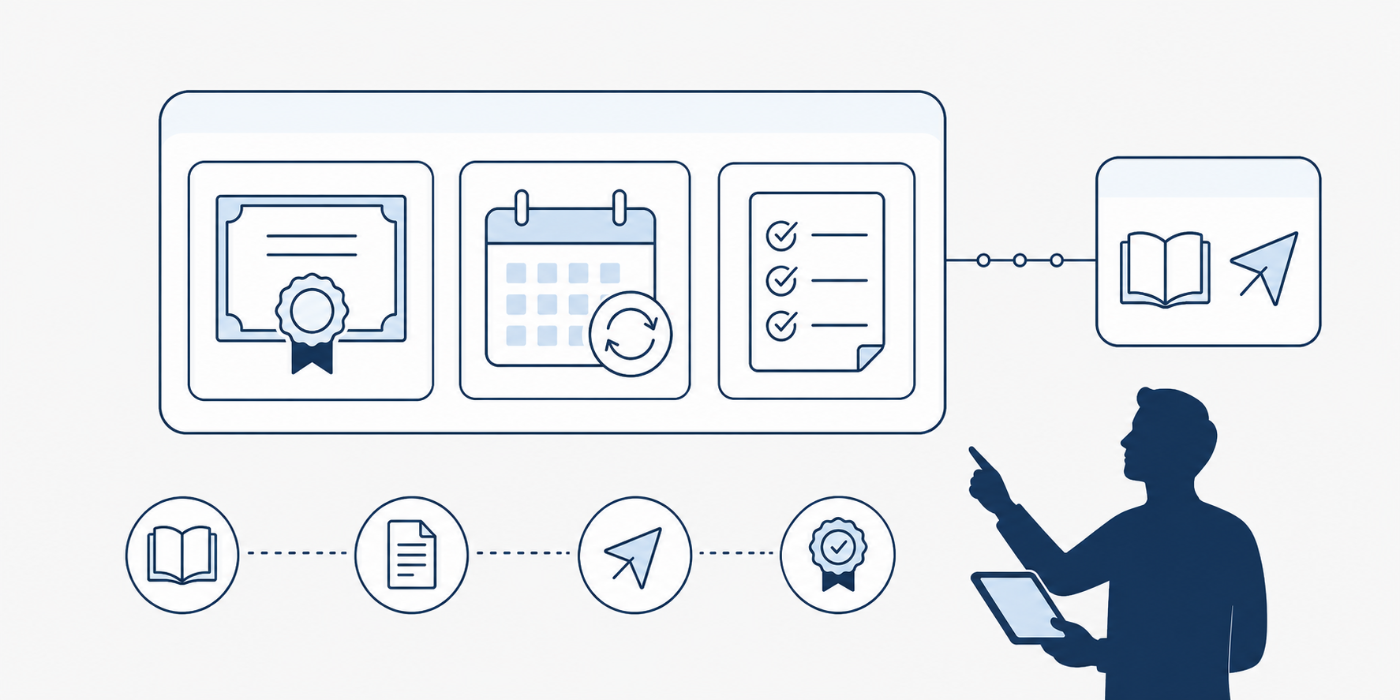
CAPM renewal is built around a simple rule: keep learning, record the right proof, and renew before your certification cycle ends. CAPM holders need 15 Professional Development Units across a three-year cycle, and those PDUs should show that you are still building relevant project management capability. That means renewal should never become a random scramble for certificates in the final month. It should connect to the skills that make you stronger in project execution, project monitoring and control, stakeholder engagement, risk management, and project communication.
The most important split is Education versus Giving Back. Education PDUs come from learning activities such as courses, webinars, reading, events, and structured discussions. Giving Back PDUs can come from activities such as working in a certified role, creating content, teaching, mentoring, or volunteering. CAPM renewal requires at least 9 Education PDUs, while Giving Back can contribute up to 6 PDUs. That structure matters because many candidates assume any 15 hours will work, then discover too late that their mix is weak. A safer plan uses Education first through agile project management terms, waterfall project management concepts, earned value management, and resource allocation.
You also need to respect the PMI Talent Triangle. CAPM holders must earn at least 2 PDUs in each skill area: Ways of Working, Power Skills, and Business Acumen. Ways of Working covers the technical and delivery side of projects, Power Skills covers leadership and people skills, and Business Acumen connects project decisions to organizational value. A renewal plan that only watches agile tool videos may leave gaps. A balanced plan includes Scrum fundamentals, Kanban terms, conflict resolution, project financial management, and quality management.
| PDU Activity | Likely Category | Best Career Use | Proof to Keep | APMIC Support Resource |
|---|---|---|---|---|
| Project management course | Education / Ways of Working | Refresh delivery fundamentals, planning language, and project control habits. | Certificate, course title, provider, date, hours. | project execution terms |
| Agile webinar | Education / Ways of Working | Strengthen adaptive delivery, backlog thinking, and team cadence. | Webinar confirmation, notes, attendance record. | agile glossary |
| Scrum workshop | Education / Ways of Working | Clarify Scrum roles, events, artifacts, and product delivery flow. | Workshop certificate, agenda, learning hours. | Scrum terms |
| Kanban training | Education / Ways of Working | Improve flow, WIP limit, bottleneck, and visual management confidence. | Training record, notes, certificate. | Kanban terms |
| Waterfall refresher | Education / Ways of Working | Reinforce baselines, dependencies, stage gates, and schedule discipline. | Course proof, reading log, completion record. | waterfall glossary |
| Risk management reading | Education / Ways of Working | Make risk identification, ownership, and response planning sharper. | Reading log with title, date, time, summary. | risk response planning |
| Risk register practice | Education / Ways of Working | Turn abstract risk terms into usable project documentation skill. | Practice file, template, notes, time log. | risk register guide |
| EVM study session | Education / Ways of Working | Improve cost and schedule performance interpretation. | Study notes, calculation sheet, time record. | EVM terms |
| Schedule compression review | Education / Ways of Working | Understand crashing, fast tracking, trade-offs, and schedule risk. | Reading log, notes, practice examples. | schedule compression terms |
| Gantt chart practice | Education / Ways of Working | Build confidence with timelines, sequencing, and dependency logic. | Sample chart, notes, practice time log. | Gantt chart terms |
| Leadership seminar | Education / Power Skills | Improve influence, communication, accountability, and team trust. | Certificate, event email, agenda. | leadership terms |
| Conflict resolution training | Education / Power Skills | Handle tension before it becomes delivery damage. | Completion proof, notes, hours. | conflict resolution terms |
| Stakeholder management reading | Education / Power Skills | Improve expectation setting, engagement, and communication targeting. | Reading log, summary, date, duration. | stakeholder engagement terms |
| Project reporting workshop | Education / Power Skills | Build cleaner updates for sponsors, teams, and cross-functional partners. | Workshop proof, sample report, notes. | reporting terms |
| Business strategy webinar | Education / Business Acumen | Connect project decisions to outcomes, budgets, markets, and value. | Webinar record, notes, time claimed. | future PM skills |
| Financial management reading | Education / Business Acumen | Strengthen budgeting, cost awareness, and value-based decision making. | Reading log and summary. | financial management terms |
| Procurement training | Education / Business Acumen | Understand vendor selection, RFPs, contracts, and supplier risk. | Course completion, agenda, notes. | RFP, RFQ, and RFI terms |
| Vendor management session | Education / Business Acumen | Improve supplier coordination and contract-aware project thinking. | Session proof, learning notes. | vendor management terms |
| Quality management course | Education / Ways of Working | Refresh prevention, inspection, standards, and continuous improvement. | Certificate, course length, notes. | TQM terms |
| ISO standards reading | Education / Business Acumen | Build compliance, audit, quality, and process discipline. | Reading log with source and summary. | ISO standards terms |
| Mentoring a junior PM | Giving Back | Convert your CAPM knowledge into leadership and coaching practice. | Dates, topics, hours, mentee context. | PM career path |
| Teaching a lunch-and-learn | Giving Back | Strengthen confidence by explaining project concepts to others. | Slides, agenda, attendance, time. | PM templates |
| Creating PM content | Giving Back | Build public proof of knowledge while helping other learners. | Published link, draft file, creation time. | freelance PM career |
| Volunteering on a PM initiative | Giving Back | Apply project skills in a real community or professional setting. | Volunteer confirmation, role description, hours. | PM consultant skills |
| Working in a project role | Giving Back | Use daily project work to support certification maintenance. | Role notes, project dates, responsibility summary. | IT project manager guide |
| PM software learning | Education / Ways of Working | Connect project concepts to dashboards, boards, timelines, and reports. | Course proof, demo notes, learning time. | agile PM tools |
| AI and PM learning | Education / Business Acumen | Stay current as automation changes planning, estimation, and reporting. | Course record, webinar proof, notes. | AI in project management |
| Career roadmap review | Education / Business Acumen | Choose PDUs that support your next role instead of random renewal. | Learning plan, notes, time log. | PM roadmap |
2. Build a 15-PDU Renewal Plan That Covers the Right Categories
The easiest CAPM renewal plan is 9 Education PDUs plus 6 optional Giving Back PDUs, but the safest plan is often 12 to 15 Education PDUs because it reduces category confusion. Education PDUs are flexible, easier to document, and directly useful if you choose topics that match your next career step. For example, someone moving toward IT project management should prioritize agile tools, dashboards, change control, stakeholder communication, and software delivery basics. Someone moving toward construction project management should focus on scheduling, procurement, risk, quality, and resource coordination.
A practical CAPM renewal split could look like this: 3 PDUs in Ways of Working, 3 PDUs in Power Skills, 3 PDUs in Business Acumen, and 6 extra PDUs from the areas that match your career direction. This satisfies the minimum Talent Triangle coverage while giving you room to specialize. If your role involves agile teams, invest the extra time in agile estimation techniques, product backlog management, Scrum project management tools, and Kanban software tools.
The worst approach is to wait until the final quarter of your cycle and grab whatever certificates are easiest. That keeps the credential active, but it wastes the career value of renewal. CAPM maintenance should improve your resume, interview stories, and confidence in project conversations. A better approach is to earn 1 to 2 PDUs every quarter. This turns renewal into a small rhythm and gives you time to choose learning that supports remote project management roles, freelance project management, international project management, or project portfolio management.
Keep a simple tracker from the first month of your cycle. Include the activity title, provider, date, PDU category, Talent Triangle area, proof link, and short reflection. That reflection matters because it helps you convert renewal into career language. Instead of saying, “I earned PDUs,” you can say, “I refreshed risk response planning, stakeholder reporting, and agile metrics to support delivery coordination.” That sounds stronger in interviews and performance reviews. Use supporting study around project reporting, risk response planning, agile metrics, and resource allocation.
3. Use CAPM Renewal to Strengthen Your Resume, Not Just Your PMI Status
CAPM renewal should protect your credential and sharpen your job-market proof. Many candidates earn the certification, add it to LinkedIn, then let the next three years pass without turning it into stronger experience. That is a missed opportunity. Each PDU can support a resume bullet, interview example, portfolio artifact, or promotion conversation if you choose topics carefully. If you are aiming for project coordinator roles, focus on schedules, risks, reporting, meetings, and documentation. If you are targeting analyst-heavy roles, add requirements, business analysis, stakeholder mapping, and data-supported decision making through stakeholder engagement, project reporting terms, financial management terms, and project closure concepts.
A strong renewal portfolio can include five proof assets: a sample risk register, a stakeholder communication plan, a basic project schedule, a lessons learned document, and a one-page dashboard. These assets help candidates who have limited formal project titles but real coordination ability. Build them while earning PDUs so the learning becomes visible. For example, after studying Gantt chart essentials, create a simple timeline. After reviewing EVM terms, add status indicators. After learning quality management, define acceptance checks.
This also helps if you plan to move from CAPM toward PMP later. CAPM renewal keeps you active in the project management ecosystem while you build practical experience. Your PDU choices can prepare you for future PMP thinking without forcing you to rush. Study broader topics like PMP certification renewal, PMP exam domains, PMP exam mistakes, and PMP exam success habits to understand where your credential path can go next.
The pain point here is real: many CAPM holders feel stuck between “certified” and “experienced.” Renewal can help close that gap when you choose learning that produces evidence. A webinar alone is forgettable. A webinar plus a new stakeholder map, better status report, updated resume bullet, and stronger interview story becomes useful. That is how CAPM renewal supports movement into Agile Project Manager roles, Product Owner paths, Scrum Master opportunities, and Project Management Consultant careers.
4. Log PDUs Correctly and Keep Proof Before You Need It
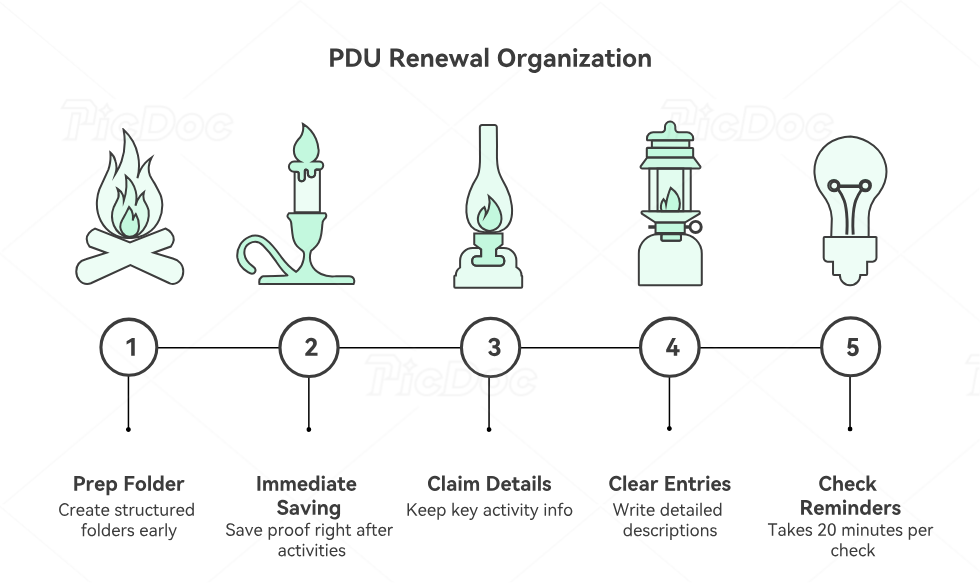
The renewal process becomes stressful when your learning proof is scattered across inboxes, screenshots, old notebooks, and forgotten webinar platforms. Create a folder before you start earning PDUs. Use subfolders for Education, Giving Back, certificates, reading logs, webinar notes, and renewal receipts. Every time you complete an activity, save proof immediately. This discipline mirrors real project documentation, which is why it supports both renewal and workplace credibility. It also reinforces habits from project reporting, stakeholder communication, risk registers, and project closure documentation.
For each PDU claim, keep enough information to explain what you did and why it fits. That usually includes the activity name, provider or source, date completed, duration, category, Talent Triangle area, and evidence. For reading, keep the title, author or publisher, topic, date, time spent, and a short summary. For teaching or mentoring, keep the topic, audience, date, and hours. For content creation, keep a published link or draft record. For work as a practitioner, keep a reasonable summary of your role and relevant time period. These habits connect naturally to PM templates, resource planning, vendor management, and procurement documentation.
When you enter PDUs, use clear descriptions. A weak entry says “watched webinar.” A stronger entry says “Completed a 1-hour webinar on agile metrics covering velocity, cycle time, throughput, and improvement conversations for project teams.” That description shows relevance and makes your own records easier to review later. The same standard applies to reading-based PDUs. Write a two-sentence summary after reading about agile metrics, backlog management, schedule compression, or quality management.
Set calendar reminders at 6-month intervals. At each checkpoint, review how many PDUs you have, which categories are covered, which Talent Triangle areas still need attention, and whether your proof folder is complete. This takes 20 minutes and can save you from a renewal panic later. If your career direction changes during the cycle, adjust your PDU plan. Someone shifting toward healthcare project management may prioritize compliance, communication, quality, and stakeholder coordination. Someone targeting government project management may prioritize procurement, governance, reporting, and documentation.
5. Avoid the CAPM Renewal Mistakes That Cost Time, Money, and Momentum
The first major mistake is treating renewal as an administrative bill instead of a professional development cycle. Paying the renewal fee is only the final step. The real value is the learning you choose before that moment. If you spend three years collecting random PDUs, you may keep the credential but lose the chance to build stronger capability. Choose a theme for every year of the cycle. Year one can focus on delivery fundamentals through project execution, Gantt charts, EVM, and monitoring and control.
The second mistake is ignoring Power Skills. CAPM holders often over-focus on tools, charts, and processes because those feel easier to study. Hiring managers, however, notice communication, follow-up, prioritization, conflict handling, and stakeholder confidence. Use renewal to build the skills that make people trust you with coordination work. Study leadership communication, conflict resolution, stakeholder engagement, and project reporting so your credential translates into daily team value.
The third mistake is choosing PDUs with no career direction. If you want to move into agile delivery, your renewal should include Scrum concepts, Kanban systems, agile estimation, and agile project management tools. If you want to move toward strategic leadership, add business acumen through PMO trends, project governance, future PM leadership, and portfolio management.
The final mistake is letting the credential expire because the process felt unclear. CAPM renewal is manageable when you make it visible. Put the deadline on your calendar, track PDUs quarterly, store proof immediately, and finish early enough to avoid stress. If you are already thinking about the next step, use renewal as a bridge toward PMP preparation, Agile Project Manager certification paths, Project Management Director growth, or Project Management Consultancy.
6. FAQs About CAPM Renewal Requirements
-
CAPM holders need 15 PDUs in each three-year renewal cycle. Build a plan that covers the PMI Talent Triangle and gives you enough Education PDUs before relying on Giving Back. You can make the process easier by learning through project execution terms, agile terms, risk registers, and stakeholder engagement.
-
You need at least 9 Education PDUs. A safe plan is to earn those early, then decide whether Giving Back PDUs make sense for the rest. Education PDUs can come from training, webinars, reading, events, or structured learning around topics like Scrum, Kanban, EVM, and quality management.
-
Giving Back can help, but it has a maximum limit of 6 PDUs for CAPM renewal. Examples can include mentoring, teaching, volunteering, creating content, or working in a relevant project role. Use Giving Back strategically if it strengthens your professional proof. It pairs well with career moves into freelance project management, consulting, remote PM roles, and international PM careers.
-
Keep certificates, attendance confirmations, reading logs, notes, mentoring records, volunteer confirmations, published links, and work summaries. Your proof should show the activity, date, provider or context, duration, and relevance. This habit also builds documentation strength for roles involving project reporting, resource allocation, vendor management, and project closure.
-
Start in the first quarter after earning your certification. A small quarterly habit is easier than a final-month rush. Even 1 to 2 PDUs every few months will keep you ahead. Choose learning that supports your target role, such as IT project management, construction project management, healthcare project management, or government project management.
-
Yes. CAPM renewal can prepare you for PMP if you choose PDUs that deepen practical project judgment. Focus on risk, stakeholders, schedule, budget, quality, agile delivery, leadership, and business value. You can also study PMP exam domains, PMP study resources, PMP exam mistakes, and PMP renewal requirements.
