
CAPM Exam Day Survival Tips: Maximize Your Performance
CAPM exam day is where your study plan becomes a performance plan. You are managing 150 questions, 180 minutes, changing question styles, mental fatigue, and the pressure of proving you understand project work beyond memorized terms. The goal is controlled execution: read clearly, pace calmly, protect easy marks, and recover quickly when a question feels uncomfortable.
Strong exam-day performance begins before the timer starts. Candidates who connect their prep with a full project management career roadmap, clear project execution terms, practical risk register examples, and strong stakeholder engagement terms walk in with sharper judgment instead of fragile confidence.
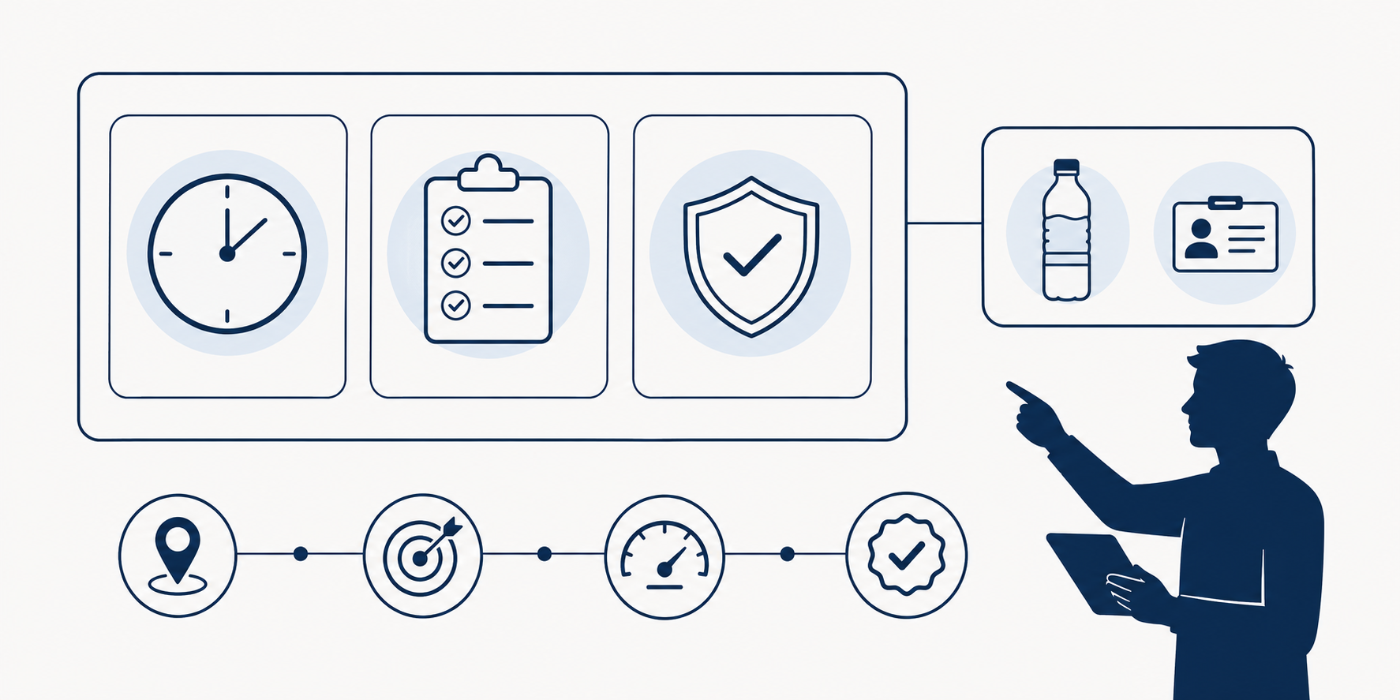
1. Build an Exam-Day Plan Before You Open the First Question
The biggest CAPM exam-day problem is poor rhythm. A candidate can understand agile project management terms, review Scrum terminology, practice earned value management terms, and study project reporting best practices, then still lose marks because the exam feels faster than expected. Your plan should give every question a simple process: read the final sentence first, identify the domain, spot the project situation, eliminate weak choices, choose the best remaining answer, flag only when useful, and move.
Your mindset matters because CAPM questions can feel deceptively simple. Some questions test direct recall. Some test scenario judgment. Some ask whether you understand how a project team member should act when scope, risk, communication, or requirements shift. That is why your exam-day thinking should sound like real project work. Ask who owns the decision, what changed, what artifact proves it, and what action protects value. This connects directly to stakeholder communication terms, project monitoring and control terms, resource allocation terms, and project closure concepts.
The final 24 hours should be light, focused, and confidence-building. Review your error log, formula sheet, agile role notes, risk/issue/assumption/constraint distinctions, and business analysis basics. Avoid adding five new resources because late overload can make familiar ideas feel unstable. Use targeted refreshers like waterfall project management terms, agile estimation techniques, RFP, RFQ, and RFI terms, and vendor management terms only where your mistake history says they matter.
| Exam-Day Move | What To Do | Why It Protects You | Danger Signal | APMIC Resource |
|---|---|---|---|---|
| Arrive mentally warmed up | Review light notes, formulas, agile roles, risk categories, and key domain reminders. | Your brain enters recall mode before pressure starts rising. | Opening the exam cold and hoping confidence appears after the first few questions. | Exam prep resources |
| Read the last line first | Check whether the question asks for first, next, best, primary, or most likely. | You answer the actual task instead of reacting to the general topic. | Choosing a true statement that does not answer the prompt. | Exam mistake guidance |
| Spot the domain | Classify the question as fundamentals, predictive, agile, or business analysis. | Your mind pulls the right decision framework faster. | Using agile logic on a predictive control question. | Exam domain guidance |
| Protect easy marks | Answer direct recall and simple concept questions cleanly, then move. | You bank score before fatigue and doubt appear. | Overthinking simple definitions for several minutes. | Project execution terms |
| Flag with purpose | Flag only questions where a second look can realistically improve the answer. | Your review time stays focused and useful. | Flagging every uncomfortable question until review becomes overwhelming. | Project reporting terms |
| Use elimination first | Remove choices that ignore role, process, ethics, stakeholder needs, or project control. | You reduce noise before choosing between close options. | Trying to fall in love with one answer before checking the others. | Leadership terms |
| Separate risk from issue | Decide whether the situation is future uncertainty or a current problem. | You choose the right response path. | Treating every negative event as a risk. | Risk register examples |
| Check role ownership | Ask whether the project manager, sponsor, team, product owner, or stakeholder owns the action. | Role-based questions become easier to eliminate. | Escalating everything to the sponsor too quickly. | Scrum glossary |
| Watch scope clues | Look for informal requests, changing deliverables, missing approvals, and unclear acceptance criteria. | You catch hidden change-control questions. | Approving stakeholder requests without impact review. | Monitoring and control terms |
| Treat formulas calmly | Write the known values, choose the formula, calculate, then interpret the result. | Math questions become structured instead of emotional. | Skipping EVM questions because they look intimidating. | EVM terms |
| Control your pace | Use rough checkpoints instead of staring at the clock every minute. | You stay aware without feeding anxiety. | Spending too long on one confusing question. | Schedule compression terms |
| Pause after panic | Take one breath, reread the last sentence, and restart the question calmly. | You stop one hard question from damaging the next five. | Rushing after a difficult item. | Conflict resolution terms |
| Identify agile signals | Look for backlog, iteration, sprint, increment, feedback, and self-organizing team cues. | You apply adaptive logic faster. | Using baseline-control thinking on a backlog refinement question. | Agile glossary |
| Identify predictive signals | Look for baselines, formal approval, defined scope, detailed plans, and phase control. | You avoid mixing delivery methods. | Choosing flexible backlog logic for a fixed-scope question. | Waterfall glossary |
| Handle hybrid carefully | Look for formal governance and adaptive delivery inside the same scenario. | You avoid extreme answers that fit only one method. | Forcing every question into purely agile or purely predictive logic. | Hybrid project management |
| Respect stakeholder impact | Notice who is affected, who needs information, and who can approve action. | Communication answers become more precise. | Sending the same update to every audience. | Stakeholder engagement terms |
| Use business analysis logic | Think needs, requirements, validation, acceptance, traceability, and value. | BA questions stop feeling disconnected from PM work. | Jumping to delivery before understanding the requirement. | Backlog terms |
| Check quality language | Separate quality planning, quality assurance, and quality control. | You choose the right prevention or inspection action. | Assuming every quality question is asking about testing. | TQM terms |
| Track procurement purpose | Separate RFI, RFQ, RFP, contract, vendor performance, and acceptance cues. | Supplier questions become cleaner. | Mixing information requests with proposal evaluation. | RFP, RFQ, and RFI terms |
| Avoid answer switching | Change an answer only when you find a specific clue you missed. | Your review period stays rational. | Changing answers because fear grows during review. | Exam success habits |
| Respect closure steps | Look for acceptance, handover, documentation, records, and lessons learned. | End-of-project questions become easier marks. | Assuming delivery alone completes the project. | Project closure terms |
| Use meeting clues | Notice whether the meeting is planning, standup, review, retrospective, or escalation. | Team-process questions become clearer. | Treating every meeting as a generic status update. | Sprint planning terms |
| Manage fatigue | Sit upright, breathe steadily, and reset after long passages. | Your late-exam judgment stays stable. | Letting tiredness turn simple questions into guesses. | PM templates and resources |
| Think like a junior PM | Choose professional, documented, ethical, team-aware actions. | Your answers match the CAPM level. | Choosing senior executive actions for associate-level scenarios. | PM career path |
| Stay exam-neutral | Treat every question as a fresh opportunity. | One weak section does not poison your full attempt. | Deciding mid-exam that you are failing. | Project manager roadmap |
| Review flagged items last | Finish the full pass before returning to flagged questions. | You protect completion and avoid time traps. | Getting stuck in a loop before seeing all questions. | Agile PM roadmap |
| Finish with evidence | Use remaining minutes to check flagged questions for role, sequence, method, and wording. | Your final review produces real improvement. | Randomly changing answers during the final minutes. | Certified Scrum Master guide |
| Leave calmly | Trust the process you used and avoid replaying every difficult question afterward. | You preserve confidence for your next project management step. | Judging your result from a handful of hard questions. | CAPM career advancement |
2. Use a Timing Strategy That Keeps You Calm for 180 Minutes
The CAPM gives you enough time when you avoid emotional time traps. A rough pace of a little over one minute per question gives you room for reading, calculating, flagging, and reviewing. The danger comes from spending four or five minutes on one confusing question while easier marks wait ahead. Strong candidates use pacing the way project managers use schedule control: they track progress, protect critical work, and respond early when they drift. That connects with schedule compression terms, Gantt chart basics, resource allocation concepts, and project monitoring terms.
A practical pacing plan is simple. During your first pass, answer questions you can solve with reasonable confidence. Flag questions that require a second read, formula check, or domain clarification. Move quickly past questions that feel sticky. Sticky questions are dangerous because they feel personal. They make you want to prove yourself. CAPM success comes from score management, so protect the full exam before wrestling with any single item. This is the same logic behind risk mitigation planning, project financial management terms, project reporting terms, and stakeholder engagement best practices.
Your review pass should be structured. Start with flagged questions where you remember the issue. Check the question stem again, identify the key word, remove answer choices that conflict with role or process logic, and avoid changing answers from fear alone. When a formula question appears, write the structure mentally: what values are given, what is being asked, what result means the project is ahead, behind, over, or under. This links directly to EVM terminology, project cost language, quality management terms, and project execution language.
3. Read CAPM Questions Like a Project Professional, Not a Nervous Test-Taker
CAPM questions often test the difference between knowing a word and applying it inside a project situation. A question may mention a stakeholder request, missed requirement, delayed deliverable, unhappy sponsor, changing backlog, new vendor, or unclear acceptance criteria. The correct answer usually reflects professional project behavior: clarify, document, analyze impact, communicate appropriately, follow the agreed process, and respect roles. That behavior should feel familiar if you review project execution terms, stakeholder engagement terms, vendor management terms, and project closure concepts.
The fastest way to improve question reading is to label the situation. Is this a risk response problem, a scope control problem, a stakeholder communication problem, an agile planning problem, a business analysis problem, or a team conflict problem? Once the situation is labeled, the answer choices become less equal. A question about a possible future threat should push you toward risk analysis or a risk register. A current blocker should push you toward issue management. An unclear requirement should push you toward elicitation, clarification, or validation. These distinctions are covered through risk register examples, business analysis backlog terms, conflict resolution terms, and leadership communication terms.
Be careful with attractive answers. CAPM answer choices often include one answer that sounds decisive, one answer that sounds collaborative, one answer that sounds technical, and one answer that fits the process. The best answer depends on the question’s stage and role. For example, escalating immediately can look strong, yet the project manager often needs to clarify, assess, or communicate first. Likewise, agreeing to a stakeholder request can look customer-friendly, yet scope changes usually need review. Train this judgment with monitoring and control terms, RFP and RFQ terms, agile glossary terms, and waterfall project management terms.
4. Handle Agile, Predictive, Hybrid, and Business Analysis Questions Without Mixing Them
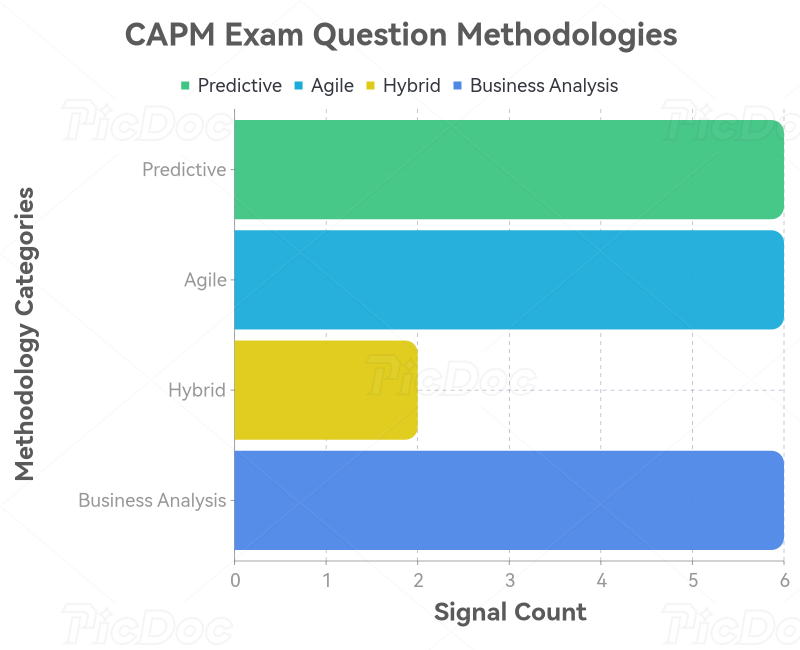
CAPM exam day becomes much easier when you recognize delivery signals quickly. Predictive questions often include formal baselines, detailed upfront planning, defined scope, change control, milestone tracking, and sequential phases. Agile questions often include backlog refinement, iterations, increments, customer feedback, daily coordination, and adaptive prioritization. Hybrid questions combine governance with flexibility. Business analysis questions focus on needs, requirements, solution value, traceability, validation, and acceptance. Your exam-day brain should sort these signals fast using agile project management terms, waterfall project management terms, hybrid project management insights, and business backlog terminology.
A common exam-day trap is choosing the answer that belongs to your favorite methodology. If you studied Scrum heavily, every scenario can start looking like a backlog issue. If you studied predictive methods heavily, every change can look like a formal change request. The exam rewards context. A construction-style project with fixed deliverables may call for stronger baseline control, while a software feature with evolving user feedback may call for backlog refinement. This is why construction project management guidance, IT project manager guidance, agile project manager roadmap content, and Scrum Master career guidance can sharpen real-world pattern recognition.
Business analysis questions deserve special attention because many CAPM candidates still treat them like a side topic. On exam day, look for words such as requirement, need, acceptance, validation, stakeholder expectation, solution, feature, user, or value. Those questions often reward clarity before delivery. If the team builds the wrong thing efficiently, the project still fails. That idea connects with stakeholder engagement, project reporting, product backlog definitions, and agile metrics. Requirements are where project control and customer value meet.
5. Recover Fast When the Exam Starts Feeling Hard
Every CAPM candidate hits a rough patch. The danger is letting five difficult minutes become thirty weak minutes. A hard question can make you question your whole preparation, especially when the wording feels unfamiliar. The recovery plan is simple: breathe, flag if needed, move forward, and protect the next mark. Strong project managers respond to risk and issues with control, and strong exam-takers do the same. Use the same discipline you learn through risk mitigation terms, conflict resolution concepts, project monitoring and control, and leadership communication terms.
When panic rises, return to process. Read the final sentence. Identify the task word. Classify the domain. Eliminate choices that break professional behavior. Look for role ownership. Choose the answer that best fits the project situation. This removes drama from the question. You are no longer asking, “Do I know everything?” You are asking, “What is the best professional action here?” That shift is powerful, especially when you have reviewed project execution terms, quality management terms, vendor management terminology, and project closure terms.
Your final review should feel like controlled checking rather than desperate repair. Revisit flagged items, read the question stem carefully, and change answers only when you find evidence. Evidence can be a missed role, a key word, a delivery approach clue, a calculation error, or a sequence mistake. Avoid changing a first answer simply because the exam feels tense. Your first pass often captures clean logic before fatigue starts arguing. This review discipline supports later growth into project coordinator roles, remote project management roles, project management consulting, and portfolio management careers.
6. FAQs: CAPM Exam Day Survival Tips
-
Use a two-pass approach. On the first pass, answer questions you can solve with reasonable confidence and flag questions that need more thought. On the second pass, review flagged questions with a clear reason for changing any answer. This keeps you from losing time to emotional questions. Support this strategy with schedule compression terms, Gantt chart basics, project monitoring terms, and exam mistake guidance.
-
Pause, breathe, reread the final sentence, and identify what the question is really asking. Then classify the situation: risk, issue, stakeholder, scope, agile, predictive, quality, procurement, or business analysis. If the answer still feels unclear, flag it and move forward. Build this recovery habit with risk register examples, conflict resolution terms, stakeholder engagement terms, and leadership communication terms.
-
Change an answer only when you can name the exact reason. Good reasons include a missed keyword, wrong role, wrong delivery approach, incorrect formula step, or overlooked project sequence. Fear alone creates weak review decisions. Practice rational review with EVM terms, project reporting terms, project execution terms, and common exam mistake guidance.
-
Look for backlog, sprint, iteration, increment, daily coordination, customer feedback, adaptive planning, and self-organizing team language. Then choose answers that respect agile roles and feedback-driven delivery. Review agile glossary terms, Scrum glossary terms, Kanban project manager terms, and agile estimation techniques before exam day.
-
Identify the delivery environment before reading every answer choice deeply. Predictive situations usually involve formal plans, baselines, approvals, milestones, and defined scope. Agile situations usually involve evolving requirements, iterative delivery, backlog priority, and feedback. Hybrid scenarios blend structure and flexibility. Strengthen this sorting skill with waterfall project management terms, hybrid project management trends, agile project management terms, and project execution terminology.
-
Review only high-yield materials: your error log, formulas, risk versus issue notes, agile roles, predictive control points, stakeholder communication rules, and business analysis basics. Keep the session short and focused. Use CAPM career advancement guidance, project management career roadmap content, exam prep resources, and project templates as targeted refreshers.
