
Effectiveness of Agile Project Management Tools: Original Industry Report (2026-27)
Agile tools are no longer being judged on whether they “support sprints.” That bar is too low now. In 2026–27, the real question is whether an agile project management tool improves delivery quality under pressure: can it reduce decision lag, expose blocked work early, sharpen prioritization, support hybrid teams, and give leaders visibility without burying teams in reporting overhead? That is the line separating genuinely effective tools from software that only looks modern in a demo.
This report breaks down what makes agile PM tools effective today, where most teams still waste money, which capabilities actually move execution forward, and how project managers can evaluate tools based on operational impact instead of feature theater. Along the way, this analysis connects agile tooling decisions to delivery maturity, certification paths, PM leadership growth, and the broader APMIC ecosystem.
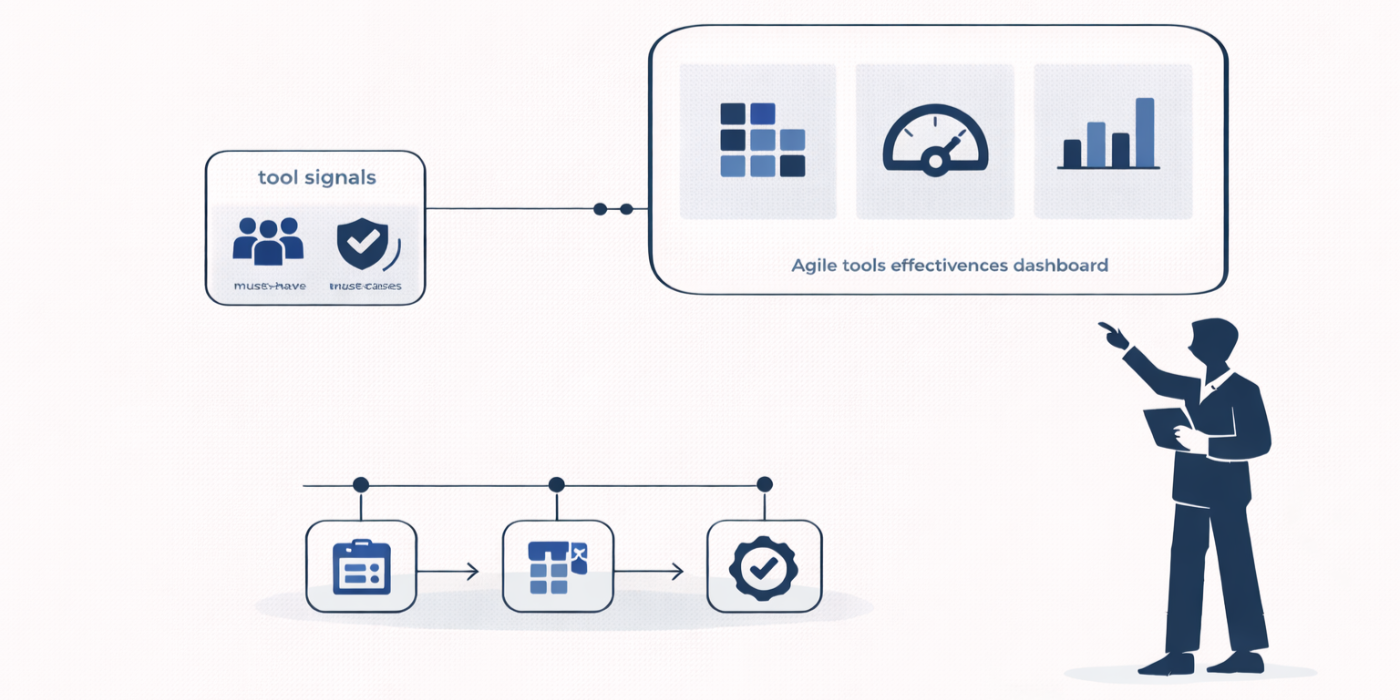
1) Why Agile Project Management Tools Are Under More Pressure Than Ever
Agile tools used to be evaluated mainly by workflow convenience. Could they manage a backlog, track sprint progress, assign work, and give the team a board? That standard is now outdated. In modern delivery environments, agile tooling has become part operating system, part coordination layer, part governance infrastructure, and part leadership visibility engine. That is why professionals studying how to become a project manager, planning their entry-level to executive PM career path, building toward a certified agile project manager role, or preparing for the future project manager skills needed by 2030 increasingly realize that tool fluency is no longer optional.
The pressure has increased because agile itself is under pressure. Organizations say they want adaptability, but they also want cleaner forecasting, tighter cost control, stronger executive reporting, faster cross-functional coordination, and proof that agile is not creating delivery chaos. So the tool is no longer just serving the team. It is also serving product, PMO, finance, technology leadership, operations, and sometimes procurement. That is why modern agile tooling conversations increasingly overlap with the rise of hybrid project management, the future of project governance, future PMO evolution, and project management 2030 methodology predictions.
Another reason these tools face greater scrutiny is that many companies already bought them once and were disappointed. They invested in boards, dashboards, sprint reports, automations, and integrations, but still saw blocked work, weak prioritization, low stakeholder clarity, and executive frustration. The problem was not always the software itself. Often the team had purchased a workflow surface without addressing deeper operating design. That is why smart buyers now pair tool decisions with analysis from best project reporting and analytics software, top dashboard and data visualization tools, best document management software for project teams, and the ultimate guide to project knowledge management software. An agile tool cannot rescue a team that has no discipline around ownership, prioritization, and decision flow.
The most effective agile tools today do something deeper: they reduce operational ambiguity. They make work visible at the right level, reduce coordination waste, expose aging blockers, preserve context, support asynchronous teams, and help leaders understand risk before deadlines are already broken. That is why agile tool effectiveness now matters not just for team speed, but also for career growth toward roles like project management consultant, project management director, vice president of PM, and eventually chief project officer. Leaders increasingly trust PMs who know how to turn tooling into operating leverage.
2) What “Effective” Actually Means for Agile Project Management Tools
The market often confuses popularity with effectiveness. A tool can dominate mindshare, appear in comparison articles, and still fail inside a real organization. Effectiveness is not whether a platform has a Kanban board, sprint reports, AI features, and dozens of integrations. Effectiveness means the tool measurably improves how work flows, how decisions happen, and how delivery risk becomes visible. That is why teams choosing platforms should compare them through the lens used in future of project management software, best automation tools for project management efficiency, top productivity software for busy PMs, and best mobile collaboration apps for project teams. The right question is always: what pain does this tool remove?
The first marker of effectiveness is adoption quality. If teams must be chased to update it, if PMs maintain shadow spreadsheets, or if executives distrust the board and request separate decks every week, the tool is not effective even if its feature list looks impressive. Real effectiveness shows up when teams naturally use the platform because it reduces friction rather than adding ceremony. This is especially relevant to professionals building careers through remote and virtual PM roles, freelance PM work, and project management consultancy paths, where poor adoption quickly destroys trust with clients and sponsors.
The second marker is whether the tool improves prioritization. Agile teams do not fail only because they cannot execute. They often fail because the backlog becomes politically overloaded, sprint planning becomes wishful thinking, and urgent work enters faster than capacity expands. An effective tool makes prioritization visible, painful tradeoffs explicit, and sequencing easier to defend. That connects directly to ideas in future of project portfolio management, financial-services PM predictions, economic uncertainty and agile demand, and global inflation’s impact on project budgets. In tighter markets, prioritization quality becomes a profit issue.
The third marker is reporting efficiency. One of the ugliest failures in agile tooling is when the platform captures data, but PMs still have to spend hours translating that data manually for leaders. At that point, the tool is supporting transaction work, not management work. Effective agile tools generate clean enough views that project managers can focus on interpretation instead of deck assembly. That is why savvy organizations look across best reporting and analytics software, dashboard tools for projects, budget tracking software, and CRM tools for PMs when aligning execution data to leadership visibility.
The fourth marker is whether the tool strengthens delivery memory. Agile can become dangerously short-memory if every sprint resets attention and valuable context disappears into chat threads. Effective tools preserve decisions, connect stories to specifications, keep work discoverable, and make it easier for new contributors to understand why something exists. This is one reason modern agile tooling overlaps heavily with project knowledge management software, document management systems, and calendar and scheduling tools. Agile speed without memory only produces faster confusion.
3) The Biggest Reasons Agile Tools Fail Even When the Software Is Good
Most agile tools fail because organizations try to install software on top of unresolved operating dysfunction. The team has weak backlog governance, unclear product ownership, poor cross-team dependency handling, inconsistent definitions of done, and vague leadership priorities. Then the company buys a premium tool and expects visual structure to produce real discipline. It rarely works. This is exactly why professionals advancing through the certified scrum master path, the agile coach career path, the scrum-master-to-agile-consultant roadmap, or the product owner career guide must learn operating design, not just ceremony design.
Another common failure is over-customization. Teams often think tailoring the tool proves maturity. In practice, too much customization creates fragile workflows, inconsistent status logic, training pain, broken reporting, and poor scalability. Every team invents its own local language, which kills comparability across programs. That is why the smartest organizations balance local flexibility against portfolio coherence, a tension that also shows up in the future role of the PMO, project governance best practices, project management leadership predictions, and predicting the evolution of Scrum by 2027. Tool flexibility is only valuable when it does not break shared truth.
A third reason is leadership misuse. Some executives claim they want agile transparency, but what they really want is constant reassurance. They force manual reporting layers, override prioritization discipline, inject urgent work mid-sprint, and then wonder why velocity data becomes meaningless. The tool gets blamed for behavior that no tool could solve. This is especially painful for PMs and delivery leads trying to move into project management director roles, vice president of PM tracks, and chief project officer positioning, because they must learn how to protect the system from executive distortion without appearing rigid.
A fourth reason is integration shallowness. If the agile tool does not connect intelligently with documentation, engineering systems, communication channels, budget views, and reporting artifacts, the team ends up doing duplicate administrative work. That destroys trust fast. This is why tool evaluations should sit near related analysis such as top PM software for the software development industry, best Gantt chart software, top 15 project management mobile apps, and investment in project management software surging amid economic pressures. Buying software without integration logic is just buying another island.
The best agile tool is not the one with the most features. It is the one that removes the most friction from prioritization, coordination, and trust.
4) What the Most Effective Agile Teams and PMs Do With Their Tools
The best agile teams do not treat the platform as a passive tracker. They use it as a shared operational language. Priorities are ranked clearly. Definitions are consistent. Blocked work is visible fast. Handoffs are traceable. Reporting logic is predictable. And context is connected tightly enough that fewer meetings are needed just to rediscover what everyone already decided. That operating maturity aligns closely with broader trends in AI and project management innovations, how machine learning will transform estimation and scheduling, AI adoption reaching record levels in PM, and digital transformation across PMOs globally. Strong teams use technology to reduce ambiguity, not hide behind it.
Highly effective PMs also understand the difference between visibility and noise. They resist the urge to measure everything. Instead, they pick the few signals that actually shape delivery: aging blocked items, backlog volatility, carryover rate, dependency delays, decision latency, and whether roadmap work is still aligned to business intent. That judgment is part of what separates professionals who merely run agile boards from those who can grow into project portfolio manager roles, international PM roles, IT project manager paths, or future freelance project management opportunities. Sophisticated PMs know that excessive measurement often means weak management.
Another pattern is that effective teams connect agile work to business value. They do not let the board become a graveyard of tickets detached from outcomes. They link initiatives to customer results, operational efficiency, revenue logic, risk reduction, or capability growth. That matters because agile skepticism often grows when executives see motion but not business consequence. It is also why agile tooling decisions increasingly intersect with project management named as a key driver of economic growth, global survey highlights rising demand for agile project management, sustainability and ESG adaptation in project management, and future leadership styles in project management. The platform becomes far more credible when it can tell a value story.
The strongest teams also keep the tool ecosystem rational. They do not let one agile platform sprawl into ten disconnected support tools with overlapping purposes. They choose a manageable stack and define which system owns which truth. That principle applies whether the delivery context is construction project management, healthcare project management, government project management, or renewable energy project management trends. Different industries change the compliance burden, but fragmented truth hurts everywhere.
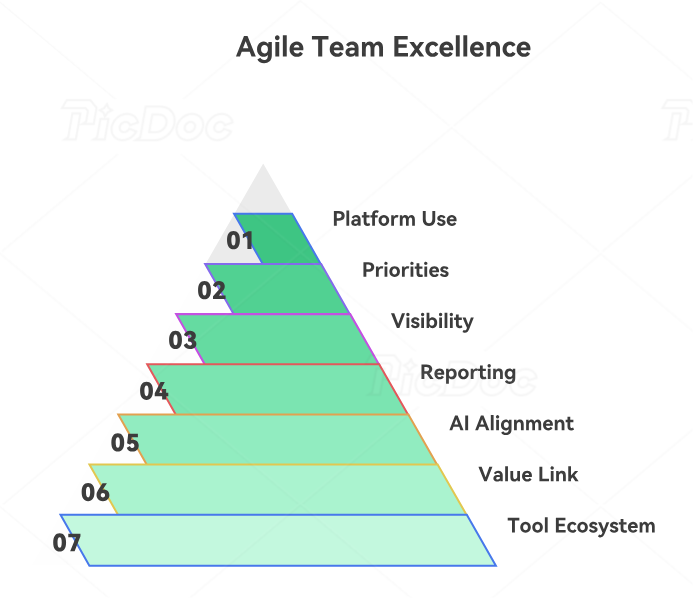
5) A Practical Framework for Evaluating Agile Tool Effectiveness in 2026–27
Start with adoption, not features. In the first phase of evaluation, ask whether the team will actually live in the tool without coercion. If the interface is heavy, the workflow feels unnatural, or daily usage creates friction, adoption will decay no matter how good the demos look. This is especially important for organizations hiring across dynamic markets like California PM careers, New York PM careers, Texas project management opportunities, Florida PM career insights, and Washington state PM training and careers. Distributed hiring makes low-friction onboarding even more valuable.
Second, evaluate how the tool handles prioritization pressure. Many platforms can record work. Far fewer can help teams survive constant priority movement without corrupting the truth. Ask whether the backlog stays clean, whether urgent work can be inserted transparently, whether planning reflects real capacity, and whether leaders can see what tradeoffs their requests are causing. That question connects directly with the maturity themes in future role of the PMO, future of project governance, future of PM leadership, and how automation and AI will transform PM careers. Prioritization discipline is where real maturity becomes visible.
Third, test the reporting burden honestly. How many manual steps are still required for sprint reviews, program updates, executive summaries, and portfolio reporting? If PMs must keep exporting, cleaning, translating, and reformatting, then the tool is not truly effective for the organization’s reporting reality. That is why evaluation should also consider neighboring ecosystems like best software platforms for PM training, PMP exam prep software reviews, ultimate PMP certification exam guide, and PMP exam study planning. Strong PM education helps professionals ask better tool questions, not just chase better credentials.
Finally, evaluate strategic usefulness. Does the tool make decisions clearer? Does it surface risk early? Does it support dependency management? Does it connect team execution to roadmap intent? Does it strengthen executive trust instead of creating another reporting theater? If not, then whatever else it does, it is not effective enough. The most valuable agile tools today are the ones that compress uncertainty, preserve context, and help leaders act faster with better judgment.
6) FAQs
-
A truly effective agile tool improves real delivery behavior. It should strengthen backlog clarity, make blockers visible, reduce manual reporting, support distributed teams, preserve context, and help leaders make faster, better decisions. A long feature list alone does not make a tool effective.
-
Because the deeper problem is often operating discipline, not software. If prioritization is weak, ownership is unclear, reporting expectations are chaotic, and leadership disrupts sprint discipline constantly, no platform will fix the system by itself.
-
No. Those features matter, but only after the basics are strong. A tool should first solve adoption, workflow clarity, reporting efficiency, and dependency visibility. AI and integrations help most when the underlying process is already healthy enough to benefit from them.
-
Look for behavioral proof. Are updates timely without chasing? Are blockers exposed earlier? Are planning conversations sharper? Has reporting effort dropped? Are fewer meetings needed just to understand project status? Those are better indicators than marketing claims.
-
They buy software before defining operating rules. When workflows, ownership, priorities, and reporting expectations are unclear, the tool becomes a mirror of confusion rather than a mechanism for improvement.
-
Yes, often even more useful. In hybrid environments, the best tools help teams balance iterative delivery with broader governance, roadmap visibility, documentation, and cross-functional coordination. Their value rises when the environment is complex, not pure.
