
In-Depth Analysis: Gender Pay Gap in Project Management (2026-27 Report)
Project management likes to present itself as merit-driven, data-driven, and objective. But compensation rarely reflects process discipline alone. Pay outcomes are shaped by who gets larger budgets, who gets promoted into higher-visibility programs, whose delivery work is framed as “leadership,” and whose labor gets treated as coordination instead of strategic execution. That is why the gender pay gap in project management cannot be reduced to one number. It sits inside role design, portfolio visibility, negotiation structure, certification access, industry concentration, sponsorship, and advancement pathways.
For professionals trying to build stronger careers, this matters immediately. If you do not understand where compensation gaps actually form, you can spend years improving delivery while still being under-leveled, under-scoped, and underpaid. This report breaks the problem down in practical terms so project managers, PMO leaders, and emerging professionals can identify where the gap appears, why it persists, and what actions close it faster.
1. Why the Gender Pay Gap in Project Management Still Exists Even in “Structured” Career Paths
Project management is often assumed to be one of the cleaner career tracks because roles appear standardized. Job titles look consistent, methodologies seem documented, and performance is supposed to be measurable through scope, budget, schedule, stakeholder outcomes, and risk control. But pay inequality survives very easily inside structured environments because structure on paper is not the same as consistency in practice. The gap often begins long before salary negotiation. It starts with role assignment.
A project manager running low-visibility internal coordination work may hold the same title as someone managing enterprise transformation, vendor-heavy infrastructure delivery, or revenue-linked implementation. On paper they are both PMs. In compensation logic, they are not even close. This is why professionals exploring how to become a project manager, the full project management career path, or future project manager skills needed by 2030 need to look beyond title and focus on compensation-driving scope.
The gender pay gap in project management usually shows up through six recurring mechanisms.
First, women are often concentrated in lower-paying sectors, support-heavy PM functions, or delivery environments where budget ownership is limited. A PM coordinating cross-functional workflows in education, healthcare administration, nonprofit programs, or internal operations may create enormous value, but the market often prices those roles lower than PM jobs in technology, infrastructure, energy, financial systems, or transformation programs. That creates a structural ceiling before negotiation even begins. Professionals comparing paths in IT project management, construction project management, healthcare project management, and government project management can already see how sector placement changes earning power.
Second, women are more likely to be given “glue work” that keeps delivery moving but is not rewarded like portfolio leadership. This includes stakeholder follow-up, documentation cleanup, meeting choreography, cross-team coordination, executive prep, vendor chasing, RAID log hygiene, onboarding, and recovery communication. These tasks are essential. They also get mislabeled as support work instead of business control work. When a professional’s value is described as “organized,” “collaborative,” or “dependable” rather than commercially decisive, pay progression slows. Articles on factors driving project success, project failure root causes, hybrid project management, and future project governance show why that invisible work is actually performance-critical.
Third, title inflation hides pay compression. Many organizations call someone a project manager even when the person is functioning more like a project coordinator, scrum lead, delivery analyst, PMO analyst, implementation manager, or workstream owner. That hurts everyone, but it often hurts women more because it enables employers to keep strong contributors in titles that sound respectable while withholding compensation aligned with program complexity. Anyone mapping long-term progression toward project management director, vice president of PM, chief project officer, or project portfolio manager needs to identify this early.
Fourth, performance evidence is not always translated into compensation language. Many project managers know how to report status but not how to quantify commercial impact. They can explain team coordination, risk mitigation, and stakeholder alignment, but they do not tie their work to reduced overruns, faster release cycles, lower vendor waste, audit readiness, capacity optimization, or implementation speed. That weakens leverage at raise time. Professionals preparing for higher-paying roles through PMP exam preparation, CAPM career positioning, PMI-ACP preparation, and certification comparisons need to connect learning to earnings language.
Fifth, promotion pipelines reward visibility, not only execution. The PM who is attached to transformation, digital modernization, enterprise systems, AI programs, regulatory delivery, acquisitions, or global expansion is simply more visible than the PM keeping everyday operations from collapsing. Visibility drives executive familiarity. Executive familiarity drives stretch roles. Stretch roles drive pay. This is one reason AI and automation in project management, future of project management software, machine learning in estimation and scheduling, and digital transformation trends are not just technology topics. They are compensation topics.
Sixth, negotiation itself is usually treated as the problem when it is actually the final checkpoint in a much longer value-recognition process. Someone who has already been under-scoped, under-titled, and under-sponsored walks into salary discussions with a weaker platform. The real question is not “Why didn’t they negotiate harder?” It is “Why was the role framed in a way that limited leverage?” That is the harder truth, and it is where the best career strategy begins.
2. Where the Pay Gap Forms: Role Level, Industry Mix, Scope, and Promotion Access
The biggest mistake in gender pay gap conversations is assuming the issue is mainly equal pay for identical jobs. That matters, but the deeper problem is unequal access to the highest-paying versions of project management work. Pay gaps widen when one group is more likely to land in lower-margin industries, lower-authority roles, and slower promotion lanes. To understand the earnings difference, you have to study work distribution, not just salary numbers.
Industry mix is one of the clearest drivers. In sectors like enterprise software, infrastructure modernization, cloud transformation, manufacturing scale-up, finance, telecom, defense-adjacent operations, and complex construction, project managers often control larger budgets, more vendors, more formal governance, and larger implementation risk. Compensation rises because failure is expensive. That is why state and city analyses such as project management careers in California, New York project management careers, Texas opportunities and trends, and Florida job market insights matter so much. Location and sector interact.
The second layer is scope ownership. A project manager who owns charter quality, change control, steering governance, vendor coordination, executive communication, financial tracking, and recovery escalation will almost always out-earn a peer whose work is limited to status collection and schedule maintenance. Both roles may require strong communication, but one role carries higher organizational risk. The market pays for risk-bearing accountability. Professionals can see this distinction reflected across content on future trends in PPM tools, future role of the PMO, project management software feature analysis, and agile tool effectiveness.
The third layer is methodology pigeonholing. Some professionals get locked into delivery niches that are respected but not rewarded like enterprise leadership. For example, someone may become excellent at ceremonies, backlog flow, standup discipline, and sprint orchestration yet never gain exposure to budgets, contracts, cross-portfolio dependencies, or executive tradeoff discussions. This creates a hidden pay wall. That is why career growth increasingly favors people who understand both agile project management roadmaps, scrum master pathways, product owner roles, and broader hybrid future methodologies.
Promotion access creates the fourth layer. In many organizations, high-earning PM roles are not posted cleanly. They emerge through sponsorship, succession planning, reorgs, transformation initiatives, crisis recovery, or special executive priorities. If women are more often assigned to “steady state” delivery while men are more often pulled into turnaround work, expansion portfolios, or technical modernization, the pay gap widens even when annual review language sounds fair. Career planning therefore has to include portfolio strategy. Reading career consulting pathways, freelance PM career building, remote and virtual PM roles, and international PM progression can help professionals see alternative value lanes.
The fifth layer is compensation timing. Many project managers are asked to perform at the next level before compensation catches up. This can look like running executive updates, rebuilding broken governance, owning stakeholder escalations, or stabilizing a failing portfolio without the title or pay associated with that level. If that stretch phase becomes normal instead of temporary, the person is financing the organization’s capability gap with unpaid labor. That is not ambition. That is wage leakage.
The sixth layer is evidence quality. Professionals who want to close compensation gaps need outcome files, not memory. The strongest raise cases are built from measurable wins: risk reduction, decision-cycle compression, procurement speed, implementation adoption, rework avoidance, milestone recovery, vendor control, compliance improvement, stakeholder satisfaction, and cost containment. People who study project success drivers, project failure patterns, salary comparisons by certification, and the global salary report are better positioned to convert their work into compensation language.
3. The Hidden Cost of Under-Leveling: Why Many Women PMs Are Paid Less Than the Complexity They Already Manage
Under-leveling is one of the most financially damaging patterns in project management because it is hard to detect from the inside. The role feels important. The workload is heavy. Stakeholders depend on you. The title sounds credible. Yet the compensation does not reflect the complexity being managed. This happens when organizations benefit from senior-level output while maintaining mid-level pay.
A common pattern is the PM who owns escalation hygiene, dependency resolution, stakeholder reporting, cross-functional deadlines, risk tracking, and delivery recovery but lacks formal authority over budget approval, resourcing, or steering decisions. Because the organization withholds one or two signals of “official seniority,” it treats the role as mid-level even though failure would create senior-level consequences. That gap between consequence and pay is where under-leveling lives.
Another pattern is where women are trusted with difficult interpersonal and operational realities but not given the title architecture that monetizes those realities. They fix misalignment between teams. They hold weak vendors accountable without damaging relationships. They manage executive expectations during slippage. They rebuild delivery cadence after planning failures. They absorb ambiguity and keep the portfolio functioning. This is not “being helpful.” It is advanced organizational control. Yet if that labor is described in performance reviews as collaboration or dependability, the compensation case weakens.
The most dangerous part is that under-leveling often gets disguised as development. A manager may say the person is “already operating at the next level,” but unless that statement comes with a compensation timeline, written criteria, and formal reclassification path, it is just a polished delay mechanism. Professionals aiming for larger roles through project management director tracks, vice president progression, CPO pathways, and portfolio management leadership need to watch this closely.
Under-leveling also damages external marketability. When a professional spends years doing bigger work under a smaller title, recruiters and hiring panels may benchmark them too low. The market reads title first, even when that title is inaccurate. This is why resume strategy matters so much. You must document the true scope: program size, business function, cross-functional reach, vendor exposure, executive governance, savings delivered, risk complexity, transformation scale, and delivery model. Articles like how to start a PM consultancy firm, freelance PM career roadmap, agile coach career path, and scrum master to consultant transition all reinforce the importance of packaging real scope clearly.
There is also an emotional tax. Under-leveled professionals often work harder to prove credibility because they sense the mismatch but cannot always name it. They over-prepare. They over-document. They over-function. They carry more invisible labor because letting anything slip could be used against them. That pattern produces burnout, not just lower pay. It also delays career risk-taking because exhaustion makes strategic moves harder.
The fix begins with a brutally honest role audit. Ask five questions. Are you managing business risk or merely reporting it? Are you controlling vendor, budget, or change decisions? Are you accountable for outcomes larger than your title implies? Are you acting as a stabilizer in high-ambiguity work? Could your current responsibilities credibly fit a larger title elsewhere? If the answer is yes to several of those, you are likely under-leveled and under-compensated.
4. How Certifications, High-Value Sectors, and Visibility Change Pay Trajectories
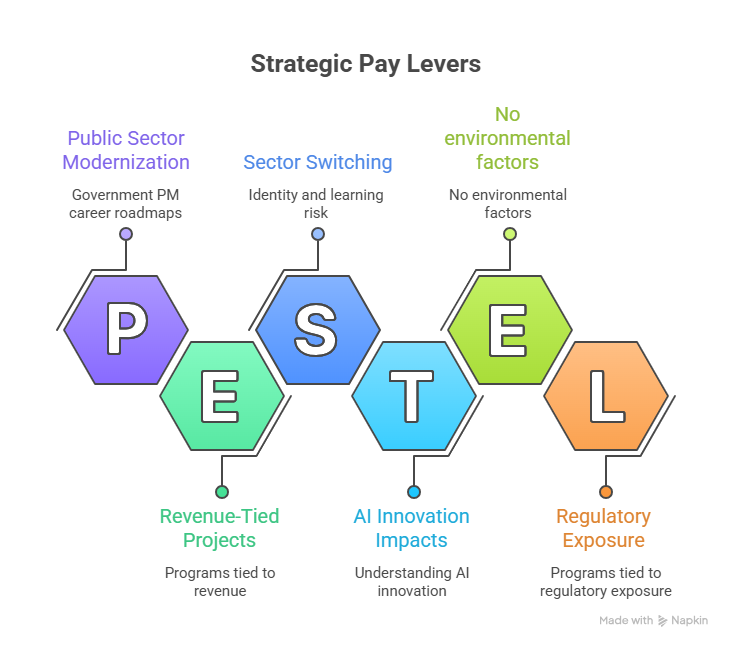
Not every lever that affects the gender pay gap is in an individual’s control. But some of the most powerful earnings levers are controllable, especially when approached strategically. Three of the strongest are certification alignment, sector movement, and visibility into high-value work.
Certification matters because it standardizes credibility in a field where job titles are messy. It does not erase bias, but it can reduce ambiguity during hiring, promotion, and pay discussions. The important point is not collecting credentials for vanity. The point is choosing credentials that unlock access to better-compensated work. For some professionals, that means studying the PMP exam guide, using the 30-day PMP study plan, and reviewing top PMP questions. For earlier-career professionals, it may mean CAPM preparation, the 30-day CAPM plan, and comparing CAPM vs PMP. For agile-heavy roles, PMI-ACP exam preparation, scrum certification, and scrum vs agile certification guidance may be more relevant.
But certifications only create earnings lift when they align with market demand. A credential without scope expansion becomes a decorative line item. The better question is: what job family becomes easier to access after this credential? Does it open enterprise PMO roles, digital transformation roles, consulting work, implementation leadership, portfolio governance, or industry-specific management tracks? The most useful credentials are bridges, not trophies.
Sector movement is the second lever. Professionals often stay in sectors that appreciate them but do not compensate them proportionately. That is understandable. Sector switching carries identity risk and learning risk. Yet staying in underpriced environments can cost a career hundreds of thousands over time. A PM with strong coordination, risk tracking, stakeholder management, and execution discipline may be able to transfer successfully into technology implementations, transformation offices, healthcare systems, infrastructure delivery, public-sector modernization, or consulting-led programs. That is why role-specific content like government PM career roadmaps, IT PM guides, healthcare PM pathways, and construction PM entry guides is so useful. It helps professionals reposition their delivery experience in sector language.
Visibility is the third lever, and it is often underestimated because many PMs assume good work speaks for itself. It does not. Good work must be translated into business visibility. The market rewards PMs who can show transformation impact, executive trust, portfolio influence, and evidence of operating in complexity. That means documenting large milestones, chairing visible meetings, presenting clearly to senior stakeholders, protecting authorship of artifacts, and making sure your role in delivery success is explicit. Content on future of PM leadership, future PMO success, project governance trends, and future certifications by 2030 helps show where the market is heading.
One especially practical tactic is to pursue “money-adjacent” project work. That means programs tied to revenue, operating cost reduction, regulatory exposure, security exposure, implementation speed, customer migration, enterprise systems, or strategic transformation. The closer the work is to measurable business pressure, the easier it becomes to defend higher compensation. Project managers who understand AI innovation impacts, software investment trends, economic pressure and agile demand, and global inflation’s effect on budgets can better spot high-value lanes.
5. A Practical Playbook to Reduce the Pay Gap at the Individual and Organizational Level
Closing the gender pay gap in project management requires action on two fronts at once: individual career positioning and organizational compensation discipline. One without the other is incomplete. Individuals need stronger leverage. Organizations need cleaner systems. When either side avoids responsibility, the gap lingers.
At the individual level, the first move is to stop describing your role as activity and start describing it as control. Instead of saying you managed status reporting, say you accelerated executive decisions by redesigning steering inputs. Instead of saying you coordinated stakeholders, say you reduced delivery friction across functions that were blocking milestone completion. Instead of saying you handled risks, say you surfaced and mitigated risks before they converted into budget loss or schedule erosion. The language matters because compensation follows perceived business leverage.
The second move is to build a compensation evidence file. This should include projects delivered, budgets influenced, teams coordinated, vendors governed, risks prevented, process improvements introduced, delivery acceleration achieved, audit or compliance strength improved, and any quantifiable impact on cost, time, or adoption. It should also include artifacts you created: steering packs, governance frameworks, change logs, issue escalation pathways, recovery plans, operating cadences, and executive dashboards. If you want to be paid like a strategic PM, you need a record that proves strategic PM behavior.
The third move is to benchmark constantly. Do not wait until frustration peaks. Review your positioning against market data, adjacent roles, and recruitment signals at least once a year. Compare yourself not only to people with your title but to people with your actual scope. Study salary by certification comparisons, global salary trend content, and city-level career pages like New York City PM roles, Los Angeles PM opportunities, Chicago PM careers, and Dallas–Fort Worth market analysis.
The fourth move is to target better portfolios, not just better titles. A PM on a high-stakes transformation initiative with budget, governance, and executive reporting exposure can increase market value much faster than a PM who changes title but stays in low-authority work. The quality of your project mix matters enormously. So does your exposure to procurement, compliance, integration, systems delivery, or turnaround work.
The fifth move is to prepare negotiation with hard evidence and narrow asks. Vague asks invite vague responses. Strong asks are structured: here is the scope I manage, here is how it compares to the level above, here is the market range, here is the impact delivered, and here is the adjustment or timeline requested. This approach reduces the chance that the conversation gets diluted into personality, effort, or generic appreciation.
At the organizational level, leaders need to clean up role architecture. Titles should align with actual complexity. Pay bands should be documented. Promotion criteria should be specific. Portfolio allocation should be audited. High-visibility work should not be assigned through informal favoritism. Performance reviews should distinguish between administrative support and business-critical delivery leadership. Compensation reviews should examine not only equal pay within titles but representation in premium-scope roles.
Organizations also need to track who is carrying invisible labor. Who is stabilizing misaligned teams? Who is rescuing broken communication? Who is making executives look more informed and more coordinated? If that labor is crucial, it must be recognized and priced. Otherwise the company benefits from high-value delivery discipline while pretending it is just professionalism.
Finally, leaders should study where the profession is going. Content on future of freelance PM markets, future software trends, future ESG in project management, and future leadership approaches shows that PM value is expanding, not shrinking. Organizations that keep compensating through outdated role assumptions will lose strong talent to employers that understand this sooner.
6. FAQs About the Gender Pay Gap in Project Management
-
Not always. Direct unequal pay for identical roles can happen, but a larger driver is unequal access to higher-paying project environments, bigger portfolios, stronger titles, and promotion pathways. The gap often widens because one group is more likely to manage lower-margin work, support-heavy assignments, or lower-visibility programs while another group gets access to transformation, technology, or revenue-adjacent delivery.
-
The clearest test is scope comparison. Look at the size of budgets touched, governance responsibility, stakeholder seniority, vendor exposure, risk ownership, and business impact you manage. Then compare that to the market value of similar scope, not just your title. If your responsibilities resemble a more senior role elsewhere, you may be under-leveled rather than merely early-career.
-
They can, but only when they improve access to better-paying roles or strengthen salary leverage. A certification that clarifies your credibility for enterprise PM, transformation, agile leadership, or portfolio work is useful. A certification without scope change is less powerful. The strongest value comes when the credential supports a bigger portfolio, cleaner re-leveling case, or stronger external job market signal.
-
Experience tied to business pressure tends to pay more. That includes transformation programs, enterprise systems rollouts, infrastructure work, complex implementation, regulated delivery, procurement-heavy projects, turnaround situations, and portfolios with direct budget, revenue, savings, or risk implications. The market rewards PMs who can operate where failure is expensive.
-
Prepare an evidence-led case, not a loyalty-based case. Document scope, delivery outcomes, risk mitigation, executive trust, process improvements, financial impact, and role complexity. Show how your current work maps to the level you are requesting. Use market benchmarks and portfolio comparisons. The strongest case is specific, measured, and tied to business value rather than effort alone.
-
Start with role audits, pay-band clarity, and portfolio allocation reviews. Check whether women are overrepresented in coordination-heavy or lower-margin PM work and underrepresented in transformation, technology, or senior-governance portfolios. Review performance language, title accuracy, and promotion criteria. Most pay inequity survives because systems are vague enough to hide it.
-
It can do either. Remote work can widen access to stronger markets and reduce geography-based constraints, which helps some professionals. But it can also reduce informal visibility, which matters in promotion decisions. Remote PMs need stronger documentation of impact, clearer authorship of deliverables, and deliberate visibility with sponsors and executive stakeholders.
