
CAPM Exam Mistakes to Avoid: Expert Advice & Guidance
Passing the CAPM exam takes more than reading notes and memorizing project terms. The exam checks whether you can think like an entry-level project professional across predictive, agile, hybrid, and business analysis situations. Candidates who want a stronger foundation should connect CAPM prep with a wider project management career roadmap, real project execution terms, practical risk register examples, and clear stakeholder engagement language. The candidates who improve fastest treat every mistake as a study signal, then rebuild their prep around proof.
1. Why CAPM Candidates Fail Even When They “Studied Hard”
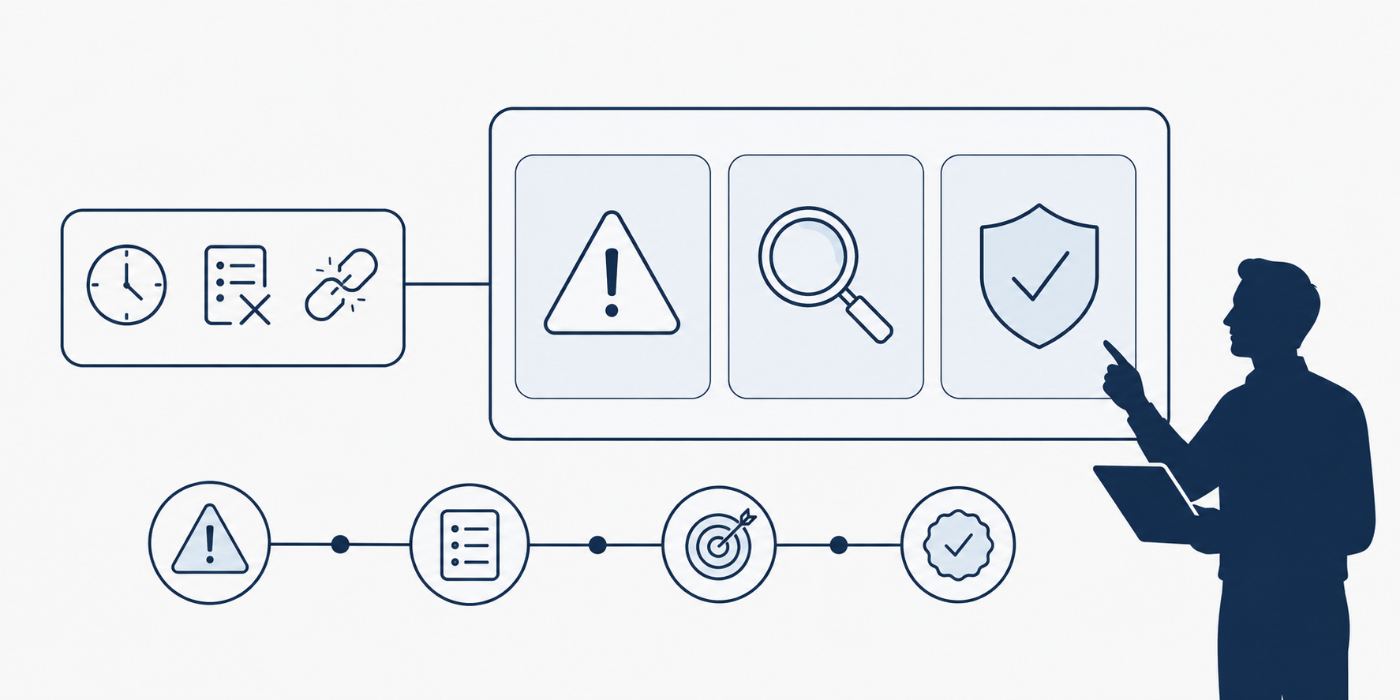
The biggest CAPM mistake is confusing effort with exam readiness. A candidate can spend weeks reading the PMBOK Guide, watching lessons, and highlighting terms, then still struggle when a question asks them to choose the best action in a messy project scenario. CAPM prep should build decision skill, not just recognition. That means studying project monitoring and control terms, practicing earned value management basics, understanding project financial management terms, and learning how a project manager protects scope, schedule, risk, value, and stakeholders at the same time.
Another common issue is using PMP-style anxiety for a CAPM-level exam. CAPM candidates often overcomplicate the material because they read advanced PMP exam domain guidance, jump into difficult PMP exam mistakes, and assume every question requires senior-level judgment. CAPM rewards foundational clarity. You need to know what a risk is, how a change request moves, why a stakeholder register matters, how agile roles interact, and when predictive planning fits better than adaptive delivery.
The danger comes when candidates memorize definitions in isolation. A flashcard can tell you what scope creep means, yet the exam may describe an informal stakeholder request, a skipped change process, a vague acceptance criterion, or a product backlog item that keeps expanding. Strong prep connects terms to behavior. Use the waterfall project management glossary, agile glossary, Scrum glossary, and Kanban terms as working tools, then ask what action a project team member should take next.
| Mistake | What It Looks Like | Why It Hurts | Better Move | APMIC Resource |
|---|---|---|---|---|
| Studying without the ECO | Reading random chapters without mapping prep to exam domains. | You spend time on low-return material while high-weight areas stay weak. | Build a domain checklist before opening study notes. | Exam domain guidance |
| Memorizing definitions only | Knowing terms without recognizing how they appear in project scenarios. | Scenario questions feel unfamiliar even when the vocabulary looks simple. | Attach every term to a project action, artifact, or decision. | Project execution terms |
| Ignoring agile basics | Treating agile as a small side topic during prep. | You lose marks on roles, events, backlogs, increments, and feedback loops. | Review agile through team behavior and delivery rhythm. | Agile glossary |
| Confusing Scrum roles | Mixing Product Owner, Scrum Master, and development team responsibilities. | Accountability questions become traps. | Separate ownership, facilitation, and delivery duties. | Scrum glossary |
| Weak risk language | Calling every problem a risk. | You blur the difference between risk, issue, assumption, and constraint. | Practice classification drills with real project examples. | Risk register examples |
| Skipping change control | Accepting scope changes through informal requests. | Scope, baseline, approval, and governance questions become costly. | Trace every change through review, impact analysis, and approval. | Monitoring and control terms |
| Poor stakeholder thinking | Treating all stakeholders as equal in influence and information needs. | Communication and engagement questions become vague. | Map power, interest, impact, expectations, and communication needs. | Stakeholder engagement terms |
| Avoiding formulas | Leaving CPI, SPI, CV, SV, and basic EVM until the final week. | Simple calculation marks become stressful under time pressure. | Practice formulas with short project-performance scenarios. | EVM terms |
| Weak resource planning | Forgetting capacity, skills, availability, and competing assignments. | Schedule and team assignment questions become guesswork. | Study resource constraints beside schedule and scope impacts. | Resource allocation terms |
| Misreading quality questions | Mixing quality planning, quality assurance, and quality control. | You choose the wrong response even when the topic is familiar. | Connect quality to standards, prevention, inspection, and acceptance. | TQM terms |
| Ignoring closure | Thinking a project ends as soon as delivery ends. | You miss acceptance, handover, records, lessons learned, and release steps. | Study closure as a formal transition, not a casual wrap-up. | Project closure terms |
| Weak reporting judgment | Choosing updates that do not fit the audience. | Communication questions become generic and easy to overthink. | Match reporting detail to stakeholder role, timing, and decision need. | Project reporting terms |
| Reading questions too fast | Missing words like first, next, best, primary, or most likely. | You answer the topic instead of the task. | Pause on the action word before reading answer choices. | Exam mistake guidance |
| Weak agile estimation | Treating story points like exact hours. | Adaptive planning and team-estimation questions become traps. | Study relative sizing, team discussion, and uncertainty handling. | Agile estimation techniques |
| Poor procurement basics | Mixing RFP, RFQ, and RFI purposes. | Vendor and contract questions become uncertain. | Separate information gathering, pricing, and proposal evaluation. | RFP, RFQ, and RFI terms |
| Weak vendor management | Focusing only on the contract document. | You miss performance tracking, acceptance, communication, and issue handling. | Study vendors as controlled delivery partners. | Vendor management terms |
| Studying tools alone | Learning charts and templates without the decision behind them. | You recognize the artifact while missing the project action. | Connect every tool to planning, tracking, control, or communication. | Gantt chart terms |
| Poor schedule compression | Mixing crashing and fast tracking. | Schedule recovery questions become risky. | Compare cost impact, risk impact, and dependency impact. | Schedule compression terms |
| Ignoring ethics | Treating professional conduct as common sense only. | You miss fairness, honesty, responsibility, respect, and transparency cues. | Practice ethical scenario reasoning, especially under pressure. | Leadership and communication terms |
| Overusing mock scores | Chasing percentages without reviewing wrong answers. | Your weak patterns stay hidden behind a single number. | Keep an error log by domain, concept, and mistake cause. | Exam success habits |
| Cramming too late | Trying to learn every domain in the final days. | Recall becomes fragile when timing pressure rises. | Use spaced review, short drills, and mixed timed sets. | Exam prep resources |
| Weak career context | Treating CAPM as a badge instead of job-ready language. | You miss how concepts appear in coordinator and junior PM work. | Study concepts through real role responsibilities. | Entry-level to executive roadmap |
| Skipping business analysis | Focusing only on project plans, schedules, and teams. | Requirements, value, validation, and acceptance questions become painful. | Study needs discovery, requirement clarity, and solution fit. | Backlog terms |
| Ignoring hybrid delivery | Assuming every project is fully agile or fully predictive. | Mixed-method questions feel confusing. | Compare delivery approach to uncertainty, change rate, and control needs. | Hybrid project management |
| Weak conflict judgment | Choosing escalation before listening, clarifying, or facilitating. | People and team questions become too aggressive. | Study conflict sources, response styles, and team communication. | Conflict resolution terms |
| Tool overload | Downloading too many apps, templates, videos, and question banks. | Your prep system becomes scattered. | Use one tracker, one question log, and one review rhythm. | PM templates and resources |
| Ignoring exam stamina | Practicing only short quizzes. | Fatigue changes your decisions late in the exam. | Add timed blocks and review breaks before exam week. | Common exam mistakes |
| No post-error system | Repeating the same mistake across multiple mock tests. | You mistake activity for improvement. | Tag every error by concept, habit, and repair action. | Project manager roadmap |
2. Study Planning Mistakes That Make CAPM Prep Feel Harder Than It Should
Many CAPM candidates begin with the wrong question: “How many weeks do I need?” A better starting point is “Which domains can I explain, apply, and defend under time pressure?” Time only helps when the plan is organized around domain gaps. Build your study calendar around the four major areas: fundamentals, predictive methods, agile methods, and business analysis. Then support each area with practical resources such as project planning terms, agile metrics, risk mitigation terms, and stakeholder engagement examples.
A weak study plan usually has three symptoms. First, the candidate studies favorite topics repeatedly because those sessions feel productive. Second, the candidate avoids uncomfortable areas like procurement, EVM, business analysis, and agile estimation. Third, the candidate tracks hours instead of evidence. Strong CAPM preparation uses proof assets: a domain checklist, a missed-question log, a formula sheet, a risk/issue/assumption/constraint drill sheet, and a one-page agile role map. These simple assets build more confidence than another passive video session, especially when paired with PMP exam preparation resources, project reporting best practices, resource allocation terms, and schedule compression concepts.
The other planning mistake is waiting too long to practice questions. Practice questions reveal how the exam phrases confusion. They show whether you can separate a risk from an issue, a sponsor from a stakeholder, a backlog item from a deliverable, or a change request from an informal update. Start with small sets early, review every miss deeply, then move into mixed timed blocks. A candidate who studies communication terms, conflict resolution terms, project closure concepts, and quality management terms through questions will learn faster than someone who reads the same chapter five times.
3. Practice Question Mistakes That Keep Your Score Flat
The most expensive practice mistake is reviewing only the questions you got wrong. Correct answers can hide lucky guesses, weak logic, and answer-choice elimination habits that collapse under pressure. After every practice set, mark each question as confident correct, lucky correct, confused wrong, or knowledge-gap wrong. This gives you a real diagnostic picture. Then rebuild with targeted review using earned value management terms, Gantt chart concepts, RFP and RFQ language, and vendor management terms.
Another score-killer is treating every missed question as a content problem. Many misses come from reading behavior. CAPM questions often hinge on a single instruction: first, next, best, primary, least, or most likely. A content mistake means you lacked knowledge. A reading mistake means you had the knowledge and applied it to the wrong task. Those errors need different fixes. A candidate who repeatedly misses “next step” questions should practice decision sequencing with monitoring and control terms, change-friendly execution language, risk response planning, and stakeholder communication terms.
You should also avoid single-source confidence. One question bank can teach you the style of that question bank. Use your official outline as the map, then use questions as drills. When you miss agile questions, return to Scrum terms, Kanban terms, and agile estimation techniques. When you miss predictive questions, return to waterfall project management terms, schedule compression terms, and project financial terms. The goal is pattern repair, not random repetition.
4. Exam-Day Mistakes That Turn Preparation Into Panic
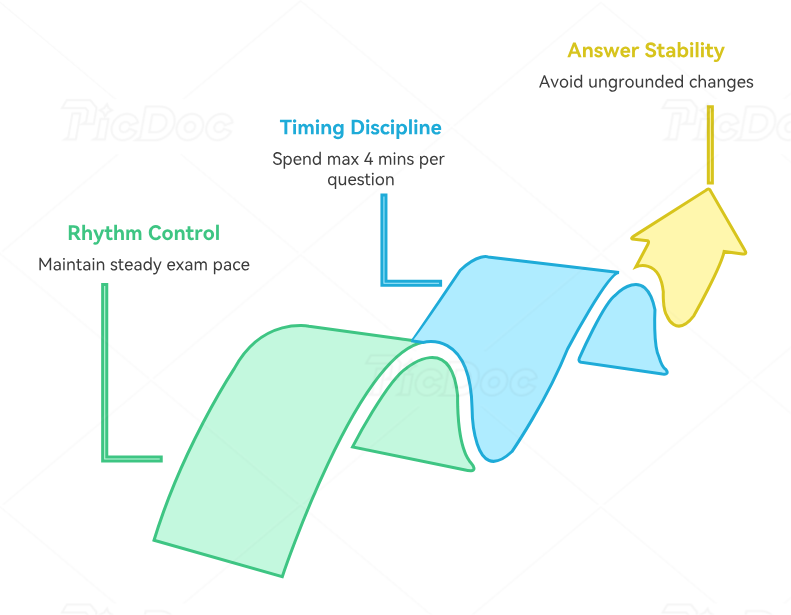
CAPM exam-day performance depends on rhythm. Candidates often lose control because they treat every question as equally emotional. Some questions will feel easy, some will feel suspiciously easy, and some will feel badly written even when they are testing a simple distinction. Your job is to keep moving with discipline. Read the stem, identify the project situation, decide whether the question is asking for prevention, correction, escalation, communication, or analysis, then eliminate choices that violate basic project logic. This approach strengthens the same instincts you build through project monitoring terms, project reporting best practices, risk mitigation planning, and stakeholder engagement terms.
Timing errors usually come from attachment. A candidate spends four minutes fighting one question because it feels familiar and unfair. That behavior steals time from easier marks later. Use a simple rule: answer, flag, and move when the question stops improving with additional thought. During practice, train this habit with mixed quizzes that include EVM calculations, agile framework questions, business analysis-style backlog questions, and predictive planning terms. The exam rewards steady judgment more than dramatic problem-solving.
Another exam-day mistake is changing answers without a reason. Second thoughts help when you find a specific clue you missed. They hurt when fear starts rewriting logic. Before changing an answer, name the reason: wrong role, wrong sequence, wrong process, wrong stakeholder, wrong delivery approach, or wrong risk response. This keeps review controlled. The same discipline appears in real project work, especially in IT project management careers, healthcare project management roles, construction project management careers, and government project management paths, where decisions need traceability.
5. The Expert Fix: Build a CAPM Prep System That Finds Weakness Early
A strong CAPM prep system has four parts: domain mapping, active recall, scenario practice, and error repair. Domain mapping tells you what to study. Active recall proves what you can remember without help. Scenario practice tests whether you can use the knowledge. Error repair turns every miss into a specific adjustment. This system connects well with a bigger project management career path, especially for candidates aiming toward project coordinator, IT project manager, agile project manager, or Scrum Master roles.
Your weekly study rhythm should be simple enough to repeat. Start the week with one domain focus. Review the concepts. Complete a small active recall sheet. Do two practice sets. Review every missed and lucky-correct answer. End the week with one mixed set that forces switching between predictive, agile, hybrid, and business analysis logic. Use agile estimation guidance, project closure terms, quality management terms, and resource allocation concepts as targeted repair tools rather than casual reading.
The best candidates also translate CAPM knowledge into workplace language. Scope becomes acceptance clarity. Risk becomes future uncertainty with a response plan. Issue becomes a current problem needing action. Stakeholder engagement becomes expectation management. Agile becomes value delivery through feedback. Predictive planning becomes controlled delivery through baselines. Business analysis becomes needs discovery and requirement clarity. This translation helps your exam score and your resume. It also prepares you for later moves into PMP certification maintenance, project portfolio management, project management consulting, and project management director roles.
6. FAQs: CAPM Exam Mistakes to Avoid
-
The biggest mistake is studying passively for too long. Reading, highlighting, and watching lessons can feel safe, yet the CAPM exam requires applied recognition. You need to know how a concept appears inside a project situation. Use project execution terms, risk register examples, stakeholder engagement terms, and agile glossary support to turn definitions into decisions.
-
Start practice questions early, even before you feel fully ready. Early questions reveal weak vocabulary, weak reading habits, and weak domain judgment. Begin with small sets, review every miss, and keep a simple error log. Then connect mistakes to resources such as EVM terms, project reporting terms, Scrum terms, and waterfall terms.
-
Mock scores move up and down when your knowledge is uneven or your question-reading process is unstable. A score dip can come from a weak domain, fatigue, guessing, or question wording. Track the cause of each miss instead of only tracking the percentage. Review common exam mistakes, exam preparation resources, schedule compression terms, and conflict resolution terms to repair patterns.
-
You should know the basic formulas well enough to use them calmly in simple scenarios. The goal is quick recognition, correct substitution, and practical interpretation. For example, CPI and SPI should tell you what is happening to cost and schedule performance. Strengthen formula confidence with earned value management terms, project financial management terms, Gantt chart terms, and resource allocation terms.
-
Look for the delivery environment first. Predictive questions usually involve baselines, detailed upfront planning, formal control, and phase-based work. Agile questions usually involve changing requirements, iterative delivery, backlog refinement, team collaboration, and frequent feedback. Hybrid questions combine both. Build this judgment with agile terms, Scrum glossary guidance, Kanban terms, and hybrid project management trends.
-
Use the final week for consolidation, timing, and error repair. Review your missed-question log, repeat weak formulas, complete mixed timed sets, and revisit the official exam outline. Avoid adding too many new resources at the last moment. Focus on high-yield repair using PMP exam preparation resources, project monitoring terms, risk response planning, and project closure terms.
