
Is Project Management a Dying Career Because of AI? Reddit Debate, Layoff Patterns & Skills That Become More Valuable
AI is stripping administrative work out of project management faster than many professionals expected. Meeting summaries, status reports, schedules, risk scans, documentation, and routine follow-ups can increasingly be accelerated or automated. That creates legitimate anxiety for anyone considering whether project management is still worth entering, investing in a PMP certification, building real project-management experience, or planning a career change into PM. The evidence in 2026 points toward a profession being redesigned around higher-value judgment rather than one disappearing.
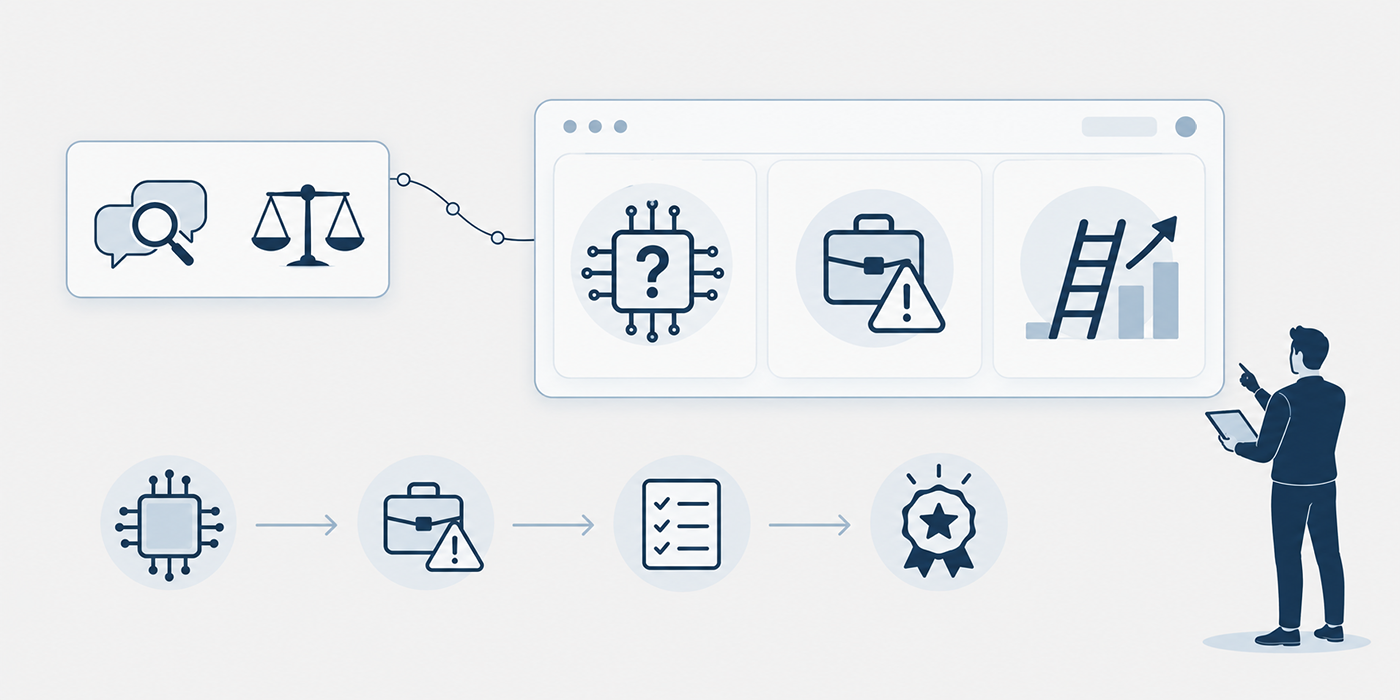
1. Is Project Management Actually Dying? The 2026 Data Says the Role Is Changing, Not Collapsing
The strongest labor-market evidence does not support the claim that project management is headed toward extinction. The U.S. Bureau of Labor Statistics projects employment of project management specialists to grow 7% from 2025 through 2035, compared with 3% across all occupations, with roughly 76,500 openings per year over the decade. BLS specifically expects demand to be supported by organizations seeking higher productivity and by increasingly complex IT projects. That matters for anyone assessing project-management career viability, the IT-to-project-management pathway, cybersecurity-related PM opportunities, and long-term program-management progression.
The World Economic Forum reaches a similarly important conclusion from a global perspective. Its Future of Jobs analysis identifies Project Managers among the job categories contributing substantially to net employment growth through 2030, even while AI, automation, demographic shifts, geopolitical pressures, and the green transition reshape occupations. That creates opportunities around environmental project management, future cybersecurity delivery, agile project leadership, and increasingly technology-intensive project governance. WEF simultaneously expects 39% of workers' existing skill sets to transform or become outdated between 2025 and 2030. The risk therefore sits heavily in skill stagnation, rather than simply occupying a PM job title.
The difficult part is that employment growth can coexist with painful restructuring. LinkedIn's 2026 Labor Market Report found hiring in advanced economies running roughly 20% to 35% below pre-pandemic levels, while its analysis explicitly argues that the broad hiring slowdown is primarily linked to macroeconomic uncertainty and monetary conditions rather than AI replacement. At the same time, U.S. jobs requiring AI-literacy skills grew 70% year over year, and LinkedIn identified approximately 1.3 million AI-enabled jobs created globally over the preceding two years. A PM who understands what employers actually screen for, builds credible delivery evidence, follows software-adoption shifts, and develops remote-collaboration capability is competing in a changing market, rather than waiting for a stable one to return.
This distinction explains why two PMs can look at AI and reach opposite conclusions. A coordinator spending most of the week compiling reports, moving dates, scheduling meetings, formatting slides, copying updates between systems, and chasing routine status information has substantial automation exposure. A project leader negotiating scope with an executive sponsor, resolving a vendor dispute, deciding whether to delay a launch, protecting a budget, managing regulatory risk, and rebuilding stakeholder confidence possesses a different economic profile. Understanding that difference is as important as choosing between PMP, CAPM, PRINCE2, and AgilePM, planning a project coordinator promotion, moving from business analysis into PM, or pursuing senior PM consulting.
The profession is therefore separating into two layers. Project administration is becoming cheaper and more automated. Project accountability is becoming more valuable as organizations deploy increasingly complex technology, AI systems, cybersecurity controls, regulatory changes, transformations, and cross-functional initiatives. PMI's decision to publish a global standard for artificial intelligence in portfolio, program, and project management in June 2026 reinforces this direction: AI is already becoming part of professional project work, while governance around its use is becoming a project responsibility in itself. Professionals studying PMO effectiveness, enterprise PM-tool selection, future PM certifications, and project-management executive careers should prepare for that higher-accountability version of the profession.
2. What the 2026 Reddit Debate Gets Right About AI Replacing Project Managers
Reddit's project-management communities reveal a more useful debate than the simplistic question “Will AI replace PMs?” Recent threads repeatedly separate tasks from roles. Practitioners describe using AI for email summarization, meeting notes, agenda formatting, data analysis, draft plans, reporting, spreadsheet checks, timeline validation, and risk discovery. Similar capabilities already appear inside the project-management software market, modern remote collaboration platforms, increasingly automated enterprise PM tools, and mature PMO reporting structures. The productivity gain is real, especially for work that previously consumed hours without requiring much judgment.
A second Reddit theme is equally important: AI can generate something that looks professionally complete before it is operationally correct. One September 2026 discussion described a new PM using AI to create a highly detailed WBS that expanded into 171 technical items, while the technical SME's real-world decomposition was dramatically smaller. That exposes a dangerous failure mode. PMs who cannot independently assess scope, dependencies, technical assumptions, or stakeholder reality may become faster at producing wrong artifacts. Candidates who currently rely on credentials more than real delivery experience, who struggle with employer experience screens, or who are entering PM with no experience should treat this as a warning about fundamentals rather than a reason to avoid AI.
The strongest practitioners in these discussions describe AI as something closer to an unusually fast analyst or assistant: useful for reorganizing information, finding patterns, interrogating project history, checking data, and accelerating first drafts, while final judgment remains with the professional who understands the situation. That model rewards people who can combine AI fluency with business-analysis skill, earned-value knowledge, cost-management expertise, and the governance judgment expected from a senior project-management consultant. AI increases the speed at which competent professionals can operate. It also increases the speed at which weak assumptions can spread when nobody checks them.
Reddit users also repeatedly return to the human problems sitting beneath project plans: competing priorities, resistant stakeholders, disengaged team members, vague executive instructions, departmental politics, contradictory incentives, ownership disputes, and sponsors who want incompatible outcomes. Those problems explain why an experienced project governance leader, program manager, project-management executive, or future COO transitioning from PM is economically different from someone whose primary output is an updated Gantt chart. AI can recommend a response to conflict. The accountable professional still has to walk into the meeting, understand what each party actually wants, create a workable compromise, and live with the consequences.
The most credible fear raised in those communities concerns role compression. One AI-enabled PM may eventually handle administrative work that previously required a PM plus one or two coordinators. A team of five project managers may support a workload that previously required seven. That can reduce headcount even while the profession survives. This makes the early-career challenge especially serious for people choosing between CAPM and experience building, comparing the Google PM Certificate with CAPM, targeting a project coordinator pathway, or pursuing an agile PM career. The entry-level ladder may narrow before the senior profession disappears.
3. What Layoff Patterns Actually Show About AI and Project Management Jobs
Layoffs deserve a more disciplined interpretation because “AI layoffs” can hide several causes inside one headline. Companies are simultaneously responding to higher capital costs, slower hiring, pandemic-era overexpansion, restructuring, mergers, weak product lines, investor pressure, offshoring, automation, and large AI infrastructure investments. LinkedIn's 2026 research explicitly cautions against treating the wider hiring slowdown as an AI-created phenomenon. Its August workforce reporting showed U.S. national hiring still down 7.6% year over year in July 2026, while its broader analysis attributes weak advanced-economy hiring primarily to economic conditions. Candidates evaluating whether PM demand is holding up, project-management salary, PMP career ROI, and future credential demand should distinguish labor-market weakness from proven occupational replacement.
AI nevertheless changes restructuring mathematics. If reporting, analysis, documentation, forecasting, and coordination become faster, leaders will ask whether layers of work can be removed. The vulnerable employee is frequently the one whose contribution is difficult to distinguish from software output. This applies to PMs whose resumes say “managed schedules,” “facilitated meetings,” and “prepared reports” far more than to professionals who demonstrate complex project outcomes, PMO-level governance, cybersecurity delivery knowledge, or program-level ownership. AI therefore raises the penalty for being difficult to economically differentiate.
Recent corporate experiments also show why replacement should not be assumed to proceed cleanly. Reuters reported in August 2026 that Meta had pursued an ambitious AI-driven organizational transformation involving dramatically smaller AI-supported teams, but pulled back from part of the plan after productivity, reliability, security, and organizational problems emerged. The lesson for PM professionals is deeper than whether one company succeeded. Real organizations contain legacy systems, governance requirements, incomplete data, regulatory obligations, distrust, stakeholder resistance, and operational dependencies. Those conditions create work for people skilled in business transformation, technology project leadership, project governance, and organizational executive delivery.
A better layoff-risk model therefore asks four questions. How much of your week produces standardized artifacts? How much authority do you have over consequential decisions? How scarce is your industry knowledge? How clearly can you prove financial or operational impact? Someone whose work is 70% coordination and documentation should deliberately move toward stakeholder ownership, business-analysis capability, cost control, or senior consulting capability. Someone already responsible for multimillion-dollar decisions, high-stakes clients, regulation, vendor performance, and executive alignment has a more defensible role because eliminating that person creates a different category of business risk.
The same logic explains why layoffs can coexist with new PM demand. Every enterprise AI rollout creates requirements around data readiness, stakeholder adoption, process redesign, security, vendor management, legal review, governance, benefits realization, and change control. PMI's 2026 AI standard explicitly frames AI implementation as portfolio, program, and project work requiring responsible adoption. Professionals who combine cybersecurity and PM knowledge, PMO governance skills, agile transformation capability, and enterprise collaboration knowledge can move toward the projects being created by automation rather than competing only for the tasks automation removes.
4. The Project Management Skills That Become More Valuable as AI Gets Better
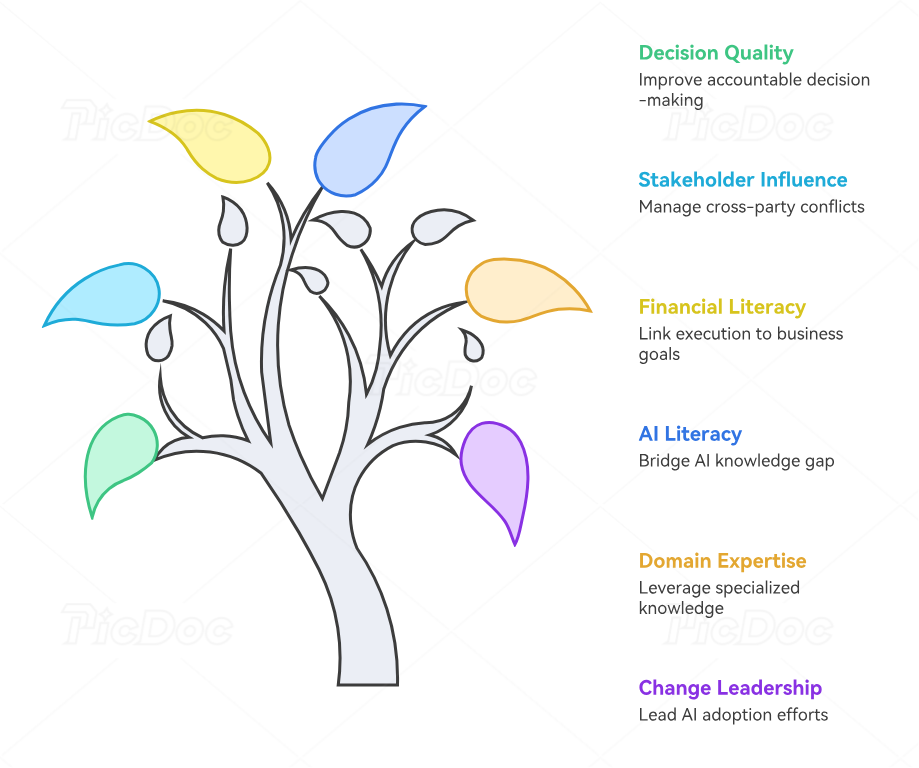
The first rising skill is decision quality under imperfect information. AI can calculate scenarios faster than a person, while somebody must decide which variables deserve trust, how much uncertainty the organization can tolerate, which risk requires escalation, and when waiting for more information costs more than acting. That makes earned-value knowledge, business-analysis expertise, cost-management capability, and mature project governance more useful. AI can make the information layer cheaper. Professionals able to convert information into accountable decisions become easier to distinguish.
The second is stakeholder influence. Project failure often begins where the project-management system stops: executives refuse a decision, departments protect resources, customers change priorities, legal introduces a late requirement, vendors reject accountability, or team members disagree on what “done” means. These are precisely the situations that make program managers, PM executives, senior consultants, and professionals on a PM-to-COO path valuable. Influence requires credibility, timing, relationship history, emotional calibration, authority awareness, negotiation, and the ability to challenge somebody who may outrank you without losing sponsorship.
The third is commercial and financial literacy. PMs who only understand tasks will compete increasingly with automation. PMs who understand margin, cost of delay, utilization, working capital, vendor economics, contractual exposure, investment trade-offs, and benefits realization can connect execution to the reasons the project exists. That strengthens a career in construction project management, environmental project management, marketing project management, or nonprofit project leadership because the person can discuss delivery in the language senior leadership uses to allocate resources.
The fourth is AI literacy with verification discipline. PMI's research says only about 20% of project managers report good or extensive practical AI experience, while 49% report little or no understanding of AI in the context of project management. That creates a temporary career gap for professionals willing to learn how AI works, where model outputs fail, what data can safely be used, which decisions require human review, how prompts affect outputs, and how governance should be documented. Understanding cybersecurity-project-management trends, future cyber requirements, tool-selection practices, and software adoption strengthens that capability.
The fifth is domain expertise. A generic PM who knows templates faces greater substitution pressure than a PM who understands clinical systems, ERP migration, construction sequencing, aerospace certification, cybersecurity controls, financial regulation, manufacturing operations, or environmental permitting. Domain depth also improves the quality of AI use because the professional can detect technically plausible nonsense. This is why candidates transitioning from IT into project management, business analysis into PM, agile delivery into PM, or traditional PM into agile leadership should preserve their original expertise instead of trying to become completely generic.
The sixth is change leadership. AI implementation itself creates organizational disruption. Employees worry about jobs, managers overestimate capabilities, legal teams worry about data, security teams restrict access, procurement evaluates vendors, finance demands ROI, and executives want productivity quickly. The PM who can coordinate those interests becomes useful precisely because AI adoption is difficult. That capability overlaps with SAFe transformation experience, Scrum@Scale knowledge, PMO governance, and program-management leadership. WEF's broader workforce research similarly expects technology skills to rise alongside distinctly human capabilities such as resilience, agility, leadership, and collaboration.
5. How to Make Your Project Management Career Harder to Replace Over the Next 12 Months
Start by auditing your work week. Divide every recurring activity into four categories: automate, augment, own, and deepen. Automate transcription, formatting, first-draft reporting, repetitive data manipulation, and routine documentation. Augment risk analysis, scenario planning, requirements review, and schedule analysis with AI while keeping validation. Own stakeholder decisions, conflict, scope, commercial commitments, escalations, and benefits. Deepen the domain knowledge that lets you judge outputs correctly. This approach is more useful than collecting random credentials, especially when comparing PMP ROI, CAPM career value, certification options by career stage, and future credential demand.
Next, rebuild your resume around business consequences rather than PM activity. “Produced weekly executive status reports” is becoming low-value evidence. “Recovered a six-week schedule variance by renegotiating supplier milestones and resequencing three dependent workstreams, protecting a $4.2 million launch” demonstrates judgment. “Facilitated stakeholder meetings” is weak. “Resolved scope conflict between operations, security, and product teams, securing executive approval without extending launch date” is defensible. Candidates struggling because certification is not producing interviews, building portfolio evidence, pursuing a project-coordinator promotion, or making a mid-career PM transition need this reframing urgently.
Then become the person who knows where AI should stop. Learn which company data is permitted inside which tools, how confidential information should be handled, how outputs are reviewed, what evidence is required before an AI-generated recommendation affects a decision, who owns errors, and when human escalation is mandatory. This turns AI familiarity into governance competence. The same professional can contribute to cybersecurity-focused PM work, future technology programs, enterprise tool decisions, and more mature project-governance leadership. PMI's new AI standard makes this capability increasingly relevant to formal project practice.
Early-career professionals should be especially deliberate because AI can remove some traditional apprenticeship work. Instead of spending two years merely updating trackers, seek exposure to requirements workshops, vendor calls, risk reviews, estimates, budget discussions, retrospectives, change requests, executive updates, and post-implementation reviews. Build a sanitized portfolio containing a charter, RAID log, stakeholder map, baseline plan, change register, status report, budget tracker, decision log, and lessons learned. That creates the proof employers seek, strengthens an experience-light CAPM profile, improves a no-experience PM roadmap, and prepares you for the coordinator-to-PM jump.
Finally, move your career progressively toward larger consequences. Manage bigger budgets, more complex dependencies, regulated environments, external customers, contractual obligations, multi-country stakeholders, strategic transformations, or portfolios. Those experiences provide routes into program management, senior PM consulting, project-management executive positions, and eventually operating leadership. The safest career strategy in an AI economy is becoming increasingly accountable for problems where being wrong costs the organization meaningful money, time, trust, or regulatory exposure.
6. FAQs
-
AI is likely to replace or compress specific project-management tasks far sooner than the complete role. Meeting notes, report drafting, schedule analysis, document formatting, risk suggestions, and routine tracking already have high automation potential. Scope ownership, negotiation, escalation, commercial judgment, accountability, organizational politics, and difficult stakeholder decisions remain substantially harder. Current BLS projections still show project-management employment growth, while candidates should strengthen real delivery evidence, AI-adjacent technical knowledge, and program-level capability.
-
Some organizations are reducing headcount while explicitly pursuing AI-enabled productivity, and administrative PM work is exposed to role compression. Current labor-market evidence does not support attributing the overall 2026 hiring slowdown primarily to AI. LinkedIn identifies broader macroeconomic conditions as the larger driver. Professionals should therefore watch PM hiring patterns, understand employer screening behavior, improve portfolio evidence, and build technology-domain expertise.
-
The highest exposure sits with professionals whose value is concentrated in scheduling, status collection, transcription, formatting, document production, reminder chasing, dashboard commentary, and other standardized coordination. Vulnerability decreases as responsibility expands into budgets, scope, contracts, stakeholder conflict, strategic prioritization, risk ownership, regulation, change leadership, and business outcomes. A junior professional can reduce exposure through the project coordinator-to-PM pathway, stronger experience proof, targeted PM certification choices, and deeper business-analysis capability.
-
PMP can still be useful when target employers value it and you meet the experience requirements. AI increases the importance of judgment and governance, areas where formal PM knowledge can complement practical delivery experience. Calculate PMP ROI, compare PMP with CAPM, PRINCE2, and AgilePM, examine future certification demand, and keep building evidence beyond credentials.
-
Start with practical workflow skills: structured prompting, summarization, document drafting, data analysis, risk interrogation, meeting synthesis, scenario comparison, and project-data querying. Then learn verification, privacy, security, hallucination risk, human-review controls, and governance. Those capabilities become stronger when combined with cybersecurity knowledge for PMs, understanding of enterprise PM tools, awareness of software-adoption trends, and mature PMO governance. PMI describes basic AI fluency as increasingly essential for project professionals.
-
The profession still offers a credible long-term path, although the entry route is changing. Early-career candidates should expect less value from purely administrative coordination and more pressure to demonstrate analytical ability, AI fluency, domain knowledge, and real project exposure. A stronger plan combines a realistic no-experience PM roadmap, careful evaluation of CAPM without experience, deliberate portfolio evidence building, and progression toward higher-responsibility project roles. BLS and WEF projections remain positive for project-management employment.
