
Project Management & Cybersecurity: Original Analysis of Emerging Trends (2026)
Cybersecurity has become a delivery constraint for nearly every technology-enabled project. A weak access model, exposed vendor dependency, unpatched component, or uncontrolled AI tool can invalidate months of planning within hours. In 2026, project managers need enough cyber fluency to translate threats into scope, ownership, funding, acceptance criteria, and executive decisions. This analysis examines the trends reshaping project delivery and provides a practical operating model for building security into governance, procurement, development, deployment, and post-launch accountability.
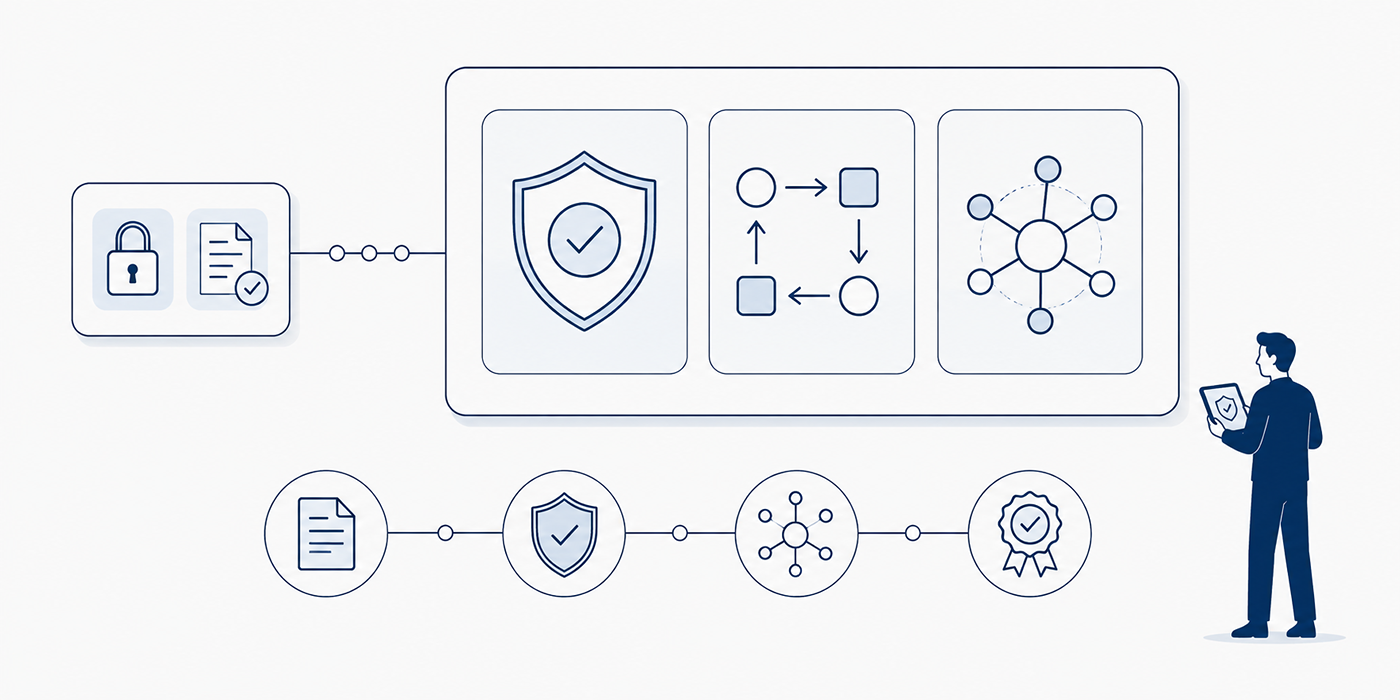
1. Why Cybersecurity Has Become a Core Project Management Responsibility
Cybersecurity increasingly determines whether a project can launch, scale, comply, and recover. A customer portal, cloud migration, connected factory, data platform, hospital system, or AI deployment creates new identities, integrations, dependencies, data flows, and attack paths. These exposures begin during design and procurement, long before a security operations team receives the finished product.
The 2026 Verizon Data Breach Investigations Report examined more than 31,000 incidents and over 22,000 confirmed breaches across 145 countries. Software vulnerability exploitation became the most common initial access route, accounting for 31% of breaches, while ransomware appeared in 48%. Generative AI supported 15% of attack techniques examined in the report. These findings place patching, architecture, dependency management, release controls, and recovery planning directly inside the project delivery system.
A project manager may never configure a firewall or investigate malware. Their decisions still determine whether security work receives budget, enters the schedule, has an accountable owner, and becomes part of acceptance. Strong project governance practices, disciplined risk register management, traceable project monitoring and control, effective stakeholder engagement, and decision-ready project reporting now form part of cyber resilience.
The financial consequences also demand executive-level treatment. IBM’s 2026 research places the global average cost of a data breach at $4.99 million, a 12% annual increase. AI-driven attacks increased by 56%, while extensive use of AI and automation in security was associated with $1.93 million in cost savings compared with organizations using none. Project leaders therefore face a dual mandate: control the risks introduced by AI while using automation to improve defensive speed and coverage.
This mandate changes the business case. A digital initiative should include security engineering, testing, monitoring, incident preparation, compliance evidence, vendor assurance, and recovery capability in its investment model. Excluding them creates an artificially attractive budget that transfers predictable costs into operations. The same logic applies to project financial management, resource allocation, earned value management, schedule compression decisions, and project execution controls.
NIST Cybersecurity Framework 2.0 reinforces this shift through six connected functions: Govern, Identify, Protect, Detect, Respond, and Recover. The added Govern function connects cybersecurity strategy, policy, accountability, and risk appetite with organizational objectives. For project managers, this means cyber decisions should appear in steering packs, investment gates, supplier agreements, release criteria, and benefits reviews.
The following APMIC matrix translates major 2026 threats and frameworks into project-level controls. It is an original analytical model designed for charters, delivery plans, stage gates, RAID logs, procurement reviews, and project assurance.
| Project Area | Emerging Cyber Exposure | Required PM Control | Evidence Required at Gate | Primary Accountable Parties |
|---|---|---|---|---|
| Business case | Security costs excluded from investment assumptions | Include engineering, assurance, monitoring, recovery, and compliance costs | Total security cost and residual-risk estimate | Sponsor, finance, CISO, project manager |
| Project charter | Security treated as an undefined technical concern | Define security objectives, risk appetite, authority, and escalation routes | Approved cyber objectives and decision rights | Sponsor, PM, security lead |
| Governance | Decisions delayed between technology, security, and business teams | Create cyber RACI, tolerances, approval gates, and exception rules | Signed RACI and governance calendar | Steering committee, CISO, PMO |
| Requirements | Security expectations remain vague or untestable | Convert obligations into traceable functional and nonfunctional requirements | Requirements traceability matrix | Business analyst, security architect, product owner |
| Data classification | Sensitive information receives insufficient protection | Classify data before architecture, migration, and vendor selection | Approved data inventory and classification map | Data owner, privacy lead, security team |
| Architecture | Insecure trust boundaries and excessive connectivity | Schedule threat modeling before design approval | Threat model, data-flow diagram, mitigations | Enterprise architect, security architect, PM |
| Identity design | Excessive user, service, or machine privileges | Define least privilege, strong authentication, and access lifecycle controls | Role model and privileged-access design | IAM lead, application owner, HR |
| AI agents | Autonomous tools receive uncontrolled permissions | Assign attributable identities, scoped permissions, runtime controls, and kill switches | Agent register and human-oversight design | AI owner, IAM lead, security, legal |
| Procurement | Supplier security is reviewed after contract signature | Place assurance, breach notification, audit, and exit terms in the RFP | Security schedule and negotiated contract clauses | Procurement, legal, security, PM |
| Third parties | Critical subcontractors remain invisible | Map fourth parties, data access, hosting regions, and concentration risk | Dependency map and risk-tier assessment | Vendor manager, service owner, security |
| Cloud configuration | Misconfiguration exposes storage, services, or credentials | Build configuration baselines and automated policy checks into delivery | Baseline scan and exception record | Cloud engineer, platform owner, security |
| Secure development | Security tasks enter the backlog too late | Integrate secure coding, review, testing, and remediation into the lifecycle | Secure development plan and Definition of Done | Engineering lead, product owner, application security |
| Software dependencies | Vulnerable or compromised components enter releases | Require dependency inventory, scanning, provenance, and remediation SLAs | Software bill of materials and scan results | Development lead, vendor, security |
| AI supply chain | Poisoned models, datasets, plugins, or libraries | Validate origin, integrity, licensing, testing, and update controls | Model card, data lineage, provenance evidence | AI lead, data owner, security, legal |
| Secrets management | Credentials appear in code, tickets, files, or chat tools | Use managed vaults, rotation, detection, and access logging | Secrets scan and vault configuration | Platform team, developers, security |
| Change control | Urgent changes bypass security assessment | Add cyber impact, rollback, and monitoring questions to change approval | Approved change record and rollback plan | Change authority, service owner, security |
| Security testing | Testing finds severe defects immediately before launch | Schedule layered testing throughout design, build, integration, and release | Test results and signed remediation decisions | QA lead, penetration tester, product owner |
| Vulnerability management | Known weaknesses remain without owners or deadlines | Set severity-based remediation SLAs and escalation thresholds | Prioritized vulnerability register | Asset owner, engineering lead, security |
| Patch readiness | Unsupported assets and slow patch routes create exposure | Define inventory, testing, deployment windows, and emergency patch authority | Patch operating model and asset coverage | Operations, vendor, security, service owner |
| Release gate | Business pressure overrides unresolved critical risks | Use explicit cyber acceptance criteria and documented risk acceptance | Go-live checklist and signed exceptions | Sponsor, product owner, CISO delegate |
| Monitoring | New services launch without useful detection coverage | Define logs, alerts, ownership, retention, and response workflows | Monitoring coverage and alert-routing test | SOC, service owner, platform team |
| Incident response | Teams improvise during a breach | Create playbooks, contacts, evidence procedures, and decision thresholds | Exercised incident-response plan | Incident commander, legal, communications, CISO |
| Materiality assessment | Executives lack reliable impact information during an incident | Define financial, operational, legal, and customer-impact assessment routes | Materiality protocol and escalation tree | Legal, finance, executive team, security |
| Regulatory reporting | Notification deadlines are missed or unsupported | Map jurisdictions, clocks, approvers, evidence, and communication channels | Regulatory obligation matrix | Legal, privacy, compliance, incident lead |
| Business continuity | Critical service dependencies have no workable alternatives | Define recovery priorities, manual workarounds, and dependency failover | Exercised continuity and recovery plan | Business owner, resilience lead, operations |
| Backups | Backups exist but cannot be restored safely or quickly | Set recovery targets and test isolated, immutable restoration | Successful restoration evidence | Infrastructure lead, service owner, resilience team |
| OT and IoT | Connected physical assets create safety and availability risks | Separate safety, cyber, operational, and vendor assurance workstreams | Asset map, segmentation design, response plan | Engineering, operations, safety, security |
| Post-quantum transition | Long-lived data relies on vulnerable cryptography | Inventory algorithms, certificates, protocols, products, and replacement dependencies | Cryptographic inventory and migration roadmap | Architecture, security, procurement, application owners |
| Closure and transition | Temporary access, test data, and unresolved risks survive project closure | Revoke access, transfer ownership, dispose of data, and fund residual actions | Security handover and closure certificate | PM, service owner, data owner, security |
2. Six Cybersecurity Trends Reshaping Project Delivery in 2026
AI Security Is Becoming a Separate Project Workstream
AI is changing both the attack surface and the pace of attack. The World Economic Forum reported that 87% of surveyed respondents viewed AI-related vulnerabilities as the fastest-growing cyber risk during 2025. Its 2026 outlook also highlights geopolitical fragmentation, supply-chain complexity, and widening differences in cyber capability between organizations.
An AI project therefore needs dedicated controls for training data, model provenance, prompts, retrieval sources, plugins, output handling, machine identities, human approval, monitoring, and model retirement. OWASP warns that AI supply chains can be compromised through manipulated models, poisoned data, and trojanized dependencies. NIST has also extended secure software guidance to generative AI and dual-use foundation models.
Project managers should connect these risks to AI project management predictions, machine-learning estimation practices, automation-driven career change, project management API integrations, and the future of cloud-connected PM software. The project plan should identify exactly where AI acts, what information it can reach, which decisions it can influence, and how humans can stop or override it.
Vulnerability Remediation Is Becoming a Schedule-Critical Capability
The rise of vulnerability exploitation means security depends heavily on operational speed. A project can launch successfully and become exposed days later when a new vulnerability appears in a component, appliance, API, or cloud service. The deliverable therefore requires an ongoing patch route, asset owner, supplier contact, test environment, maintenance window, and emergency decision authority.
This places cybersecurity inside schedule management, change control, project risk responses, resource planning, and monitoring practices. A security defect without a funded remediation route remains an accepted exposure, regardless of how clearly it appears in a scanner report.
Software Supply-Chain Security Is Moving Into Procurement
OWASP’s 2025 Top 10 expanded its component-risk category into “Software Supply Chain Failures,” covering dependencies, build systems, repositories, and distribution infrastructure. NIST’s Secure Software Development Framework similarly recommends integrating secure development practices into each software development lifecycle.
This trend changes how project managers handle vendor and supplier management, RFP, RFQ, and RFI preparation, software tool selection, project governance, and financial risk management. Contracts should address component provenance, software bills of materials, vulnerability notification, remediation times, subcontractors, audit rights, secure deletion, service continuity, and exit assistance.
The most dangerous procurement failure happens when a supplier wins on price and functionality while security obligations remain negotiable after selection. At that point, the project has lost leverage. Security schedules and evidence requirements should influence scoring before commercial commitment.
Regulation Is Compressing Incident Decision Time
The SEC requires covered public companies to disclose a material cybersecurity incident on Form 8-K generally within four business days after determining that the incident is material. The rule requires information on the incident’s nature, scope, timing, and material impact or reasonably likely material impact.
NIS2 establishes a shared cybersecurity framework covering 18 critical sectors across the European Union. DORA became binding for EU financial entities in January 2025 and strengthens operational-resilience and third-party ICT oversight. The Cyber Resilience Act introduces lifecycle cybersecurity requirements for hardware and software products with digital elements.
Project teams must translate applicable rules into requirements engineering, business analysis, ISO-related controls, project reporting obligations, and stakeholder communication routes. A regulation listed vaguely as “compliance risk” offers little operational value. The project needs named obligations, evidence owners, approval gates, notification clocks, and record-retention requirements.
Operational Resilience Is Overtaking Prevention-Only Thinking
Ransomware, cloud outages, supplier failures, account compromise, and destructive attacks cannot always be prevented. Projects need a credible route for maintaining critical operations, restoring data, rebuilding systems, communicating with customers, and making commercial decisions during disruption.
This shifts attention toward risk response planning, project closure and handover, PMO effectiveness, quality management, and executive project leadership. Recovery time objectives should influence architecture, hosting, contract terms, staffing, and testing. A backup screenshot cannot demonstrate recoverability; a timed restoration exercise can.
Post-Quantum Migration Is Becoming a Portfolio Planning Issue
NIST released its first three finalized post-quantum cryptography standards in 2024 and encourages organizations to begin migration. The transition requires discovery because cryptography is embedded across applications, certificates, devices, protocols, libraries, supplier products, and long-lived data.
For many organizations, this will become a multi-year portfolio rather than a single technology replacement. Project leaders need portfolio prioritization, PMO governance, supplier coordination, resource forecasting, and disciplined project financial control. Initial work should identify long-lived sensitive information, cryptographic dependencies, replacement constraints, and systems likely to remain operational throughout the transition period.
3. How to Integrate Cybersecurity Across the Project Lifecycle
Initiation: Define Exposure Before Approving Investment
The initiation stage should identify the information, systems, users, suppliers, jurisdictions, and physical processes affected by the proposed change. A preliminary threat assessment can expose expensive design constraints before the project commits to an architecture or vendor.
The charter should identify a security owner, define escalation authority, establish risk appetite, and state the evidence required at each gate. Use project governance terminology, stakeholder mapping practices, risk register structures, project execution concepts, and business-analysis preparation to make ownership explicit.
A useful initiation question is: What could this project enable an attacker, careless user, compromised supplier, or uncontrolled AI agent to do that they cannot do today? The answer exposes new permissions, data access, financial authority, operational influence, and trust relationships.
Planning: Convert Cyber Risks Into Funded Work
A cyber risk becomes manageable when it has a cause, credible event, business consequence, probability, impact, trigger, response, owner, deadline, and residual exposure. Statements such as “risk of hacking” are too broad to guide investment. A stronger entry would describe an internet-facing legacy component, a delayed upgrade, the likelihood of exploitation, expected service disruption, and the planned mitigation.
The schedule should include architecture reviews, privacy analysis, threat modeling, supplier assurance, secure configuration, code scanning, penetration testing, incident exercises, access reviews, recovery tests, and remediation periods. These activities belong in the baseline alongside Gantt chart planning, agile estimation, sprint planning, resource allocation, and earned value measurement.
Security contingency should also be realistic. Late testing frequently identifies changes affecting architecture, interfaces, workflows, and suppliers. A project with zero remediation allowance has effectively decided that launch pressure will dominate security evidence.
Execution: Make Secure Delivery Visible
Security work should appear in backlogs, work packages, status reports, demonstrations, and quality reviews. Agile teams can place security criteria in the Definition of Done, while predictive projects can link them to design, build, testing, and acceptance milestones. Hybrid environments can combine stage-gate assurance with iterative technical delivery.
Useful operating resources include agile project management terminology, Scrum backlog concepts, Kanban flow terminology, Waterfall delivery definitions, and agile performance metrics.
The project manager should monitor unresolved critical vulnerabilities, overdue access decisions, untested integrations, supplier evidence gaps, threat-model actions, secrets exposure, compliance exceptions, and recovery readiness. Reporting the number of completed security tasks can hide the severity of remaining exposure. Executive reports should show residual business risk and the decision required.
Monitoring and Control: Track Exposure Alongside Cost and Schedule
Cybersecurity needs leading and lagging indicators. Leading indicators include percentage of assets inventoried, critical vulnerabilities within SLA, privileged accounts reviewed, supplier evidence completed, recovery scenarios tested, and security requirements traced to tests. Lagging indicators include incidents, failed releases, emergency changes, exposed secrets, and service downtime.
These measures strengthen project reporting, monitoring and control, quality management, PMO effectiveness analysis, and portfolio decision-making. Metrics should drive action. A dashboard that remains red for six steering meetings without escalation has become decorative reporting.
Closure: Transfer Security Accountability Into Operations
Project closure should confirm asset ownership, monitoring coverage, support contacts, patch responsibility, supplier obligations, recovery procedures, unresolved risks, privileged access, data retention, and funding. Temporary accounts, test environments, sample data, shared credentials, and emergency exceptions should be removed or formally transferred.
Use a structured project closure process, documented risk acceptance, complete reporting handover, clear vendor ownership, and traceable governance decisions. Closure should occur after the service owner accepts both the deliverable and its ongoing cyber responsibilities.
4. The Cybersecurity Skills Project Managers Need in 2026
Risk Translation
Project managers need to translate technical findings into delivery and business consequences. “Critical remote-code-execution vulnerability” should become a clear statement about affected services, exploitability, downtime, customer exposure, regulatory implications, remediation cost, and decision deadline.
This capability builds on risk mitigation terminology, risk-register design, financial management, stakeholder communication, and conflict resolution. Executives need the decision logic, while specialists need enough technical context to trust the translation.
Secure Requirements and Acceptance Criteria
Cyber fluency begins with requirements such as authentication strength, encryption, logging, retention, availability, restoration, vulnerability remediation, regional hosting, vendor notification, and administrative access. Every critical requirement should have a verification method and accountable approver.
Project managers can strengthen this area through CPRE requirements engineering, PMI-PBA preparation, ISO terminology, quality-management concepts, and project execution controls.
Vendor and Contract Fluency
Project managers should understand security questionnaires, assurance reports, penetration-test summaries, subcontractor disclosures, breach notification, liability, data return, secure deletion, exit support, remediation SLAs, and audit rights. They should also recognize where a supplier answer requires specialist validation.
Relevant foundations include vendor-management terminology, RFP and RFQ concepts, project financial controls, resource-allocation decisions, and governance best practices.
AI Governance
AI governance requires model and use-case inventories, data controls, testing, human oversight, access management, output handling, accountability, monitoring, and retirement. IBM’s 2026 guidance gives particular attention to controlling agentic identities through scoped permissions, runtime enforcement, human attribution, and auditability.
Project managers can connect this capability to AI adoption trends, AI project innovation, automation-driven PM careers, software integration planning, and future PM competencies.
Incident and Crisis Coordination
During an incident, project-management discipline becomes highly valuable. Teams need workstream coordination, decision logs, dependency tracking, executive updates, regulator and customer timelines, action ownership, and controlled handoffs. The PM can support the incident commander while security specialists investigate and contain the threat.
Strong preparation draws on leadership communication, stakeholder engagement, conflict resolution, project reporting, and monitoring and control. The project manager should understand the response structure before an incident, because a live breach offers little time to negotiate roles.

5. A 90-Day Plan for Building Cybersecurity Into Project Management
Days 1–30: Establish Visibility
Create an inventory of active projects that introduce internet exposure, sensitive data, cloud services, AI, third parties, privileged access, operational technology, or customer-facing systems. Rank them by business criticality and exposure.
For each high-priority project, review the charter, RAID log, supplier scope, architecture, test plan, release criteria, and operational handover. Compare existing controls with the 28-row matrix above. Use project management templates, risk-register guidance, reporting terminology, stakeholder engagement tools, and project governance practices to standardize the assessment.
The output should identify missing ownership, unfunded controls, late testing, weak vendor terms, absent recovery exercises, and unclear release authority. Limit the first cycle to gaps capable of causing major business harm.
Days 31–60: Embed Controls Into Delivery
Update templates and governance gates. Add cyber objectives to the charter, security assumptions to the business case, cyber risks to the RAID log, evidence requirements to procurement, security criteria to the backlog, and operational readiness to the closure checklist.
Define a minimum assurance path based on risk tier. A low-risk internal tool may require baseline configuration and access review. A high-risk customer platform may require architecture assessment, threat modeling, secure development controls, supplier assurance, penetration testing, incident exercises, and executive risk acceptance.
Connect the model with hybrid project management, agile metrics, Waterfall controls, resource allocation, and schedule management. The control framework should fit the delivery model while preserving required evidence and authority.
Days 61–90: Test Decisions and Recovery
Select one critical project and run a scenario exercise. Possible scenarios include ransomware during migration, compromised supplier credentials, exposed cloud storage, an AI agent making unauthorized changes, a zero-day vulnerability before launch, or loss of a critical SaaS provider.
Measure how quickly the team identifies the service owner, affected data, supplier obligations, technical responders, executive decision-maker, communication lead, regulatory route, recovery priority, and customer impact. Capture every delay caused by unclear information or authority.
Feed the results into PMO effectiveness improvement, future PMO design, leadership development, digital transformation governance, and the response to major cybersecurity concerns in PM software.
By day 90, the organization should have a risk-tier model, cyber RACI, updated templates, defined assurance gates, supplier clauses, release criteria, dashboard measures, and one exercised response scenario. These controls provide a practical foundation for scaling maturity.
6. FAQs About Project Management and Cybersecurity
-
Cybersecurity is a shared delivery responsibility. Security specialists define and validate technical controls, while project managers ensure that work has scope, funding, sequencing, ownership, evidence, escalation, and approval. The PM should integrate cyber activities into project governance, risk management, resource planning, project reporting, and operational handover.
-
A project manager needs practical fluency in threats, controls, identity, data classification, secure development, third-party risk, vulnerability remediation, incident response, recovery, and regulatory obligations. Deep technical configuration remains with specialists. The PM’s value comes from converting specialist findings into requirements, plans, dependencies, business consequences, and decisions. Useful foundations include risk registers, requirements engineering, vendor management, ISO concepts, and leadership communication.
-
Security should enter during business-case and charter development. Early involvement allows the team to shape architecture, procurement, data use, access, budget, schedule, and acceptance criteria. Late involvement limits the available responses to expensive redesign, formal risk acceptance, or delayed launch. NIST’s SSDF guidance emphasizes integrating secure practices into the development lifecycle rather than treating them as a final inspection.
-
Include specific scenarios involving credential compromise, exposed data, vulnerable components, supplier failure, cloud misconfiguration, unavailable services, ransomware, insufficient logging, delayed patching, weak recovery, AI misuse, regulatory reporting, and unsupported technology. Each entry should identify the cause, event, business impact, owner, trigger, response, deadline, and residual exposure. Use risk mitigation terminology, risk-register examples, financial impact concepts, and monitoring controls.
-
Agile teams should place security requirements, threats, defects, testing, and remediation in the backlog. Security acceptance criteria belong in user stories and the Definition of Done. Larger risks may need architecture enablers, dedicated threat-modeling workshops, or release-level controls. Combine Scrum terminology, backlog management, agile estimation, agile metrics, and Kanban flow management to make security work visible.
-
Unresolved critical vulnerabilities, missing authentication controls, exposed secrets, unapproved regulatory gaps, absent monitoring, failed recovery tests, unknown data flows, incomplete supplier obligations, and risks exceeding approved tolerance can justify blocking release. The decision should follow predefined severity thresholds and named approval authority. Strong project governance, monitoring and control, quality criteria, and stakeholder communication prevent launch pressure from bypassing evidence.
-
Create an inventory of AI systems, models, datasets, plugins, agents, integrations, permissions, owners, and affected decisions. Require data classification, model provenance, security testing, output validation, human oversight, logging, monitoring, scoped identities, and shutdown procedures. Track these controls through AI project management, software integrations, project governance, risk registers, and future PM skills.
