
Career Pathway: Transitioning from PM to Chief Operating Officer (COO)
Project managers already work close to the operating core of a business: priorities, resources, risks, budgets, teams, vendors, and executive expectations. Reaching the COO seat requires expanding that delivery discipline across the entire organization. The strongest candidates combine project leadership capabilities, enterprise governance judgment, portfolio-level decision-making, and the future-ready competencies expected from senior project leaders. This guide explains how to build those capabilities, prove them commercially, and position yourself as an executive who can run a dependable operating system.
1. Understand What Changes When a Project Manager Becomes a COO
A project manager is normally accountable for a defined outcome within an approved scope, budget, schedule, and governance structure. A COO carries continuing responsibility for how the business performs after individual projects close. That includes operating margins, customer delivery, workforce capacity, supplier reliability, process quality, regulatory exposure, and the company’s ability to execute its strategy repeatedly. Knowledge of project execution terminology, monitoring and control practices, project financial management, and resource allocation provides a strong foundation, though each discipline must eventually be applied across departments rather than within one project.
The biggest shift concerns the duration of accountability. Project managers can hand over a completed system, facility, product, or transformation. COOs remain responsible for adoption, staffing, service levels, cost control, maintenance, customer impact, and operational improvement. A capable COO therefore connects requirements engineering with frontline execution, combines business analysis discipline with commercial judgment, and converts stakeholder engagement into decisions that employees can implement. Hiring panels want evidence that you can sustain performance after the launch meeting, celebration email, or formal project closure.
The second shift concerns scale. A senior PM may manage a major initiative with hundreds of contributors, yet still operate inside an established organizational design. A COO must decide whether that design remains appropriate. This requires evaluating reporting lines, decision rights, spans of control, incentives, process ownership, and cross-functional friction. Experience with PMO effectiveness, hybrid project management, Agile terminology, and Waterfall governance helps because COOs frequently need different operating methods for different workstreams.
The third shift concerns commercial accountability. PMs often protect approved budgets; COOs influence the economic model that creates those budgets. You need to understand revenue drivers, gross margin, contribution margin, working capital, cash conversion, fixed versus variable costs, unit economics, and the operational consequences of pricing decisions. Skills developed through cost management certification preparation, earned value management, project estimation, and global project-budget analysis become far more valuable when you can connect them to profitability, cash flow, and investment choices.
There is also a major identity shift. PM credibility often comes from being the person who organizes ambiguity and keeps delivery moving. COO credibility comes from building an organization that can perform without constant personal intervention. That demands scalable systems, capable managers, clear operating metrics, controlled escalation paths, and consistent decision forums. Studying project governance trends, leadership communication, conflict resolution, and future leadership approaches helps you replace heroic delivery with institutional capability.
Your first practical task is to identify which bridge role can widen your mandate. Common stepping-stones include program director, portfolio director, transformation director, PMO leader, chief of staff, head of operations, business-unit leader, vice president of delivery, and general manager. The right choice depends on the exposure it provides. A role with ownership of portfolio prioritization, vendor management, workforce planning, and executive reporting can accelerate your progress more effectively than a prestigious title with narrow delivery authority.
| Capability | What “Good” Looks Like | Business Impact | Signals / Tools | Who You Align With |
|---|---|---|---|---|
| Requirements control | Clear baselines, traceable changes, signed approvals, and controlled scope decisions. | Lower rework and fewer delivery disputes. | Requirements log, traceability matrix, change register. | Business owners, legal, product leaders. |
| Governance cadence | Decision gates, escalation rules, meeting design, and visible accountability. | Faster executive decisions and fewer stalled initiatives. | Steering pack, RACI, decision log. | CEO, board, PMO, executive sponsors. |
| Procurement fluency | Understands bid timelines, evaluation logic, contract constraints, and vendor leverage. | Shorter sourcing cycles and stronger commercial terms. | RFP calendar, SOW checklist, evaluation matrix. | Procurement, finance, legal. |
| Cost control | Tracks committed, actual, forecast, and avoidable costs across business units. | Improved margin and fewer budget shocks. | Cost baseline, forecast-at-completion, variance review. | CFO, controllers, business-unit heads. |
| Portfolio prioritization | Allocates capital and talent according to strategic value, capacity, and risk. | Higher return on investment and reduced initiative overload. | Portfolio scorecard, sequencing model, kill criteria. | CEO, CFO, strategy leaders. |
| Financial forecasting | Connects delivery assumptions to revenue, cost, cash, and margin forecasts. | More accurate planning and earlier corrective action. | Rolling forecast, scenario model, sensitivity analysis. | CFO, FP&A, commercial teams. |
| Benefits realization | Measures whether completed investments produce the expected operational outcomes. | Stronger investment discipline and less value leakage. | Benefits register, owner map, post-implementation review. | Finance, strategy, functional owners. |
| Business analysis | Diagnoses operating problems before prescribing technology, restructuring, or process changes. | Better investment choices and cleaner solution design. | Process map, root-cause analysis, business case. | Product, operations, technology leaders. |
| Enterprise risk ownership | Aggregates strategic, operational, supplier, financial, and compliance risks. | Fewer surprises and stronger resilience. | Enterprise risk register, heat map, risk appetite. | CEO, legal, audit, board committees. |
| Resource allocation | Directs scarce talent toward the work with the highest strategic and commercial value. | Higher productivity and reduced bottlenecks. | Capacity heat map, utilization model, skills matrix. | HR, finance, department heads. |
| Capacity planning | Forecasts hiring, contractor, shift, and capability requirements before demand peaks. | Stable delivery and controlled labor costs. | Demand forecast, staffing model, workload dashboard. | HR, finance, frontline leaders. |
| Vendor performance | Sets commercial expectations, service levels, review cycles, and exit options. | Stronger service reliability and lower dependency risk. | SLA scorecard, QBR, corrective-action plan. | Procurement, legal, technology teams. |
| Executive reporting | Converts operational detail into decisions, exposure, options, and recommended action. | Faster interventions and stronger executive confidence. | One-page dashboard, exception report, decision memo. | CEO, board, investors. |
| Stakeholder alignment | Surfaces competing incentives and creates clear trade-offs before conflict delays execution. | Higher commitment and cleaner implementation. | Influence map, engagement plan, alignment workshop. | Executives, customers, partners. |
| Conflict resolution | Separates personal tension from structural problems and resolves decisions at the right level. | Less political drag and stronger cross-functional performance. | Issue framing, escalation ladder, decision rights. | Functional leaders, HR, executive team. |
| Change adoption | Designs implementation around behavior, incentives, capability, and frontline conditions. | Higher adoption and faster benefits realization. | Readiness assessment, adoption metrics, reinforcement plan. | HR, communications, department heads. |
| Process design | Defines ownership, handoffs, controls, exceptions, and measurable service standards. | Lower cycle time and fewer operating errors. | SIPOC, process map, standard operating procedure. | Operations, quality, technology teams. |
| Quality management | Builds prevention, inspection, root-cause correction, and continuous improvement into operations. | Lower failure cost and stronger customer trust. | Control plan, defect analysis, corrective actions. | Quality, customers, operations leaders. |
| Compliance literacy | Translates standards and regulations into practical controls, evidence, and ownership. | Reduced exposure and improved audit readiness. | Control library, evidence register, audit calendar. | Legal, compliance, audit, security. |
| Digital systems thinking | Understands how workflows, data, integrations, and user behavior affect operating performance. | Better technology investments and lower tool fragmentation. | Systems map, integration roadmap, platform governance. | CIO, CTO, data leaders. |
| Automation judgment | Selects automation opportunities through value, control, reliability, and workforce-impact criteria. | Lower administrative cost and faster throughput. | Automation backlog, control review, value tracker. | Technology, finance, process owners. |
| Data-driven decisions | Uses leading and lagging indicators to challenge assumptions and direct action. | Earlier intervention and more reliable forecasts. | KPI tree, variance analysis, predictive models. | Data, finance, functional executives. |
| Agile operating rhythm | Uses short feedback loops, transparent work, and rapid learning where uncertainty is high. | Faster adaptation and reduced delivery waste. | Backlog, review cadence, retrospectives. | Product, technology, customer teams. |
| Cross-functional leadership | Creates shared outcomes across leaders with different metrics, incentives, and priorities. | Improved enterprise execution. | Shared scorecard, operating forum, accountability map. | Entire executive team. |
| Talent development | Builds succession, management capability, role clarity, and performance accountability. | Deeper leadership bench and lower key-person risk. | Succession map, competency model, development plans. | CEO, CHRO, functional leaders. |
| Crisis discipline | Stabilizes priorities, decision authority, communications, and recovery work under pressure. | Lower disruption and faster operational recovery. | Incident room, recovery plan, escalation protocol. | CEO, legal, security, communications. |
| ESG integration | Connects environmental and social commitments to procurement, operations, data, and accountability. | Reduced reputational exposure and stronger stakeholder confidence. | ESG scorecard, supplier criteria, emissions baseline. | Board, legal, procurement, investors. |
| Industry depth | Understands the sector’s economics, regulation, customers, delivery model, and talent constraints. | Faster judgment and greater executive credibility. | Industry metrics, market map, regulatory calendar. | CEO, board, customers, regulators. |
2. Build the Five Capabilities That Separate COO Candidates From Senior PMs
The first capability is financial command. You should be able to review an operating statement, challenge a forecast, explain a margin movement, identify cash constraints, and evaluate a business case without waiting for finance to translate every figure. Build this skill by connecting cost-professional concepts, earned value measurements, project financial terminology, and economic pressure on project budgets to revenue, gross margin, cash flow, and return on invested capital. Ask to participate in monthly business reviews and volunteer to explain operational variances alongside finance.
The second capability is operating-model design. Many PMs can improve a workflow inside a project, while fewer can redesign how work moves through an organization. Learn to map demand, decisions, dependencies, controls, service levels, and exception paths from customer request to delivered outcome. Your toolkit should combine project execution controls, quality-management principles, ISO-aligned operating standards, and hybrid delivery methods. The proof hiring panels value is measurable: cycle time reduced, defects contained, approvals simplified, capacity released, or customer service stabilized.
The third capability is organizational leadership. Your future COO role will depend heavily on the quality of managers who translate executive priorities into daily performance. Start developing supervisors, workstream leads, and department heads before you hold an executive title. Use leadership and communication frameworks, stakeholder-engagement methods, conflict-resolution practices, and future leadership models to create stronger managers rather than becoming the default escalation point. A credible executive successor can name the leaders they have built, the responsibilities delegated, and the performance systems that kept standards visible.
The fourth capability is enterprise prioritization. Senior PMs often inherit the project portfolio. COO candidates learn to challenge it. They ask which initiatives advance strategy, which ones consume scarce capacity, which commitments should pause, and which operational problems deserve investment before another transformation begins. Learn the mechanics of project portfolio management, resource allocation, workforce planning, and future PMO responsibilities. Then create a portfolio review that exposes strategic contribution, financial value, resource load, delivery risk, and stopping criteria on one page.
The fifth capability is technology judgment. A COO does not need to replace the CIO or CTO, though the role requires enough technical fluency to challenge platform decisions, integration costs, data quality, automation controls, user adoption, and vendor dependency. Study the future of project-management software, AI applications in project management, machine-learning applications, and project-management APIs and integrations. Focus your executive questions on business value, control design, integration burden, operating ownership, and the cost of maintaining the solution after implementation.
Risk leadership connects all five capabilities. Many project managers document risks effectively, yet executive hiring panels want evidence of prevention, resilience, and decisive response. Build an enterprise view using risk-register practices, risk-response planning, cybersecurity-related project concerns, and supplier-management controls. Present risks through potential business interruption, financial exposure, customer impact, regulatory consequence, and recovery time. That framing shows that you understand the organization behind the project plan.
3. Follow a Deliberate 18-to-36-Month PM-to-COO Transition Plan
Begin with a hard capability audit. Score yourself from one to five across finance, operations, strategy, people leadership, commercial management, technology, governance, and industry depth. Require evidence for every score. Completing a budget qualifies as project finance exposure; owning a business-unit forecast demonstrates broader commercial responsibility. Running a steering committee shows governance experience; redesigning decision rights across functions demonstrates operating-model capability. Use business-analysis methods, project-monitoring terminology, portfolio-management trends, and future executive competencies to define what advanced evidence should look like.
During months one through six, pursue scope expansion inside your current role. Ask to own a recurring operating metric, a cross-functional improvement problem, a vendor relationship, or a portion of the annual planning process. Examples include reducing order-to-delivery time, improving resource utilization, correcting supplier performance, or stabilizing customer onboarding. These assignments let you apply vendor-management practices, resource-allocation concepts, project-reporting discipline, and quality-management tools to business performance that continues beyond a project deadline.
During months six through eighteen, build a portfolio of operating proof. Each case study should show the initial business condition, financial or customer exposure, your diagnosis, the operating changes introduced, the stakeholders aligned, and the sustained result. “Delivered an ERP implementation” remains too narrow for a COO narrative. A stronger account explains how the work standardized processes, shortened close cycles, improved data quality, lowered manual effort, and created ownership after go-live. Use language informed by digital-transformation trends, automation’s impact on PM careers, software integration strategy, and benefits-realization measurements.
By months twelve through twenty-four, target roles that add missing executive exposure. A PMO director role may strengthen portfolio governance and executive access. A transformation director role may create wider cross-functional authority. A head-of-operations role may add recurring service and workforce accountability. A general manager role may provide direct revenue and profit responsibility. Compare opportunities by reviewing their access to project governance, financial management, workforce systems, and portfolio decisions. Choose the role that closes your most consequential capability gap.
Industry choice deserves equal attention. A COO in construction needs strong subcontractor, schedule, safety, and cash-flow command. A financial-services COO needs regulatory, process-control, technology, and risk depth. A renewable-energy COO needs capital-project, supply-chain, permitting, and stakeholder expertise. Examine construction project-management trends, financial-services innovation, renewable-energy opportunities, and sustainability-led project management. Deep sector knowledge can outweigh a perfect title progression because it improves judgment under pressure.
By months eighteen through thirty-six, seek visible responsibility for an enterprise outcome. Strong examples include margin recovery, service improvement, post-merger integration, operating-model redesign, enterprise cost reduction, customer-retention improvement, or a large-scale technology transformation with measurable adoption. Build governance through clear decision structures, control delivery through monitoring practices, manage uncertainty through risk-response planning, and document results through executive reporting. This becomes the flagship case that demonstrates readiness for COO-level accountability.
What Is Your Biggest Barrier to Reaching a COO Role?
4. Position Your Experience So Executive Hiring Panels See COO Potential
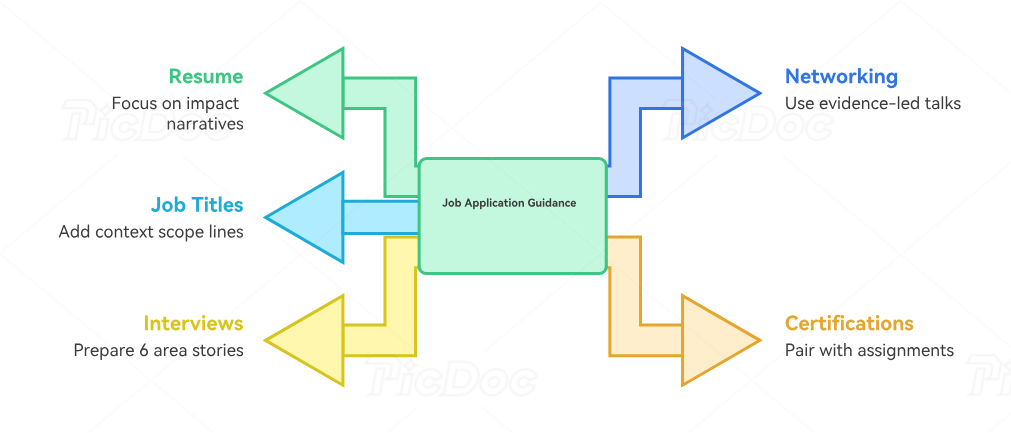
Your resume should present an operating narrative rather than a chronological list of project duties. Lead with the scale of the business problems you have solved: revenue protected, costs removed, capacity created, customers retained, risks reduced, or operating performance stabilized. Replace activity-heavy descriptions with evidence connected to financial management, resource optimization, risk mitigation, and stakeholder alignment. Every major achievement should clarify the condition you inherited, the decisions you influenced, the functions involved, and the sustained commercial result.
Job titles require context. “Senior Project Manager” can represent a narrow coordinator role or enterprise-scale leadership. Add a scope line beneath each relevant position: operating budget influenced, team size, regions served, customers affected, suppliers managed, transformation value, or business units involved. Then describe how you used portfolio governance, vendor controls, quality systems, and executive reporting. This gives hiring panels enough evidence to assess your operating complexity rather than relying on title assumptions.
Your interview stories should cover six areas: commercial judgment, cross-functional leadership, difficult trade-offs, operating improvement, talent development, and crisis response. Prepare one detailed example for each. Explain the data you used, the incentives you uncovered, the options considered, the decision made, the resistance encountered, and the result sustained. Reference your command of conflict resolution, risk-register management, leadership communication, and governance design through the quality of your explanation rather than through terminology alone.
Executive networking should be evidence-led. Instead of asking senior leaders for general career advice, discuss operating problems you have solved and seek perspective on larger versions of those problems. Engage with CEOs, CFOs, COOs, board advisers, investors, and executive recruiters inside your chosen sector. Use insights from construction transformation, financial-services project leadership, renewable-energy project opportunities, and future PM leadership to ask informed questions that demonstrate industry awareness.
Certifications can strengthen credibility when they close a visible gap. A PMP maintenance plan can preserve your delivery credentials, PMI-PBA preparation can deepen analytical capability, CCP preparation can support cost expertise, and Agile certification comparisons can help you select an adaptive-delivery credential. Executive readiness still depends on applied scope. Pair every learning investment with a business assignment that produces measurable operating evidence.
5. Prepare for the First 100 Days After Securing a COO Role
The first month should focus on operational truth. Meet the CEO, CFO, functional leaders, frontline managers, critical customers, and major suppliers. Ask each group where commitments break, which decisions move too slowly, where data cannot be trusted, and which risks receive insufficient attention. Review stakeholder-engagement structures, supplier-management practices, financial control terminology, and risk-register methods before creating conclusions. Early credibility comes from diagnosis grounded in evidence and operating reality.
Build a concise operating baseline covering revenue delivery, margin, cash, customer service, quality, workforce capacity, technology reliability, major projects, supplier performance, and compliance. Define which metrics are trustworthy, which require repair, and which encourage counterproductive behavior. Use monitoring and control principles, Agile metrics, earned value concepts, and project-reporting practices to construct a scorecard that drives decisions rather than producing decorative reporting.
During days thirty to sixty, clarify the operating cadence. Define which meetings exist, what decisions belong in each forum, who owns the inputs, and how unresolved issues escalate. Remove duplicate reviews, separate information sharing from decision-making, and establish a visible action system. Combine governance best practices, PMO operating trends, leadership communication methods, and conflict-resolution tools. A disciplined cadence turns strategy into repeated executive behavior.
During days sixty to one hundred, select a small number of operating priorities. Each priority needs an accountable owner, measurable baseline, target outcome, resource commitment, dependency map, and review schedule. Avoid launching a broad transformation before understanding capacity and change fatigue. Apply portfolio prioritization, resource-allocation discipline, change-adoption principles, and risk-response planning. Early wins should improve the operating system while building confidence in the managers who will sustain it.
Your relationship with the CEO requires explicit design. Agree on decision rights, communication frequency, escalation thresholds, board responsibilities, and the division between strategic and operating leadership. Discuss how disagreements will be resolved before a high-pressure situation tests the relationship. Draw on executive governance principles, future leadership approaches, stakeholder-alignment practices, and reporting discipline. A strong CEO-COO partnership gives the organization one coherent leadership system rather than competing centers of authority.
6. Frequently Asked Questions
-
The timeline depends on your current scale, sector experience, commercial exposure, and access to bridge roles. A senior PM who already influences budgets, managers, vendors, and executive decisions may build credible COO evidence within three to five years. A project manager with narrow delivery responsibility may need several progressive roles. Focus on scope gained rather than elapsed time. Experience in portfolio management, project financial management, workforce planning, and enterprise governance indicates stronger progress than accumulating years in roles with identical authority. Review your evidence every six months and pursue assignments that close the most consequential gap.
-
An MBA can strengthen finance, strategy, organizational behavior, and executive-network access. Its value depends on the gaps it closes and the quality of the program, cohort, and application opportunities. Many COO candidates develop equivalent credibility through progressively broader operating roles, direct financial ownership, sector expertise, and measurable transformation results. Before enrolling, compare the degree against targeted development through cost-management study, business-analysis preparation, leadership development, and future project-management competencies. Choose the route that creates applied executive evidence, stronger commercial judgment, and access to larger responsibilities.
-
The strongest bridge role is the one that adds accountability you currently lack. PMO director can provide enterprise prioritization and governance. Transformation director can provide cross-functional change authority. Head of operations can provide recurring service, staffing, and performance ownership. Chief of staff can provide CEO exposure and enterprise coordination. General manager can provide direct revenue, cost, and profit responsibility. Evaluate each opportunity through access to portfolio decisions, resource allocation, financial control, and vendor performance. Select for expanded accountability, executive visibility, and measurable operating outcomes.
-
Agile and Scrum backgrounds can support COO progression because they develop prioritization, feedback, team autonomy, transparency, and iterative improvement. The candidate still needs financial command, enterprise governance, workforce leadership, commercial judgment, and sector depth. Expand beyond delivery rituals by applying the Agile project-management glossary, Scrum terminology, Agile metrics, and hybrid management principles to enterprise operating problems. Demonstrate that you can use adaptive methods where uncertainty exists while preserving financial controls, compliance, accountability, and long-term operating stability.
-
Start with the income statement, balance sheet, cash-flow statement, budgeting, forecasting, gross margin, contribution margin, working capital, unit economics, and investment appraisal. Then learn how operating decisions change those figures. Hiring, inventory, supplier terms, overtime, customer discounts, project delays, and technology investments all create financial consequences. Strengthen this understanding through project financial terminology, cost-professional preparation, earned value management, and project estimation trends. Practical exposure remains essential, so request ownership of forecasts, business cases, cost centers, and monthly variance explanations.
-
Ask for responsibility that continues after project delivery. You could own service-transition performance, benefits realization, supplier governance, process compliance, customer adoption, workforce capacity, or a recurring operating dashboard. Volunteer for annual planning, cost-reduction initiatives, post-merger integration, audit remediation, and cross-functional performance reviews. These assignments let you extend project closure practices, benefits measurement, vendor-management skills, and quality-management principles into sustained business ownership. Document the operating baseline, the changes introduced, the result after implementation, and the managers who maintained performance.
