
Choosing between PMP, CAPM, PRINCE2, and AgilePM becomes much easier once you stop treating them as four competing versions of the same credential. They validate different things, target different experience levels, and create different hiring signals. A professional making an IT-to-project-management transition, following a business-analyst-to-PM pathway, pursuing Agile project management, or preparing for program-management leadership needs the credential that closes their current career gap, rather than whichever acronym appears most impressive.
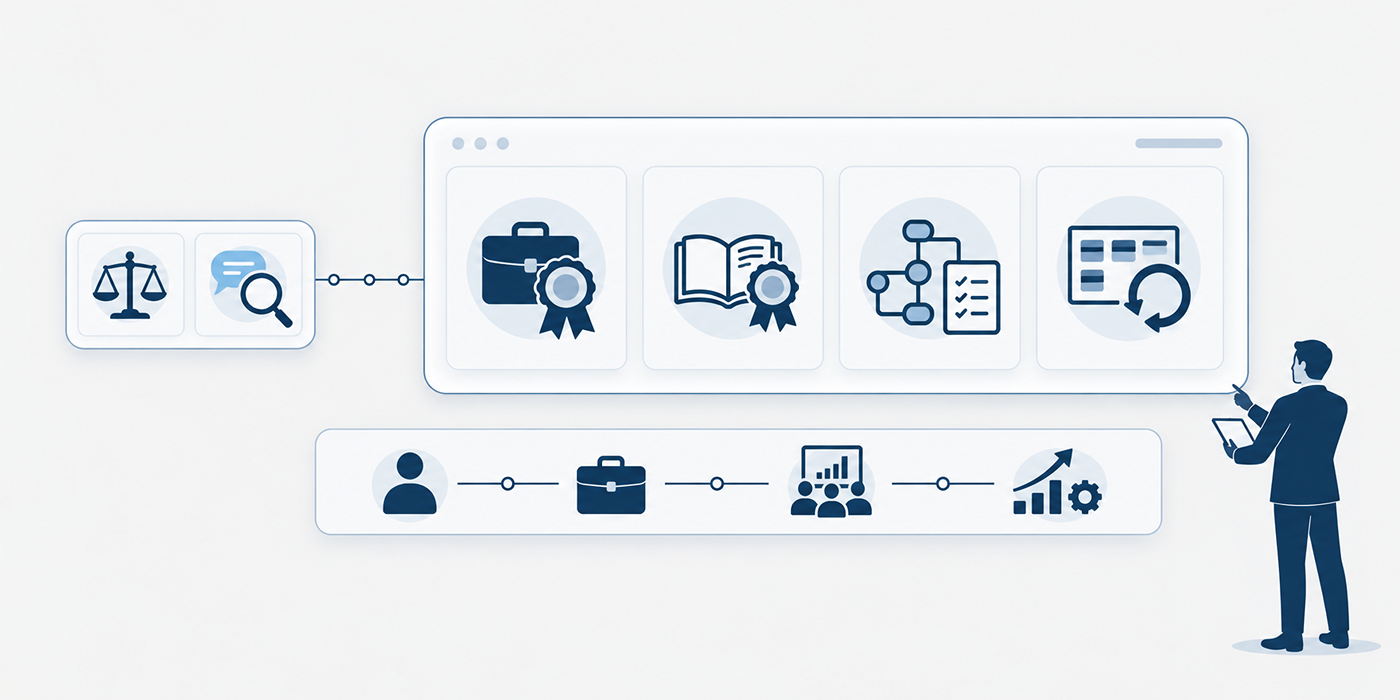
1. PMP vs CAPM vs PRINCE2 vs AgilePM: They Solve Different Career Problems
The cleanest way to compare these certifications is to ask what each one proves to an employer.
PMP proves experienced project leadership. CAPM proves foundational project-management knowledge. PRINCE2 proves knowledge of a structured project-management method. AgilePM proves knowledge of managing projects through an explicitly agile delivery framework.
That distinction matters more than exam difficulty.
Someone already running multimillion-dollar projects gains relatively little from choosing an entry-level credential simply because it is easier to pass. Someone with six months of professional experience gains little from obsessing over PMP when they cannot yet meet its experience requirements. A UK candidate targeting PRINCE2-heavy organizations faces a different market from somebody building a cybersecurity project-management career, advancing toward project governance leadership, preparing for senior PM consulting, or targeting project-management executive positions.
PMP: the experienced-practitioner credential
The July 2026 PMP Examination Content Outline created four eligibility pathways. Candidates with secondary education need 60 months of non-overlapping project leadership experience, candidates with qualifying post-secondary short-cycle education need 48 months, bachelor's-level candidates need 36 months, and graduates of PMI GAC-accredited programs can qualify with 24 months. Experience must fall within the previous ten years. Candidates also need 35 hours of qualifying project-management training, although an active CAPM can satisfy that training requirement.
That makes PMP fundamentally different from a knowledge-only beginner certificate. It validates a combination of project experience and examination performance. Anyone preparing for it should understand the current PMP exam domains, use serious PMP preparation resources, avoid common PMP exam mistakes, and study actual PMP success strategies.
The post-July 2026 exam has 180 questions in 240 minutes, with People accounting for 33%, Process 41%, and Business Environment 26%. Approximately 40% of questions represent predictive approaches, while the remaining 60% is divided between adaptive/agile and hybrid approaches.
That list point is important because PMP is frequently described as a “waterfall certification.” The current exam does not support that simplistic characterization. Professionals moving from traditional PM into Agile, developing toward a SAFe Agilist career, exploring Scrum@Scale practice, or managing modern collaboration-software environments are studying a PMP framework that already expects adaptive and hybrid judgment.
CAPM: the foundation when your experience is still developing
CAPM has a much lower eligibility barrier: a secondary degree or equivalent plus 23 hours of project-management education. The exam contains 150 questions and covers project-management fundamentals, predictive methods, Agile methodologies, and business-analysis frameworks.
That makes CAPM useful when your real problem is credibility before substantial PM experience exists. A graduate, project administrator, coordinator, junior analyst, operations professional, or early-career career changer can use CAPM to establish structured knowledge while accumulating evidence through real projects.
Its value rises when paired with an intelligent IT-to-PM transition, a realistic BA-to-project-manager route, practical CAPM exam resources, and a deliberate plan for leveraging CAPM professionally.
Its value falls when an experienced PM takes it merely because PMP looks intimidating.
PRINCE2: method and governance credibility
The current credential is formally branded PRINCE2 Project Management Foundation/Practitioner Version 7. Foundation is positioned by PeopleCert as suitable at any career stage. Its exam contains 60 multiple-choice questions in 60 minutes, is closed book, and requires 60% to pass.
PRINCE2 teaches an actual method: principles, practices, processes, roles, governance logic, and tailoring. That makes it particularly useful where employers already operate with PRINCE2 terminology or expect candidates to understand structured governance.
Anyone comparing it with PMP should examine PMP versus PRINCE2 directly, review PRINCE2 salary and career benefits, understand common PRINCE2 exam pitfalls, and investigate credible PRINCE2 training providers.
PRINCE2 Practitioner also has unusually flexible prerequisites. PeopleCert currently accepts PRINCE2 Foundation, earlier PRINCE2 Foundation/Practitioner credentials, PMP, CAPM, and several other qualifications as qualifying entry credentials.
AgilePM: project leadership built around adaptive delivery
AgilePM Version 3 is based on the Agile Business Consortium framework and has evolved toward value-driven delivery, project leadership, Scrum integration, and multi-team work. AgilePM Foundation has no prerequisite. The Foundation exam contains 50 questions over 40 minutes with a 50% passing threshold; Practitioner uses a 2.5-hour open-book scenario-based examination worth 80 marks, with 40 needed to pass.
This creates a useful option for someone already moving from Agile team member to project manager, building a traditional-to-Agile PM transition, pursuing SAFe career progression, or learning how modern project-management tools support adaptive delivery.
The important word is project. AgilePM goes beyond isolated Scrum ceremonies by addressing governance, roles, lifecycle, prioritization, timeboxing, project leadership, and delivery structure. The Agile Business Consortium describes Version 3 as a complete agile project-management approach rather than an overlay on a traditional method.
2. Reddit Experiences Reveal the Biggest Mistake: Choosing a Certification Ahead of Your Career Stage
The most useful lesson from Reddit is surprisingly consistent: candidates get disappointed when they ask a certificate to solve a problem it was never designed to solve.
In a January 2026 discussion, a career changer asked whether CAPM or PMP should come next after an introductory project-management course. Respondents generally pointed toward CAPM when PMP experience requirements were unmet. Another February discussion involving someone approaching PMP eligibility produced the opposite advice: several participants argued that an eligible candidate should bypass CAPM and pursue PMP directly rather than paying twice for credentials at different career levels.
That makes sense for someone working through CAPM preparation, evaluating CAPM career leverage, studying common CAPM mistakes, or planning an eventual PMP preparation path. The useful progression is driven by eligibility and professional responsibility, rather than a requirement to “collect every level.”
A June 2026 CAPM discussion shows why expectations need calibration. Participants reported wildly different experiences. Some viewed the knowledge as valuable for terminology and confidence while saying the credential itself carried limited name recognition. Others regarded CAPM as useful during a career change or as evidence of continued professional development. One experienced professional said, in retrospect, that they should have gone straight to PMP because their experience already justified the higher credential.
That discussion should influence anyone moving through an IT-to-PM transition, a business-analysis career transition, an Agile team-to-PM transition, or an eventual program-management career. The certificate should validate the level you are approaching, rather than understate experience you already possess.
Reddit on PMP: valuable filter, weak substitute for experience
Reddit discussions around PMP repeatedly describe it as a hiring filter rather than a job-generating machine. One June 2026 discussion included professionals describing PMP as useful because its absence can eliminate otherwise qualified applicants in competitive markets. Others described it as a checkbox that rarely compensates for weak practical experience.
That is exactly how an experienced credential should behave. PMP creates more value when attached to strong project outcomes, industry credibility, and increasingly senior responsibility. Professionals pursuing project governance roles, senior project-management consulting, project-management executive advancement, or a longer PM-to-COO pathway have enough experience for an additional credibility signal to matter.
Reddit on PRINCE2: geography and employer method matter
A July 2026 PRINCE2 discussion compared PMP and PRINCE2 from the perspective of someone struggling with PMP practice questions. Participants emphasized a distinction that formal specifications also support: PRINCE2 feels more like a defined method for approaching projects, while PMP evaluates broader project-management competence and professional judgment. The same discussion highlighted geography as an important selection factor.
A separate 2026 UK discussion involved a career changer considering PRINCE2 Foundation. Responses cautioned that the qualification creates the most leverage where organizations actually value or use the method. Another thread included a professional whose client required current PRINCE2 credentials during a PMO audit, which is precisely the type of situation where certification has direct operational value.
Candidates comparing PMP with PRINCE2, evaluating PRINCE2 career benefits, researching PRINCE2 recertification, or choosing among PRINCE2 training providers should therefore begin with job descriptions in the market where they actually intend to work.
Reddit on Agile credentials: relevance depends on how the employer delivers
Community discussions about Agile certifications often arrive at the same practical conclusion: they become more valuable when the organization genuinely operates with Agile delivery. A PM-career discussion on Agile credentials argued that certifications can reassure hiring managers that applicants understand Agile terminology and processes, while hands-on experience still carries greater weight.
That is especially relevant for professionals building a SAFe Agilist career, advancing through Scrum@Scale, transitioning from traditional PM into Agile, or managing technology through project-management APIs and integrations. An Agile credential has far more credibility when your résumé proves that you can ship work through changing requirements, iterative planning, stakeholder feedback, prioritization, and cross-functional teams.
3. What Each Certification Actually Signals to Hiring Managers
Hiring value depends on the signal-to-evidence ratio. A certificate produces a signal. Your project history supplies the evidence.
The mistake many job seekers make is maximizing credentials while leaving the evidence side untouched.
What PMP signals
PMP tells the employer that the candidate has passed a demanding professional examination and met a substantive project-leadership requirement. The current examination also assesses People, Process, and Business Environment across predictive, adaptive, and hybrid work, making the signal broader than knowledge of a single delivery method.
That signal becomes powerful when a résumé also proves budget control, procurement, governance, delivery recovery, stakeholder conflict, vendors, benefits, or organizational change. Someone building toward project governance leadership, a senior consulting career, program management, or project-management executive leadership can use PMP as reinforcement for experience the employer already finds commercially valuable.
PMP holders also have a continuing-development obligation: 60 PDUs during each three-year renewal cycle. CAPM holders need 15 PDUs during the same cycle. Anyone calculating lifetime certification ROI should include PMP renewal requirements, ongoing PMP learning resources, evolving PMP exam domains, and continued development in areas such as cybersecurity project management.
What CAPM signals
CAPM tells an employer that an early-career candidate has deliberately learned recognized PM concepts. Because it lacks PMP's experience requirement, it should be understood as an education signal, rather than proof of seasoned delivery.
That distinction changes how CAPM should appear on a résumé. Put the certificate beside evidence such as coordinating a CRM rollout, managing a volunteer initiative, controlling project documentation, maintaining a RAID log, supporting implementation planning, managing requirements, or coordinating dependencies.
A candidate can strengthen that position through CAPM career-development tactics, careful CAPM exam preparation, avoidance of common CAPM preparation mistakes, and practical exposure to project-management templates.
What PRINCE2 signals
PRINCE2 signals that you understand a defined project-management method and its approach to principles, practices, processes, governance, tailoring, and roles. That is particularly useful when an employer's project operating model uses the same vocabulary.
Foundation proves knowledge. Practitioner is more meaningful where the role expects you to apply and tailor the method.
PeopleCert now requires PRINCE2 certifications to remain current through a three-year renewal model, with options including CPD or earning another qualification in the same product suite. The Foundation page currently identifies 60 CPD points for renewal.
Anyone choosing this route should understand PRINCE2 renewal, compare PRINCE2 against PMP, research PRINCE2 career economics, and avoid predictable PRINCE2 examination mistakes.
What AgilePM signals
AgilePM signals understanding of project leadership inside adaptive delivery. Version 3 places increased emphasis on value, Scrum, scaling, and project leadership.
Its strongest candidate is often someone sitting between traditional project governance and modern Agile delivery: a BA coordinating adaptive projects, a PM moving into digital work, an Agile team lead taking broader accountability, or a Scrum-oriented professional who needs stronger project-level structure.
That positioning pairs naturally with an Agile PM career roadmap, a traditional-to-Agile transition, SAFe progression, and understanding how organizations adopt remote collaboration software.
CAPM is the most natural fit among these four if you want structured PM knowledge while experience is still developing. Pair it with coordinator, analyst, implementation, volunteer or internal-project work that gives you measurable delivery evidence.
Review the projects you have actually led, including work performed under non-PM job titles. If you remain below PMP eligibility, CAPM can bridge the gap while you deliberately accumulate qualifying responsibility.
Your hiring problem has moved beyond foundational knowledge. Validate eligibility, study your target vacancies and use the credential to reinforce quantified experience rather than replace it.
PRINCE2 Foundation or Practitioner can make excellent sense when target organizations actually use the method. Build evidence that you can tailor governance rather than merely repeat terminology.
It is especially relevant when you already understand Agile teamwork but need stronger capability around project leadership, governance, lifecycle, prioritization and multi-team delivery.
Collect 30–50 target job descriptions and count every certification requirement. The market will tell you whether PMP, CAPM, PRINCE2, AgilePM, another qualification or simply more experience closes the largest gap.
Career-stage fit creates more certification ROI than collecting the largest number of badges.
4. Which Certification Fits Your Actual Career Stage?
Stage 1: You have almost no project experience
Your highest-value objective is getting close enough to real delivery that somebody trusts you with deadlines, dependencies, stakeholders, documents, risks, and outcomes.
CAPM fits this stage because the eligibility requirements allow you to build structured knowledge before extensive experience exists. PMI requires a secondary credential and 23 hours of project-management education.
The mistake is believing CAPM should immediately turn a graduate or career changer into a full Project Manager. A stronger route combines CAPM career leverage, practical CAPM learning resources, an adjacent IT-to-PM transition, and opportunities such as project coordinator, implementation analyst, PMO analyst, junior BA, or operations project support.
A useful first-job strategy is to find work where your existing domain remains valuable. A healthcare administrator moving into healthcare projects, software engineer moving toward technical delivery, marketer moving toward marketing project management, or nonprofit professional entering nonprofit project management carries context that a generic beginner does not.
Stage 2: You have 1–3 years of genuine project exposure
Now the decision becomes more nuanced.
Start by auditing PMP eligibility carefully. PMI's current requirements focus on leading and directing projects, and the July 2026 ECO explicitly explains that qualifying experience can come from professional work even when it is unpaid; the experience does not require “Project Manager” as the job title. Routine operational or administrative work does not qualify.
That means an experienced business analyst, engineer, implementation specialist, operations manager, consultant, or entrepreneur should avoid dismissing valid project leadership simply because their title was different.
Someone following a BA-to-PM roadmap, an IT-to-project-management transition, an Agile team-to-PM pathway, or a future program-management route should inventory projects before deciding which certificate matches their stage.
If you remain clearly below PMP eligibility, CAPM can make sense. If you qualify for PMP, pursuing CAPM first usually creates an extra examination, renewal obligation, and cost without solving a different career problem.
Stage 3: You already manage projects independently
PMP becomes the most obvious benchmark among these four, particularly when your target job descriptions repeatedly list it.
At this level, the employer is evaluating how you handle money, difficult sponsors, changing scope, vendor failure, regulatory pressure, project recovery, prioritization, governance, and business outcomes. Certification should reinforce that capability.
Your development should therefore combine PMP examination mastery, strong PMP study resources, realistic PMP success strategies, and eventual PMP renewal planning.
The résumé must mature at the same time. Replace “managed cross-functional projects” with statements such as: “Led a $6.8 million ERP rollout across nine business units, recovered an eight-week schedule variance, renegotiated two vendor milestones, and completed cutover within the revised governance baseline.”
That evidence is what supports eventual movement into senior PM consulting, project governance leadership, program management, or project-management executive roles.
Stage 4: Your employer uses PRINCE2
This is where PRINCE2 can beat a theoretically “bigger” credential on immediate relevance.
If your organization structures project boards, business cases, stages, tolerances, roles, and management products around PRINCE2, knowing how the method works removes onboarding friction. Foundation gives you the language. Practitioner becomes more useful when you need to tailor and apply the method.
Candidates should use PRINCE2 versus PMP analysis, research PRINCE2 career benefits, avoid common PRINCE2 exam problems, and understand PRINCE2 recertification requirements.
A PMP-certified professional can even use PMP as an accepted prerequisite for PRINCE2 Practitioner under PeopleCert's current rules, creating a sensible sequence for someone who already has experience-based credibility and later enters a PRINCE2 environment.
Stage 5: You manage adaptive or digital delivery
AgilePM deserves much more attention here.
Version 3 integrates Scrum more explicitly, shifts emphasis toward value delivery and project leadership, and strengthens guidance for multi-team environments.
This makes it relevant for professionals moving beyond team-level Agile into actual project leadership. Someone can combine an Agile PM career pathway, Scrum@Scale knowledge, SAFe career development, and modern project-management integrations with AgilePM's project-level governance.
The credential becomes weaker when the candidate applies exclusively to environments where employers neither recognize AgilePM nor operate with comparable Agile project structures. Again, vacancy evidence decides.

5. The Certification ROI Test: How to Choose Without Wasting Time or Money
Use a five-part test before buying any certification.
Test 1: Audit 30–50 real target job descriptions
Create a spreadsheet with columns for title, salary, geography, sector, required experience, PMP, CAPM, PRINCE2, AgilePM, Agile/Scrum credentials, software, technical skills, and domain requirements.
Do this before comparing exam providers.
If PMP appears in 32 of 40 serious target vacancies, you have a strong signal. If PRINCE2 appears in 28, that changes the answer. If AgilePM appears twice while every employer demands ERP implementations, the actual gap is clearer.
This same evidence-first principle should guide PM software decisions, investment in project-management APIs, use of project-management templates, and development toward project governance leadership.
Test 2: Separate the certification gap from the experience gap
Suppose 70% of the vacancies request three years of healthcare implementation experience and only 15% request PMP. PMP probably does not fix your rejection problem.
Suppose 80% request PMP and you already satisfy the sector, seniority, and technical requirements. Now the credential may be the most efficient gap to close.
This is why professionals pursuing environmental project management, marketing PM roles, cybersecurity project management, or nonprofit project management should protect their domain advantage instead of becoming generic certification collectors.
Test 3: Measure opportunity cost
Certification has four costs: exam fees, training, renewal, and time.
The time cost is often largest.
One hundred hours spent preparing for a credential your market rarely requests could instead produce a portfolio, domain qualification, stronger technical capability, professional network, interview preparation, or real project exposure.
Professionals working toward PMP preparation, comparing PRINCE2 training, studying CAPM resources, or developing an Agile PM career should calculate the value of the next-best use of that time.
Test 4: Ask whether the credential changes your eligible job pool
This is the strongest ROI question.
Count how many desirable jobs currently reject you on paper because of the missing qualification. Then estimate how many become realistically accessible after certification.
A PMP that moves you from qualified for 20% of your desired senior roles to 65% can have exceptional value. A CAPM that improves credibility for project coordinator positions can be valuable to a beginner even if it does not increase salary immediately. PRINCE2 can have excellent ROI where it is embedded in target organizations. AgilePM can materially improve fit where employers operate adaptive project environments.
That logic becomes increasingly important as professionals move toward program management, governance leadership, senior consulting, and eventually PM executive careers.
Test 5: Build proof while studying
The most dangerous certification strategy is disappearing for three months, passing an exam, and returning to the market with exactly the same résumé.
Build evidence simultaneously.
Create sanitized examples of a project charter, RAID log, governance map, sprint/release plan, change-control workflow, executive dashboard, dependency map, benefits register, stakeholder strategy, project recovery plan, vendor scorecard, or implementation plan. Use practical project-management templates, understand how companies select PM tools, study remote collaboration practices, and understand PM integrations.
The certification tells employers what you studied. The portfolio demonstrates how you think.
6. FAQs About PMP, CAPM, PRINCE2 and AgilePM in 2026
-
There is no universal winner because the credentials solve different problems. PMP has the strongest fit for experienced project leaders, CAPM for people still building experience, PRINCE2 for professionals who need structured method and governance knowledge, and AgilePM for professionals managing adaptive project delivery.
Your decision should reflect target vacancies, experience, geography, and employer methodology. Compare PMP and PRINCE2, evaluate CAPM career leverage, understand Agile PM progression, and consider your longer program-management pathway.
-
CAPM is valuable when you do not yet meet PMP experience requirements or need structured foundations. An active CAPM can also satisfy PMP's 35-hour project-management training requirement once you meet the separate PMP education and experience requirements.
If you already qualify for PMP, CAPM usually becomes a weaker use of time and money. Reddit discussions from 2026 repeatedly reflected this distinction, with experienced candidates commonly being encouraged to proceed directly toward PMP.
A sensible path combines CAPM preparation, CAPM career leverage, eventual PMP study, and deliberate accumulation of project responsibility.
-
PMP and PRINCE2 validate different things. PMP combines prior project leadership with a broad professional examination. PRINCE2 teaches a specific structured project-management method.
An experienced PM targeting employers that repeatedly request PMP may gain more from PMP. A professional entering a PRINCE2-based organization may gain immediate operational value from Foundation or Practitioner.
Candidates should study PMP versus PRINCE2, PRINCE2 career benefits, PRINCE2 renewal, and current PMP exam requirements before deciding.
-
It can be especially useful because Scrum knowledge and project-management responsibility are different layers.
AgilePM Version 3 covers project leadership, governance, lifecycle, value delivery, roles, prioritization, multi-team work, and Scrum integration.
That combination can support an Agile-team-to-PM transition, a Scrum@Scale pathway, SAFe advancement, and broader Agile PM specialization.
-
CAPM is generally the strongest fit among these four for somebody who wants broad project-management foundations without extensive professional project experience. PRINCE2 Foundation and AgilePM Foundation also lack substantial prior experience requirements, but they teach more specific approaches.
The better choice depends on target roles. A beginner should combine credential learning with an IT-to-PM transition plan, a BA-to-PM pathway, practical CAPM career development, and exposure to real project-management tools.
-
PRINCE2 deserves serious consideration because it is well established in UK project environments, although individual employer requirements matter far more than a broad national stereotype. Reddit discussions involving UK candidates repeatedly emphasize checking the local job market rather than assuming one certification will guarantee interviews.
Professionals can compare PRINCE2 and PMP, investigate PRINCE2 training providers, understand PRINCE2 career benefits, and study PRINCE2 exam pitfalls against actual job descriptions.
