
Guide to Advancing from Agile Team Member to Agile Project Manager
Moving from an agile team role into agile project management requires a fundamental expansion of responsibility. You must progress from completing assigned work to protecting delivery outcomes, coordinating dependencies, controlling risk, communicating with decision-makers, and proving that the team’s effort creates usable value. Technical competence may earn trust inside the team, while advancement depends on demonstrating judgment across the wider delivery system. This guide explains the capabilities, evidence, certifications, and career moves that can turn hands-on agile experience into credible project leadership.
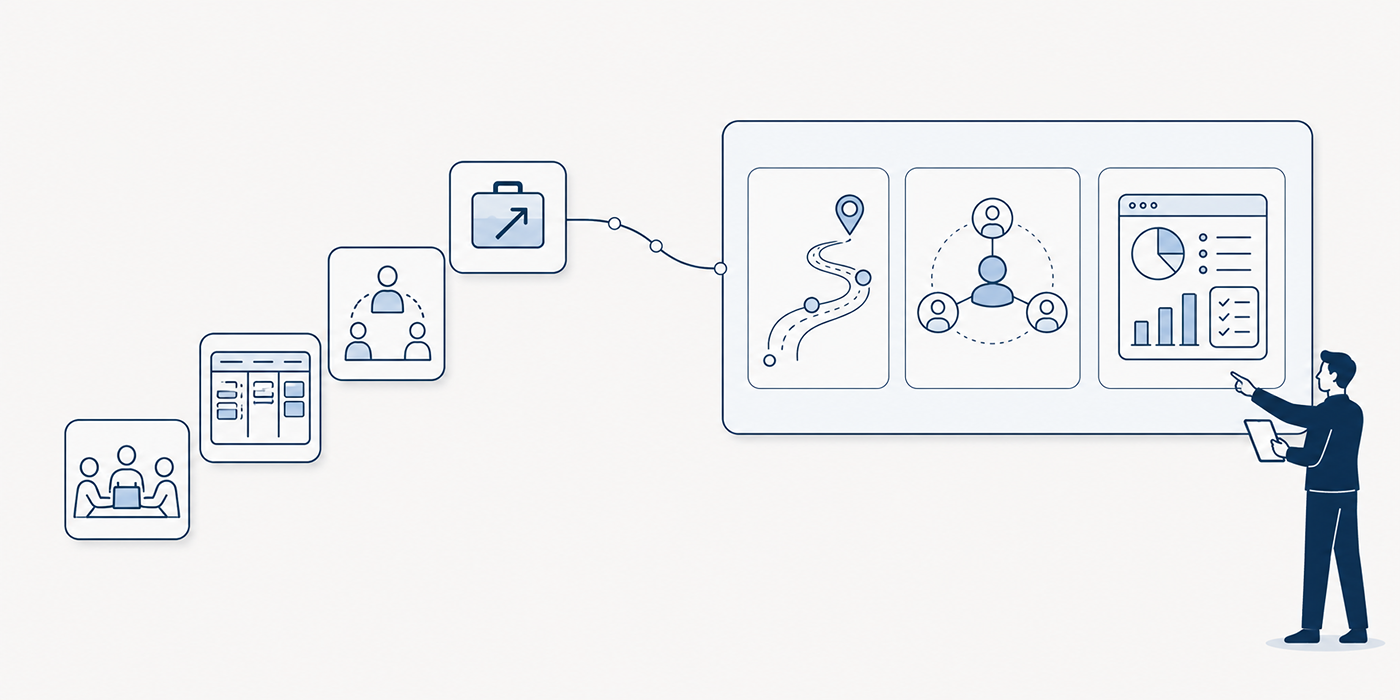
1. Understand the Real Gap Between Team Contribution and Project Leadership
An agile team member usually works within a defined delivery system. The backlog exists, priorities have been discussed, ceremonies are scheduled, and someone else often manages executive expectations, commercial constraints, cross-team dependencies, or delivery escalation. Developers, testers, designers, analysts, coordinators, and subject-matter experts contribute essential expertise, yet their normal responsibilities may cover only part of the project environment.
An agile project manager has to understand the entire delivery system. That includes customer outcomes, scope boundaries, funding constraints, release dependencies, supplier commitments, operational readiness, compliance obligations, team capacity, and unresolved decisions. Fluency in the complete agile project management glossary, Scrum terminology, Kanban project management terms, and hybrid project management practices provides the language needed to work across different delivery environments.
The first major career shift is from task awareness to outcome awareness. A team member may report that five stories were completed. A project manager asks whether those stories removed the release risk, enabled a customer journey, satisfied an external dependency, or produced the evidence required for approval. Understanding product and sprint backlog distinctions, essential agile metrics, project monitoring and control, and project reporting practices helps you make that transition.
The second shift is from local optimization to system coordination. Finishing your work quickly offers limited project value when another team, supplier, approver, or environment blocks release. Emerging project leaders examine handoffs, queues, decisions, resource conflicts, and dependency timing. They use resource allocation principles, agile estimation methods, sprint planning terminology, and schedule compression concepts to protect flow across the complete project.
The third shift is from raising problems to structuring decisions. Senior stakeholders rarely need a long explanation of every obstacle. They need the consequence, available options, recommendation, cost, timing, owner, and deadline. This requires stronger stakeholder engagement, leadership communication, conflict resolution, and risk-response planning.
The title “agile project manager” also varies across organizations. Similar responsibilities may appear under delivery manager, iteration manager, project lead, agile delivery lead, technical project manager, implementation manager, or Scrum Master. PMI describes agility as a fit-for-purpose capability spanning Scrum, Kanban, Lean, design thinking, product delivery, project delivery, and hybrid approaches. Its research also indicates that successful organizations increasingly select delivery methods according to context rather than applying one model to every initiative.
Before pursuing a title, examine the responsibilities attached to it. Some Scrum Master roles focus heavily on facilitation and team effectiveness. Some agile project manager roles include budgeting, suppliers, governance, scope, deadlines, and executive reporting. Others combine project execution responsibilities, project financial management, risk-register ownership, and business-analysis work.
| Capability | Team-Member Contribution | Project-Manager Standard | Evidence to Build | Career Warning Sign |
|---|---|---|---|---|
| Backlog understanding | Completes assigned backlog items | Connects backlog priorities to outcomes, releases, risks, and dependencies | Prioritization rationale and dependency map | Treating every item as equally urgent |
| Sprint planning | Estimates personal work | Tests capacity, readiness, dependencies, and goal feasibility | Capacity plan and sprint-risk review | Accepting work without readiness checks |
| Estimation | Contributes effort estimates | Explains uncertainty and produces realistic forecasts | Range-based delivery forecast | Presenting estimates as guarantees |
| Agile metrics | Reviews velocity or completed work | Uses flow, predictability, quality, value, and risk indicators together | Decision-oriented metrics dashboard | Using velocity as an individual target |
| Outcome orientation | Focuses on accepted deliverables | Connects deliverables to adoption, benefit, and customer impact | Outcome map and benefits hypothesis | Reporting output without impact |
| Stakeholder engagement | Attends stakeholder meetings | Maps influence, expectations, decisions, resistance, and communication needs | Stakeholder engagement plan | Contacting stakeholders only when approval is needed |
| Executive communication | Provides detailed progress updates | Summarizes impact, options, recommendation, and decision deadline | One-page steering update | Overloading executives with operational detail |
| Risk management | Raises concerns | Defines exposure, response, trigger, owner, deadline, and residual risk | Prioritized risk register | Listing vague risks without action |
| Issue control | Reports active blockers | Coordinates resolution, escalation, workaround, and impact assessment | Issue log with aging and escalation | Allowing blockers to survive multiple iterations |
| Dependency management | Identifies immediate handoffs | Maps internal, external, technical, commercial, and approval dependencies | Dependency board with commitment dates | Discovering dependencies during release week |
| Resource planning | Communicates personal availability | Forecasts capacity, specialist bottlenecks, leave, and competing priorities | Capacity and skills matrix | Assuming named resources are fully available |
| Financial awareness | Tracks time or effort | Understands budget, burn rate, forecast, contingency, and cost of delay | Monthly financial forecast | Treating budget as the sponsor’s concern |
| Scope control | Flags unclear stories | Protects objectives while managing discovery and controlled change | Scope boundary and change log | Allowing every request to enter the backlog |
| Requirements | Clarifies acceptance criteria | Maintains traceability between needs, requirements, tests, and outcomes | Requirements traceability matrix | Starting work around unresolved assumptions |
| Quality management | Meets the Definition of Done | Designs prevention, assurance, testing, acceptance, and defect controls | Quality management plan | Treating testing as the final activity |
| Conflict resolution | Shares concerns with the facilitator | Surfaces the real conflict and creates an accountable resolution path | Conflict-resolution case summary | Avoiding disagreement until delivery suffers |
| Facilitation | Participates constructively | Designs sessions that produce decisions, commitments, and shared understanding | Workshop plan and decision record | Running meetings without defined outputs |
| Team leadership | Supports colleagues | Creates clarity, accountability, safety, and sustainable delivery expectations | Team working agreement | Solving every problem personally |
| Supplier management | Works with vendor personnel | Manages commitments, deliverables, evidence, escalation, and commercial exposure | Supplier performance review | Relying on informal vendor promises |
| Governance | Supplies information for reviews | Creates timely evidence, decisions, tolerances, and escalation routes | Governance calendar and RACI | Viewing governance as administrative overhead |
| Project reporting | Submits progress information | Produces concise, accurate, decision-oriented reporting | Executive status report | Reporting green while major risks remain unresolved |
| Release planning | Completes work for release | Coordinates scope, environments, approvals, training, communications, and support | Integrated release-readiness plan | Equating code completion with launch readiness |
| Change leadership | Adopts new processes | Plans stakeholder adoption, training, resistance management, and reinforcement | Adoption and readiness plan | Assuming deployment automatically creates adoption |
| Operational readiness | Provides implementation knowledge | Confirms support, monitoring, ownership, continuity, and service acceptance | Operational-readiness checklist | Handing over unresolved ownership |
| Project closure | Completes assigned closeout tasks | Closes contracts, actions, access, documentation, finances, and lessons | Closure report and ownership transfer | Disbanding the team after launch |
| Continuous improvement | Suggests retrospective actions | Prioritizes improvements, assigns owners, and verifies sustained change | Improvement backlog with results | Repeating the same retrospective themes |
| Business context | Understands the immediate user need | Connects delivery choices to strategy, economics, regulation, and operating constraints | Business-context briefing | Making delivery decisions without commercial context |
| Career evidence | Lists ceremonies and tools used | Explains the problem, decision, leadership action, and measurable result | Six evidence-based career stories | Writing a résumé as a duty list |
2. Build the Capabilities Employers Expect From an Agile Project Manager
Learn to Own Delivery Without Controlling Every Decision
Agile project leadership relies heavily on influence. Product owners may control priority, technical leads may control architecture, specialists may determine implementation, and sponsors may control funding. Your role is to connect these decisions, expose their consequences, and maintain delivery coherence.
This requires a clear understanding of accountability. Use a lightweight RACI or decision-rights map to identify who recommends, approves, contributes, and receives information. Combine it with stakeholder engagement practices, project leadership terminology, conflict-resolution tools, and project governance guidance.
Your credibility grows when colleagues understand that you will create clarity, preserve commitments, and escalate responsibly. Constantly directing specialists can weaken ownership. Avoiding difficult conversations can allow hidden delivery failure. Effective leadership finds the point where the team retains autonomy and the project retains accountability.
Expand From Ceremony Facilitation to Delivery Facilitation
Running stand-ups, planning sessions, reviews, and retrospectives can build valuable experience. Advancement requires proving that those sessions produced better decisions and delivery conditions. A daily stand-up should reveal blocked flow and coordination needs. Sprint planning should expose readiness and capacity. Reviews should generate usable stakeholder feedback. Retrospectives should create owned improvements.
Study the mechanics behind sprint planning, agile estimation, backlog management, and agile performance metrics. Then redesign each ceremony around an explicit output.
For example, replace a generic dependency discussion with a dependency record containing the required deliverable, owner, commitment date, downstream impact, confidence level, and escalation point. Replace vague retrospective actions with one accountable owner, a due date, a success measure, and a review date. This approach converts facilitation into visible management evidence.
Develop Commercial and Financial Awareness
Many aspiring agile project managers can discuss velocity, user stories, and sprint goals confidently. Their credibility drops when the conversation moves to budget, vendor costs, contingency, return, contractual milestones, or the financial impact of delay.
Begin by understanding the project’s funding model. Determine whether teams are funded annually, whether the initiative has a fixed budget, whether suppliers bill by time or deliverable, and whether delays create penalties or lost revenue. Learn the language of project financial management, earned value management, resource allocation, and vendor management.
You do not need to become a finance specialist. You should be able to explain actual spending, forecast completion cost, contingency use, supplier exposure, and the cost of a major decision. A project manager who cannot discuss money will struggle to earn ownership of commercially significant work.
Become Reliable at Risk, Dependency, and Issue Control
An emerging leader often gains their first major opportunity by bringing control to a difficult project. Create a weekly operating rhythm for risks, assumptions, issues, dependencies, and decisions. Review aging, ownership, next action, target date, and escalation need.
Avoid entries such as “resource risk,” “technical issue,” or “stakeholder delay.” Use language that allows action: “The security architect remains allocated at 20% through September, which may delay design approval by two iterations and move the release beyond the regulatory deadline.” The entry now provides cause, event, consequence, timing, and decision context.
Combine a strong risk register with practical risk-response planning, visible monitoring and control, and concise project reporting. This routine creates leadership evidence faster than attending additional ceremonies without broader responsibility.
Learn Hybrid Delivery Before You Need It
Agile teams frequently operate inside predictive or governance-heavy environments. Annual budgets, regulatory approvals, procurement lead times, architecture gates, contractual milestones, and fixed launch dates may surround iterative development. Project managers must connect these systems without forcing the entire organization into one delivery model.
PMI’s current guidance covers predictive, adaptive, agile, and hybrid approaches throughout its project management framework. The 2026 PMP examination also integrates these approaches across its domains instead of isolating agility as one narrow topic.
Develop working knowledge of Waterfall project management terminology, Gantt chart concepts, hybrid delivery trends, and future project manager competencies. Your value increases when you can preserve feedback and adaptation while satisfying legitimate governance, financial, and operational constraints.
3. Follow a Practical Roadmap From Team Member to Agile Project Manager
Stage One: Become the Most Reliable Person in Your Current Scope
Leadership opportunities begin with delivery reliability. Maintain clear commitments, raise uncertainty early, and provide useful updates. Understand how your work affects testing, documentation, operations, customers, and downstream teams. Learn the project’s wider purpose rather than limiting your attention to assigned tasks.
Build fluency through the agile project management glossary, Scrum glossary, Kanban terminology, and project execution concepts. Use that knowledge to improve the work rather than displaying vocabulary.
Track your contribution in an evidence log. Record the situation, delivery risk, action taken, stakeholders involved, and result. Include numbers where they genuinely explain impact: reduced defect turnaround from nine days to four, closed twelve overdue dependencies, improved sprint-goal completion, or prevented a two-week release delay.
Stage Two: Volunteer for Coordination Problems
Seek bounded responsibilities with visible project impact. Examples include coordinating a small release, maintaining dependencies, facilitating a planning workshop, managing a risk review, improving reporting, onboarding a supplier, or organizing operational readiness.
Choose assignments that force you to work across functions. Coordinating only within your specialist area may reinforce your existing profile. Cross-functional responsibilities build stakeholder engagement, leadership communication, conflict management, and resource-allocation capability.
Agree on authority before accepting the work. Ask who owns the final decision, which risks you can escalate, what success looks like, and which stakeholders must participate. Hidden accountability creates a painful situation where you are blamed for outcomes you lacked authority to influence.
Stage Three: Own a Small Workstream End to End
A workstream creates a bridge between team contribution and full project leadership. Select one with a meaningful outcome, several stakeholders, measurable risk, and a real deadline. Examples include data migration, user training, integration testing, customer onboarding, vendor implementation, or a release-readiness stream.
Create a concise workstream plan covering outcome, scope, milestones, dependencies, risks, resources, stakeholders, quality criteria, decisions, and reporting. Use Gantt chart principles where fixed dependencies require calendar visibility, Kanban tools where flow management dominates, Scrum project platforms for iterative delivery, and team communication platforms for distributed coordination.
Report the workstream as a project leader. Explain the forecast, completed outcomes, major exposure, decisions required, and planned recovery. Avoid presenting a list of activities. Your manager should be able to use your report without rewriting it for senior stakeholders.
Stage Four: Act as Deputy or Shadow Project Manager
Ask to support an experienced project or delivery manager with responsibilities that reveal the full role. Attend steering preparation, financial reviews, vendor meetings, release decisions, risk escalations, and operational handover discussions. Observe which information leaders request and how experienced managers frame uncertainty.
Offer to own one complete operating process, such as weekly reporting, RAID governance, dependency management, financial reconciliation, or release readiness. Apply project reporting best practices, monitoring and control, supplier-management terminology, and project closure disciplines.
Shadowing produces value when responsibility accompanies observation. Sitting silently in meetings rarely changes your career profile. Producing the steering pack, chasing decisions, updating forecasts, and preparing recommendations gives you defensible evidence.
Stage Five: Lead a Low-to-Moderate-Risk Project
Your first formal project should have enough complexity to prove leadership and enough containment to permit learning. A small internal platform, process improvement, customer feature, departmental migration, or vendor implementation can provide suitable experience.
Define the success measures before launch. Include delivery measures, customer or user outcomes, quality, cost, adoption, and operational stability. Use project quality terminology, stakeholder engagement planning, financial-management controls, and project closure concepts.
After completion, document your leadership case. Explain the original problem, constraints, approach, major decisions, setbacks, corrective actions, and measurable result. This case becomes useful for promotion discussions, résumé development, certification applications, and interviews.
Stage Six: Apply for the Role Based on Evidence
Review ten to twenty target vacancies and create a capability-frequency table. Record which roles request agile delivery, Scrum, Kanban, budget ownership, supplier management, risk control, stakeholder communication, PMP, PMI-ACP, CSM, SAFe, or industry experience.
Use the evidence matrix above to score yourself. Select the three most common gaps that can be closed through real work. A certification may address one gap, while a workstream, volunteer initiative, mentor relationship, or internal stretch assignment may solve another.
Research agile certification options, advanced Scrum Master certification, SAFe Agilist preparation, and agile career success stories. Then choose development activities according to vacancy evidence and existing experience.
4. Build a Portfolio That Proves You Can Manage Agile Projects
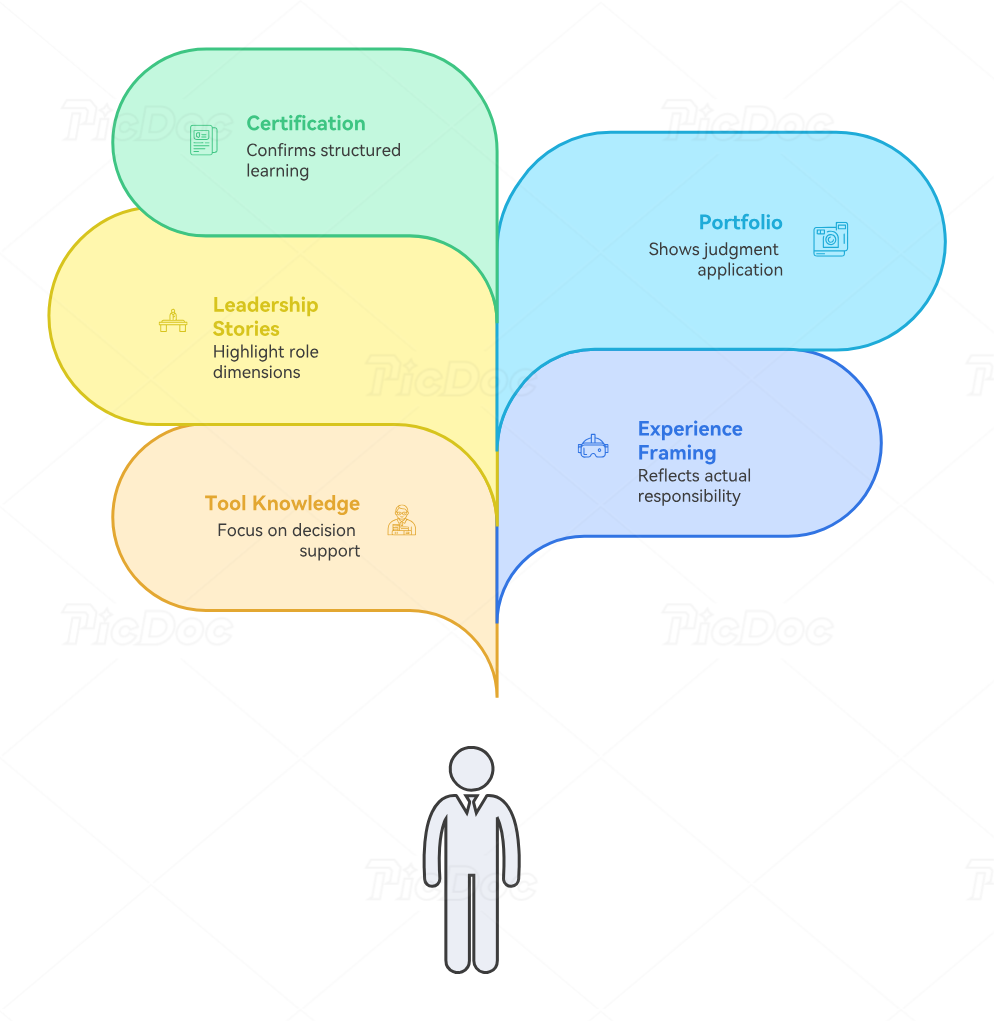
A certification can confirm structured learning. Your portfolio must show how you apply judgment in a delivery environment. Employers frequently receive résumés filled with terms such as stand-ups, Jira, sprint planning, and retrospectives. These terms establish exposure. They reveal little about ownership, difficulty, or impact.
Create an anonymized portfolio containing six to eight artifacts. Useful items include a delivery roadmap, RAID log, dependency map, stakeholder plan, executive report, release-readiness checklist, financial forecast, and retrospective-improvement record. Templates from the project management resources guide, risk-register glossary, project reporting guide, and stakeholder engagement glossary can help establish professional structure.
Every artifact should answer four questions
What decision or delivery need did this document support?
Which stakeholders used it?
How did it change action or reduce uncertainty?
What result followed?
A colorful dashboard with no decision purpose has limited value. A simple dependency tracker that prevented a launch delay provides strong evidence. A detailed plan nobody used reveals administration. A concise risk paper that secured an executive decision demonstrates management maturity.
Convert Your Experience Into Leadership Stories
Prepare at least six stories covering different dimensions of the role:
A serious delivery risk you identified early
A stakeholder conflict you resolved
A dependency you coordinated across teams
A forecast you corrected using evidence
A process improvement that changed team performance
A release or workstream you led through completion
Structure each story around context, difficulty, judgment, action, and result. Mention the ceremony or tool only where it explains the approach. Strong stories show how you used agile metrics, conflict-resolution methods, risk-response planning, and project monitoring to influence an outcome.
Consider this weak résumé statement:
Participated in daily stand-ups, sprint planning, reviews, and retrospectives.
A stronger version would read:
Coordinated dependencies across three delivery teams, introduced weekly aging reviews for blocked work, and reduced unresolved cross-team blockers from 14 to five before a customer release.
The stronger version reveals scope, initiative, method, and result. It also gives the interviewer several useful areas to explore.
Create Evidence Before Receiving the Official Title
You can build credible experience without misrepresenting your role. Use phrases such as “led the release-readiness workstream,” “owned weekly risk reporting,” “coordinated delivery across three teams,” or “deputized for the project manager during steering preparation.” These statements describe actual responsibility accurately.
Seek evidence-building work through internal improvement projects, nonprofit initiatives, professional associations, community programs, and small business implementations. Apply the same disciplines found in project execution management, resource planning, quality management, and project closure.
Maintain ethical boundaries. Do not claim ownership of a project you supported. Explain your exact scope and show how your work influenced the wider outcome. Accurate evidence creates stronger interviews because you can discuss decisions and consequences in depth.
Make Your Tool Knowledge Decision-Focused
Hiring managers may expect familiarity with Jira, Azure DevOps, Trello, Monday.com, Asana, Smartsheet, Microsoft Project, communication platforms, or portfolio tools. Learn enough to configure useful workflows, dashboards, dependencies, permissions, and reports.
Explore the top agile project management tools, Kanban software directory, Scrum project management platforms, and project management API integrations. Then focus on the management problem each feature solves.
An agile project manager should be able to answer:
Which work is blocked, and for how long?
Which dependency threatens the next release?
How has scope changed?
Which risks exceed tolerance?
What does current throughput imply about the forecast?
Where does the team lack capacity?
Which executive decision remains overdue?
Tool proficiency becomes valuable when it makes these answers faster and more reliable.
5. Choose Certifications and a 90-Day Advancement Plan
Select a Certification That Matches the Role You Want
PMI-ACP can suit professionals who already have substantial agile experience and want a framework-agnostic credential covering approaches such as Scrum, Lean, and Kanban. PMI currently describes it as an experience-based certification requiring more than two years of experience and validating stakeholder engagement, agile application, and team leadership.
PMP can support professionals pursuing broader responsibility across agile, predictive, and hybrid projects. Current eligibility varies by education and leadership experience, while the 2026 examination integrates predictive, adaptive, and hybrid approaches across its domains. Use the PMP exam-domain guide, PMP preparation resources, common PMP exam mistakes, and PMP success stories to understand the complete route.
CSM can support an initial move into Scrum facilitation. Scrum Alliance positions the course for Scrum Masters, engineers, analysts, project managers, and new team members. The current certification assessment contains 50 questions, with 37 correct answers required to pass.
For experienced Scrum Masters, A-CSM currently requires a CSM and twelve months of relevant Scrum Master experience within the previous five years. CSP-SM requires A-CSM and at least 24 months of recorded Scrum Master experience. Review the advanced CSM certification guide, agile certification comparison, Scrum glossary, and agile career success stories.
SAFe certifications can align with enterprises using Agile Release Trains, scaled planning, portfolio structures, and cross-team delivery. Current SAFe pathways include SAFe Agilist, SAFe Scrum Master, Product Owner/Product Manager, Release Train Engineer, Lean Portfolio Management, DevOps, and several role-specific routes. The SAFe Agilist certification guide, PMI-ACP versus CSM versus SAFe comparison, future Scrum analysis, and hybrid project management forecast can help clarify fit.
Days 1–30: Diagnose and Reposition
Collect fifteen relevant job descriptions. Build a spreadsheet listing responsibilities, certifications, tools, experience, industry requirements, and recurring keywords. Score your current evidence against the progression matrix.
Select one leadership responsibility you can request immediately. Suitable options include dependency coordination, risk reporting, release readiness, stakeholder updates, or retrospective-action governance. Support the work with project reporting principles, risk-register techniques, stakeholder engagement practices, and agile metrics.
Rewrite your résumé headline and profile around delivery leadership. Describe your experience in terms of outcomes, scope, stakeholders, risks, and measurable improvement.
Days 31–60: Lead and Document
Own one contained workstream. Establish its outcome, boundaries, milestones, dependencies, risks, stakeholders, and reporting rhythm. Produce at least three portfolio artifacts.
Ask an experienced project manager, delivery lead, or Scrum Master to review your work. Seek specific feedback on decision quality, reporting clarity, commercial awareness, escalation timing, and stakeholder handling. Use leadership communication terminology, project execution guidance, quality-management principles, and resource-allocation concepts to strengthen weak areas.
Begin certification preparation only after confirming that the credential appears repeatedly in your target market.
Days 61–90: Convert Experience Into Opportunity
Complete the workstream or reach a meaningful delivery milestone. Document the result and request written feedback from relevant stakeholders. Build six interview stories and rehearse explaining them without jargon.
Apply for internal promotions, deputy roles, delivery-lead vacancies, and carefully selected external positions. Tailor each application around the employer’s highest-risk responsibilities. A role emphasizing suppliers should lead with vendor coordination. A role emphasizing executives should lead with decision reporting. A role emphasizing multi-team delivery should lead with dependency and release leadership.
Continue developing through future project manager skills, future PM leadership approaches, project governance trends, and project management certification forecasts. Career advancement becomes more predictable when each learning activity produces evidence relevant to the next role.
6. FAQs About Becoming an Agile Project Manager
-
Yes. Each role provides useful delivery knowledge. Developers understand technical constraints, testers understand quality and release risk, analysts understand requirements, and designers understand user needs. Advancement requires adding broader capabilities in stakeholder engagement, risk management, project reporting, and resource coordination. Begin by leading a cross-functional workstream where your specialist background helps while the responsibility forces you to manage beyond it.
-
A Scrum Master role can build facilitation, coaching, impediment removal, and team-effectiveness experience. Agile project management may also require budgets, suppliers, governance, deadlines, risk ownership, and executive reporting. You can move through Scrum Master responsibilities, business analysis, project coordination, product operations, technical leadership, or direct workstream ownership. Compare the Scrum Master certification path, agile certification options, stakeholder engagement requirements, and project execution responsibilities before choosing a route.
-
The strongest choice depends on the target role. PMI-ACP supports multi-method agile credibility. PMP supports wider project leadership across agile, predictive, and hybrid environments. CSM and advanced Scrum credentials fit Scrum-focused facilitation paths. SAFe certifications align with scaled enterprise environments. Study the PMI-ACP, CSM, and SAFe comparison, PMP exam domains, SAFe Agilist guide, and advanced CSM guide. Choose according to recurring vacancy requirements.
-
Request responsibility for a bounded delivery problem. Lead a release, coordinate dependencies, own the risk review, manage stakeholder updates, or run an operational-readiness workstream. Define the output and success measure before accepting it. Document your work through a risk register, stakeholder plan, project status report, and closure summary. These artifacts establish evidence without requiring an immediate title change.
-
Many candidates focus heavily on ceremonies and tools while leaving risk, finance, governance, suppliers, and executive decisions underdeveloped. Agile project managers need enough financial-management knowledge, vendor-management capability, governance understanding, and leadership communication skill to operate outside the delivery team. Certifications should support this expansion rather than replace it.
-
The timeline depends on your existing exposure, organizational opportunities, and target role. A team member already coordinating stakeholders and releases may reposition within several months. Someone with highly specialized responsibilities may need longer to build cross-functional evidence. Progress accelerates when you follow a structured sequence: diagnose target-role gaps, own one workstream, produce artifacts, gain feedback, and apply selectively. Use future PM skill forecasts, agile certification success stories, project management templates, and leadership terminology to structure the journey.
