
Why Certified Project Managers Still Can’t Get Jobs: Reddit Hiring Stories, Experience Gaps & What Employers Actually Screen For
A project management certification can strengthen credibility, improve technical vocabulary, and satisfy a hiring requirement. Yet candidates with PMP, CAPM, Scrum, or other credentials still report sending hundreds of applications without reaching an interview. The problem usually appears somewhere between certification and evidence. Employers evaluate project execution ability, industry-specific judgment, financial management capability, and stakeholder leadership alongside credentials. Recent Reddit hiring stories expose exactly where that gap hurts candidates most.
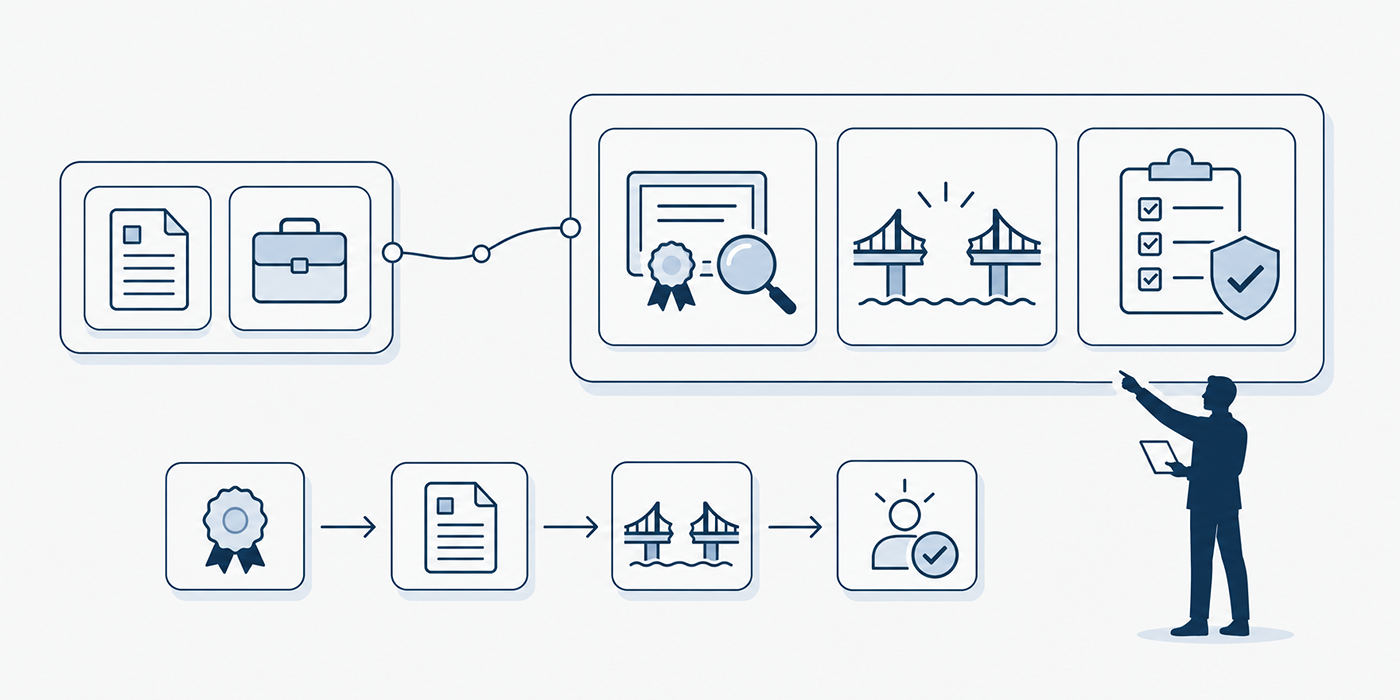
1. Why Certification Can Still Produce Zero Interviews
The contradiction becomes clearer once certification and hiring are separated. PMI’s current PMP eligibility rules require substantial professional project leadership experience: depending on education, candidates generally need between two and five years of qualifying experience. PMI also explains that the applicant’s formal job title does not have to be “project manager” when the work genuinely involved leading projects, decisions, delivery, and outcomes. That means a PMP can verify legitimate project-management experience, knowledge of project execution principles, exposure to stakeholder engagement, and familiarity with risk management. It still cannot tell an employer whether that experience resembles the specific vacancy being filled.
That distinction explains one of the recurring stories appearing in project-management communities. In July 2026, a PMP-certified candidate described having more than 15 years in healthcare operations, including budgeting, hiring, vendor management, process improvement, and running a clinic, yet struggled to secure corporate PM interviews in the United States. The candidate possessed serious transferable experience. The unresolved employer question was whether that experience translated into the corporate environments, project structures, governance routines, and role expectations being advertised. Similar transitions require candidates to translate operational leadership, vendor management, budget ownership, and process improvement into unmistakable project evidence.
Another April 2026 Reddit poster had recently passed the PMP while working primarily in contract monitoring, quality assurance, compliance, and performance assessment. The poster acknowledged limited recent hands-on experience as a project lead while asking whether a $110,000–$115,000 PM role was realistic. This is an important distinction. Knowledge of quality management, compliance controls, supplier performance, and project monitoring can be highly relevant, yet a hiring manager may still need evidence that the candidate personally owned schedules, scope decisions, budgets, resources, executive escalations, and delivery outcomes.
An August 2026 poster described earning the PMP and continuing to receive few interviews. Commenters focused heavily on resume positioning, quantified results, relevance to the vacancy, and the reality that experienced PMs with the same credential remain competitors. Another July 2026 thread featured a candidate with delivery, release-management, and software-development experience who expected the PMP to meaningfully improve hiring results, then encountered repeated automated rejections. These stories point toward a recurring weakness in how candidates market delivery experience, Agile knowledge, technical project work, and leadership capability.
Domain experience is another recurring pain point. One 2025 PMP discussion described candidates being asked repeatedly for sector experience even after certification. The underlying hiring logic is straightforward: a hospital implementation, ERP migration, commercial construction program, financial-services transformation, and cybersecurity initiative may all use recognizable project governance, risk-response methods, resource allocation, and project reporting. Their regulatory constraints, terminology, vendors, technical dependencies, stakeholder risks, and failure modes can differ substantially.
The Reddit stories should be treated as anecdotal accounts rather than a statistical sample of the entire project-management labor market. Broader labor data shows continuing demand. The U.S. Bureau of Labor Statistics projects employment of project management specialists to grow 7% from 2025 through 2035, with roughly 76,500 openings per year on average. The useful conclusion is therefore that applicants can face severe competition and screening friction even inside a growing occupation. Candidates need evidence across project planning, financial control, risk mitigation, and leadership communication that makes their fit obvious quickly.
The credential itself still has market value. PMI reports a salary premium among PMP holders and positions the certification around people, processes, and business priorities. Its value is strongest when it validates an already credible professional story. Think of certification as one signal inside a larger hiring equation involving industry knowledge, project complexity, business outcomes, and executive credibility.
| Hiring Filter | What the Employer Is Trying to Verify | Weak Evidence | Strong Evidence | Best Resume Signal |
|---|---|---|---|---|
| End-to-end delivery | You have personally taken work from initiation through implementation and handover. | “Supported multiple projects.” | Owned planning, execution, controls, acceptance, and closure. | Project scope, duration, outcome, and your accountability. |
| Schedule ownership | You can build, maintain, forecast, and recover a real delivery schedule. | Attended weekly planning meetings. | Owned integrated schedule and corrected critical-path slippage. | Baseline, forecast, milestone, and recovery result. |
| Budget responsibility | You understand the financial consequences of delivery decisions. | “Worked within budget.” | Managed forecast, commitments, variance, contingency, and corrective action. | Dollar value plus measurable cost result. |
| Forecasting ability | You identify deterioration before the deadline or budget is already lost. | Reported historical status. | Reforecasted cost/schedule and triggered early intervention. | Forecast accuracy or avoided overrun. |
| Risk ownership | You turn uncertainty into accountable preventive action. | Maintained risk register. | Quantified exposure, assigned owners, monitored triggers. | Specific risk prevented or impact reduced. |
| Crisis response | You remain effective when assumptions fail. | “Solved project issues.” | Stabilized a major disruption with structured response and escalation. | Problem, decision, recovery time, result. |
| Stakeholder leadership | You can secure decisions from people you do not directly manage. | Communicated with stakeholders. | Resolved competing priorities across senior functions. | Functions aligned and decision achieved. |
| Conflict management | You can handle disagreement without letting delivery stall. | “Strong interpersonal skills.” | Resolved a documented scope, priority, or resource dispute. | Trade-off made and delay avoided. |
| Governance experience | You understand approvals, decision rights, escalation, and executive oversight. | Attended steering meetings. | Designed or ran governance that accelerated decisions. | Decision cycle improved or backlog reduced. |
| Executive reporting | You can turn complex information into a decision-ready message. | Produced status reports. | Reported exposure, options, decisions, and recommended action. | C-suite/steering audience plus outcome. |
| Resource planning | You can manage scarce people across competing work. | Assigned tasks. | Resolved capacity conflicts and secured critical resources. | Team size, functions, utilization, delivery impact. |
| Team scale | Your previous leadership complexity resembles the open role. | Worked with a team. | Led multi-functional, distributed, or vendor-supported delivery. | Headcount, locations, disciplines. |
| Vendor management | You can control third-party dependencies and contractual obligations. | Worked with vendors. | Managed performance, milestones, SLA issues, and corrective actions. | Supplier count, contract value, performance result. |
| Procurement exposure | You understand sourcing and commercial consequences. | Participated in procurement. | Defined requirements, evaluated bids, supported negotiation and contracting. | Procurement value and decision ownership. |
| Requirements control | You can protect scope and acceptance from ambiguity. | Collected requirements. | Baselined, traced, validated, and controlled requirements. | Rework or scope leakage reduced. |
| Business analysis | You understand the business problem behind the project. | Documented business needs. | Connected solution choices to measurable business outcomes. | Revenue, cost, quality, customer, or process metric. |
| Quality control | You can prevent defects rather than simply track deadlines. | Monitored quality. | Implemented assurance, acceptance, and corrective-action controls. | Defect/rework reduction. |
| Regulatory experience | You understand sector-specific compliance constraints. | General compliance awareness. | Delivered within named regulatory or audit requirements. | Standard, framework, audit, or regulator involved. |
| Agile experience | You can operate in iterative, changing delivery environments. | “Familiar with Agile.” | Led releases, dependencies, risks, and outcomes across Agile teams. | Release cadence and business result. |
| Scrum exposure | You understand how the team actually works. | Listed Scrum as a skill. | Managed cross-team dependencies around Scrum delivery. | Products, teams, releases, velocity-related result. |
| Predictive delivery | You can work with baselines, stage gates, contracts, and sequential dependencies. | “Waterfall experience.” | Led stage-gated delivery with formal change control. | Milestones, approvals, contractual outcome. |
| Hybrid delivery | You can tailor methods instead of forcing one framework everywhere. | Listed Agile and Waterfall. | Coordinated iterative and predictive workstreams under one governance model. | Complexity and interfaces managed. |
| Technology fluency | You can operate within the employer’s project ecosystem. | Long list of software names. | Used tools to improve visibility, workflow, forecasting, or governance. | Tool plus business result. |
| Systems integration | You understand dependencies between project and enterprise systems. | “Worked on integrations.” | Coordinated technical interfaces, owners, testing, and cutover. | Systems, users, failure risk, result. |
| AI literacy | You can use emerging tools while maintaining control and validation. | “AI enthusiast.” | Applied AI to a controlled workflow with measurable value. | Time saved, accuracy, governance. |
| Portfolio awareness | You can prioritize your project within wider business constraints. | Focused only on own deliverables. | Managed cross-project dependencies and portfolio trade-offs. | Initiatives, investment scale, resource decision. |
| PMO maturity | You understand standardized controls and enterprise delivery systems. | Reported into a PMO. | Improved methodology, governance, templates, reporting, or prioritization. | Organization-wide impact. |
| Leadership maturity | You can challenge senior people and maintain trust. | “Excellent leader.” | Made difficult decisions across conflicting executive priorities. | Decision and consequence. |
| Closure and handover | You understand that implementation is only part of successful delivery. | Project launched successfully. | Secured acceptance, transition, operational ownership, and lessons learned. | Adoption or benefit result after launch. |
| Industry relevance | You can become productive without learning the sector from zero. | Generic PM expertise. | Relevant customers, regulations, workflows, products, and terminology. | Sector named prominently near top of resume. |
2. What Employers Screen Before the PMP Ever Gets a Chance to Help
The first screen is often basic relevance. Indeed advises project-manager candidates to study each job description, mirror relevant terminology accurately, emphasize industry-specific abilities, and provide measurable examples of their work. Its ATS guidance also notes that applicant-tracking systems commonly participate early in recruitment. A resume packed with PMP terminology, Agile terminology, risk language, and stakeholder terminology can still perform poorly when the employer is screening specifically for healthcare implementations, SAP migrations, utility capital projects, clinical systems, cybersecurity programs, or commercial construction.
This explains why “PMP required” should never be interpreted as “PMP is the primary hiring criterion.” A vacancy can simultaneously require PMP, seven years of technology delivery, ERP implementation exposure, vendor leadership, a particular regulatory environment, and experience managing multi-million-dollar programs. Certification satisfies one line. The candidate still needs to demonstrate vendor-management capability, project financial control, enterprise governance, and complex resource leadership at approximately the scale the employer needs
Hiring managers also screen for proof density. “Managed projects from initiation to completion” tells them little because thousands of candidates can write the same sentence. “Led a $4.2 million ERP rollout across six business units, coordinated 34 internal and vendor resources, recovered a six-week forecast delay, and completed cutover within the revised budget” creates a much stronger evidence trail. Indeed specifically recommends quantified examples and measurable accomplishments for PM resumes. Apply the same principle to schedule management, cost management, quality management, and project closure.
Recency matters as well. A candidate may have ten years of management experience and still lose to someone with four years of highly relevant experience on the employer’s current technology stack, regulatory environment, customer model, or project type. The issue is deployability. Employers with urgent vacancies may favor candidates who already understand specific project software, current Agile workflows, modern project reporting, and contemporary PM competencies. Older experience still carries value when the resume demonstrates that those capabilities remain current.
The title itself can create another screening problem. PMI explicitly allows qualifying project leadership performed under other job titles. Employers still need the resume to translate that work. A business analyst, operations manager, engineer, product lead, implementation specialist, military officer, or department manager may have excellent project leadership, requirements management, financial responsibility, and risk ownership. Recruiters cannot infer hidden experience reliably. The applicant must expose the project structure directly.
Salary targeting creates its own filter. Someone moving from operations, military service, teaching, HR, quality assurance, or business analysis may have substantial professional maturity while possessing limited evidence at the target PM level. Applying immediately to senior PM roles can place that candidate against people with years of direct portfolio-management exposure, PMO governance, large-budget responsibility, and executive stakeholder leadership. A strategically chosen bridge role can therefore accelerate earnings over several years even when it initially looks lateral.
3. The Experience Gaps That Certifications Cannot Hide
The first major gap is ownership. Many candidates participated in projects, coordinated deliverables, attended meetings, maintained plans, or supported senior PMs. Employers distinguish participation from accountability. Ask whether you personally owned the integrated schedule, controlled project risks, defended budget forecasts, and closed stakeholder decisions. When every difficult decision was escalated to another PM, your experience may support a coordinator or associate-PM role more strongly than a senior PM role.
The second gap is consequence. A PM who delivered an internal $40,000 process improvement and a PM who controlled a $20 million customer implementation may understand the same Agile concepts, risk vocabulary, reporting terminology, and project execution framework. Their exposure to commercial risk, executive scrutiny, contractual consequences, and organizational complexity differs. When applying upward, show the largest scale you have genuinely handled and avoid inflating it.
The third gap is domain fluency. A financial-services PM may need familiarity with controls, audit, data security, compliance, and regulated customer processes. A construction PM may need procurement, subcontractor coordination, schedule sequencing, cost control, and site risk. Energy roles may involve permitting, capital investment, engineering interfaces, and environmental stakeholders. Build a deliberate bridge through financial-services project trends, construction project-management trends, renewable-energy project opportunities, or sustainability project practices depending on your target.
The fourth gap is commercial literacy. Some certified candidates understand methodology extremely well while struggling to explain margin, forecast, contingency, procurement, contractual exposure, or benefits realization. Senior PM jobs commonly involve decisions where project financial management, earned value management, supplier management, and RFP/RFQ processes directly affect profitability. Build examples where you protected money, challenged estimates, negotiated trade-offs, or improved financial visibility.
The fifth gap is leadership under resistance. Passing an exam demonstrates knowledge. Managing a sponsor who refuses to make a decision, a functional manager who will not release resources, a vendor missing milestones, or an executive insisting on an impossible date tests applied judgment. Prepare specific evidence involving conflict resolution, resource negotiation, vendor escalation, and executive communication. Hiring panels often learn more from the hardest project story than from the smoothest one.
The sixth gap is measurable outcomes. Indeed’s current resume guidance repeatedly emphasizes examples, impact, and quantification. A candidate who writes “managed project risks, stakeholders, schedules, and budgets” provides keywords. A candidate who explains that a risk-response plan avoided a three-week outage, resource reallocation recovered a critical milestone, requirements control reduced change requests by 28%, and quality controls cut post-launch defects gives the employer evidence.
4. Fix the Resume and Application Strategy Before Buying Another Certification
Begin with a vacancy audit rather than another course. Collect 20 to 30 roles you would genuinely accept. Extract recurring requirements into categories: industry, project type, budget, team scale, methodology, technology, governance, education, certification, regulatory exposure, and leadership level. Then compare those requirements against your evidence in project execution, project finance, risk management, and stakeholder leadership. Your actual market gap becomes visible immediately.
Build a “proof inventory” before rewriting the resume. For every major project, record budget, duration, team size, departments, locations, vendors, technology, methodology, customer group, major risks, executive stakeholders, deadline pressure, and measurable results. Include examples of schedule recovery, cost control, supplier intervention, and project closure. You cannot write a powerful resume while trying to remember the evidence one bullet at a time.
Rewrite the professional summary around market fit. “PMP-certified project manager with ten years of experience” wastes valuable space when the employer already sees PMP in the certification section. A stronger summary might specify “Healthcare transformation project leader with eight years coordinating clinical operations, vendor implementations, compliance work, and multi-site process change.” The summary should expose domain competence, delivery complexity, stakeholder scale, and financial responsibility immediately.
Every experience bullet should answer at least three questions: What did you own? How difficult was it? What changed because of your work? Indeed’s June 2026 project-manager resume guidance specifically recommends measurable evidence and close alignment with the job description. Use project reporting metrics, Agile metrics, quality metrics, and financial measures to replace generic descriptions with defensible outcomes.
Tailoring should happen at the role-family level and then at the individual vacancy level. Create separate base resumes for IT transformation, operations, healthcare, construction, financial services, or whatever categories genuinely match your background. Within each version, prioritize the most relevant Agile experience, Waterfall experience, software knowledge, and governance exposure. Indeed advises candidates to use the employer’s relevant terminology when it accurately describes their experience.
Give projects their own visibility when your job titles hide your PM work. A candidate whose title was Operations Manager can create a clearly labeled “Selected Project Leadership” section describing an ERP rollout, site opening, process redesign, compliance remediation, or vendor transition. That lets recruiters evaluate your project planning, requirements control, resource coordination, and risk-response experience without pretending your formal title was different. Indeed similarly recommends highlighting relevant projects to expose applied experience.
Application quality also requires selective rejection. Skip vacancies where you fail several hard screens simultaneously. A PMP-certified operations manager with no software-delivery history gains little from repeatedly applying to senior technical PM jobs demanding seven years of cloud migration experience, specific architecture exposure, and enterprise SaaS implementations. Instead, pursue adjacent roles where business-analysis experience, operational leadership, vendor management, and process improvement solve problems the employer already understands.

5. Use a 90-Day Recovery Plan When the Job Search Has Stalled
During days one through fifteen, diagnose the funnel. Separate applications into four numbers: applications submitted, recruiter screens, hiring-manager interviews, and final rounds. A near-zero recruiter-screen rate suggests targeting, resume, or eligibility problems. Frequent recruiter screens followed by no hiring-manager progress suggests weak experience alignment. Reaching final rounds repeatedly suggests interview differentiation or competition. Review your evidence in project execution, project financial management, risk management, and leadership communication according to the failing stage.
During days fifteen through thirty, define a narrow target market. Choose two or three role families and two or three sectors where your existing experience creates an advantage. Someone from healthcare operations might target healthcare implementation PM, clinical operations PM, healthcare transformation PM, or program-coordinator roles rather than generic technology PM positions. Someone from construction should exploit experience in construction project management, vendor management, cost control, and schedule management before discarding years of sector credibility.
During days thirty through forty-five, produce three flagship project case studies. Each should explain the business problem, project objective, scope, constraints, team structure, budget, schedule, major risks, your decisions, and measured result. Include one case involving stakeholder conflict, one involving risk or delivery recovery, and one demonstrating financial or resource control. These cases become raw material for resumes, interviews, networking conversations, and recruiter screens.
During days forty-five through sixty, build missing evidence through your current position, contract work, nonprofit projects, professional associations, or a realistic bridge role. A 2024 Reddit hiring-manager discussion emphasized experience over certification while acknowledging that credentials can help career changers signal commitment. Other project-career discussions similarly recommend obtaining genuine delivery responsibility rather than stacking classroom credentials. Seek work that creates schedule ownership, risk accountability, stakeholder leadership, and project closure evidence.
During days sixty through seventy-five, intensify warm outreach. Join a local PMI chapter, reconnect with former colleagues, speak with previous vendors and clients, and approach recruiters who specialize in your sector. Conversations should focus on specific problems you can solve through project governance, portfolio prioritization, technology implementation, or operational improvement. “I’m looking for any PM job” gives your network little useful direction.
During days seventy-five through ninety, review conversion by category. Compare healthcare roles against generic PM roles, referrals against cold applications, PM positions against coordinator or implementation roles, and tailored resumes against broad versions. Double down where the evidence shows traction. Stop spending energy on channels producing nothing. Treat the job search like a controlled project-monitoring system with measurable reporting, resource prioritization, and corrective action.
One result should become obvious after ninety days: whether the constraint is presentation or experience. A candidate generating interviews after resume repositioning already possessed marketable evidence that was hidden. A candidate who remains consistently rejected from highly relevant roles may need stronger delivery ownership, industry experience, financial responsibility, or leadership scope. That diagnosis is far more useful than automatically purchasing another certification.
6. Frequently Asked Questions
-
The PMP establishes meaningful project-management knowledge and requires qualifying professional experience, but employers still screen for relevance, scope, industry, recent experience, leadership, and measurable outcomes. Your resume should show how you applied project execution skills, controlled project finances, managed project risks, and led stakeholder decisions. PMI itself describes PMP eligibility around real professional project leadership, while recent Reddit stories show that credential holders can still struggle when their experience is difficult to map onto current vacancies.
-
A PMP can help when the employer specifies or prefers that credential, especially because ATS and recruiter processes may look for vacancy-specific terms. Its presence cannot compensate for missing hard requirements such as industry experience, technical specialization, work authorization, seniority, or required project scale. Optimize the complete resume around relevant PMP domains, project reporting, risk management, and financial management. Indeed recommends matching accurate keywords and skills to the specific job description.
-
Transferable methods help a PM structure work, while domain experience helps the PM recognize hidden constraints quickly. Healthcare, construction, finance, energy, cybersecurity, and software programs can differ in regulation, terminology, procurement, risk, technology, and stakeholder expectations. Candidates should combine core project governance, stakeholder management, financial controls, and risk-response expertise with a sector story that reduces the employer’s perceived onboarding risk.
-
A coordinator, associate PM, implementation manager, workstream lead, or junior PM role can be strategically valuable when your missing evidence involves full project ownership. Judge the opportunity by exposure to schedule management, budget control, risk ownership, and executive reporting. A bridge role with genuine responsibility can improve your future market position substantially faster than holding out indefinitely for a title whose accountability you have never demonstrated.
-
Use conversion rather than a fixed application count. Twenty or thirty tightly matched applications producing zero recruiter screens deserves investigation. Review eligibility, title level, industry fit, resume parsing, quantified outcomes, and vacancy-specific language. Build your audit around project execution evidence, resource-management proof, stakeholder leadership, and risk-management results. Sending 300 poorly matched applications provides far less useful market feedback than 30 carefully tracked applications across defined role categories.
-
Choose another credential when specific target vacancies repeatedly demand it or when the training closes a real capability gap. Someone moving toward Agile delivery may benefit from comparing PMI-ACP, CSM, and SAFe. A cost-intensive career path may benefit from CCP certification, while analytical roles may benefit from PMI-PBA preparation. Experience gaps in project execution usually require applied responsibility rather than another exam.
