
Choosing between the Google Project Management Certificate and CAPM becomes confusing when both are marketed toward aspiring project professionals, yet they solve different career problems. The Google program is strongest for learning practical foundations, while CAPM offers a standardized PMI credential. For someone transitioning from IT into project management, moving from business analysis into PM, building Agile project-management capability, or planning a longer program-management career, the better choice depends on what your résumé currently fails to prove.
1. Google Project Management Certificate vs CAPM: Understand What Each Credential Actually Proves
The biggest mistake is treating these two credentials as interchangeable.
The Google Project Management Professional Certificate is primarily a structured learning program. Coursera currently presents it as a beginner-level, seven-course series requiring no prior degree or project-management experience. Its curriculum includes project initiation, planning, execution, Agile, stakeholder management, budgets, risks, procurement, project tools and applied exercises. Coursera says the program includes more than 140 hours of instruction and qualifies graduates for more than 100 hours of project-management education applicable toward PMI credentials such as CAPM.
That makes Google especially useful when your problem is knowledge formation. Someone who has coordinated campaigns, organized events, implemented software, managed operations or supported cross-functional work may already possess useful experience while lacking the language to describe it. Learning stakeholder registers, risk management, project charters, dependency management and Agile ceremonies can help that person translate existing work into a recognizable project-management career story, identify stronger project templates and artifacts, understand how organizations select PM technology, and operate more intelligently inside remote project teams.
Google also reports that 75% of surveyed certificate graduates experienced a positive career outcome such as a new job, promotion or raise within six months. That figure comes from a U.S. graduate survey conducted in 2022, so it should be interpreted carefully. A “positive career outcome” covers several outcomes and does not mean 75% became project managers because of the certificate.
CAPM solves a different problem.
The Certified Associate in Project Management, issued by the Project Management Institute, requires a secondary degree or global equivalent plus 23 hours of project-management education. Candidates then sit a proctored 150-question, 180-minute examination. The current exam allocation is 36% project-management fundamentals and core concepts, 17% predictive methodologies, 20% Agile frameworks and 27% business-analysis frameworks.
CAPM therefore functions more clearly as an independent knowledge-validation credential. You are demonstrating that you met PMI's eligibility requirements and passed an external examination. Candidates preparing for it benefit from dedicated CAPM examination resources, understanding common CAPM exam mistakes, learning how to leverage CAPM after certification, and gradually developing the stronger delivery evidence needed for a future project-governance career.
PMI itself lists potential CAPM-related career paths including assistant project manager, project administrator, project analyst, project coordinator, project manager and technical project manager. That should be treated as a set of possible paths rather than a guarantee that certification alone satisfies employers' experience requirements.
The practical distinction is powerful:
Google helps you learn how project management works. CAPM helps you validate that you understand recognized project-management concepts. Experience proves that you can deliver when something real is at risk.
The last category remains the hardest one to fake. A hiring manager evaluating someone for an Agile PM position, an IT project-management transition, a future senior PM consulting role, or eventually project-management executive leadership still wants evidence that the candidate can manage ambiguity, deadlines, dependencies, difficult stakeholders and changing priorities.
That is why collecting certificates without collecting proof creates a painful outcome: your LinkedIn credential section grows while your interview stories remain empty.
The Google certificate can provide stronger learning exercises and practical exposure. CAPM can provide the more formal external credential. Neither turns a hypothetical project into a delivered one.
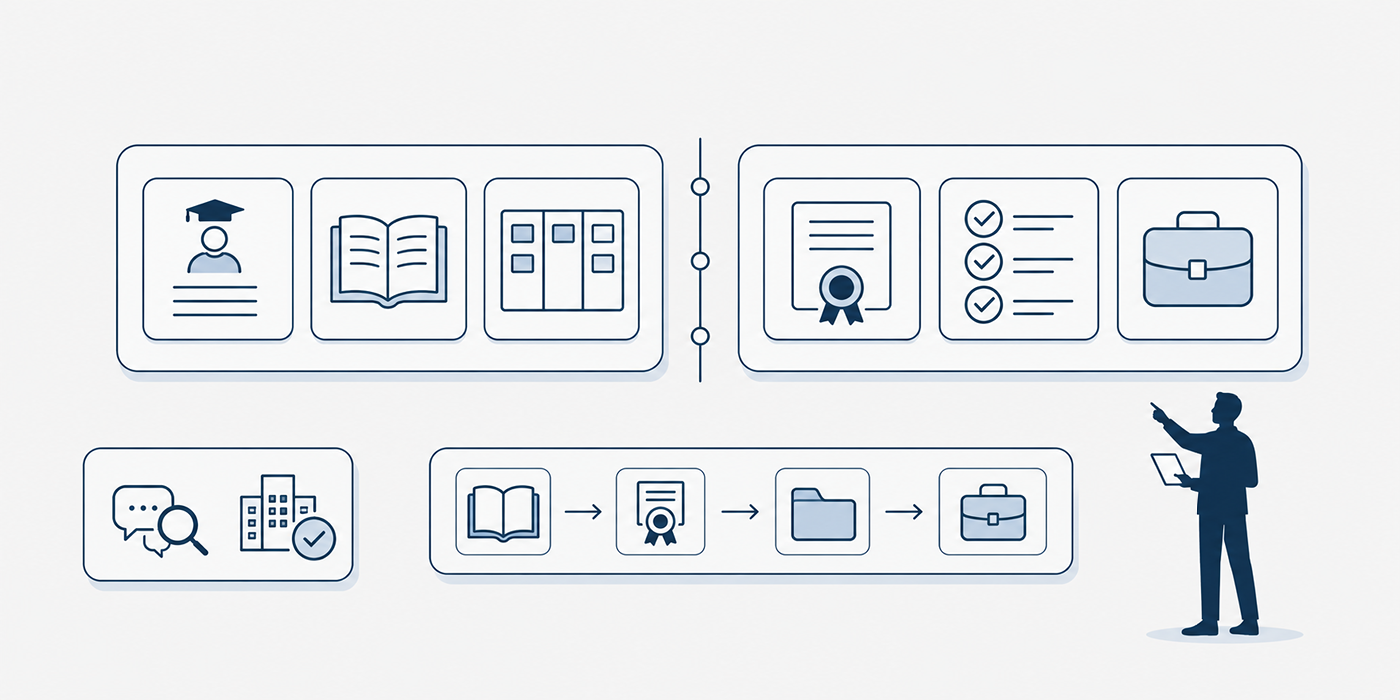
The strongest candidates therefore combine formal learning with evidence such as a project charter, stakeholder map, RAID log, requirements traceability, communication plan, schedule, decision log and post-project review. Those assets become especially valuable when you understand project-management integrations, can discuss modern collaboration systems, recognize the growing connection between project management and cybersecurity, and can explain how those capabilities support a longer program-management pathway.
The following matrix shows where each option produces meaningful career value and where candidates frequently overestimate it. Current eligibility and curriculum comparisons are based on PMI, Google and Coursera's published program information.
2. Reddit Job Outcomes: What Actually Happened After Google PM and CAPM?
Reddit becomes useful here because marketing pages tell you what credentials are designed to accomplish, while career forums expose what happens when candidates enter a competitive hiring market.
The recurring theme across recent discussions is uncomfortable but valuable: credentials tend to amplify experience rather than replace it.
In an October 2025 r/PMCareers discussion specifically asking whether people had landed jobs with the Google certificate, one contributor said it had been helpful when applying for a management position but did not attribute the job directly to the credential. Another described getting a mid-level PM position after completing it while explicitly saying transferable experience mattered more. Hiring-oriented commenters repeatedly emphasized interview evidence and relevant experience.
That distinction matters when deciding whether to spend the next several months collecting credentials or building evidence. A retail supervisor may already have delivered store openings, inventory migrations or staffing changes. A marketer may have managed campaigns. An IT worker may have coordinated implementations. Learning to translate these activities through an IT-to-PM transition framework, Agile project-management vocabulary, reusable project-management templates, and appropriate collaboration tools can be more valuable than pretending those projects never happened because the job title lacked “project.”
A June 2026 r/PMCareers poster provides a good example. After taking introductory Google project-management training, she joined a small floral company as an operations assistant, supported multiple departments and was eventually offered a project-manager position as the company grew. That is a useful outcome, yet the mechanism matters: the certificate helped support a transition while operational exposure and demonstrated usefulness created the promotion opportunity.
This is precisely why candidates targeting marketing project management, environmental project management, nonprofit project management, or a technical cybersecurity-PM pathway should treat domain experience as an asset instead of discarding it during a career change.
CAPM produces the same warning from another direction.
A 2025 r/PMCareers poster who had recently passed CAPM described receiving project-coordinator interviews but continuing to encounter concerns about insufficient PM experience. Another Reddit discussion featured a CAPM holder with roughly two years of IT/SaaS project-management experience who reported more than 150 applications without securing a new role.
A June 2026 CAPM discussion showed the same frustration from a fresher. The poster had passed CAPM and then discovered that the entry-level project coordinator and PMO analyst opportunities they expected were difficult to find.
Those experiences do not make CAPM useless. They identify the hiring problem CAPM cannot solve.
Imagine two candidates applying for a project coordinator position.
Candidate A writes:
CAPM certified. Knowledge of Agile, predictive project management, stakeholder management and risk.
Candidate B can demonstrate that they coordinated six stakeholders, maintained a decision log, caught a dependency that threatened launch, reorganized the schedule, escalated a vendor problem and helped deliver a system migration two weeks inside the revised deadline.
Candidate B possesses interview ammunition.
The strongest applicant often combines both forms of evidence: a credential supported by recognizable CAPM preparation, practical project-management resources, credible business-analysis crossover skills, and enough Agile delivery understanding to explain what they actually did.
Another Reddit pattern is equally important: beginners frequently complete Google before CAPM. People describe using Google to establish the conceptual foundation, then pursuing CAPM for the more recognizable PMI credential. One r/CAPM discussion summarized the distinction through user experiences: Google was regarded as more practical for understanding the work, while CAPM was regarded as more recognizable.
That sequencing has logical efficiency because Google's program already provides substantially more than CAPM's 23-hour education requirement. Someone who genuinely needs foundational learning can therefore use the Google coursework to understand the discipline, develop initial artifacts, then move into focused CAPM exam preparation, avoid predictable CAPM study mistakes, and eventually learn how to turn CAPM into career leverage rather than treating the credential as the finish line.
3. Employer Recognition: Why CAPM Usually Has the Stronger Credential Signal
Recognition needs to be separated into three layers: brand recognition, recruiting recognition and evidence of capability.
Google obviously has enormous consumer and employer brand recognition. Seeing “Google Project Management Professional Certificate” immediately communicates that the applicant completed structured professional training from a familiar organization. Google's program also offers U.S. graduates access to an employer consortium and career resources, and Coursera says completers may share their information with participating employers.
That creates legitimate value, particularly for a beginner assembling a first project-management résumé, learning common PM collaboration software, building familiarity with project-management tools, or preparing to operate inside an Agile project environment.
CAPM carries a different form of recognition because PMI is specifically associated with professional project-management credentials. PMI reports more than 1.7 million certification holders across its credential ecosystem.
Recent Reddit discussions repeatedly describe seeing CAPM or PMP named in vacancies while seeing the Google certificate named much less frequently. That observation remains anecdotal rather than a complete job-posting census, but it explains why many experienced commenters distinguish between Google's training certificate and PMI's exam-based certification.
This matters for ATS screening.
If a vacancy states “CAPM preferred,” CAPM gives the recruiter a direct match. Completing a Google course may demonstrate relevant education, but it does not satisfy a literal CAPM preference. Candidates should therefore study the requirements appearing repeatedly in their actual target vacancies before deciding where to invest money.
Take 30 jobs you would realistically apply for and create a requirement frequency sheet:
How many request CAPM?
How many request PMP?
How many mention Agile or Scrum?
How many require Jira, Asana, Smartsheet or MS Project?
How many demand industry-specific experience?
How many request two years of coordination?
How many mention budgeting or procurement?
How many require risk management?
How many require reporting or dashboards?
How many mention the Google certificate specifically?
That analysis tells you whether your bottleneck is certification, tooling, experience, domain knowledge or positioning.
Someone seeking Agile career advancement may discover methodology signals matter more. Someone building a technical PM career may find domain knowledge dominates. Someone targeting governance-heavy work may benefit more from understanding project-governance leadership, while a candidate aiming eventually at consulting should study the progression toward senior project-management consulting.
This is where candidates lose months.
They ask, “Which certificate is better?” while their target vacancies are screaming, “We need someone who has handled vendors, budgets and implementation schedules.”
The credential question should therefore become:
Which missing signal is currently preventing the employer from believing I can succeed in this particular role?
That produces a much better career decision.
Choose the barrier that best matches your situation, then hit Submit to reveal your highest-value next move.
4. Google PM Certificate or CAPM? Choose According to the Career Problem You Actually Have
Choose Google first when you genuinely do not understand project management yet.
If terms such as project charter, RAID log, critical path, sprint retrospective, change control and stakeholder register are mostly unfamiliar, structured learning has immediate value. The Google program gives you enough context to understand how a project moves from initiation through execution and closeout. Pair that learning with PM templates, practical collaboration software knowledge, basic Agile PM development, and familiarity with how companies evaluate project-management tools.
Choose CAPM first when you already understand the fundamentals and need a cleaner external credential.
A working project coordinator who already maintains schedules, facilitates meetings, tracks risks, writes status reports and supports stakeholders may gain limited marginal value from months of beginner coursework. That person has a stronger reason to use focused CAPM study resources, avoid common CAPM examination errors, earn the credential and then concentrate on leveraging CAPM professionally.
Choose Google → CAPM when you are a genuine career changer with enough time and budget.
This is one of the most defensible combinations because the credentials perform different jobs. Google teaches. CAPM validates. Your portfolio proves.
It particularly suits someone converting experience from IT, operations, military service, customer success, marketing or business analysis. The candidate can use an IT-to-project-management roadmap, a BA-to-PM transition strategy, an Agile career pathway, or a specialist marketing PM roadmap to preserve domain credibility while changing job families.
Choose neither immediately when your résumé already contains strong project delivery and you may qualify for something more advanced.
Someone who has spent years leading projects under a different title can waste time underselling themselves. Before automatically pursuing another beginner credential, audit your real responsibilities, project leadership history and eligibility for more advanced credentials. Professionals already progressing toward project governance, senior consulting, program management, or eventually project-management executive roles need increasingly stronger delivery evidence rather than endless introductory certifications.
Choose experience-building first when applications fail because every vacancy demands experience.
This category is particularly important.
If your target jobs repeatedly require one or two years of coordination experience, spending another six months collecting educational certificates may leave the underlying gap untouched.
Instead, create project ownership where you already work.
Volunteer to coordinate a CRM migration. Lead a documentation cleanup. Run a customer onboarding improvement project. Organize a fundraising campaign. Implement a new reporting system. Coordinate a website launch. Manage an office move. Help deploy a cybersecurity control. Introduce a collaboration platform.
These can generate evidence around technology implementation, cybersecurity project coordination, remote team adoption, and Agile delivery while simultaneously creating the stories employers want.
The project does not need a $10 million budget.
It needs stakes, constraints, stakeholders, decisions and an outcome.

5. The Best Next Step After Google PM or CAPM: Build a Proof Stack Employers Can Verify
Once you have either credential, the most valuable next move is rarely another generic beginner certificate.
Build a proof stack.
Start with one project that has a legitimate objective. Define the current problem numerically. Identify stakeholders. Establish scope. Create a schedule. Record assumptions. Track risks. Log decisions. Manage changes. Produce status reports. Close the project with a measurable result.
A strong candidate portfolio might contain:
Project charter showing objective, scope, exclusions, stakeholders and success criteria.
Stakeholder map demonstrating influence and communication planning.
Work breakdown structure translating the outcome into manageable deliverables.
Schedule or milestone plan showing sequencing and dependencies.
RAID log capturing risks, assumptions, issues and dependencies.
Change log showing how scope changes were evaluated.
Decision register proving governance discipline.
Budget tracker if financial resources were involved.
Status report showing concise executive communication.
Retrospective or lessons-learned document demonstrating improvement thinking.
Candidates can build these more efficiently by adapting project-management templates, understanding appropriate collaboration platforms, studying how organizations choose project-management software, and learning when PM APIs and integrations matter.
Then translate the evidence into résumé bullets.
Weak:
Helped manage a website project.
Stronger:
Coordinated a six-week website relaunch across design, content and development teams, maintained milestone and issue tracking, resolved approval dependencies and supported launch three days before the revised deadline.
The second bullet gives the interviewer material to interrogate.
Your portfolio should also match the domain you are entering.
For an IT candidate, emphasize technical dependencies, implementations and vendor coordination using an IT-to-PM transition strategy. A BA should emphasize requirements, traceability, stakeholder analysis and change using the BA-to-project-manager pathway. An Agile candidate should show backlog, sprint, retrospective and adaptive-planning competence through an Agile PM progression and deeper traditional-to-Agile transition.
Next, narrow the job search.
Candidates with little formal experience frequently waste applications on “Project Manager” vacancies asking for five years of ownership when their evidence fits:
Project Coordinator
Project Administrator
Project Analyst
PMO Analyst
Implementation Coordinator
Junior Project Manager
Assistant Project Manager
Operations Coordinator
Client Implementation Specialist
Business Analyst roles with delivery responsibility
PMI itself includes several of those paths among careers associated with CAPM.
Your first strategic objective is therefore proximity to project ownership.
A project coordinator role where you manage schedules, reporting, dependencies, vendors and stakeholders may create more long-term career capital than a generic administrative role paying slightly more. That experience can later support movement into program management, project governance, senior PM consulting, or eventually an executive project-management pathway.
Finally, create six interview stories before applying heavily:
Scope change: What changed and what did you protect?
Stakeholder resistance: Who disagreed and how did you regain alignment?
Risk: What did you identify before it became an issue?
Missed deadline: How did you reforecast and communicate?
Conflict: How did you obtain cooperation without formal authority?
Failure: What decision would you make differently now?
This interview preparation is where certificate knowledge becomes commercially useful. CAPM terminology can strengthen your explanations. Google coursework can give you frameworks for organizing them. Experience gives you the actual story.
That three-layer combination is substantially harder for another applicant to beat.
6. FAQs: Google Project Management Certificate vs CAPM
-
CAPM generally provides the stronger formal credential signal because it is an exam-based PMI certification. The Google certificate provides stronger structured beginner training and applied coursework. Recent Reddit discussions repeatedly describe CAPM as more recognizable while simultaneously warning that neither credential reliably compensates for missing experience.
Someone entering from scratch may therefore get more value by learning through Google, building a project, then completing CAPM preparation and learning how to leverage the credential. Candidates already familiar with PM fundamentals may move directly toward CAPM while strengthening their project-management proof assets and career-transition positioning.
-
Google's current program provides more than 100 hours of project-management education, while CAPM requires at least 23 hours of project-management education. Coursera explicitly states that the Google certificate's educational hours apply toward PMI credentials including CAPM.
That makes Google → CAPM a logical path for true beginners. Once the foundation is built, shift toward dedicated CAPM exam resources, avoid CAPM exam pitfalls, strengthen Agile project knowledge, and continue collecting real delivery evidence.
-
Some candidates do enter project-related work after completing it, yet available Reddit outcomes show that transferable skills, networking, existing domain experience and the ability to demonstrate project work frequently determine the result. One 2026 poster moved from operations assistant into a project-manager position after initial Google PM training, but the promotion followed hands-on contribution across the business.
Improve the odds by entering through your existing domain, such as marketing project management, IT project management, nonprofit project management, or a business-analysis transition.
-
A certification cannot guarantee a role. Recent Reddit discussions include CAPM holders still encountering experience barriers and difficult entry-level markets.
CAPM becomes considerably more useful when paired with documented project ownership, strong project-management artifacts, relevant collaboration-tool competence, appropriate Agile capability, and a deliberate plan for using CAPM after certification.
-
Yes, when both are relevant and space permits. Place CAPM prominently in the certifications section because it communicates the standardized PMI credential. The Google certificate can sit under professional development or certifications and support your story of structured training.
The stronger résumé, however, should devote more space to delivered outcomes. Employers hiring someone who hopes to move into project governance, program management, senior consulting, or eventually operations leadership need evidence of progressively larger responsibility.
-
Audit your knowledge before enrolling. If you already create schedules, run meetings, manage risks, support budgets, maintain documentation and coordinate stakeholders, beginner coursework may produce significant duplication.
Your higher-return move may be CAPM, deeper Agile specialization, stronger project-governance capability, better tool and integration knowledge, or more deliberate preparation for future program-management responsibilities.
